

Autonomous Mobile Clinics and Telehealth Integration: Technological, Cost, and Regulatory Shifts in 2026

Many people are eager to see the future of telemedicine. Whether due to remote locations, frustration with long wait times, or the burden of traveling to hospitals while ill just to obtain a medical certificate, consumers are urgently hoping for changes in telemedicine.
Both the technology underpinning telemedicine and the laws fostering its sound development must keep pace with consumer needs and the times. On November 7, the U.S. House of Representatives voted to pass the “Veterans E-Health and Telemedicine Support (VETS) Act of 2017,” which will allow physicians within the Veterans Health Administration to provide telemedicine services across state lines.
This marks another landmark policy following the Centers for Medicare & Medicaid Services’ (CMS) announcement of Medicare coverage for interstate telemedicine services directed at consumer patients.
VCBeat (WeChat: vcbeat) has compiled for you the latest perspectives on trend shifts in the gradually booming telemedicine market, sourced from MobiHealthNews and ReadWrite.
Telemedicine Needs to Address Technical Pain Points and Integration Challenges
Most current healthcare providers have already incorporated telemedicine into their service offerings, while some health-tech startups are designing proprietary services for telemedicine.
A survey conducted by the College of Healthcare Information Management Executives (CHIME) and KLAS, involving 114 chief information officers, IT directors, telehealth managers, and other experts, revealed that telehealth practices continue to face significant barriers.
59% of respondentsInsurance Reimbursement Listed as One of the Factors Limiting the Development of Telemedicine, they believe that payers are very slow in reimbursing patients for telemedicine services, or reimburse at lower rates than those for in-person care.
The overwhelming majority of respondents believe that,Lack of integration and connectivity between electronic medical record systems and virtual care platform providers, or only unidirectional linkage exists.. Furthermore, three-quarters of respondents indicated that they are actively planning to leverage existing solutions to expand the number of medical specialists or improve patient access to care.
Adam Gale, Chairman of KLAS, believes that the future of telemedicine is very bright, but the technology behind it still needs to progress more rapidly.The integration of electronic medical record systems with telemedicine remains in its nascent stage., suppliers really should accelerate the development of technology and support technologies.
Remote Assisted Diagnosis Using Wearable Devices and Mobile Medical Equipment
Telemedicine technology has been integrated into future elderly care devices, as seen in projects partnering with K4Connect, where sensing technology enables medical experts to accurately obtain patients' lifestyle and vital signs data.
In terms of diagnosis, scientists have developed a home HIV testing kit that not only accelerates the diagnostic process but also enables patients to monitor their treatment progress in real time.
A team from Imperial College London and DNA Electronics is collaborating to develop a USB drive equipped with a mobile phone chip. A drop of blood is placed on the drive; if any HIV virus is present in the sample, the acidity changes, and the drive converts this change into an electronic signal that is transmitted directly to the connected software program.
Preliminary studies have shown that the device boasts an exceptionally high accuracy rate, achieving 95% accuracy across 991 blood samples tested.
This device also significantly reduces the time required for traditional HIV testing. While conventional methods take at least three days to detect the HIV virus, this cartridge can deliver results within 20 minutes.
This device is also suitable for patients to monitor blood viral loads at home, helping healthcare providers assess medication adherence and determine whether the virus has developed resistance to prescribed drugs.
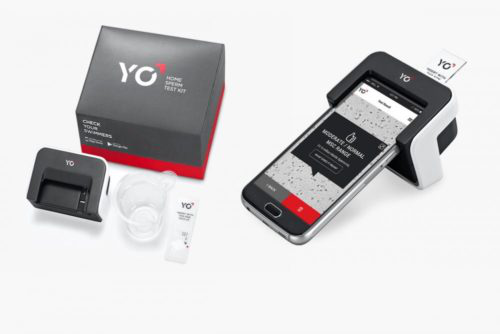
Another company has developed the YO Sperm Test Kit for monitoring male fertility. This device, which has received FDA clearance, can be used with a smartphone, eliminating the need for patients to visit a hospital.
New Form of Autonomous Driving Vehicle Clinic
Major companies are striving to make autonomous vehicles the third most significant technology of the future, fundamentally creating greater development opportunities for “Mobility as a Service” (MaaS) and implying that vehicle usage will encompass a broader range of tasks, including medical consultations.
"Clinicians often lack access to useful patient data. Aim is a service platform that generates positive health outcomes by providing better care experiences, understanding, and intervention models."

This autonomous clinic, designed for remote areas, significantly reduces the logistical burden on patients, making it more likely that they will engage in medical care before their conditions worsen and costs rise.
Such clinics will be equipped with embedded sensors to obtain patients’ vital signs through self-guided assessment. If the data indicate that a patient requires medical attention, the Aim platform will immediately connect them with an on-call physician from its partner network.
Telemedicine Breaks Geographical Barriers, but Costs Remain High
Although telemedicine appears to be progressing in a positive direction, some unforeseen negative aspects have emerged. A recent study shows that although telemedicine is cheaper than traditional doctor or hospital visits, butAs more people use this service for its convenience, the cost of medical care is actually rising.。
A study by the University of Wisconsin found that encouraging patients to use online care increased the frequency of in-office visits and telephone consultations, while physicians accepted 15% fewer new patients per month on average. Furthermore, researchers discovered that the health outcomes of patients who utilized telemedicine services did not show significant improvement compared to those who did not.
However, for patients who lack access to medical specialists and clinical care channels in their local areas, telemedicine has broken down this barrier, while also ensuring—at least in theory—that equivalent treatment is no longer constrained by geographic location.
It is highly likely that, in the foreseeable future, we will see healthcare systems leveraging mainstream 3D printing technology in pharmacies to provide patients with the medications they need (Spritam is already doing this) and using drones for drug delivery.
Reports indicate that Amazon is secretly conducting research in telemedicine. The long waits in waiting rooms are becoming a thing of the past.
Nearly Every U.S. State Has Updated Its Telemedicine Laws
As telemedicine gains popularity among healthcare institutions in the United States, states are enacting or amending their own laws to more appropriately formulate regulations affecting telemedicine.
According to the latest research data released by Epstein Becker Green, a healthcare and life sciences company, on telepsychiatry regulations, all states except Connecticut and Massachusetts made substantial amendments to relevant laws last year, with some states enacting legislation specifically focused on mental health treatment pathways.
Brad Davidsen and James Tam, researchers at Epstein Becker Green, stated: “Just last year, we saw a significant number of states that previously lacked relevant laws—or had none at all—such as Alaska, adopt comprehensive regulatory frameworks, while other states, like Texas, eased restrictions on telemedicine practices to boost industry competition and service utilization.”
They also stated that the use of telemedicine has now become mainstream, integrated into the treatment models of the vast majority of states, and they hope to continue seeing changes and improvements in relevant laws and regulations in the future.
Building on its prior survey of telepsychology/behavioral health across all 50 states, Epstein Becker Green’s 2017 report once again examined state laws, revealing the progress made in telemedicine-related legislation over the past year.
A report from the U.S. Centers for Medicare & Medicaid Services (CMS) shows that,Telemedicine Services Drive a 28% Increase in Health Insurance Expenditures; 31 States and the District of Columbia Enact Private Payer Parity Laws for Telehealth. The U.S. Centers for Medicare & Medicaid Services estimates that 61% of healthcare institutions are implementing some form of telemedicine services.
The report also found that regulations established in five states allow patient-provider assessments to be conducted via telemedicine platforms. A newly implemented telemedicine law in New Jersey has relaxed the definition of “healthcare providers,” thereby permitting the use of a broader range of telemedical devices.
“Consumer demand can drive legislation. In many states, newly enacted or expanded parity laws require insurers to include telemedicine in their coverage,” said Davidsen and Tam. “In states lacking such parity laws, payers should monitor these new legislative developments and prepare for a future where telemedicine services are covered.”
Removing Barriers to Establishing Doctor-Patient Relationships and Medical Facilities
To provide real-time information on potential new legislation, Epstein Becker Green has continuously monitored changes in relevant legislation, regulations, and policies in each state since the publication of its previous report, with particular attention to the field of telepsychiatry.
The company found that, although some states have begun to plan and formulate regulations targeting psychologists and other related healthcare providers, among the 48 states that have made substantial changes in legislation since 2016,Regulation of physicians' professional conduct remains the most prevalent.。
Several states have begun to remove barriers to establishing patient–physician relationships and setting up medical facilities, while others are showing a willingness to heed the input of telehealth stakeholders and plan to clarify regulations.
Regarding mental health care, a new report indicates that New York State’s regulations on delivering mental health services via telehealth are significantly clearer than before. The state’s legislation has evolved from a series of agency statements posted on the Department of Health’s website into several new regulations, along with multiple directives specifically addressing telepsychiatry. Furthermore, recently enacted legislation in West Virginia has expanded access to psychotropic or behavioral health medications through telehealth.
“Healthcare providers seeking to operate across multiple states must ensure that the treatments they deliver comply with each state’s licensure and insurance requirements, and further guarantee that all patient care—including prescribed medications—is permitted under that state’s telehealth and telemedicine laws,” said Davidsen and Tam. “Keeping abreast of these laws in real time is indeed challenging; healthcare providers should closely monitor industry associations, relevant blogs, and resource websites to stay promptly informed of new laws and regulations.”
References:
http://www.mobihealthnews.com/content/report-nearly-every-state-has-updated-its-telehealth-legislation-last-year
https://readwrite.com/2017/10/18/mainstream-telehealth-needs-help/