

Nestlé Health Science Targets China's Underpenetrated $56B+ Medical Nutrition Market
Foods for Special Medical Purposes (FSMP) are a completely unfamiliar concept to many people. In simple terms, they are “meals” for patients, classified as food rather than pharmaceuticals.
Professionally speaking, the full name of "special medical foods" is "Foods for Special Medical Purposes (FSMP)." They are neither health supplements nor pharmaceuticals, but rather specially processed and formulated foods designed to meet the specific nutritional and dietary needs of individuals with limited food intake, digestive or absorptive impairments, metabolic disorders, or specific disease states.
So, who exactly needs to consume foods for special medical purposes (FSMP)? What is the current state of FSMP development in China? And what trends will shape the industry’s future? Li Tiantian, founder and chairman of DXY, recently visited Ms. Gu Xinxin, President of Nestlé Health Science Greater China, to discuss the developmental trajectory of FSMP.
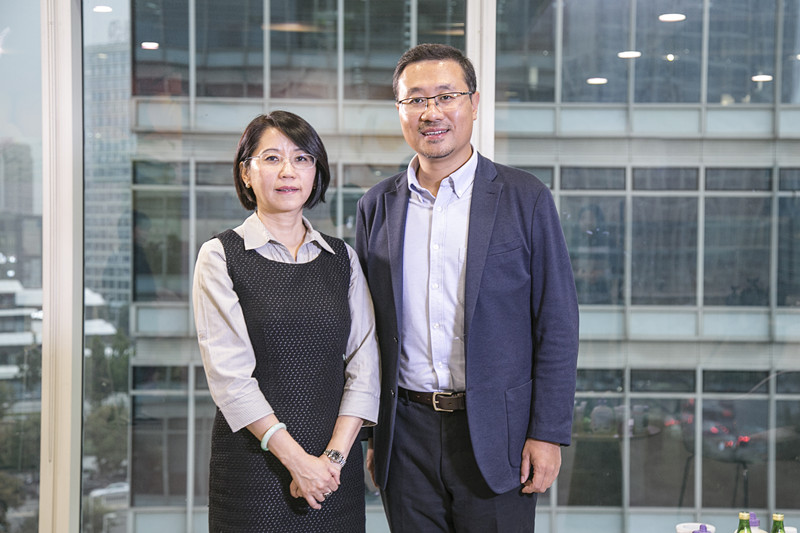
Left: Gu Xin, President of Nestlé Health Science Greater ChinaXinMs. ; Right: Li Tiantian, Founder and Chairman of DXY
According to statistics, the global annual consumption of foods for special medical purposes (FSMP) totals RMB 56 billion to 64 billion, with the market size growing at an annual rate of 6%. In the United States, 65% of malnourished patients use FSMP, compared to 27% in the United Kingdom, while mainland China has a usage rate of only 1.6%, corresponding to approximately RMB 600 million and accounting for just 1% of the global market.
This data, compiled by the China Health Food and Dietary Supplements Association, reflects that the supply of foods for special medical purposes (FSMP) in China falls far short of market demand. Additional data further highlight this market gap: among China’s 140 million hospitalized patients, fewer than 1% receive clinical nutrition diagnosis and management; the clinical nutritional treatment of hundreds of millions of outpatients with chronic non-communicable diseases remains largely unmanaged; and the prevalence of malnutrition among patients with major diseases, such as cancer, reaches 70%–80%.
“For these clinical patients, existing homemade foods are simply unable to meet their nutritional needs. Our current patient diets are still stuck at the stage of millet porridge and hen soup, which are far from sufficient.” Having observed the market for many years, Nestlé’s Gu Xinxin introduced that many people may confuse Foods for Special Medical Purpose (FSMP) with health supplements. In fact, there is an essential difference between the two: the former targets diseased populations to provide for their nutritional needs, while the latter serves as a nutritional supplement for healthy or sub-healthy individuals.
Taking infants and young children as an example, Dr. Zhuang Ruidan, a pediatrician at Hangzhou Dingxiang Clinic, stated that conditions such as lactose intolerance and cow's milk protein allergy are very common in clinical practice. In addition, some children suffer from inherited metabolic disorders. These children all require the consumption of foods for special medical purposes (FSMP).
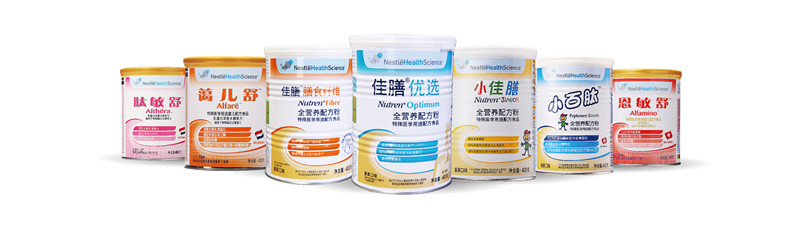
However, it is important to note that due to the lack of awareness about foods for special medical purposes (FSMPs) among parents and even many physicians, families with such needs should strictly follow the guidance of professional physicians when selecting these products.
It is understood that, in addition to infants and young children as well as individuals with inherited metabolic disorders, a large population of patients with critical illnesses also constitutes a key demographic requiring foods for special medical purposes (FSMP). Clinically, many patients do not die from their underlying diseases but rather from “starvation.” This is particularly evident among oncology and surgical patients, who often experience significant postoperative weight loss, severe muscle wasting, or prolonged anemia that fails to resolve. The underlying cause is inadequate dietary intake that fails to meet their nutritional requirements.
In clinical practice, foods for special medical purposes (FSMP) serve not only as an adjunct to treatment but also as a therapeutic intervention itself. “Abroad, you will find that the clinical application of FSMP has become highly specialized, with dedicated consultation departments providing nutritional regimens for patients. Upon hospitalization, all patients undergo screening and assessment for malnutrition risk. If a risk is identified, nutritional supplementation is administered prior to admission, and surgery is performed only after this supplementation is completed,” said Gu Xinxin. As early as the late 20th century, developed countries such as the United States, Japan, and Canada had already widely adopted FSMP in clinical settings, with many nations including them in their medical insurance reimbursement schemes. However, domestic awareness of FSMP remains at a rudimentary stage, with even many physicians lacking clear understanding.
For this very reason, Nestlé Health Science has established its own digital team in recent years, leveraging social media to engage and interact with consumers, thereby enhancing public understanding of nutritional science. Meanwhile, Nestlé Health is also committed to advancing the examination and certification process for registered clinical dietitians in China; currently, a number of sales staff within the Nestlé team have already obtained national certification as registered clinical dietitians. Gu Xinxin stated that foundational market education will remain a highly prioritized initiative for Nestlé Health Science over the next five to ten years, and even beyond.
As public awareness of foods for special medical purposes (FSMP) grows, this sector has emerged as a new blue ocean within the broader health industry in recent years, attracting increasing corporate participation, with giants such as Nestlé actively establishing their presence. Consequently, national policies and regulations governing FSMP are being continuously refined and improved.
In March 2016, the China Food and Drug Administration (CFDA) issued the Administrative Measures for the Registration of Foods for Special Medical Purposes (hereinafter referred to as the “Measures”), which officially came into effect on July 1, 2016. The promulgation of these Measures completed the transition of foods for special medical purposes from the drug category to the food category, streamlined the registration process, and shortened the registration timeline.
In November 2016, the China Food and Drug Administration (CFDA) issued the "Good Clinical Practice for Foods for Special Medical Purposes (Trial)."
In September 2017, the China Food and Drug Administration issued Announcement No. 108 of 2017 concerning the “Items and Requirements for Registration Application Materials for Foods for Special Medical Purposes (Trial) (2017 Revised Edition)” and the “Requirements for Stability Studies of Foods for Special Medical Purposes (Trial) (2017 Revised Edition).”
It is evident that the introduction of a series of measures holds significant positive implications for standardizing the development of the FSMP (Food for Special Medical Purpose) industry. Policies are becoming increasingly comprehensive, with the government imposing stringent entry thresholds for FSMPs and establishing detailed regulations on enterprises’ capabilities in research and development, production, and testing.
However, the FSMP (Food for Special Medical Purposes) industry remains in an awkward position characterized by stringent regulation and low public awareness. Encouragingly, there are pioneers within the sector. Last year, at the initiative of the China Health Care Association, eight FSMP companies, including Nestlé, established the “China Formula Foods for Special Medical Purposes Alliance (C-FSMP)” and signed an industry self-discipline development convention. They committed to providing high-quality products in sufficient quantities, standardizing and self-regulating production and operations, and jointly safeguarding the healthy and sustainable development of the industry. This marks the first industry convention for FSMPs in China.
“Abroad, market regulation is essentially industry self-regulation, and we hope to introduce this mechanism into China through the alliance. This will help establish a market regulatory framework that is fully free and highly competitive. Every enterprise joining the alliance must adhere to strict self-discipline,” said Gu Xinxin, who believes that the role of the C-FSMP Alliance is mainly reflected in two aspects:
First, we advocate a scientific approach to nutrition. By leveraging the alliance, we aim to help more doctors and users develop correct nutritional concepts, thereby educating the market and standardizing the industry. This also aligns with the intrinsic requirements of the "Healthy China 2030" Planning Outline, which seeks to increase the average life expectancy of citizens from 76 to 79 years. Second, we assume corresponding governmental functions by providing timely feedback and recommendations to the government on industry policies and regulations, thus promoting industry progress.
While “industry leaders” such as Nestlé Health Science have emerged, ensuring that products meet regulatory requirements for efficacy, safety, and standardization across basic research, formula design, R&D and manufacturing, clinical trials, and distribution and application remains a common challenge facing the industry at this stage.
Liu Xuecong, Secretary-General of the China Nutrition and Health Food Association, stated to the media: “Under the new regulatory framework design, specific complete nutritional formula products within the category of Foods for Special Medical Purpose (FSMP) must undergo standardized clinical validation before they can be approved and registered.” Currently, most countries worldwide do not implement a registration management system for FSMPs, but rather adopt a standards-based approach. “China has limited prior experience to draw upon in implementing registration management for FSMPs, requiring us to proceed through cautious exploration.”
As the industry leader, Nestlé has a clear strategic direction. At last year’s China Conference on the Promotion and Implementation of Foods for Special Medical Purposes (FSMP), Roberto Reniero, Head of Nestlé China R&D Center, stated that R&D is the foundation for both corporate and industrial development, and that high-level R&D can drive the growth of the FSMP sector. Nestlé is committed to this endeavor, positioning FSMP as one of the cornerstones of its future research and development.
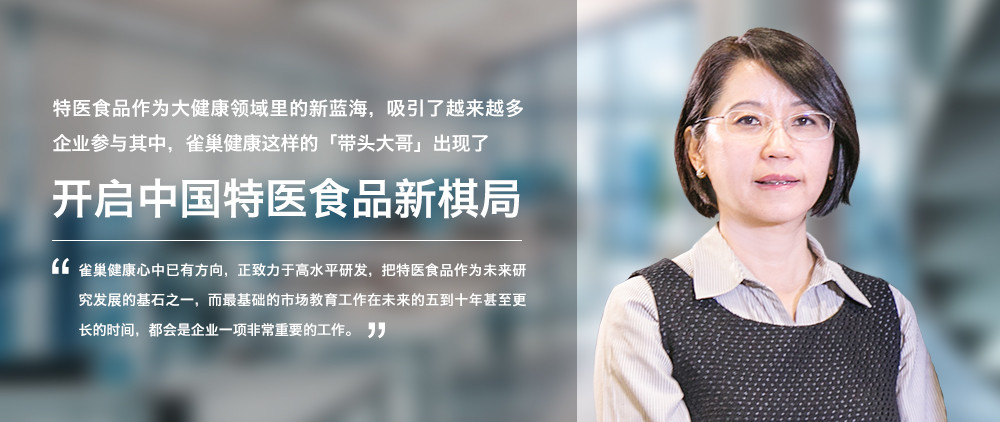
Gu Xinxin stated, “The current situation will gradually improve with the development of foods for special medical purposes (FSMP). We have reason to believe that, through the joint efforts of Nestlé Health Science and numerous other enterprises, the future market will see a wider variety of FSMP products at more affordable prices.”
Nestlé Health Science
Nestlé Health Science is a global leader in nutritional health under the Nestlé Group. Established in Switzerland in 2011, its primary research and development areas include nutrition, metabolism, digestion, protein metabolism, and lipid metabolism.
Nestlé Health Science entered the Chinese market in 2012, committing itself to the fields of elderly nutrition, pediatric nutrition, and nutrition for patients with critical illnesses and cancer, with a comprehensive portfolio of product lines. In China, Nestlé Health Science primarily provides scientifically formulated nutritional solutions for children and adults across various physiological and pathological stages. Its products feature meticulously developed formulas, high-quality raw materials, advanced manufacturing processes, and comprehensive, rich nutritional profiles. In recent years, Nestlé Health Science has actively collaborated with organizations such as the China Health Food Association and the Chinese Society for Parenteral and Enteral Nutrition, working together to promote the healthy development of the nutrition industry.