

Nuodao Medical Files IPO Prospectus: Leveraging Proprietary AI Platform DORA to Power Four Core Product Lines
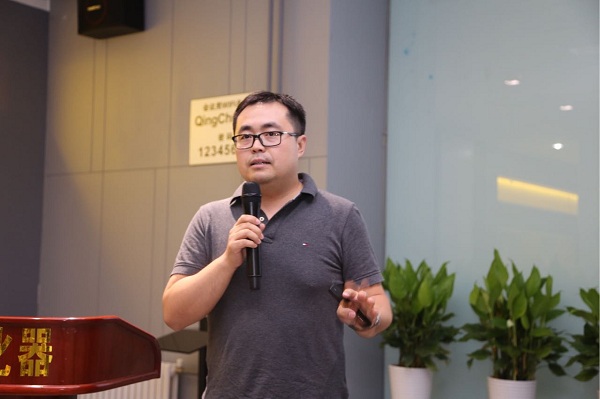
Zhao Jie, CEO of Nuodao Medicine
From Smart Cities to Intelligent Healthcare
During his 10 years at IBM, Zhao Jie, founder of Nuodao Medicine, gained experience across various domains, including R&D, architecture, pre-sales, sales, and management.
In late 2008, IBM proposed the concept of Smart Cities, and Zhao Jie, serving as an architect, was involved from the project’s early stages. During the implementation of Smart City initiatives, Zhao Jie began to engage with the field of smart healthcare.
During the implementation of smart city initiatives, Zhao Jie found that in most cases, only 30% of the expected outcomes were achieved. The bold visions conceived in the early stages eventually dwindled into mere deployments of information technology software, gradually leaving Zhao Jie somewhat disheartened. He began to reflect: What exactly does “smart” mean, whether in the context of smart cities or smart healthcare? Given that the concept of a smart city is overly broad and encompasses too many areas, it would be more prudent to select a field with strong growth potential and implement it solidly, rather than engaging in empty theorizing. After careful comparison, he ultimately chose the healthcare sector.
In March 2016, Zhao Jie resigned from IBM and founded a healthcare informatics company. By September 2016, Zhao Jie and Wang Dongyuan, now Chief Operating Officer of Nuodao Medicine, met the other two core team members of Nuodao Medicine: Zhu Yu, Chief Technology Officer, and Gao Fei, Chief Strategy Officer. Since then, Nuodao Medicine has been established, embarking on the exploration of AI + Healthcare.
Chief Operating Officer Wang Dongyuan, formerly a colleague of Zhao Jie, previously served as Channel Manager in IBM’s Big Data Analytics Division and as Channel Director for Microsoft’s Enterprise Solutions Group, accumulating extensive expertise in marketing. Chief Technology Officer Zhu Yu, a graduate of Tsinghua University with a major in Operations Research, previously specialized in the processing and analysis of industrial big data. He led the three-year development of a fully proprietary computing platform, which was implemented in PetroChina’s refined oil transportation optimization system. Additionally, he spearheaded the Global Markets and Financial Computing Grid Services project for HSBC.
Dr. Gao Fei, Chief Strategy Officer, graduated from Shanghai Second Medical University and completed his postdoctoral fellowship in the Department of Cardiovascular Medicine at The University of Texas MD Anderson Cancer Center. A former professor at Shanghai Jiao Tong University School of Medicine, he possesses extensive expertise in the healthcare industry and a deep understanding of the specific pathways for applying artificial intelligence technologies to healthcare.
Nuodao Medical’s four partners cover technology, healthcare, marketing, and management operations, making it a perfect startup team.
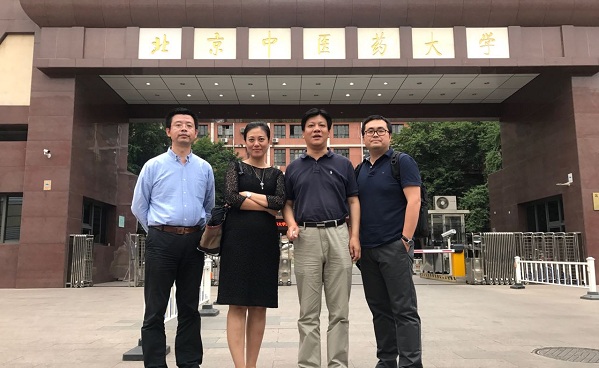
From left to right: Zhu Yu, Wang Dongyuan, Gao Fei, Zhao Jie
DORA: An AI Computing Platform
Nodao Medicine is a technology-driven company. Leveraging his extensive expertise in industrial big data analytics, Chief Technology Officer Zhu Yu integrated medical domain elements and led the team to develop DORA (Dynamic Optimization & Real-time Analytics), an AI computing platform tailored for the healthcare sector. Unlike open-source computing platforms that require the integration of multiple foreign systems such as TensorFlow, Hadoop, Spark, and Kubernetes, the DORA platform offers one-stop AI computing services with the following four advantages:
1. The frameworks of open-source computing platforms such as Hadoop, Spark, TensorFlow, and Kubernetes are continuously evolving, making them difficult for ordinary users to control; a proprietary platform can avoid this issue.
2. The accuracy of algorithms integrated into open-source frameworks is problematic, making it difficult for users to adjust certain parameters.
3. Leveraging deep learning to facilitate seamless end-to-end workflows.
4. It offers robust security and holds significant importance for national data security.
Multiple “Tests” Have Given Rise to a Network of Joint Laboratories for Medical Artificial Intelligence
When first engaging with a hospital, Nuodao Medical typically undergoes an “assessment” centered on data analysis and mining for the collaborating department. Specifically, the collaborating department provides a batch of clinical data, which is then analyzed and mined by Nuodao Medical’s algorithm engineers. The objective is to identify key factors and develop predictive models.
For example, in collaboration with the National Center for Cardiovascular Diseases and the Department of Hypertension at Fuwai Hospital, Chinese Academy of Medical Sciences, a cohort study on “Risk Factors for Hypertension-Induced Stroke” aimed to identify key risk factors. Traditional biostatistical methods encountered difficulties in analyzing comprehensive clinical data from nearly 5,000 participants. This challenge was handed over to Nuodao Medical’s algorithm team. After one week of intensive effort, the team resolved the issue using machine learning algorithms, identified key risk factors, and developed a predictive model. This model calculates the probability of stroke occurrence based on key variables, achieving an accuracy rate exceeding 90%, which holds significant implications for the prevention and treatment of hypertension-induced stroke.
As pilot programs continue across multiple hospitals, Nuodao Medical has established a nascent network of joint laboratories for medical artificial intelligence, including Ruijin Hospital affiliated with Shanghai Jiao Tong University School of Medicine, Xinhua Hospital affiliated with Shanghai Jiao Tong University School of Medicine, Changhai Hospital of Naval Medical University (Second Military Medical University), Beijing Hospital, Peking University First Hospital, Peking University Third Hospital, Xuanwu Hospital of Capital Medical University, Beijing Friendship Hospital, Dongzhimen Hospital of Beijing University of Chinese Medicine, and Hebei Provincial Hospital of Traditional Chinese Medicine.
These initiatives involve multiple National Clinical Research Centers for Diseases and National Key Clinical Specialties, taking the form of hospital-level joint artificial intelligence laboratories or collaborative research projects. They cover various fields, including medical imaging, cardiovascular diseases, digestive system disorders, neurology, clinical pharmacy, and traditional Chinese medicine. The aim is to achieve breakthroughs in original technological innovation, clinical translation and application, and service model upgrading. Serving as physician assistants, these solutions provide end-to-end auxiliary diagnosis and medication recommendations, while leveraging cloud-based platforms to serve a wide range of primary healthcare institutions and patients.
Notably, Nuodao Medical is a builder of the National Health and Medical Big Data Platform.China Electronics Data Services Co., Ltd.strategic partners, will collaborate on the development of big data and artificial intelligence platforms and demonstration applications in national pilot cities for health and medical big data.
Super Doctor: Four Major Product Lines Initially Formed
Having previously worked as an architect, Zhao Jie aims to avoid limiting product design to any single medical condition or clinical workflow. Unlike most medical AI companies that focus on medical imaging or specific clinical specialties, the Nuodao team established its goal from the outset: to create a multidisciplinary “super doctor.” The core elements of medical artificial intelligence include algorithms, computing platforms, and big healthcare data.
High-quality medical data is a prerequisite for artificial intelligence and machine learning. Since high-quality clinical data originates from renowned large-scale Grade A tertiary hospitals, Nuodao Medical has focused on national clinical research centers for diseases, key clinical specialties, and other leading disciplines. After undergoing multiple rounds of rigorous evaluation, it has established a network of joint laboratories for medical artificial intelligence.
Leveraging its proprietary DORA computing platform, Nuodao Medical has established collaborations with numerous prominent Grade A tertiary hospitals across China, including multiple National Clinical Research Centers and National Key Clinical Specialties. These partnerships span a wide range of fields such as medical imaging, cardiovascular diseases, digestive system disorders, neurology, clinical pharmacy, and Traditional Chinese Medicine (TCM). Currently, the network of joint medical AI laboratories has taken shape, giving rise to four core product lines: iSight (medical image analysis), DoctorX (single-disease auxiliary diagnosis), iPharma (clinical pharmacy service platform), and Simiao (intelligent TCM).
iSight products can currently identify medical images such as CT, MRI, digestive endoscopy, and electrocardiograms (ECG), covering conditions including lung cancer, breast cancer, Alzheimer’s disease (AD), pain management disorders, and digestive diseases.
Zhao Jie told VCBeat that although the types of medical images analyzed vary, they all rely on the same underlying image processing algorithms. Among these is an intelligent capsule endoscopy image interpretation system co-developed with Changhai Hospital of Naval Medical University (formerly Second Military Medical University) and the National Clinical Research Center for Digestive Diseases. Through the close collaboration between Nuodao Medical’s algorithm engineers and gastroenterologists at Changhai Hospital, and leveraging high-quality datasets with precise annotations, the product has taken shape. It can process tens of thousands of gastroscopic images within minutes, identifying normal findings as well as five types of lesions, including ulcers and erosions, with accuracy meeting clinical usage standards.
Zhao Jie believes that products should first be validated using public datasets, followed by initial clinical validation with thousands of clinical data points. After iteration, they must undergo further validation with massive volumes of heterogeneous clinical data from diverse sources. Only after passing these stages are they deemed ready for formal deployment in hospitals.
Doctor X is an ambitious initiative that will cover major clinical disease categories within three years, with a particular focus on critical conditions that pose significant threats to the health of the Chinese population, including cardiovascular and cerebrovascular diseases, diabetes, pain management, Alzheimer’s disease, and cancer.
The Hypertension Auxiliary Diagnosis and Medication Guidance System, jointly developed by Nuodao Medicine and Fuwai Hospital of the Chinese Academy of Medical Sciences, establishes an AI-based information platform for tiered diagnosis and treatment and chronic disease management of hypertension. Relying on this platform, AI-powered auxiliary diagnostic capabilities for hypertension will extend across the hypertension medical consortium led by Fuwai Hospital, encompassing primary healthcare institutions, secondary hospitals, and tertiary hospitals. Based on the varying testing and service capacities of hospitals at different levels, physicians can provide final diagnoses or referrals. This system enables functions such as screening and chronic disease management, aiming to manage primary hypertension primarily at primary care facilities while referring secondary and refractory hypertension cases to higher-level hospitals.
It is reported that the auxiliary diagnostic and medication guidance system for hypertension will complete its training phase and go live by the end of the year. Construction of the information platform for the four-tier hierarchical diagnosis and treatment and chronic disease management system is also scheduled to begin by the end of this year, with an expected coverage of 100,000 hypertensive patients by 2018.
In December 2016, the U.S. Congress passed the 21st Century Cures Act, permitting the use of real-world clinical data for research on expanding drug indications. Recently, the U.S. FDA has officially approved the use of real-world data in the regulatory review of medical devices. These developments signal that clinical pharmacy will become another key application scenario for healthcare big data, alongside medical imaging.
iPharma is an innovative, end-to-end clinical pharmacy informatics product powered by artificial intelligence, grounded in real-world data and general pharmaceutical rules. Leveraging real-world clinical medication data from hospital information systems—including medication regimens, clinical data, and endpoint events—iPharma employs data processing and analytical mining, followed by validation by clinical pharmacists and integration with general pharmaceutical rules, to extract patient characteristics associated with efficacy and adverse drug reaction (ADR) data. The platform enables functionalities such as real-time ADR monitoring, intelligent prescription review, personalized medication regimens based on therapeutic drug monitoring and pharmacogenomic data, and comprehensive clinical evaluation of drugs.
From an individual perspective, it is possible to predict therapeutic efficacy, calculate the probability of adverse reactions, and provide personalized medication regimens. From a population perspective, it enables long-term, dynamic, comprehensive, and accurate evaluation of in-hospital medications.
iPharma is currently being deployed and implemented at Xinhua Hospital Affiliated to Shanghai Jiao Tong University School of Medicine, and will be introduced to several other large Grade 3A hospitals, including The First Affiliated Hospital of Zhengzhou University, Nanfang Hospital, and Hebei General Hospital.
“Artificial intelligence technology offers the greatest benefit to Traditional Chinese Medicine.” This was the first sentence Zhao Jie uttered when introducing their “Intelligent TCM—Simiao” product.
Traditional Chinese Medicine (TCM) is an experience-based discipline. To enable the AI transformation of TCM, the first step is to quantify its diagnostic and treatment experiences. In early 2017, Nuodao Medical collaborated with the Department of Spleen and Stomach Diseases at Hebei Provincial Hospital of Traditional Chinese Medicine to deploy China’s first TCM four-diagnostic quantitative data collection system integrated with the hospital’s HIS. The project aims to collect 100,000 cases within three years to develop an intelligent auxiliary diagnosis system for precancerous gastric lesions caused by turbid-toxin syndrome.
In addition, Nuodao Medicine has partnered with the Department of Neurology at Dongzhimen Hospital of Beijing University of Chinese Medicine on the “Integrated Traditional Chinese and Western Medicine for the Prevention and Treatment of Alzheimer’s Disease,” and with the Department of Traditional Chinese Medicine at Beijing Hospital on the “Study on Diagnostic and Therapeutic Experience in Geriatric Kidney Deficiency Syndrome.” Nuodao Medicine has also developed an AI-powered TCM pulse diagnostic device based on big data. Featuring next-generation flexible array sensors, built-in machine learning algorithms, and support from a big data platform, the device has undergone clinical validation with over 50,000 cases in collaboration with five major TCM hospitals: Dongzhimen Hospital of Beijing University of Chinese Medicine, Guang’anmen Hospital of China Academy of Chinese Medical Sciences, Guangdong Provincial Hospital of Traditional Chinese Medicine, Hunan Provincial Hospital of Traditional Chinese Medicine, and the Affiliated Hospital of Chengdu University of Traditional Chinese Medicine. It is reported that Nuodao Medicine will soon establish the “Intelligent TCM Research Center” in partnership with Beijing University of Chinese Medicine.
Zhao Jie told VCBeat that the greatest significance of AI-powered traditional Chinese medicine (TCM) products lies in their easier implementation at primary healthcare institutions compared to Western medicine. This is because Western medical diagnosis relies on various diagnostic equipment, and complex devices are difficult to deploy at the primary care level. In contrast, TCM pulse diagnostic instruments are simple in design, representing a unique inherent advantage of traditional Chinese medicine.
Three Major Advantages Ensure Its Rapid Development
Zhao Jie told VCBeat that Nuodao Medical was able to establish a network of joint laboratories for medical artificial intelligence and achieve the commercial deployment of its AI products within less than a year, thanks to a team capable of tackling tough challenges, as well as three specific key advantages.
First,Funding. Namely, sufficient funding support from angel investors and the profitability of the company’s traditional information technology products;
Second,Technology and Talent. In addition to CTO Zhu Yu, a senior artificial intelligence expert, the algorithm and software implementation team has assembled a group of outstanding engineers. For instance, Algorithm Engineer Wang Zeyuan holds a Master’s degree in Data Science from Stevens Institute of Technology in the United States, where he studied under Professor David Belanger, a renowned American data scientist (Co-Chair of the IEEE Big Data Committee and Chief Scientist at AT&T Bell Labs). Wang achieved notable results in the 2017 DSG Global Data Competition, ranking eighth in the preliminaries and seventeenth in the finals;
Third,Resources and Channels. It has rapidly gained traction in the relatively conservative and closed healthcare sector; AI products have already been commercialized this year, with sales revenue expected to exceed RMB 100 million next year.
Zhao Jie further stated that Nuodao Medicine secured RMB 18 million in angel financing at the beginning of the year and is currently seeking Series A funding, prioritizing strategic partners with industry resources for synergistic collaboration.
Those interested may contact VCBeat, and we can facilitate the connection.