

Hundreds of Healthcare Experts and Investors Gather at Fosun HQ to Explore New Trends in Smart Connected Health
In recent years, with the development of smart healthcare, people have gradually realized that while mobile healthcare has improved communication efficiency and facilitated information exchange among different medical institutions, it is only by leveraging artificial intelligence to truly integrate interconnected data that we can genuinely empower the supply side and enhance the overall level of medical diagnosis.
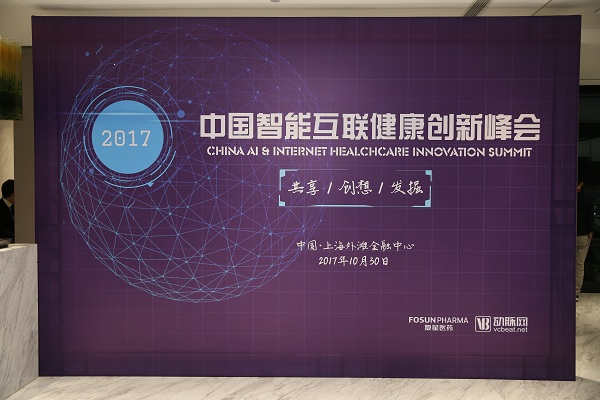
On October 30, the “China Smart Connected Health Innovation Summit,” co-hosted by Fosun Pharma and VCBeat, was successfully held at the Bund Finance Center, the headquarters of Fosun Group. The conference featured three thematic sessions: Medical C2M, Industry + Internet, and Medical Robotics. Distinguished attendees included key executives from Fosun Group, renowned industry experts, leaders of outstanding startups, and seasoned investors. They shared their latest progress and successful experiences regarding medical C2M, Industry + Internet, and the development, challenges, and achievements of medical robotics, while also discussing the potential, trends, and opportunities in China within this interdisciplinary field.
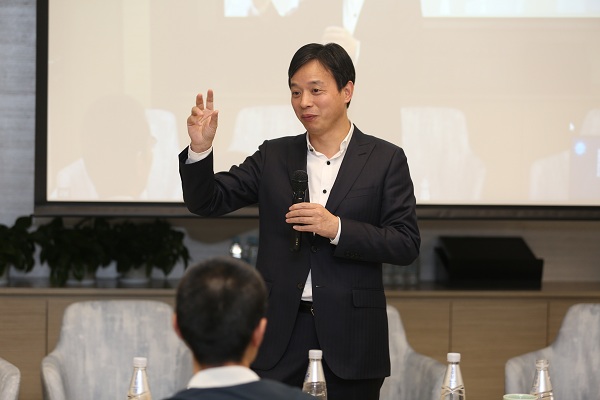
Wang Qunbin, Executive Director and CEO of Fosun Group
Wang Qunbin, Executive Director and CEO of Fosun Group, stated that promoting the industrialization and commercialization of products through technological innovation is key to addressing many current medical challenges.
To this end, Fosun is undertaking initiatives in three areas. First, in the realm of pharmaceutical technology, Fosun collaborates with or invests in high-caliber teams to facilitate their rapid growth.
Second, in terms of artificial intelligence technology, Starry Big Data, serving as the big data center of Fosun Group, has amassed 60 million records of real-world behavioral data across sectors including finance, healthcare, real estate, and entertainment, achieved certain research outcomes, and established collaborations with select enterprises.
Third, Fosun actively promotes collaboration in medical talent rather than focusing on medical equipment, facilitating outstanding physicians to establish hospitals or departments in China and subsequently expand them into chains. Throughout this process, Fosun provides resource support.
China does not lack physicians; what it lacks are outstanding, top-tier specialists. Fosun is developing artificial intelligence to replicate clinical expertise, while recruiting excellent foreign physicians serves as a valuable supplement. These initiatives are all aimed at addressing the core challenges in healthcare.
As the host, Li Datao, founder of VCBeat, shared with the audience VCBeat’s methodology in information architecture and classification, aiming to present readers with the logic behind events and future trends in healthcare through its proprietary approach.
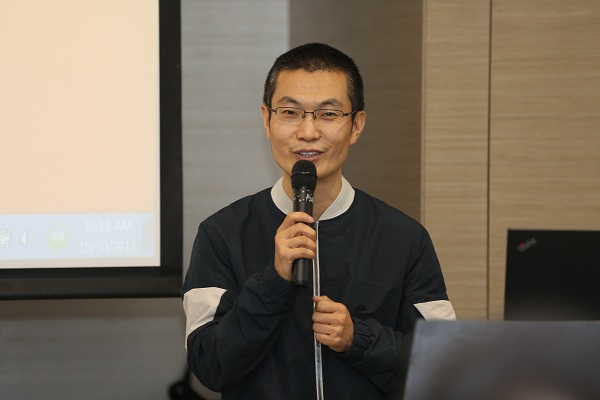
Li Datao, Founder of VCBeat
VCBeat aims to collaborate with industry professionals throughout this process, providing technical support to help shape new social relationships and ethical values, and to facilitate the industry’s attainment of a new equilibrium.
At the medical C2M special session, Hu Hongxia, Senior Vice President and CTO of WeDoctor Group, stated that WeDoctor is currently centered on intelligence to build a closed-loop “medicine-pharmacy-insurance” ecosystem, gradually establishing a Chinese-style “family healthcare” system.
In the field of artificial intelligence, in addition to jointly establishing the Zhejiang University-WeDoctor Research Center with Zhejiang University, WeDoctor has made significant progress in traditional Chinese medicine (TCM). Its TCM syndrome differentiation and treatment system has been deployed in 400 hospitals, generating over 1.5 million intelligent prescriptions, and it has formulated guidelines for the development of TCM medical consortia.
At the “Industry + Internet” special session, Wang Letian, CEO of Sinopharm Online, stated that in the field of pharmaceutical e-commerce, B2B and B2C models differ significantly in their target users, industry characteristics, and consumer habits.
For B2B, its primary role is to enhance efficiency within the supply chain. This includes uncovering deeper layers of added value in existing logistics and information flows, offering better options, improving gross margins, and fostering mutual growth—this defines the core positioning of B2B.
For B2C, the cost structure differs significantly from that of traditional retail. Taking pharmacies as an example, traditional retail typically operates with a gross profit margin of around 40–45% and a net profit margin of 5%. Costs are primarily driven by rent, utilities, labor, and other similar expenses. In contrast, e-commerce offers a low-cost model with a transformed cost structure. It eliminates the need for extensive retail outlets by using large centralized warehouses to serve end consumers directly. Due to this shift in cost structure, such high gross profit margins are no longer necessary.
At present, the B2C sector is encountering challenges due to a lack of industry self-regulation, internal price undercutting among insiders, and brand concentration in red-ocean markets. Price wars have led to widespread losses across the industry, pushing it to another extreme.
At the medical robotics session, discussing the transition of domestically produced robots from the laboratory to the market, Hou Zengguang, a researcher at the Institute of Automation, Chinese Academy of Sciences, and Deputy Director of the State Key Laboratory of Management and Control for Complex Systems, stated that China’s scientific research capabilities are steadily improving. The work conducted by researchers is increasingly aligning with market demands. Whereas previously the focus was merely on developing prototypes, researchers now maintain closer ties with physicians, patients, and investors, demonstrating a strong awareness of commercialization.
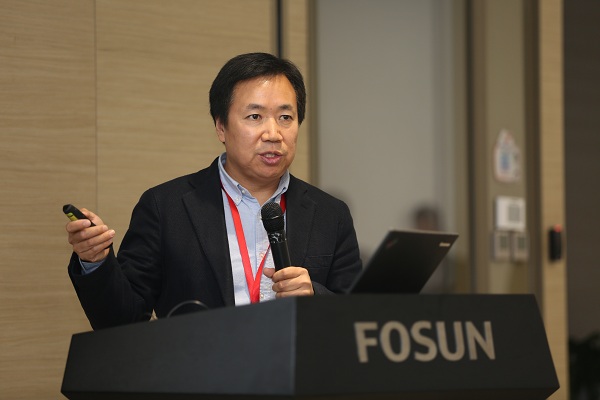
Hou Zengguang, Research Fellow at the Institute of Automation, Chinese Academy of Sciences, and Deputy Director of the State Key Laboratory of Management and Control for Complex Systems
The domestically produced orthopedic robot Tiangong has been implemented and put into use in Xinjiang, Guangdong, Sichuan, and other regions.
Liu Yu, Senior Vice President and Chief Operating Officer of the Fosun Medical Technology Management Committee, stated that the number of surgeries performed using the da Vinci Surgical System in mainland China and Hong Kong reached 27,000 this year. With the increase in surgical volume, installed units, and trained operators, the competitive moat of the da Vinci system lies not only in its technology but also in physicians’ usage habits. Although some recently launched robotic systems from other manufacturers may offer superior performance, many physicians have indicated that their established usage habits are difficult to change. These intangible advantages will further expand the market share of the da Vinci system.
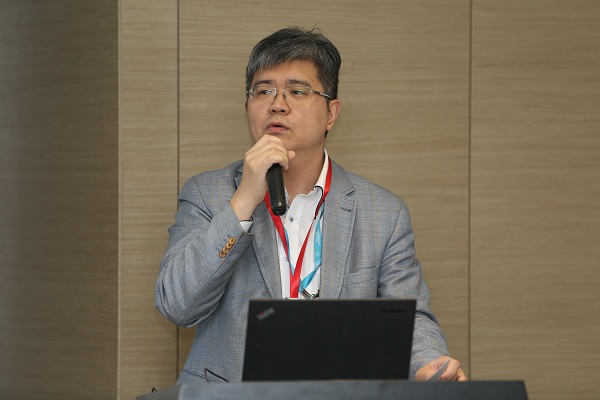
Huang Bangyu, Assistant to the President of Fosun Pharma and General Manager of the Internet Business Division
In his report to the 19th National Congress of the Communist Party of China on behalf of the 18th CPC Central Committee, Xi Jinping proposed that China should “accelerate the development of a manufacturing powerhouse and advanced manufacturing, and promote the deep integration of the internet, big data, artificial intelligence, and the real economy.” Huang Bangyu, Assistant to the President and General Manager of the Internet Business Division at Fosun Pharma, stated, “The purpose of bringing everyone together is to foster idea exchange and identify genuine commercial application scenarios. Fosun will continue to host this summit.”