

JD.com's Internet Hospital Launches Nationwide Doctor Recruitment Drive Amid Liu Qiangdong's $1.2B+ Healthcare Investment Push
Yesterday, the self-media outlet Zhenlipai published an article titled “Shocking! JD.com Internet Hospital Is Recruiting Doctors Nationwide.” This marks another instance of being “shocked” since JD.com announced the establishment of JD Yinchuan Internet Hospital on August 31.
The article states that physicians who join JD Internet Hospital are entitled to: transparent and competitive compensation, advancement to renowned specialist status, access to precisely matched patients, and opportunities for academic research. Additionally, they receive irregular distributions of Jingdou (JD Points), JD shopping coupons, exclusive internal purchase privileges, and free-order vouchers.
Judging from the benefits offered, it must be said that JD.com has accurately grasped the pain points of the current medical practitioner community. As the new healthcare reform policies are gradually implemented, measures such as zero markup on drugs, the two-invoice system, multi-site practice, and allowing physicians to open clinics while employed have been introduced. On one hand, these policies have liberated physicians’ productivity; on the other, they have also induced a sense of insecurity. Although physicians within the public system see a large volume of patients and endure heavy workloads, they enjoy relatively high comprehensive income. However, hospital reforms will inevitably impact their earnings. If physicians choose to leave the public system to start their own practices, they face a host of pressing challenges, including patient acquisition, practice management, and funding sources.
So, as an e-commerce giant, why does JD.com have such a profound understanding of physicians' pain points and the current state of the healthcare industry?
VCBeat (WeChat ID: vcbeat) has discovered through the collection of public information that JD.com has maintained an inseparable bond with the pharmaceutical business since its early development. As early as 2011, JD.com partnered with Jointown Pharmaceutical Group to jointly restructure Haoyaoshi, laying out its strategy in the online pharmaceutical sales sector. However, the two parties parted ways after two years of collaboration.
Over the years, in addition to its booming e-commerce business, JD.com has also made significant strides in the investment sector.In 2016, media reports revealed that Liu Qiangdong of JD.com made a massive investment of RMB 16 billion in 12 companies, including Yonghui Superstores (retail), BitAuto (automotive e-commerce), Ele.me (food delivery market), Tiantian Orchard (fresh food e-commerce), Fenqile (financial services), Daojia Meishihui, Misfit,PICOOC(Medical) etc.. It is evident that the investees are not only valued for their intrinsic worth and growth potential, but also represent JD.com’s strategic ecosystem layout across several vertical sectors.
In fact, JD.com’s investments in the healthcare industry extend far beyond a single company last year.According to incomplete statistics from the VCBeat database, JD.com opened the door to its healthcare investments after launching its self-built JD Health platform in 2013. Over these four years, it invested in a total of 13 companies, including two self-built entities, one cooperative venture, one strategic investment, and nine equity investments. As shown in the figure below:
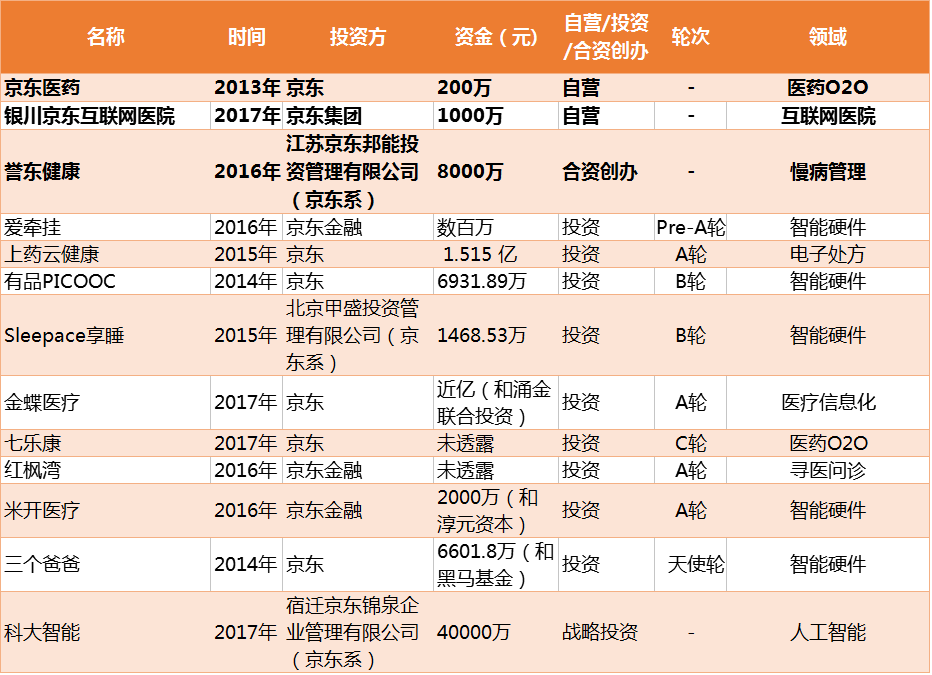
Among the invested companies, Chinasoft Intelligence received the largest single investment. Through a private placement and matching fundraising plan, it secured RMB 400 million from Suqian Jingdong Jinquan Enterprise Management Co., Ltd. (whose actual controlling shareholder is Liu Qiangdong) in 2017. As one of China’s leading providers of industrial intelligence solutions, Chinasoft Intelligence focuses on the research, development, and application of products in the fields of industrial robots, service robots, artificial intelligence, electric power, and new energy.
In 2017, the hottest sector in the healthcare industry was undoubtedly “medical artificial intelligence,” with iFlytek Smart emerging as a paradigm for AI applications by launching health advisor robots and medical imaging analysis robots tailored to the healthcare field. Leveraging technologies such as machine vision, natural language processing, and wearable devices, the health advisor robot collects user health data and benchmarks it against relevant indicators using big data analytics. This enables physicians to identify potential health risks early and deliver preventive care. Furthermore, the robot can optimize treatment plans based on the patient’s current condition, supported by big data analytics.
In 2016, Liu Qiangdong, CEO of JD.com, shared the company’s strategic plan for its second twelve-year phase during a meeting with members of the CEIBS Entrepreneurship Camp. He stated that JD.com would fully embrace technological transformation, vigorously developing artificial intelligence and robotic automation technologies to comprehensively upgrade the competitive advantages built through traditional means over the previous twelve years. He also noted that the rapid advancement of technologies such as artificial intelligence, the Internet of Things (IoT), and AR/VR presents both opportunities and significant challenges for various industries. Technological innovation will continue to substantially reduce industry costs, comprehensively enhance operational efficiency, and even disrupt existing business models.
“In the next twelve years, we will comprehensively infuse all of the Group’s products, businesses, and services with advanced technology, building an intelligent commercial ecosystem centered on cloud computing, artificial intelligence, and robotics,” said Liu Qiangdong.
Regarding the cooperation with JD.com, KG Intelligent stated, “By introducing strategic investors, we can establish business partnerships with strategic investors such as JD Jinquan and their affiliates in the fields of smart logistics and smart new retail, which aligns with the business development needs of both the listed company and Yingnei IoT.”
As can be seen, this largest round of financing fully aligns with Liu Qiangdong’s second twelve-year strategic plan for JD.com, marking the company’s first step in that direction.
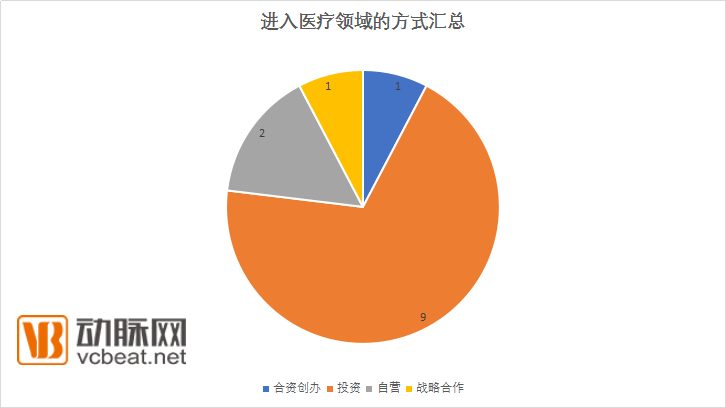
As can be seen from the list, JD.com has entered the healthcare sector through four approaches: joint ventures, investments, self-operated businesses, and strategic partnerships. Among these, investment is the most frequently adopted approach. The companies invested in operate in the following fields: smart hardware, e-prescriptions, healthcare informatization, pharmaceutical O2O (online-to-offline), online medical consultation, and artificial intelligence.
In the past, JD.com’s investment strategy prioritized its core business, favoring companies that could complement or generate greater synergy with its main business segments, such as Tuniu, Bitauto, Tiantian Orchard, and Kingdee Software.
The healthcare industry is characterized by high entry barriers, substantial capital requirements, and long return cycles. Consequently, achieving deep market penetration in the short term is unlikely; even with digital health tools, one cannot fully leverage or disrupt the healthcare sector. Therefore, direct investment may be a more feasible approach for cross-industry expansion.
In terms of investment sectors, JD.com has nine key areas: artificial intelligence, internet hospitals, medical consultation services, smart hardware, electronic prescriptions, chronic disease management, healthcare informatization, and pharmaceutical O2O.
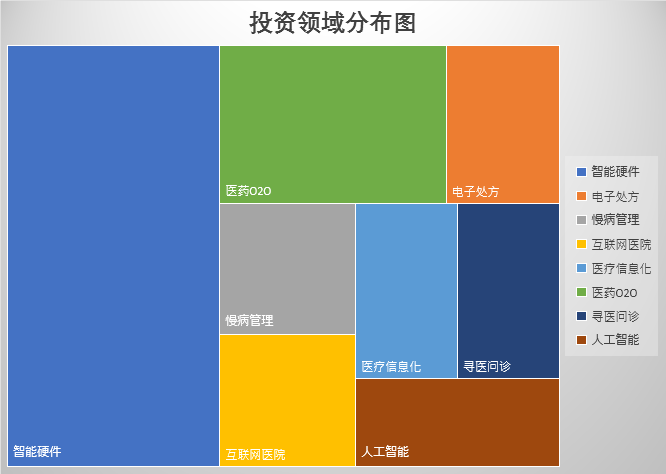
Among these, smart hardware has attracted the most investment. This is closely tied to the nature of JD.com’s e-commerce platform, as it complements the existing product categories on the platform, thereby enriching the product portfolio.
On the other hand, as consumption upgrades continue to shape market trends, consumers have become increasingly “discerning” about online shopping, posing significant challenges for e-commerce platforms. Contemporary consumer values have gradually shifted from a focus on fashion and luxury goods to an emphasis on quality and comfort, with technology-driven smart products emerging as new favorites. The integration of health and technology represents the ideal product paradigm, which will ultimately determine whether major e-commerce platforms can attract more patients. In other words, e-commerce platforms are now engaging in a fierce battle for consumers, centered on innovation in quality and service.
Furthermore, companies invested in by JD Health’s e-commerce platform are being progressively integrated, covering areas such as online medical consultation, chronic disease management, and electronic prescriptions. These sectors are strategically positioned across the pre-consultation, intra-consultation, and post-consultation phases, aiming to streamline the entire healthcare journey.
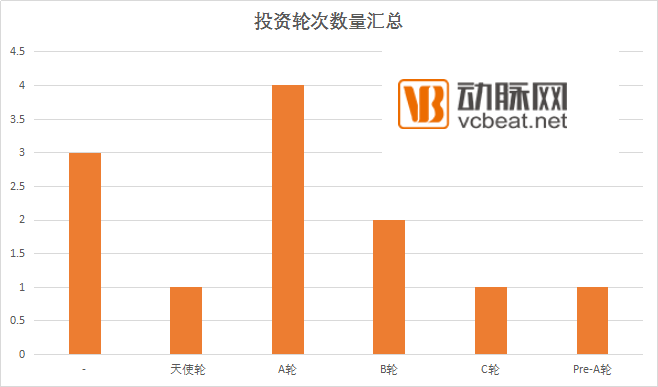
In addition to the three wholly-owned subsidiaries of JD.com, JD.com’s corporate investments span angel rounds, Pre-A rounds, Series A, Series B, and Series C financing stages, with Series A being the most frequent, followed by Series B.
Series A companies include Shanghai Pharma Cloud Health, Kingdee Medical, Hongfengwan, and Mikai Medical. These enterprises boast clear business models, strong teams, and abundant medical resources, any of which would be valuable to JD.com’s pharmaceutical e-commerce platform.
For instance, Shanghai Pharma Cloud Health has established its core business model around electronic prescriptions, leveraging the “Internet+” initiative to assist the government and various medical institutions in achieving the separation of prescribing from dispensing. The company has successively forged partnerships with multiple organizations, enabling multi-point entry into key segments of the pharmaceutical e-commerce value chain, thereby effectively extending its reach and consolidating its competitive advantages at both the diagnostic/treatment and medication-purchasing ends.Co-developed a B2B wholesale platform with JD.com, targeting retail pharmacies and small-to-medium-sized medical institutions.
JD.com stated that, against the backdrop and trend of the national government’s vigorous promotion of healthcare reform and the separation of medical services from pharmaceutical sales, it has entered into a strategic partnership with Shanghai Pharmaceuticals. By integrating Shanghai Pharmaceuticals’ high-quality resources accumulated over the years in the pharmaceutical sector with JD.com’s internet technology and supply chain management advantages, the two parties aim to bridge online and offline resources. Together, they will build a viable pharmaceutical e-commerce model that provides consumers with an improved omnichannel shopping experience and higher-quality, more convenient medical services, thereby achieving a win-win outcome for both commercial value and social benefit.
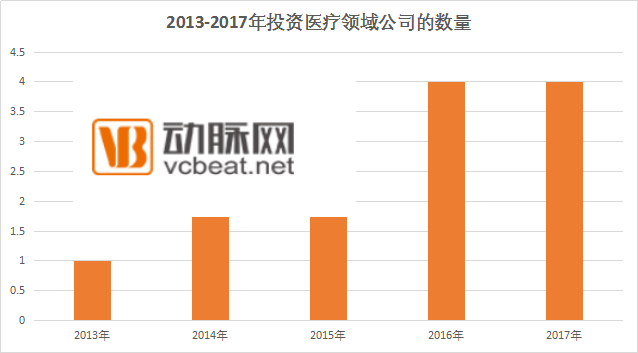
Since 2013, JD.com has increased its investments in healthcare companies year by year, with the number of invested firms in 2017 being four times that of 2013.
Given that the development of the healthcare industry is particularly policy-dependent, sectors experiencing gradual policy deregulation will attract greater opportunities and attention, and vice versa.
Taking pharmaceutical logistics as an example, sales in China’s pharmaceutical sector have long exhibited distinct characteristics. On one hand, pharmaceutical giants primarily engage in drug distribution; on the other hand, major pharmaceutical circulation enterprises generate revenue by charging service fees for logistics, warehousing, and delivery services, thereby achieving diversified income streams.
JD.com’s collaboration with Jointown Pharmaceutical Group in 2011 to launch Haoyaoshi can be understood as an attempt in the distribution sector.However, due to various policy and environmental constraints, pharmaceutical logistics had previously lagged significantly behind the rapidly growing e-commerce logistics sector in terms of distribution services. It was not until the issuance of the “Opinions of the General Office of the State Council on Promoting the Healthy Development of the Pharmaceutical Industry” in 2016 that explicit provisions were made to fully leverage the delivery network advantages of postal and express courier companies, thereby enhancing drug supply assurance capabilities in grassroots and remote areas.
The introduction of this policy has created opportunities for a large number of logistics companies to enter the pharmaceutical industry. As an e-commerce platform that prioritizes speed, JD.com holds a more pronounced advantage in pharmaceutical distribution.
Not only that, but on August 29, 2017, JD Logistics also unveiled its pharmaceutical logistics solution, known as the “JD Logistics Pharmaceutical Cloud Warehouse Strategy.” This initiative aggregates warehouse resources certified under the Good Supply Practice (GSP) for Pharmaceutical Products to serve as JD’s Pharmaceutical Cloud Warehouses. By integrating systematic transportation and delivery capabilities, all parties within the ecosystem leverage their respective strengths. The solution provides services compliant with GSP certification requirements—including product acceptance, warehousing, storage, maintenance, and outbound processing—while establishing a qualified pharmaceutical logistics and distribution network. This network covers every service link, including transport vehicles, drivers, trunk-line distribution, and last-mile delivery, spanning the entire upstream and downstream pharmaceutical industry chain. By strengthening coordination and deepening integration across all segments, the initiative aims to co-create an integrated pharmaceutical logistics ecosystem.
and signed the “JD Pharmaceutical Cloud Warehouse Strategic Agreement” on-site with eight pharmaceutical distribution enterprises, including Sinopharm Group, Hongyuntang, Huawei Pharmaceutical, Fukang Pharmaceutical, Guanglin Pharmaceutical, Suzhou Hengding, Jianqiao Pharmaceutical, and Yikang Pharmaceutical Group. Under the agreement, both parties will engage in comprehensive cooperation in the field of pharmaceutical distribution.
Not coincidentally, just three days after the launch of the “JD Logistics Pharmaceutical Cloud Warehouse Strategy,” the Yinchuan Municipal Government signed multiple agreements with JD.com. One notable project among them is the Internet Hospital.
Under the agreement, both parties will engage in deep cooperation in areas such as health big data, pharmaceutical e-commerce, and smart medical insurance. In this process, JD.com will open up its relevant medical resources and leverage its comprehensive advantages in the Internet of Things (IoT), big data, and cloud computing to integrate data from Yinchuan’s entire medical industry, thereby realizing the value of big data analytics. By capitalizing on its strengths in the pharmaceutical sector, JD.com will translate its capabilities in app applications, payment systems, and data analysis into competitive advantages for the healthcare industry, thus achieving deep integration into the medical system.
At this point, JD.com’s footprint in the healthcare industry spans pharmaceuticals, logistics and distribution, internet hospitals, artificial intelligence, and smart hardware; the companies it previously invested in all constitute individual links within this ecosystem.
Finally, you may have also noticed that across all segments, JD.com lacks only one critical element: physicians. As the saying goes, “He who wins over doctors wins the market.” Today, JD.com has everything in place except for doctors. With the recent announcement of its nationwide physician recruitment campaign, can JD.com truly fulfill its ambition to build a completely new healthcare ecosystem?
Drawing from the practices of numerous enterprises that have signed agreements with internet hospitals in Yinchuan, although their operational footprint is not as extensive as JD.com’s, they share a typical characteristic: all possess physical medical institutions. Examples include WeDoctor, Haodf Online, and DXY.
So, is JD.com considering acquiring hospitals next?