

China Medical Device Industry Association's Medical Artificial Intelligence Committee Officially Launched Amid Surge in AI Healthcare Innovation
From October 29 to November 1, the 78th China International Medical Equipment Fair (Autumn) (hereinafter referred to as “CMEF”) was grandly held at the Kunming Dianchi International Convention and Exhibition Center. In addition to hosting more than 3,000 medical device manufacturers, the fair featured dozens of thematic forums.
Among them, on October 30, jointly hosted by Sinopharm Reeds Exhibition Co., Ltd., the Artificial Intelligence Professional Committee of the China Medical Device Industry Association, the Chinese Society of Biomedical Engineering, and the Teaching Steering Committee for Biomedical Engineering Majors under the Ministry of Education—2017 China Medical Artificial Intelligence Industry Development Forum and Inaugural Meeting of the Medical Artificial Intelligence Professional Committee of the China Association for Medical Device IndustryThe most popular.VCBeat (WeChat ID: vcbeat)Reporters have summarized the key highlights of the conference, as follows:
Amid the overarching theme of “Jointly Building a Healthy China in the New Era,” countless experts, scholars, and industry elites have gathered here to jointly explore both the long-term vision and immediate pathways for the development of China’s medical artificial intelligence industry. The venue was packed to capacity, with every attendee eager to gain valuable insights, draw new inspiration, identify strategic partners, and clarify the future direction of industrial development at this premier forum on medical AI advancement.
Jiang Feng, Executive Vice President of the China Association for Medical Devices Industryhave high hopes for the development of China's medical device industry: “Currently, the development of China’s medical device industry is entering an unprecedented golden era. With a surge of favorable policies being introduced, stakeholders should seize this opportune moment!“President Jiang Feng believes that within China’s biomedical sector, the medical device industry remains the most promising arena for domestic enterprises to thrive. Compared with the high investment, long development cycles, extensive clinical trials, and prolonged patent protection periods characteristic of pharmaceutical R&D, medical device projects are notably shorter, faster, and more efficient. Furthermore, the medical device sector aligns closely with the broader trends in China’s manufacturing development. Coupled with the frequent introduction of regulatory policies favoring industrial innovation, these factors have collectively fostered an ecosystem conducive to industry growth.”
President Jiang Feng further stated,In this golden era, we must seize high-barrier niche segments to drive a qualitative breakthrough in China’s medical device industry.It is no longer viable for nearly 15,000 companies to focus solely on the domestic market, vying for a share that accounts for only 5% of the global total. We must raise the bar for our products and set our sights on the international market.When discussing “import substitution,” we must not narrowly interpret it as merely replacing imports in the domestic market, nor resort to low-level price competition or intellectual property infringement, which are detrimental to the healthy development of the industry and may even tarnish the international image of Made in China. Instead, we should have the determination and courage to pursue “import substitution” in the global marketplace.
In the field of artificial intelligence, our starting point is roughly on par with that of foreign countries. If we can closely integrate AI with medicine and successfully commercialize our products, we will be well-positioned to capture the global market and achieve ““Global Replacement”It will no longer be just an empty slogan.
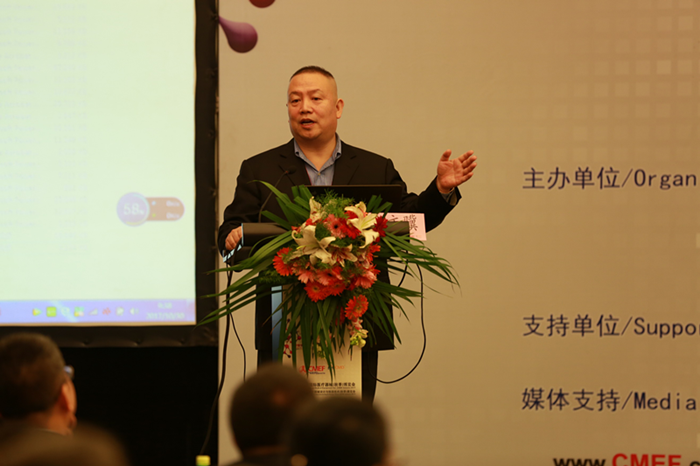
Address by Mr. Jiang Feng, Executive Vice President of the China Medical Industry Association
Subsequently, President Jiang Feng announced the list of the newly elected Council of the Medical Artificial Intelligence Professional Committee under the China Association for Medical Device Industry. ThusThe Medical Artificial Intelligence Professional Committee of the China Association for Medical Device Industry Was Officially Established, playing a positive guiding role and actively serving and supporting the healthy, robust, compliant, and orderly development of China’s medical device and medical artificial intelligence sectors in the future.
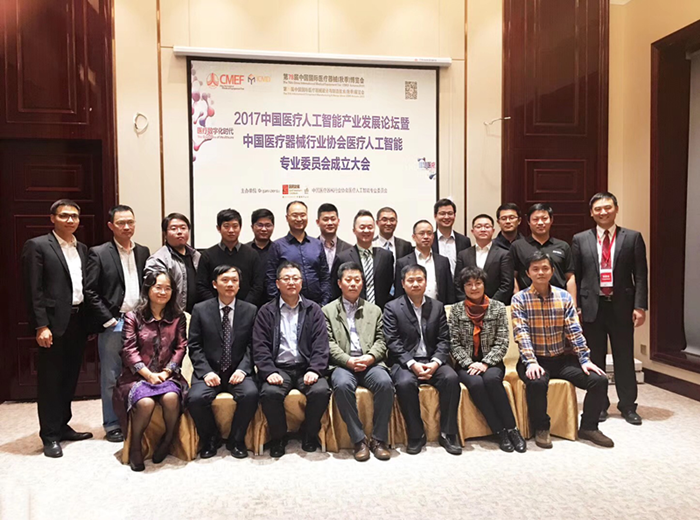
Group Photo of the Founding Members of the Medical Artificial Intelligence Professional Committee, China Association for Medical Device Industry
On the Day, Zhang Zhijun, Vice President of the National Institutes for Food and Drug ControlHe made a special trip to the event site to demonstrate his support for the establishment of the Special Committee and to express his hopes for the development of the medical artificial intelligence industry. Dean Zhang Zhijun stated,With the current booming development of artificial intelligence, its integration with the healthcare industry has become a key area in the development of the medical device sector.China has also simultaneously launched various special policies to support industrial development.
In March this year, artificial intelligence was included in the Government Work Report during the Two Sessions, becoming a hot topic among deputies and committee members. In recent years, to implement national strategies such as "Made in China 2025" and "Internet Plus," efforts have focused on the deep integration of information technology and manufacturing technologies, with innovative applications of artificial intelligence in the manufacturing sector as the primary direction. Relevant ministries and commissions have carried out a series of initiatives in AI-related fields, including big data, intelligent manufacturing, and the robotics industry, actively promoting the industrial development of AI technologies. They have promptly strengthened top-level design and strategic planning, and jointly released the "Special Action Plan for the Innovative Development of the Smart Hardware Industry (2016–2018)."
Catalyzed by a series of key policies introduced in relevant sectors,The development of the artificial intelligence industry is expected to receive more robust support in terms of R&D, capital injection, and preferential policies, potentially ushering in an explosion of value during the 13th Five-Year Plan period.According to Dean Zhang Zhijun,The Center for Medical Device Standards Administration of the National Medical Products Administration is currently developing standards and guidelines for medical robots.
Currently, the coordination mechanisms between upstream and downstream segments of the artificial intelligence industry chain remain underdeveloped. There is an urgent need for robust professional organizations within the industry to facilitate coordination in technological innovation and promote industrial development through resource sharing.Dean Zhang Zhijun stated, “We are confident that the Medical Artificial Intelligence Professional Committee of the China Association for Medical Devices Industry will make concerted efforts in this regard, and we also look forward to joint promotion of the development of medical artificial intelligence technology by stakeholders from government, industry, academia, research, and clinical application.”
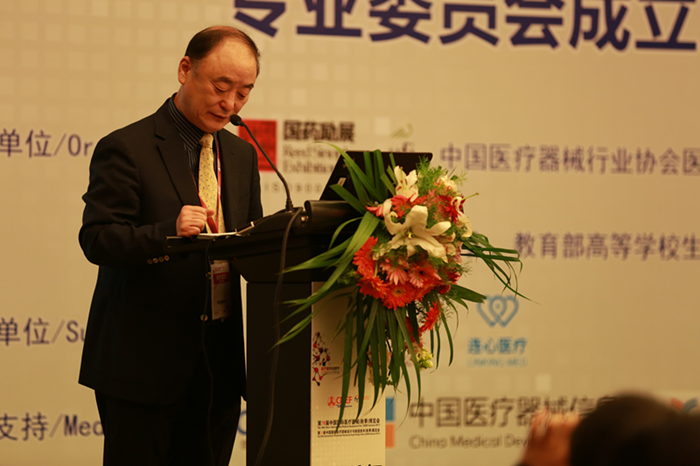
Address by Zhang Zhijun, Vice President of the National Institutes for Food and Drug Control
Amid widespread attention and anticipation from all sectors,Professor Wan Suiren, School of Biological Science and Medical Engineering, Southeast UniversityElucidated the significant importance of the High-Level Forum on Medical Artificial Intelligence to all colleagues present.Digitalization, networking, and intelligence are the three key elements of the new round of industrial revolution, ushering in a new era of artificial intelligence in medicine.Industry professionals should conduct in-depth research on self-learning artificial intelligence, striving to achieve the level of deep intelligent self-learning by 2020.
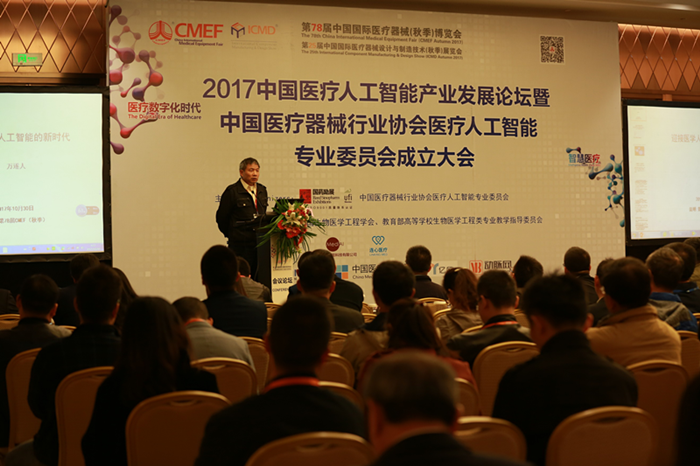
In the keynote address by Professor Wan Suiren, Vice Chairman of the Chinese Society of Biomedical Engineering and Southeast University
Cheng Xiao, Director of Operations for the AliHealth Medical AI Engine PlatformThis article introduces Alibaba Health’s comprehensive layout in medical AI, with particular attention drawn to its “New Rural Strategy,” which aims to provide inclusive medical services by leveraging the advantages of Alibaba’s existing rural service stations.Empowering a New Model of Grassroots Healthcare: AI-Enabled Village Clinics + Rural Taobao
Dr. Yu Zhong, CEO of Jinglun Century Medical Network Technology (Beijing) Co., Ltd.The phrase “the extent of intelligence is determined by the amount of manual labor” encapsulates the current bottlenecks and developmental frustrations encountered in the annotation of pathological data for medical artificial intelligence, and proposesThe Problem-Solving Paradigm for “Medical Issues”: Big Data (Annotated) + Machine Learning + Medical Expertise; The Paradigm for Delivering Medical Services Should Be: Big Data + Models + Rules + Medical Service Management.
The core issue in medical service management within big data medicine is the transition from supervised learning to semi-supervised learning, and ultimately to self-directed learning.The future of intelligent medicine lies in a comprehensive interactive service network integrating humans, robots, devices, and cloud platforms.
Yang Wenji, CEO of Beijing Zhongke Huineng Technology Co., Ltd.It introduced the company’s attempts and tangible progress in exploring commercial pathways for AI-driven healthcare informatics within integrated scenarios. Meanwhile, through video format, it excellentlyDemonstrates speech recognition technology for heavy Henan regional accents in noisy environments, andVoice-controlled cursor positioning and speech-to-text transcription enable rapid and convenient documentation and editing of electronic medical records, significantly reducing the time physicians spend on completing them.。
Dr. Hua Zhang, CEO of Lianxin MedicalUnder the theme of “AI Cloud Services Driven by Big Data in Medical Imaging,” he shared the value and practical experience of artificial intelligence (AI) technology in the field of oncology treatment. He pointed out that AI technology can deliver substantial value in five key areas: improving the efficiency and accuracy of tumor diagnosis, enabling personalized tumor treatment, facilitating tumor image analysis, and enhancing quality control in tumor therapy.
Guo Yulan, CEO of Suowen Boshi Technology (Beijing) Co., Ltd.The development and application of artificial intelligence based on electronic medical records have addressed the barriers to data collection posed by the variability in clinicians’ narrative case documentation, thereby attracting significant attention from numerous vendors and healthcare institutions.
Neusoft MedicalSince the inception of first-generation AI exploration in 2005, Vice President Kang Yan has stated that the team has been committed to in-depth research on the standardization of imaging equipment, with the aim of positioning China’s AI standards at the forefront of the international community.Neusoft Medical’s Cloud Strategy in the Cloud Era: Networked, AI-Assisted, and Specialty-Oriented. Based on this, the concept of intelligent assistance for medical imaging in the cloud era is proposed.
Heads of information departments at several medical institutions also shared their practices and insights regarding artificial intelligence in healthcare. For instance, Lu Jian, Director of the Information Center at Yunnan Cancer Hospital, presented an exploration of big data applications at the hospital; Yang Ruijie, Associate Researcher at the Cancer Center of Peking University Third Hospital, discussed practical experiences with AI and Big Data in radiation oncology.
The conference showcased the latest technological achievements in the industry. Min Dong, Chief Engineer at the Institute of Technology and Standards, China Academy of Information and Communications Technology (CAICT), presented on the development trends of medical big data and artificial intelligence, as well as innovative applications in management strategies. Zhang Chao, CEO of Beijing Kangfuzi Technology Co., Ltd., introduced the principles and practical applications of robotic general practitioners. Dr. Zhang Xin, Associate Researcher at the Institute of Automation, Chinese Academy of Sciences, discussed key technologies for intelligent analysis of brain data. Professor Peng Niancai, Vice Dean of the Suzhou Academy of Nanotechnology at Xi’an Jiaotong University, explained recent advancements in PCR-based molecular diagnostics and intelligent gene analysis systems. Professor Jiang Rui from the Department of Automation at Tsinghua University presented on intelligent information processing for healthcare big data.
Furthermore, Yang Zhiming, CEO of DeepBrain AI Robotics Technology (Beijing) Co., Ltd., believes that technology can address critical healthcare needs and bridge the gap in AI-driven medicine. Liu Jingjia, CEO of Shanghai Wuhe Medical Technology Co., Ltd., took a different approach by raising a frequently overlooked question: How should the outcomes of medical AI be measured against clinical standards? Fleming Lure, CTO of Shenzhen Zhiying Technology Co., Ltd., presented applications of intelligent medical imaging in disease prevention, diagnosis, and management. Henning, CTO of Basler AG, discussed the integration of imaging technology with smart healthcare. Pan Yiqiong, General Manager of Greater China at Carestream Health, introduced the current status and future prospects of the global medical imaging industry.
But it is not all rosy,Jiang Tianjiao, Director of the Industrial Finance Department at Founder Securities, offered a sober and prudent perspective on medical AI from the standpoint of secondary market investment, expressing the hope that medical AI can address practical challenges related to product commercialization, business model implementation, and profit model viability.
Last updated byJiang Haihong, Director of the Special Committee on Medical Device Regulation at Shanghai University of Medicine & Health Sciences, provided comprehensive guidance on the CFDA certification of AI-powered innovative medical devices.The relevant laws, regulations, and key considerations for each stage—from registration testing to clinical evaluation, and finally to review and approval—were introduced in detail. Meanwhile, from the perspective of regulatory risk, practical experience and recommendations were provided regarding key considerations across pre-market, post-market, and full lifecycle management stages.
The venue remained packed until the very end of the conference, with many attendees reluctant to leave, continuing to engage in discussions and exchanges with the speakers.
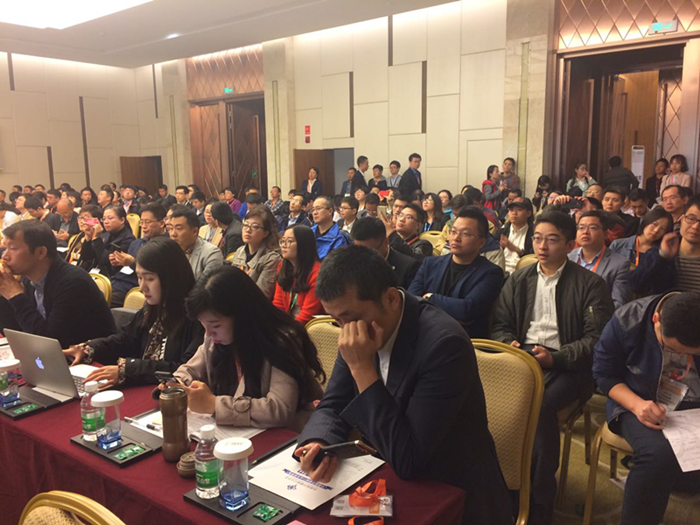
The Forum on the Development of China's Medical AI Industry Was Packed to Capacity
The 2017 China Medical AI Industry Development Forum and the Inaugural Meeting of the Medical Artificial Intelligence Professional Committee of the China Association for Medical Device Industry (CAMDI) have concluded successfully. Beyond the sustained enthusiasm at the venue, which remains vivid in our memories, it is worth noting that the more than 20 keynote speakers boasted impressive credentials and remarkable achievements in their respective fields. Fully committed to this blue-ocean market of medical artificial intelligence, and guided by the principle that the ultimate goal of technological advancement is to benefit human health and well-being, they presented a compelling vision for the future development of healthcare.