

Innovation in Pharmaceuticals: China's 2017 Milestones with ICH Accession and Landmark Policy Drive Globalization
10Before the Chinese New Year, after extensive discussions and deliberations, the newThe Measures for the Administration of Drug Registration officially came into effect, a policy long regarded as the beginning of China’s efforts to encourage pharmaceutical innovation.
A decade on, pharmaceutical innovation is gradually becoming a major trend, with regulators, industry practitioners, and investors growing increasingly confident and determined.
From Imitation to Manufacturing: Internationalization and Innovation Have Become the Prevailing Trend.
In 2017, China officially joined the ICH; it was also the year that the “Opinions on Deepening the Reform of the Review and Approval System to Encourage Innovation in Drugs and Medical Devices” was released. These were arguably the two most influential events in the field of pharmaceutical innovation this year, signaling that China’s rapidly advancing pharmaceutical innovation industry is about to embark on a journey of internationalization.
Internationalization of Investment Trends
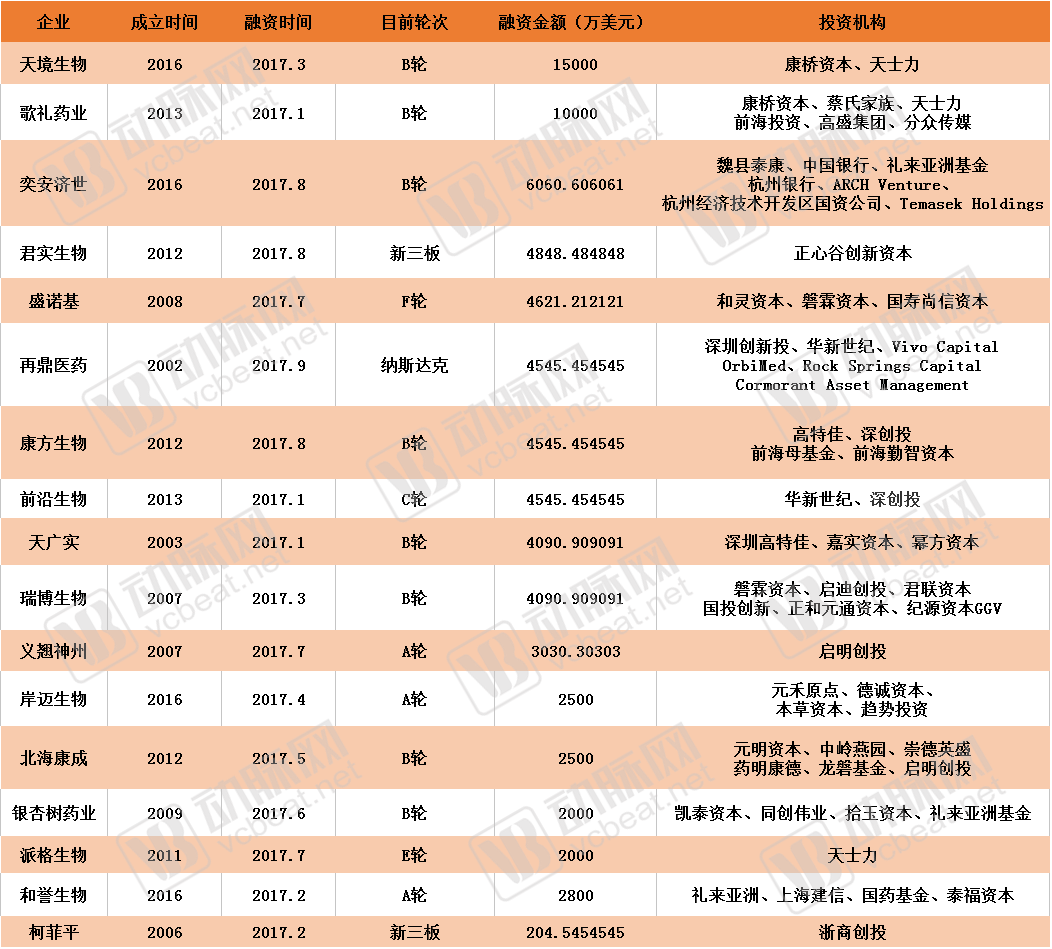
Note: Data is current as of September 2017, with the CNY-USD exchange rate calculated at 6.6.
"Funding Amounts": "Tens of millions" and "hundreds of millions" are calculated as "10 million" and "100 million," respectively.
In 2017, there were a total of 17 investment and financing events in the pharmaceutical industry, with the total amount raised exceeding US$750 million.
A comparison of financing over the past three years shows that the total funding amount in 2016 increased by more than fourfold compared to 2015. Cinda Pharmaceutical alone raised $260 million that year, setting a new record for financing in China’s pharmaceutical sector.
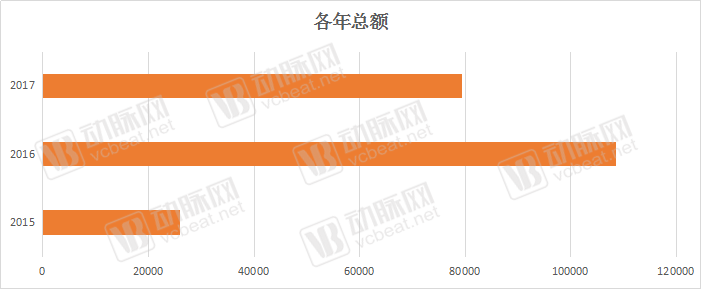
Investment and financing data for 2017 are currently available only through September. Nevertheless, the fact that such substantial funding rounds were still secured—despite leading companies like Zai Lab (now listed on NASDAQ), WuXi AppTec, Ascentage Pharma, and CStone Pharmaceuticals having already completed large-scale financings in the previous year—demonstrates that capital market enthusiasm for investing in pharmaceutical innovation has not waned this year.
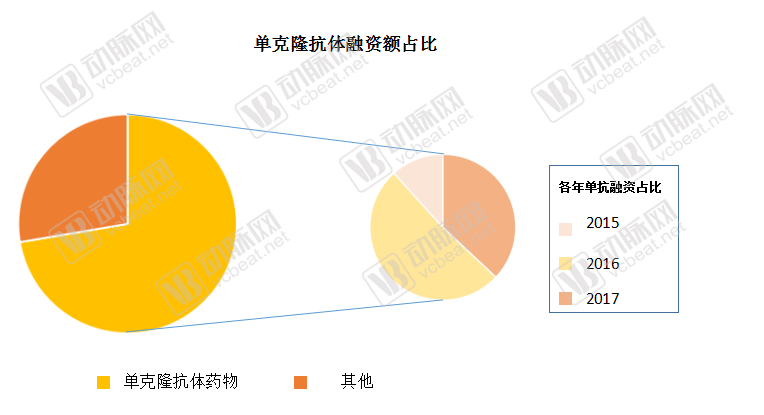
Over the past two years, monoclonal antibody drugs have been the absolute mainstream in investment.
Among the 45 financing events from 2015 to 2017, 27 were related to antibodies. In 2017, the total financing amount for antibody-related deals accounted for 75.58% of the overall total.
He Xun, Founding President of the Shenzhen Life Sciences and Biotechnology Association, stated at a conference that while fundraising for most other pharmaceuticals in the United States is currently facing significant challenges, antibody-based therapeutics remain a steadfast strategic direction. China’s pharmaceutical innovation is still in a phase of rapid development; although it may not mirror the U.S. landscape exactly, it is foreseeable that monoclonal antibody drugs are becoming leaders in the pharmaceutical industry in both China and the United States.
Pressuring Pharmaceutical Giants: The Internationalization of Leading Enterprises' Strength
On September 7, 2017, Eli Lilly and Company officially announced the closure of its China R&D Center located in Zhangjiang, Shanghai. That evening, Lilly’s global website unveiled a series of global operational optimization measures, including the layoff of 3,500 employees worldwide. Following the implementation of these business optimizations, Eli Lilly and Company projected annual savings of approximately $500 million starting from the following year.
Eli Lilly is not the first multinational pharmaceutical company to choose to cut costs in China. Just last month, before they announced this decision, GSK also announced that it would close its neuroscience R&D center located in Zhangjiang, Shanghai. Moreover, AstraZeneca has sold its early-stage research team in China to Chinese venture capital firms.AbbVie had already shut down its operations in China as early as 2015,Kidney Disease R&D Center.
Once rushing into the Chinese market in a frenzy, multinational pharmaceutical companies are now retreating on a large scale and by common consent. Behind this trend lies both their calculus of investment versus return, and the pressure exerted by the rapid development of China’s pharmaceutical industry.
Despite leading achievements in certain fields, the R&D centers of multinational pharmaceutical companies in China have always held a relatively low status within their global headquarters due to the overall subdued R&D environment. The return on R&D investment has been disproportionate to the input; therefore, it is reasonable for multinational pharmaceutical companies to choose to close their R&D centers in China over the long term.
On the other hand, with the encouragement of policies and capital towards the pharmaceutical innovation industry in recent years, Chinese local pharmaceutical innovation companies have begun to rise, giving birth to internationally competitive enterprises such as BeiGene, Innovent, and Hengrui. Encouraged by this innovative environment, many key leaders from the China R&D centers of multinational pharmaceutical companies have also started joining the entrepreneurial wave.
Chen Li, former Chief Scientific Officer at Roche, founded Hua Medicine. The company’s globally first-in-class novel diabetes drug, Dorzagliatin (HMS5552), has entered Phase III clinical trials.
Tan Lingshi, former Chairman and General Manager of Pfizer’s China R&D Center, founded Dimei Biopharma, which is dedicated to supporting new drug development in China. The company has recently completed its first round of financing, led by Qiming Venture Partners.
Lü Xiangyang, former head of Novartis China’s biological research division, founded Laekna Therapeutics. The company also acquired global rights to CFG920, a CYP17 inhibitor licensed from Novartis for the treatment of prostate cancer.
These professionals possess world-class technical expertise and a global perspective, and are well-versed in the rules of the international market. Their companies are gradually becoming the backbone of China’s pharmaceutical innovation industry. Meanwhile, these rapidly growing enterprises have not been immune to poaching talent from industry giants; for instance, Jiang Ningjun, formerly President of R&D at Sanofi, joined CStone Pharmaceuticals in July 2016.
On one hand, the return on investment fails to justify their own expenditures; on the other, domestic Chinese enterprises have risen to prominence, subjecting these giants to market pressures and brain drain. Caught in this pincer movement, the R&D centers of these industry titans are now forced to begin their retreat.
The closure and downsizing of R&D centers in China will release a large cohort of seasoned professionals with specialized training and strong professional backgrounds into the job market. Whether they choose to launch startups or join existing companies, they will enrich and strengthen China’s rapidly growing talent pipeline for pharmaceutical innovation. Both corporations and investors welcome this development.
Layouts of Tech Giants and Overseas Venture Capital: Internationalization of the Capital Market
But have these multinational pharmaceutical companies truly abandoned the Chinese market altogether? Judging by the moves of these industry giants, a strategic realignment appears more likely.
The internationalization of the market has brought about global competition, while also attracting worldwide attention. Some pharmaceutical companies are reducing their workforce in China, yet they continue to expand their presence in the Chinese market through investments and partnerships.
Taking Eli Lilly as an example, the company established the Lilly Asia Ventures in 2008, focusing on equity investments in the biopharmaceuticals, biotechnology, medical devices, healthcare services, and animal health sectors in Asia, particularly in China. To date, Lilly Asia Ventures has invested nearly $1 billion in China, with seven portfolio companies based in Shanghai and others located across various regions, including Innovent Biologics, 3SBio, and Betta Pharmaceuticals.
Looking at Kite Pharma, the company partnered directly with Shanghai Fosun Pharmaceutical to establish Henlius, focusing on antibody research and development in China. Similar strategies were adopted by Pfizer, Leading BioSciences, and the Chinese Academy of Sciences, which jointly established Chengdu Kehui Leading; WuXi AppTec and JUNO Therapeutics also formed a joint venture, WuXi Juno.
Not only are industry giants being drawn in, but with the enhancement of innovation capabilities and the business environment, China’s pharmaceutical innovation sector has also attracted a cohort of overseas investors, such as OrbiMed, Rock Springs Capital, and Cormorant Asset Management.
For pharmaceutical companies, beyond investment strategies, the more significant change lies in a shift in mindset: from handling everything in-house to collaborative R&D. Examples include Eli Lilly and Innovent Biologics’ joint development of a biosimilar to rituximab (MabThera), and PegBio’s collaboration with Pfizer to develop next-generation glucokinase activators (GKAs) for diabetes tailored to Chinese patients.
Joining ICH, Market Internationalization
On June 1, 2017, the China Food and Drug Administration (CFDA) officially became a member of the International Council for Harmonisation of Technical Requirements for Pharmaceuticals for Human Use (ICH). Undoubtedly, this was the most milestone event in the pharmaceutical industry this year, signifying that China’s drug regulatory system has truly integrated into the internationally recognized regulatory framework.
ICH, the International Council for Harmonisation of Technical Requirements for Pharmaceuticals for Human Use, was initiated in 1990 by the drug regulatory authorities and pharmaceutical industries of the United States, Japan, and the European Union. The purpose and mandate of this organization are to harmonize the standardization of global drug regulatory systems, akin to the role played by the WTO in international trade among nations.
For a long time, China was excluded from ICH membership because its drug policies and regulations largely adhered to the standards of the WHO (World Health Organization), which is considered the global minimum standard.
The significance of joining the ICH is no less than that of joining the WTO.
Joining the ICH signifies that China’s drug regulatory standards have gained international acceptance; however, it also means that China’s pharmaceutical industry will immediately face the challenges of aligning with global norms. A large volume of imported drugs will enter the Chinese market in a short period, posing an immediate shock to domestic companies—particularly startups—that are still in a “catch-up” or even “marginal participant” phase.
Although the influx of imported drugs into the market in the short term will cause a shock to the market, it also means an improvement in the competitive landscape—Chinese pharmaceutical innovation enterprises will compete with international-level enterprises. In addition, the internationalization of regulatory systems may bring discomfort in the short term, but for capable enterprises, it will be beneficial for their subsequent internationalization strategies.
The pharmaceutical market already hosts numerous innovative startups founded by returnees, who are well-versed in international negotiation norms and regulatory frameworks, while consistently pursuing global standards in technology and product development. For these companies, joining the ICH entails even less negative impact.
Overall, for the Chinese pharmaceutical market, joining the ICH brings more benefits than drawbacks. It not only aligns China’s pharmaceutical industry with international standards but also encourages and compels Chinese pharmaceutical companies to pursue innovation and global expansion.
Bold Reforms: The Internationalization of Regulation
From a policy and regulatory perspective, joining the ICH means that China’s future regulatory approaches and regulations must comply with international standards. This signifies that the direction of its regulatory system will inevitably align with international practices.
In fact, China established its ICH research group a decade ago, comprising members from industry, academia, government, and technical institutions.
Since 2015, China’s pharmaceutical industry has reached a critical juncture of development and transformation.
On March 11, 2016, the General Office of the State Council issued the “Guiding Opinions on Promoting the Healthy Development of the Pharmaceutical Industry,” prompting regulatory authorities to undertake bold reforms and begin aligning with international regulatory standards.
On October 25, 2016, the Central Committee of the Communist Party of China and the State Council issued the Outline of the Healthy China 2030 Plan. This document serves as an action guide for advancing the construction of a Healthy China over the next 15 years, calling for innovative development in the pharmaceutical industry and enhancing its international competitiveness.
This year, the CFDA’s pharmaceutical reforms have become even more frequent.
On March 17, 2017, the China Food and Drug Administration (CFDA) released the “Decision on Adjusting Certain Matters Concerning the Registration and Administration of Imported Drugs (Draft for Comment).”
Although still in the form of a draft for public comment, the release of this document has sent shockwaves through the industry. Clearly, this is a signal from the China Food and Drug Administration (CFDA) that, on one hand, encourages innovation and original drug development among domestic pharmaceutical companies, and on the other hand, aims to accelerate the introduction of new international drugs into China, thereby establishing a globalized pharmaceutical industrial ecosystem and competitive landscape.
Subsequently, on May 11, the China Food and Drug Administration (CFDA) issued four policy measures aimed at encouraging innovation in pharmaceuticals and medical devices. These policies focus on new drug research and development, clinical trials, ownership rights, and market approval processes, guiding the establishment of a comprehensive R&D-to-market pathway and promoting novel drug creation and international development.
With the release of the "Opinions on Deepening the Reform of the Review and Approval System to Encourage Innovation in Drugs and Medical Devices" on October 8, 2017, this policy, hailed as the most significant initiative for the pharmaceutical industry since the founding of the People's Republic of China, was officially implemented.
Furthermore, the “Implementation Opinions on Improving and Perfecting the Supply Guarantee Mechanism for Shortage Drugs,” released on June 28, is expected to transform the prevailing notion in China that “safe but ineffective drugs are good drugs.” Zhu Xun, an expert on the National Center for Drug Evaluation’s expert committee, explained at a conference that if management follows this approach, China’s pharmaceutical sales industry may undergo earth-shaking changes.
Many currently top-ranked drugs are likely to fall in the rankings, while future best-selling pharmaceuticals will inevitably be those that address fundamental health issues or meet the most critical and pressing medical needs.
In addition to encouraging innovative enterprises, policy and regulatory measures are also compelling and facilitating the transformation of traditional generic drug manufacturers toward innovation and innovative generics.
Generic drugs currently hold the largest market share. In 2017, detailed policies on generic drugs were introduced, including the Guiding Principles for Human Bioequivalence Studies, the Technical Guidelines for the Evaluation of Generic Drugs with Changed Specifications (Oral Solid Dosage Forms), and the Guiding Principles for On-site Inspections. These policies have bolstered companies’ confidence in advancing consistency evaluations, thereby enhancing the certainty and operability of policy implementation.
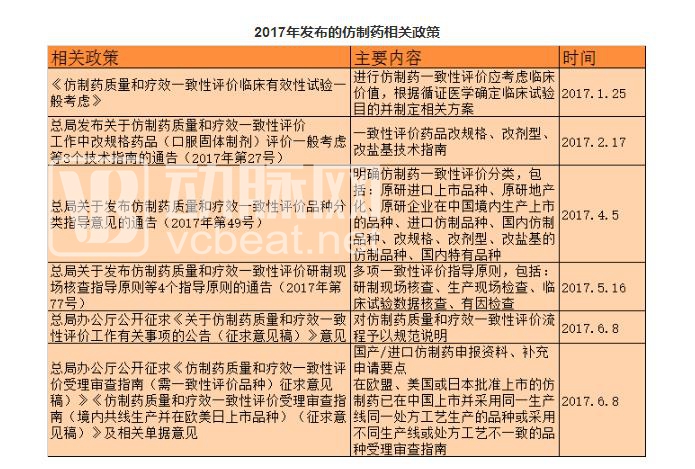
Following China’s accession to the ICH, imported drugs will enter the domestic market, disrupting the previously comfortable environment for generic drug manufacturers. Additionally, the introduction of the Generic Drug Consistency Evaluation will impose stricter regulations on generic drugs. In this context, a subset of high-quality generic drugs will stand out in the market, while the majority of those that are safe but ineffective will be eliminated.
The CFDA announced that it would complete the approval of consistency evaluation for the quality and efficacy of 289 generic drug varieties by the end of 2018, a move that will inevitably bring about a reshuffling of the pharmaceutical industry.
For traditional generic drug manufacturers, increasing innovation efforts—whether through original innovation or generic-based innovation—is essential for survival.
On one hand, regulatory authorities are encouraging innovation in novel drugs; on the other, they are facilitating the rapid entry of imported drugs into the Chinese market. As a result, the domestic market has become a stage synchronized with international developments, with policies steering it toward globalization.
The era in which China relied on traditional policy protections and exclusive product varieties has passed. After all, world-class industries cannot be built through protectionism alone.
Not only is China changing, but the United States is also continuously following suit.
In December 2016, the United States released the final version of the 21st Century Cures Act, which legally guarantees $4.8 billion in funding over the next decade to implement a series of research innovations, including brain research, cancer research, and precision medicine initiatives tailored to individual genetic profiles.
It took two years from the initial proposal and revisions to the eventual bipartisan consensus in Congress, culminating in the final introduction of this bill, which will drive innovation and R&D in biomedicine in the United States over the next decade or beyond.
Meanwhile, the U.S. FDA approved a total of 433 innovative drugs from 2010 to 2016. The United States boasts the world’s most comprehensive regulatory system, featuring expedited review pathways and a series of accelerated approval policies, with drug innovation having reached a peak phase. Following the appointment of Robert Califf as the new Commissioner, the number of new drugs approved by the FDA in the first half of this year has already surpassed the total for the entire year of 2016.
This is, in fact, a signal that China is making substantial investments in innovation, while the United States is vigorously promoting the output of innovation.。
Future Trends
Over the next five years and beyond, China’s pharmaceutical industry will advance along the dual tracks of internationalization and innovative development. In the course of internationalization, Chinese pharmaceutical companies, capital, and even regulatory frameworks will gradually align with global standards.
So, how should this internationalization movement proceed?
1. “Going Global,” “Bringing In”
“Healthy China 2030” previously stated that pharmaceutical innovation in China should“Going Global,” “Bringing In”。
“Going Global”: Chinese capital and pharmaceutical innovation enterprises should align with international markets, whether through investment or collaboration.
In the coming years, an increasing number of Chinese domestic enterprises will collaborate with foreign industry giants. On one hand, this allows these companies to amplify their voice in the international market; on the other hand, they will become familiar with the rules of the game in foreign markets through such partnerships, thereby gaining leverage to enhance the global influence of Chinese enterprises.
“The Policy of Appropriation”: “Appropriating” advanced technologies and expertise, and even talent, from abroad.
In terms of technical expertise, the innovative technologies and regulatory frameworks in the United States need no elaboration. However, it is not only the U.S. that deserves attention; countries such as Japan and India also offer valuable lessons and insights worth learning from.
As an Asian country sharing genetic similarities with China, Japan is the nation with the highest life expectancy globally. Given that China is also undergoing population aging, there are undoubtedly valuable insights to be drawn from Japan’s models of health management and pharmaceutical care.
It is unlikely that China will adopt the U.S. model in the short term; however, Japan offers a relevant point of reference. As the country with the highest life expectancy globally, Japan shares an Asian demographic profile with China, exhibiting similarities in disease patterns and genetic backgrounds. Furthermore, Japan’s innovation model aligns well with China’s current market dynamics.
Of the 433 FDA-approved drugs, only a small number have entered Japan directly through imports. However, Japan has developed far more modified versions of these drugs than the United States and the European Union. Taking overall payment capacity into account, a model that combines “following” and “parallel” strategies—featuring both drug modifications and innovations—is more realistic. As for leading the field, there is still considerable ground to cover.
In terms of resources, in addition to introducing cutting-edge technologies and drug molecules, it is also essential to welcome overseas investment institutions. Innovation hinges on talent. The approach of “borrowing from others” should encompass not only technologies, resources, and business models, but also talent—including Chinese professionals working abroad as well as international talents who are optimistic about innovation in China.
2. The Remarkable Transformation of Generic Drug Manufacturers
Additionally, the innovative transformation of generic drug manufacturers may also become a trend. Here is a highly successful example.
Initially, Hengrui was also a generic drug manufacturer. In 2005, Hengrui began its journey toward independent internationalization. In 2010, Hengrui’s first self-developed new drug passed the review by the U.S. FDA.
Hengrui’s first step toward internationalization was primarily based on generic drugs.
Currently, the majority of the domestic market in China remains dominated by generic drugs, with innovative enterprises primarily focusing on “me-too” drugs. Overall, the industry is still in a follower stage; only by aligning with international standards can the development of the entire biopharmaceutical industry be promoted.
In today’s Chinese market, favorable policies will attract more overseas talent to enter the market. Capital, policy, and talent have together created an unprecedentedly vibrant innovation environment. Although still far from leadingEven running in parallel still has a long way to go, but due to the favorable policy and capital environment, China's pharmaceutical innovation industryAlthough the Task Is Arduous and the Road Long, It Is Full of Hope。