Artery Network and Lagou Jointly Analyze a Decade of Internet Healthcare Employment Trends: Insights from 2,360 Companies and 45,326 Job Listings

Yidu Cloud
Medical Big Data Platform
Healing the sick and saving lives was originally associated with “shamanism,” imbued with the primal obscurity of early civilization, and regarded as a sacred practice. It was not until the 19th century that the modern medical system was established, propelling medicine onto a fast track of development. The healthcare industry has never declined, as it is closely intertwined with advancements in technology and cognitive understanding. In the 21st century, the interplay of policy, technology, and capital has sparked a sweeping transformation in healthcare. VCBeat is honored to document this transformative journey through its writing. During the same period, Lagou.com has been driving this revolution forward in a different way—through recruitment. Here, VCBeat Eggshell Research Institute joins hands with Lagou.com to review the landscapes we have experienced and envisioned on the path of internet healthcare, based on recruitment data from internet healthcare companies.
Internet healthcare has weathered over a decade of trials and tribulations. Since commercial internet services first entered the public eye, internet healthcare has evolved from its early days of simple information queries and appointment registration into today’s integrated ecosystem that delves deep into clinical care, encompassing online consultations and auxiliary diagnosis. Throughout its journey, internet healthcare has experienced initial public skepticism during its nascent stage, witnessed frenzied expansion during its growth phase from 2013 to 2015, and then seen a divergence in corporate development amid the capital winter of 2016. Internet healthcare has now completed a full cycle. Looking back, we find that there is still no historical annotation dedicated to chronicling its story.
At this juncture, Lagou.com provided us with a dataset comprising 74,728 job postings from 4,917 healthcare companies, including information on company size, recruitment timelines, job positions, and compensation. We excluded companies engaged in traditional pharmaceuticals and the manufacturing and distribution of medical devices, leaving 2,360 companies within the final scope of our analysis. These companies were categorized into 41 major sectors and further divided into 586 subcategories based on their core business activities, with each company undergoing verification and analysis. Drawing on VCBeat’s insights into internet healthcare, we will review the inception, growth, and differentiation of the internet healthcare sector from the perspectives of industrial evolution and talent shifts.
Data Source:Lagou.com provided VCBeat with recruitment data from 4,917 healthcare companies, totaling 74,728 job postings, which include information such as company size, posting date, job titles, and compensation.
Sample Subject: All recruiting companies on the Lagou platform tagged with “Medical and Healthcare” (excluding traditional pharmaceutical, medical device, and health supplement manufacturers).
Statistical Period: July 2013–January 2017
Criteria for Determining Corporate Death: A company is deemed defunct if it meets all three criteria.
A. Official website is inaccessible
B. Official WeChat and Weibo accounts have not been updated for one year
C. Unable to establish contact by phone
Table of Contents
I. Industry Evolution: Advancing from Pre- and Post-Hospital Care to the Diagnosis and Treatment Phase
1.1 Emergence: Missing the First Wave of the Internet, Growing in the Cracks of Medical Information Asymmetry
1.2 Growth: Policy Relaxation, Capital Support, and Explosive Expansion
1.3 Differentiation: Growing Amidst Madness, Differentiating Amidst Madness
1.4 The Growth Path of Industry Giants: Each Success Story Has Its Own Unique Drivers
II. Talent Evolution—From a Preference for Technical Specialists to a Demand for Multidisciplinary Professionals
2.1 Job Categories: Technical Roles Remain Popular, While Functional Roles Emerge as a Rising Force
2.2 Enterprise Type: Companies with Core Competitiveness Are in Urgent Need of Talent Pool Expansion
2.3 Technology-Driven Enterprises vs. Service-Oriented Enterprises: Heavy Reliance on Specialized Technical Talent vs. Diversified Talent Needs
2.4 Startups vs. Growth-Stage Companies: Talent Demand Structure Remains Stable
2.5 Recruitment Regions: Far Ahead of the Pack, Beijing Shows the Strongest Demand
2.6 Compensation and Benefits: Growth bottlenecks exist, yet it remains capable of attracting talent from the traditional healthcare industry.
Part IIndustry Evolution From Pre- and Post-Hospital Care to the Diagnosis and Treatment Process
Key Findings:
After weathering the test of time, enterprises established before 2013 have gradually matured.
Internet Healthcare Startups: Beijing Remains the Hottest Hub, While Chengdu’s Ecosystem Gains Momentum.
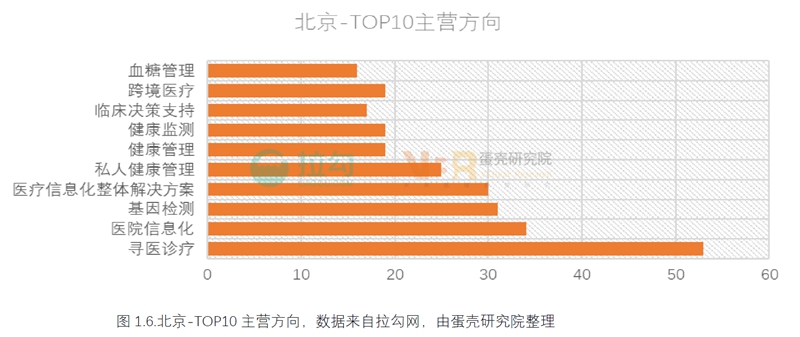
Beijing: Primarily focused on medical consultation and diagnosis, supplemented by informatization solutions.
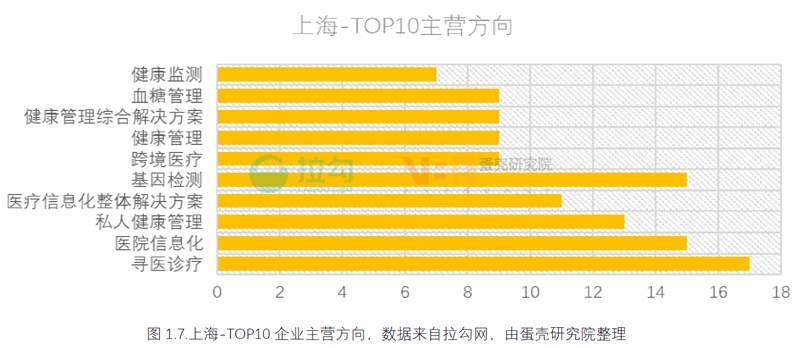
Shanghai—Primarily focused on medical consultation, diagnosis, and genetic testing, with an emphasis on health management.
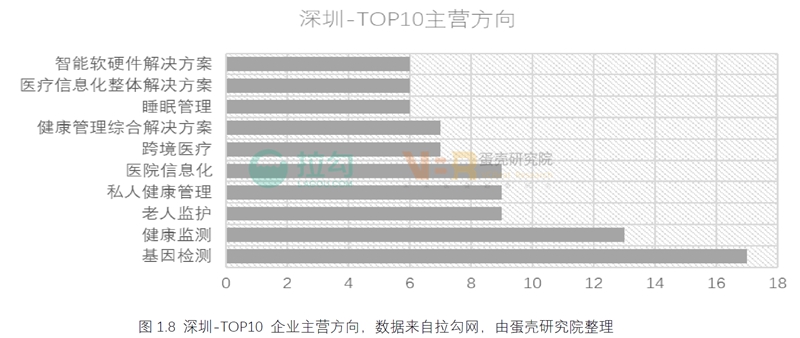
Shenzhen: Genetic testing as the core, supplemented by health management.
“Companies with 15–50 employees” are the main component of urban entrepreneurship.
Large Enterprises Lead Healthcare IT Solutions, with the Highest Number of Listed Companies.
2015 Was the Hottest Year for Healthcare IT.
Hospital informatization, pharmaceutical e-commerce, and comprehensive healthcare IT solutions are the three sectors drawing the most attention from entrepreneurs.
E-commerce, maternal and child health, and elderly care boast the most robust industrial ecosystems.
Startup Mortality Curve: The More Opportunities, the Greater the Caution.
Since its emergence in the late 1990s, the Internet has exerted a profound impact on industries such as media, communications, retail, finance, and education. However, its influence on the healthcare sector has been negligible; even as this wave of internet innovation subsided, digital health failed to hitch a ride on this fast-moving train.
The significance of the Internet lies in bringing “connectivity” and “intelligence” to various industries. “Connectivity” serves to aggregate and redistribute information and human flows that were previously isolated by time and space. “Intelligence,” a hallmark of computer science, links data across all stages of healthcare, restructures diagnostic and treatment processes, and leverages innovative technologies to achieve unprecedented breakthroughs in the medical field.
The development of mobile internet, the widespread adoption of smart terminals, advancements in sensor technology, and improvements in internet infrastructure have provided fertile ground for the explosive growth of internet healthcare.
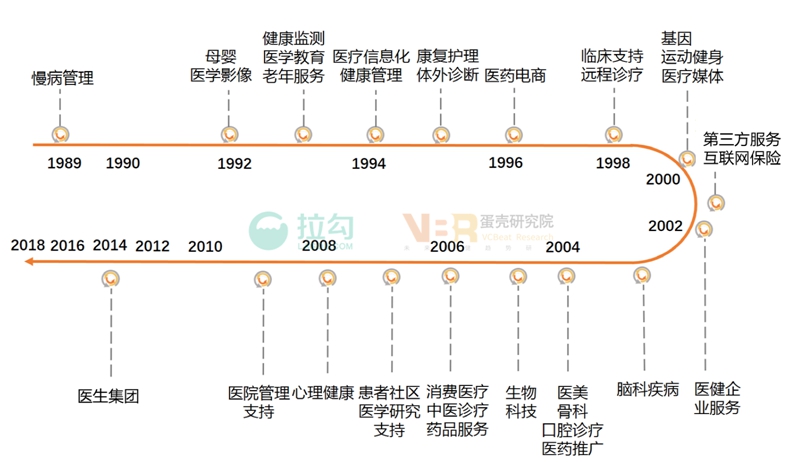
VCBeat·VBInsight has organized the surveyed internet healthcare companies by their founding year to clarify the development trajectory of the industry.
The earliest of these companies was established in 1989, when Jafron Biomedical entered the field of hemodialysis. At that time, the concept of internet healthcare did not yet exist, and business operations were primarily focused on traditional medical services and the broader healthcare sector. In the 1990s, sporadic signs of internet healthcare began to emerge in areas such as chronic disease management, maternal and child health, medical imaging, and medical education. It was not until 1997, with the proliferation of medical informatics companies, that the era of internet healthcare was officially ushered in.
Riding the wave of the internet at the dawn of the new century, and addressing the information asymmetry characteristic of the healthcare industry, internet-based healthcare permeated various pre- and post-hospital stages through information queries, appointment scheduling and referrals, and doctor-patient communication, thereby completing the first wave of user education. Starting in 2003, internet-based healthcare began to extend into diagnosis and treatment, with biotechnology, adjunctive therapies, and specialized medical services emerging rapidly. Alongside societal consumption upgrades, the healthcare industry underwent similar transformations; consumer healthcare and medical aesthetics companies were established around 2005, becoming a new force in the current landscape of internet-based healthcare.
By this point, the entire internet healthcare ecosystem had assembled. The period from 2000 to 2010 marked the golden decade of its nascent stage. Most of the artificial intelligence, genomics, and consumer healthcare companies that are currently in the spotlight were established during this phase, laying the foundation for the explosive growth of internet healthcare between 2013 and 2015.
The development trajectory of an industry typically begins with technological innovation. Existing structural systems are disrupted, and founders seize the opportunity to embark on exploration. After the nascent stage, deregulation combined with strong capital infusion ultimately ignites the industry, leading it toward gradual maturity. The development of internet healthcare has followed this same path.
Although the origins of internet healthcare date back quite some time, the first decade was essentially a period of exploration. Since the second half of 2013, a series of favorable policies have been introduced in the medical sector. Within just over a year, internet healthcare experienced an explosive surge.
On September 28, 2013, the State Council issued the “Several Opinions on Promoting the Development of the Health Service Industry,” which introduced the concept of “market access unless explicitly prohibited.” All sectors not expressly forbidden by laws and regulations were to be opened to private capital, and all sectors open to local capital were to be equally accessible to non-local capital. This move broke down the “glass doors” that had previously hindered private investment from entering the healthcare and medical sector.
In February 2014, the “Several Opinions on Physicians’ Multi-Site Practice (Draft for Comments)” was released, signaling that multi-site practice by physicians—a key component of healthcare reform—is expected to be further liberalized.
In May 2014, the China Food and Drug Administration (CFDA) released the “Administrative Measures for the Supervision of Online Food and Drug Operations (Draft for Comments),” which included provisions allowing the online sale of prescription drugs. Also in May, the State Council issued the “Notice on Printing and Distributing the Key Tasks for Deepening the Healthcare System Reform in 2014,” prioritizing the reform of public hospitals and mandating specific deadlines for the completion of each task. In 2015, significant measures were intensively implemented in the reform of public hospitals. Subsequently, the state carried out a series of reforms to the personnel and compensation systems of public medical institutions, explicitly proposing the transition of medical professionals from “institution-affiliated individuals” to “socialized professionals.”
Guided by national policies that prioritize market-oriented mechanisms and designate physicians as the primary units of medical care, multi-site practice for doctors has been implemented, thereby unlocking the key constraints in internet healthcare. The comprehensive liberalization of these policies has brought significant benefits to the healthcare industry, prompting a substantial influx of capital.
Having weathered the test of time, enterprises established before 2013 have reached maturity.
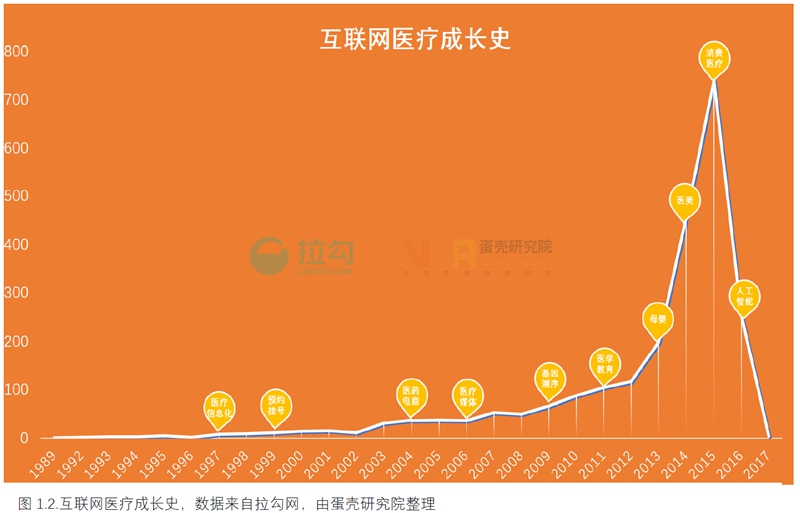
Since the second half of 2013, capital interest in internet healthcare has become an evident reality. In 2011 and 2012, investments in the fields of internet healthcare and mobile healthcare were isolated cases. In the second half of 2013, investment volumes gradually climbed, culminating in a surge in 2014.
Internet companies experienced substantial growth in 2013 and 2014, reaching a peak in 2015. According to incomplete statistics, 739 companies were established in 2015 alone, with 80 internet healthcare companies founded in July 2015. Subsequently, as market space contracted, the growth rate of the number of enterprises slowed down and stabilized.
During this phase, in the field of medical appointment and consultation, Guahao.com, founded in 2010, secured $100 million in financing. Doctor-patient platforms such as Chunyu Doctors and Haodf Online also obtained funding in succession, rapidly expanding the number of physicians participating in internet healthcare. In the pharmaceutical e-commerce sector, Alibaba entered the online medication purchasing market. In late January 2014, Alibaba announced a strategic investment in CITIC 21st Century Limited, in partnership with Yunfeng Capital, thereby acquiring the online drug trading license for the 95095 pharmaceutical platform operated by its subsidiary, Hebei Huiyan Pharmaceutical Technology Co., Ltd.
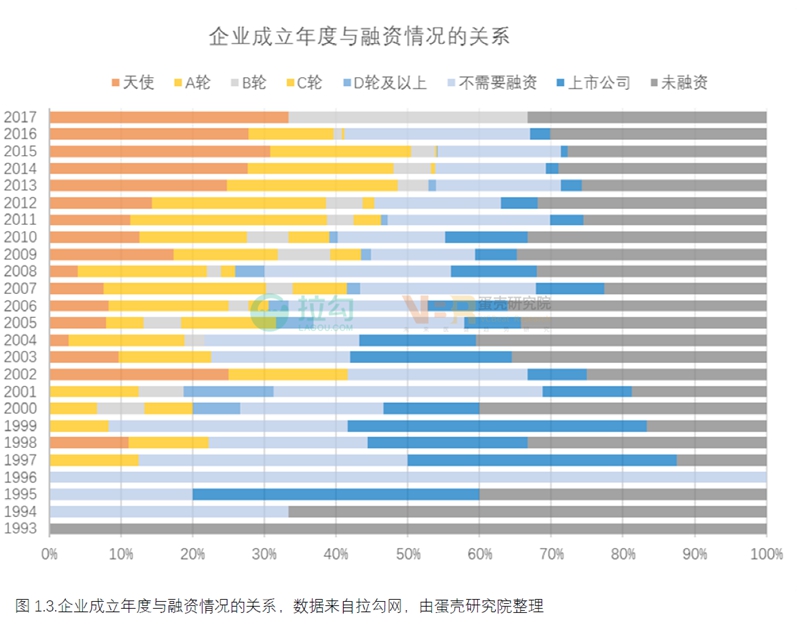
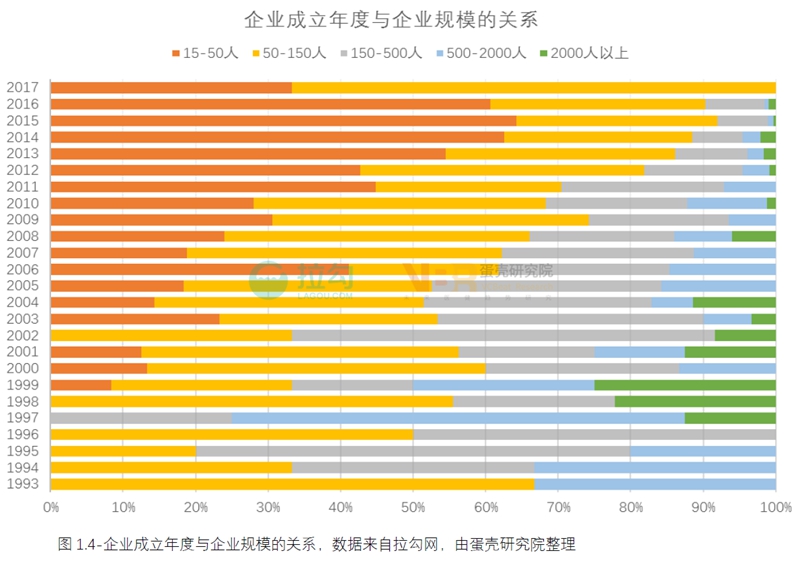
Startup Map: Beijing Is the Hottest, While Chengdu’s Atmosphere Is Gradually Intensifying
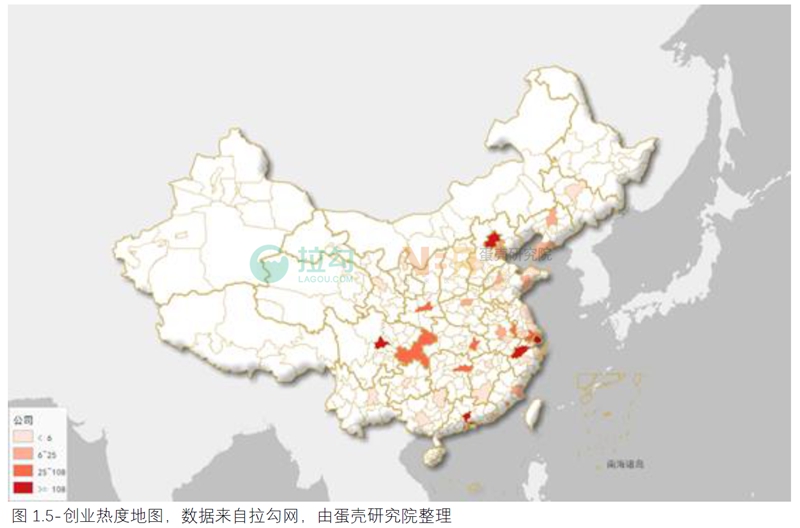
Internet healthcare companies are distributed across 55 major cities, with Beijing, Shanghai, Shenzhen, Hangzhou, and Guangzhou as the primary hubs, accounting for over 78% of the total. Additionally, Chengdu has seen the establishment of 108 internet healthcare companies, ranking sixth nationwide and first in western China, indicating a robust entrepreneurial ecosystem for internet healthcare in the city.
Beijing – Medical Consultation and Treatment as the Core, with IT Solutions as Support
Shanghai - Focusing on medical consultation and genetic testing, supplemented by health management
Shenzhen – Genetic Testing as the Core, Health Management as the Supplement
2015: The Hottest Year for Healthcare IT
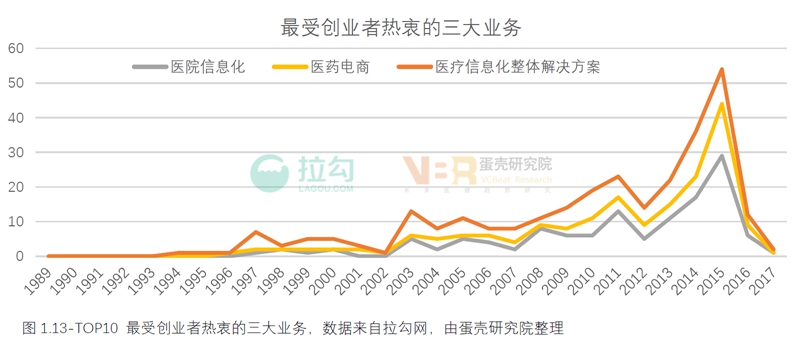
Entrepreneurship in three major sectors is on the rise, with integrated healthcare IT solutions leading industry development and emerging as the hottest sector during the 2015 internet healthcare boom.
The Three Sectors with the Richest Industrial Ecosystems
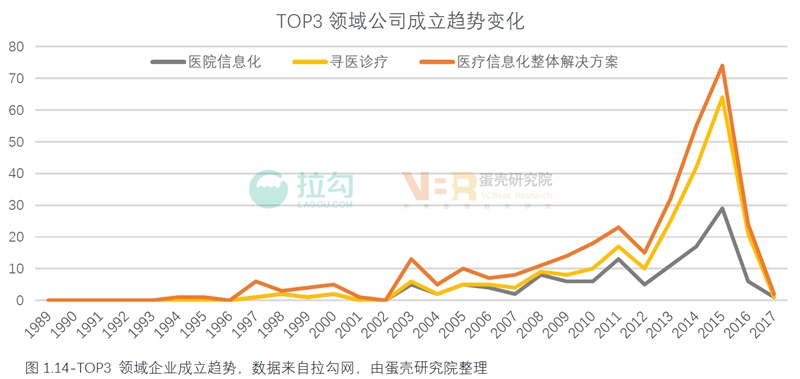
Based on the number of companies and job requirements, we selected the three industries with the most robust industrial ecosystems—e-commerce, maternal and child health, and elderly care—and analyzed their business compositions.
Pharmaceutical E-commerce, Health Supplement E-commerce, and Medical Device E-commerce Rank in the Top Three
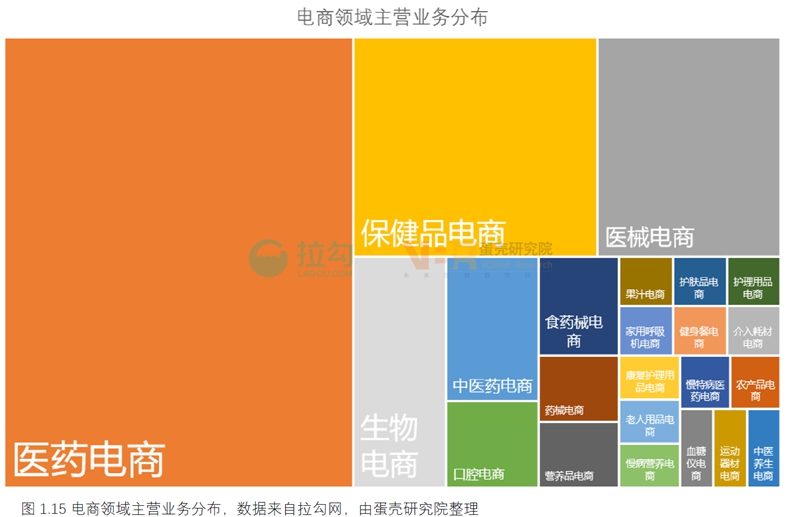
The e-commerce industry encompasses 23 major sub-sectors, with 131 participating companies. Pharmaceutical e-commerce companies dominate the landscape, accounting for nearly half of the total. Additionally, health supplement e-commerce (including two cross-border health supplement e-commerce firms) and medical device e-commerce have 20 and 15 companies respectively, ranking as the top three vertical e-commerce sectors.
The Maternal and Child Health Industry Covers 53 Major Sectors
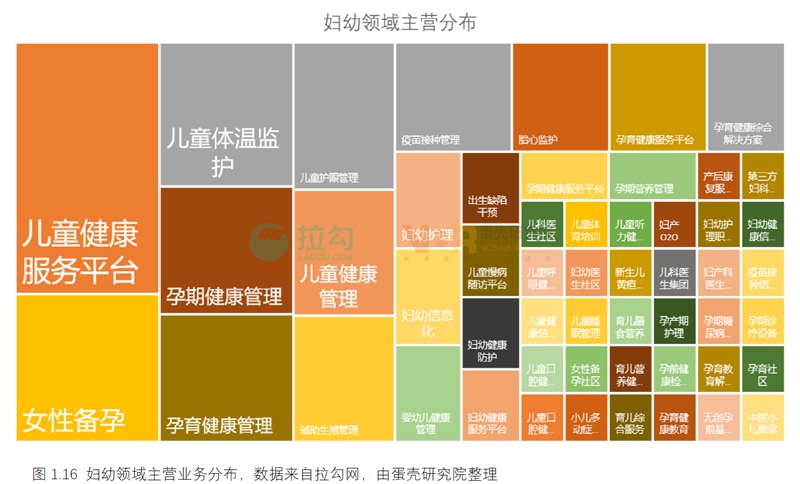
The maternal and child health industry encompasses 53 major sectors, with 144 participating companies. The top five areas are children's health service platforms, female preconception care, pediatric temperature monitoring, pregnancy health management, and perinatal health management.
Comprehensive Solutions for Chronic Disease Management and Elderly Care Lead the Mainstream of the Senior Care Industry
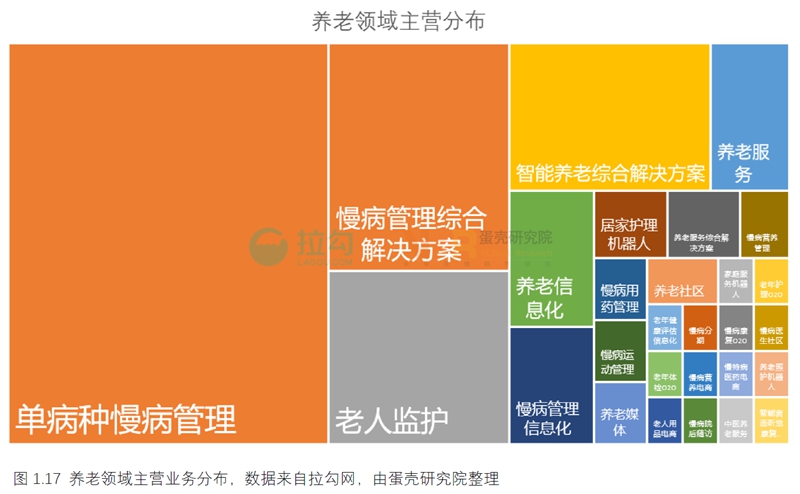
The elderly care industry encompasses 28 major sectors, covering a total of 190 companies. Chronic disease management and comprehensive elderly care solutions constitute the primary focus, accounting for 74% of the total, with these dominant sectors playing a leading role in the industry as a whole.
Similar to the dot-com bubble at the beginning of this century, internet healthcare gradually attracted capital attention after nearly a decade of incubation, entering a phase of frenzied growth in 2014–2015.
However, healthcare is an industry characterized by slow growth and stringent regulation. Although there is a trend toward policy liberalization, key reforms at the core of China’s healthcare transformation—such as policies enabling physicians to practice at multiple institutions and to practice independently—have not yet been fully implemented. Moreover, the growth of healthcare demand follows objective laws and will not surge abruptly in response to a sudden increase in supply.
By the end of 2015, signs of divergence had already emerged in the internet healthcare sector: some companies experienced frenzied growth, while others rapidly collapsed amidst the chaos. Following this peak, the capital winter for internet healthcare arrived in 2016 as expected. When a large number of participants flood into a market with stable demand within a short period, the inevitable outcome is market segmentation—a phenomenon most pronounced in the field of online medical consultations.
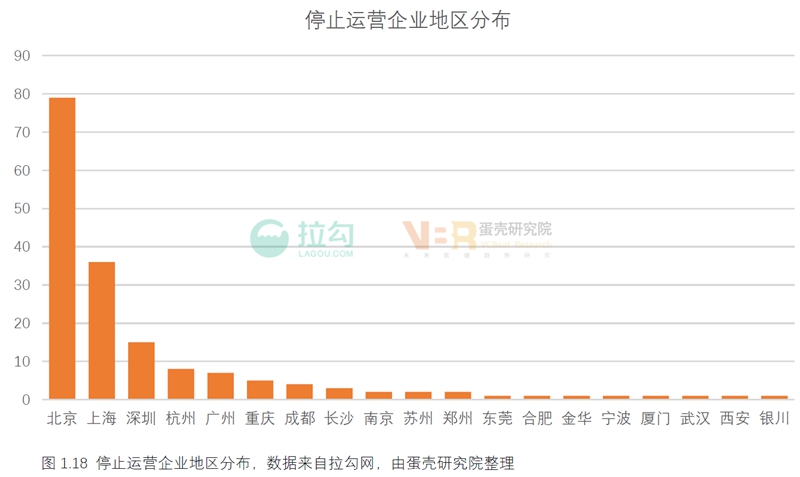
Among the 2,360 internet healthcare companies, 168 have ceased operations, accounting for 7%. These companies are distributed across 19 cities, primarily in Beijing, Shanghai, and Shenzhen. Notably, 77 startups in Beijing have failed, representing a failure rate of 8.8%.
Part II Talent Evolution: Shifting from a Preference for Technical Specialists to a Demand for Multidisciplinary Professionals
Key Findings:
Internet Healthcare Has Reached an Industry Inflection Point.
Technical roles predominate, with Java being the most in-demand.
Recruitment demand for product managers peaks after the Spring Festival.
Recruitment demand for copywriters has grown steadily year by year.
Demand for PHP developers has declined with the maturation of the mobile internet.
Web frontend recruitment demand continues to grow at a moderate pace.
Medical informatics, online medical consultation, and health management companies are major recruiters.
Focusing on the B2B market, healthcare IT companies maintain relatively stable hiring demands.
Focusing on C-end users, the hiring demands of medical consultation companies are fluctuating.
“Consumption Upgrading” Impacts the Healthcare Industry, with Sustained Strong Hiring Demand for Health Management Companies
Healthcare Transformation Penetrates Core Sectors as Traditional Medical Media Fades
With the sector still in its ascendancy, pharmaceutical e-commerce companies demonstrate the most stable talent demand.
Technology-driven enterprises are highly dependent on specialized technical talent.
Service-oriented enterprises have diversified talent needs.
Beijing’s internet healthcare companies entered their boom phase earlier than those in other cities.
Internet healthcare companies have not seen significant changes in compensation.
Internet Healthcare Has Reached an Industry Turning Point
Internet Healthcare Has Reached an Industry Inflection Point
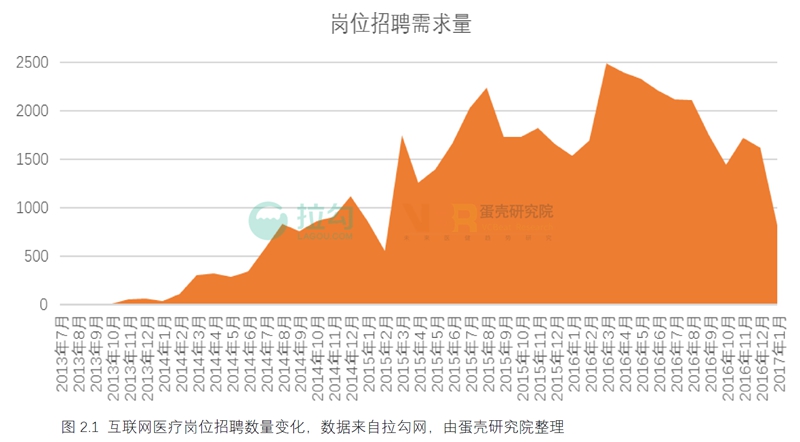
This report compiled a total of 49,597 recruitment data entries. In addition to company information, each entry includes nine job-related dimensions: job position, posting date (year and month), city of job demand, minimum monthly salary, maximum monthly salary, work experience requirements, educational requirements, employment type (full-time/part-time/internship), and most recent update time.
From July 2013 to March 2016, the recruitment demand of internet healthcare companies exhibited a trend of rapid growth. The monthly number of job openings increased by approximately 1,000 year-over-year each year. However, after reaching a peak of 2,491 monthly job openings in March 2016, the recruitment demand for internet healthcare companies declined.
Judging from the trend in total recruitment volume, it appears that the internet healthcare sector has reached an industry inflection point. In the following sections, we will examine the changing trends in talent demand among internet healthcare companies during the reporting period from six more specific perspectives: job categories, company types, differences in talent needs between technology-driven and service-oriented enterprises, differences in talent needs between early-stage startups (pre-Series A and Series A) and growth-stage companies (post-Series C and Series C), recruitment regions, and compensation packages.
Technical Roles Dominate, with Java in Highest Demand
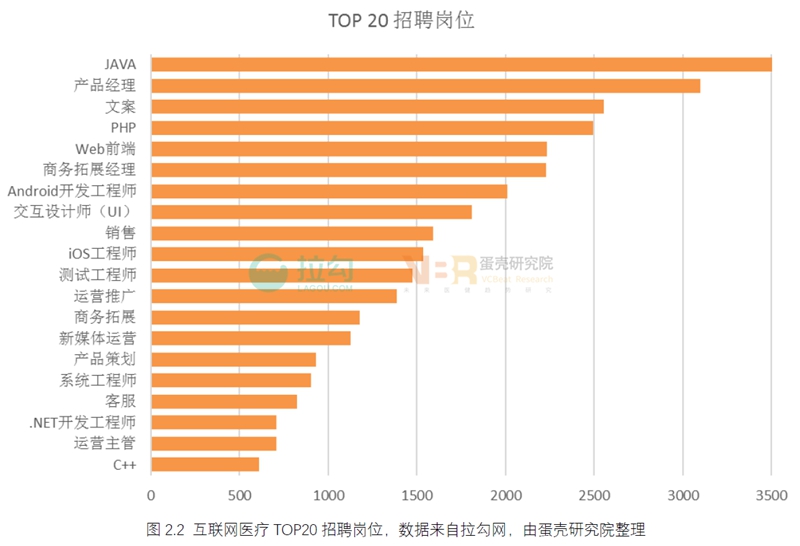
During the reporting period, internet healthcare companies posted a total of 515 types of job positions and 49,597 job openings. Among these, Java developers had the highest demand, with 3,505 postings. Furthermore, more than half of the top 20 most in-demand positions were technical roles. We anticipate that as technologies such as artificial intelligence become more widespread in the healthcare industry, technical positions like algorithm engineers and image processing engineers will also become highly sought-after.
Notably, this report covers very few healthcare-related positions. This phenomenon is attributed to two main factors: first, most internet healthcare companies do not engage in the core clinical diagnosis and treatment processes but instead provide supporting services; second, Lagou.com focuses on internet career opportunities rather than the healthcare industry, resulting in a low frequency of healthcare-related job postings.
The demand for Java developers follows the same trend as overall hiring demand.
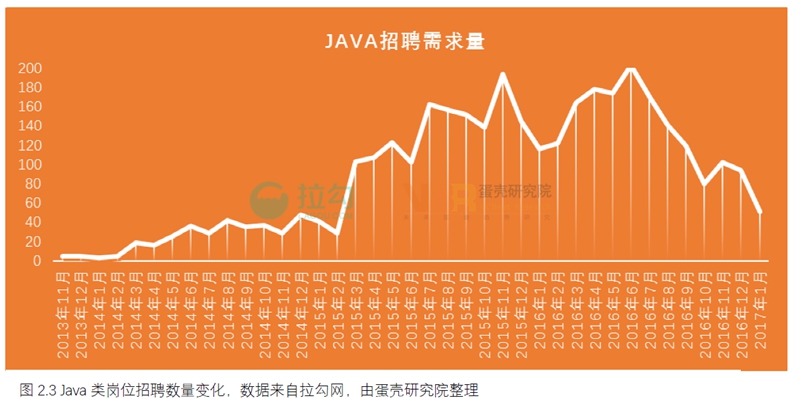
Compared with other programming languages, Java is characterized by its ease of use and wide applicability. The core of internet healthcare companies lies in healthcare, while the internet serves merely as a technological implementation channel. As a foundational internet technology, Java commands significant demand for talent. Furthermore, Java recruitment demand is closely linked to the overall development trends of the industry, resulting in a synchronization between Java-specific hiring needs and the overall recruitment demand within the internet healthcare sector.
Recruitment Demand for Product Managers Peaks After the Spring Festival
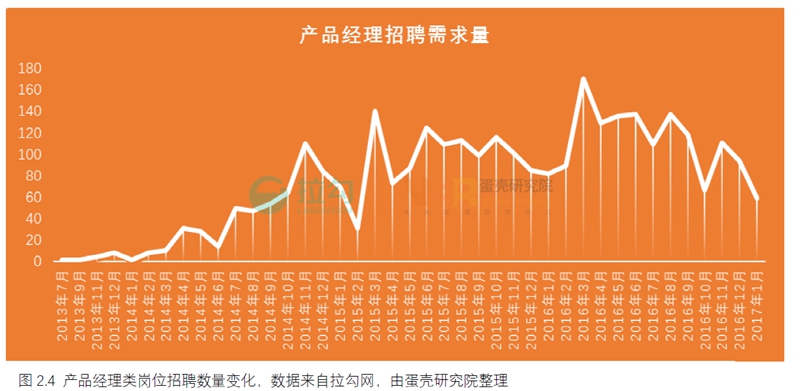
Product managers are key personnel in internet healthcare companies and serve as the central figures driving project progress. Therefore, it is uncommon for product managers to be replaced arbitrarily during a project cycle. Recruitment demand for product managers in internet healthcare companies is significantly higher in March than in other months. This is primarily because these companies initiate new projects after the Spring Festival and require stable project management talent, which also aligns with the “Golden March, Silver April” recruitment trend.
Recruitment demand for copywriters has grown steadily year by year
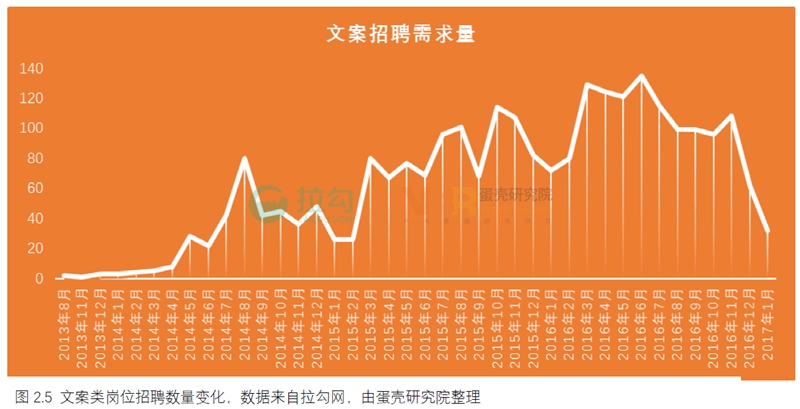
Since 2014, the demand for copywriters at internet healthcare companies has gradually increased, albeit at a moderate pace. This trend is primarily driven by the maturation of the market and intensifying competition, which have compelled these companies to allocate more resources to brand promotion and marketing.
Demand for PHP Developers Shrinks as the Mobile Internet Matures
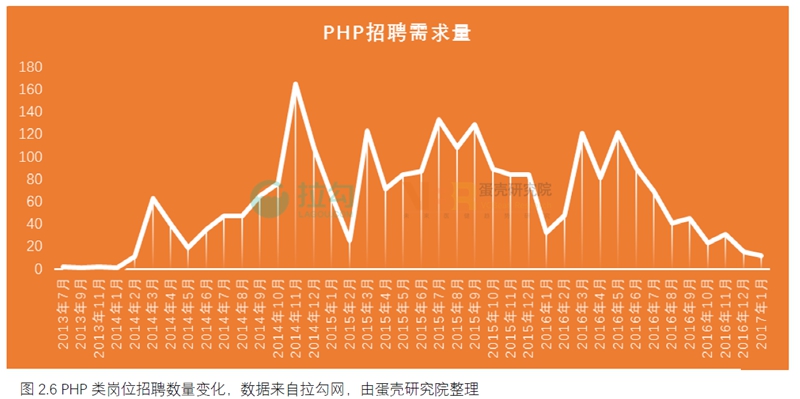
The maturation of mobile internet has led many digital health companies to shift their focus from web-based platforms to mobile applications, with some even bypassing the web entirely. As a foundational technology for website development, PHP has consequently faced significant challenges. As a result, demand for PHP developers has been declining year by year since 2014.
Web Front-End Hiring Demand Maintains Moderate Growth
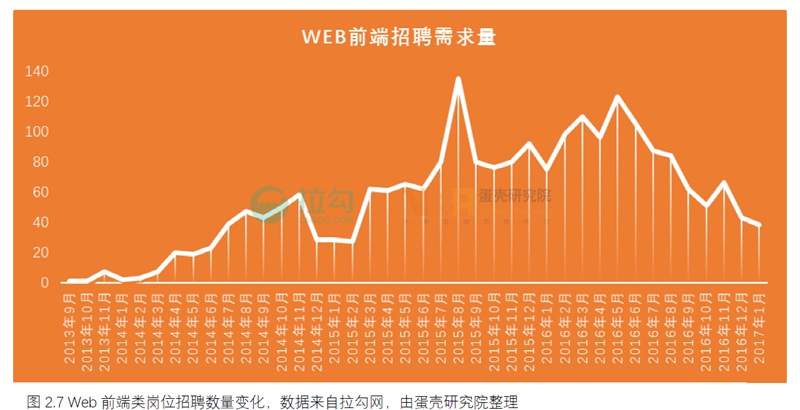
Amid intensifying competition, internet healthcare companies need to place greater emphasis on strengthening their connections with users. Web front-end engineers play a crucial role in enhancing this brand-user relationship by designing and optimizing the user experience of digital products. Consequently, although recruitment for web front-end positions has experienced some fluctuations, the overall trend remains upward.
From the perspective of job roles being recruited, competition among internet healthcare companies has shifted from initial-stage technological rivalry to a more mature contest centered on the quality of medical services. We anticipate that as speculative capital gradually withdraws, the internet healthcare industry will undergo a return to intrinsic value. While IT and other technologies will remain essential prerequisites for maintaining corporate competitiveness, high-quality products and services will be the ultimate key to success in an increasingly mature industry.
The above is an excerpt from the research report “Internet Healthcare Workplace Report,” which reviews the inception, growth, and diversification of internet healthcare from the perspectives of industrial evolution and talent dynamics. The following sections include:
Demand for web front-end developers continues to grow at a moderate pace.
"Medical informatics, online medical consultation, and health management companies are major employers."
Focusing on the B2B market, healthcare IT companies maintain relatively stable hiring demands.
Focusing on C-end users, the hiring demands of medical consultation companies are fluctuating.
“Consumption Upgrading” Impacts the Healthcare Industry, with Sustained Strong Demand for Recruitment at Health Management Companies
Healthcare transformation penetrates the core, while traditional healthcare media gradually declines.
The trend is still rising, and talent demand at pharmaceutical e-commerce companies remains the most stable.
Technology-driven enterprises are highly dependent on specialized technical talent.
Service-oriented enterprises have diversified talent needs.
Beijing’s internet healthcare companies entered their boom phase earlier than those in other cities.
Compensation at internet healthcare companies has not shown significant changes.
Internet Healthcare Has Reached an Industry Inflection Point
Scan the QR code below to join the event and receiveFull Version of the “Internet Healthcare” Workplace Report