

Medical and Life Science Innovation to Lead China's Next Two Decades of Economic Growth
On November 2, 2017, the 5th China Renaissance Healthcare and Life Sciences Leadership Summit was held in Shanghai, with on-site reporting by VCBeat (WeChat ID: vcbeat).
Since 2011, the summit has grown and expanded alongside the China Renaissance Healthcare and Life Sciences team.
This year’s event welcomed over 400 leading scientists, corporate CEOs, and investors from China’s healthcare and life sciences sectors. Over the course of two days, the program featured four keynote speeches, six main forums, eight sub-forums, and more than ten project pitch sessions.
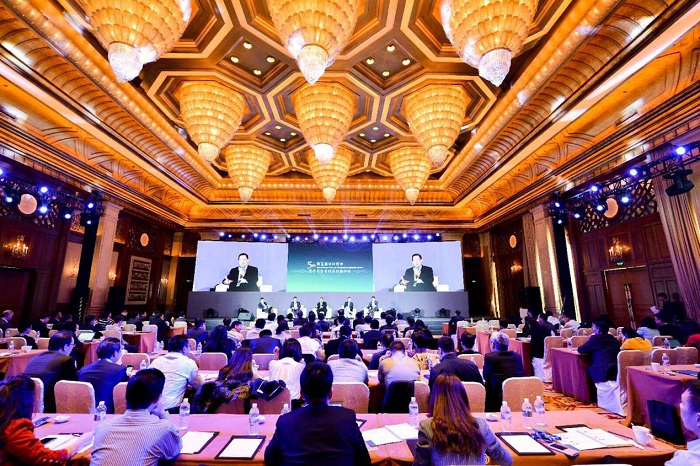
Since 2009, China Renaissance has been bullish on and deeply committed to the healthcare and life sciences sector, focusing on areas ranging from mobile internet healthcare and specialized hospitals to medical devices, healthcare services, pharmaceuticals and biotechnology, as well as diagnostics and genetic testing, always staying at the forefront of the latest trends in the healthcare and life sciences fields both in China and globally.
Over the past year, China Renaissance has successively served a number of prominent companies, including WuXi AppTec, Akeso, Frontier Biotechnologies, and Ascentage Pharma. As of October 2017, the China Renaissance Healthcare and Life Sciences team had acted as financial advisor on more than 40 financing and M&A transactions, with a total transaction value of approximately US$1.7 billion.
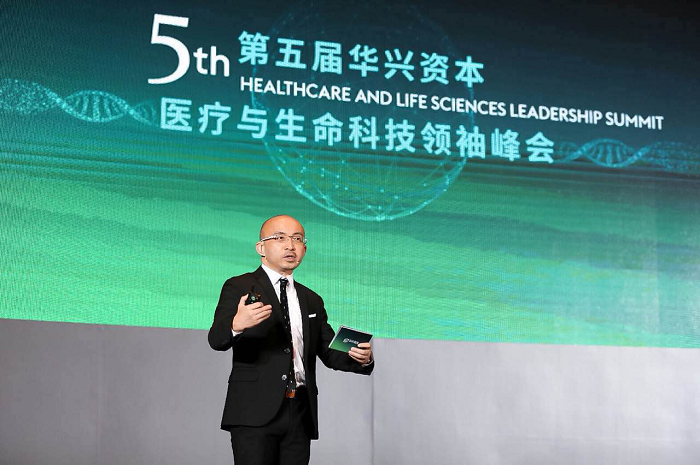
In his keynote address this morning, Bao Fan, Chairman and Chief Executive Officer of China Renaissance Holdings Limited, stated that 2017 had become a landmark year as groundbreaking innovations and services continued to flow into the healthcare and life sciences sectors.
China Renaissance remains bullish on three key areas within the new economy: consumption upgrading, industrial transformation, and technological innovation. In Bao Fan’s view, while innovations in information technology drove China’s rapid economic growth over the past two decades, healthcare and life sciences will lead China’s technological innovation in the next twenty years. Following the information technology revolution, healthcare and life sciences have taken center stage in China’s new economy, emerging as the new protagonists.
“Driven by four key forces—innovation, policy, capital, and internationalization—China is transitioning from a nation of generic manufacturers to one of innovators. Chinese enterprises are poised to grow stronger and larger, emerging as globally influential players. The future of healthcare and life sciences is already here,” said Bao Fan. “We are highly confident in the future of the pharmaceutical industry.”
As Chinese enterprises step onto the global stage, they will encounter a diverse array of opportunities and challenges, ranging from overseas mergers and acquisitions, international strategic collaborations, and the establishment of overseas manufacturing plants and R&D centers, to the development of global sales networks. China Renaissance will continue to enhance its service capabilities, striving to become the most trusted capital markets partner for Chinese enterprises expanding into international markets.
Innovation in the pharmaceutical industry will be more disruptive than that in the internet industry.
In his speech, Bao Fan reflected on the past, stating that the development and innovation of life science technologies have brought a series of breakthrough solutions to human health and the treatment of various diseases: the emergence of gene sequencing has changed human understanding of diseases, while tumor immunotherapy and minimally invasive techniques have provided new treatment methods.
Looking ahead, in addition to the continuous advancement of the aforementioned technologies, artificial intelligence, cell therapy, and precision gene therapy are all poised to bring about disruptive revolutions to the industry. “Innovation in the pharmaceutical industry is more disruptive than innovation in the internet sector.”
Policies in China’s healthcare industry are undergoing continuous reform, with active encouragement of innovation and stringent control over product quality emerging as the most significant drivers of healthcare reform.
“The development of the pharmaceutical and healthcare industry in any country is closely tied to its regulatory environment.” Bao Fan noted that policies rolled out throughout the year, such as the “Two-Invoice System” and “reforms in health insurance payment methods,” have played a positive role in transforming the healthcare industry. These measures will significantly encourage innovation in China’s pharmaceutical sector, enhance the quality of products and services, and create a larger market for the healthcare industry.
From a Major Generic Drug Producer to an Innovation Powerhouse: China Will Give Rise to Globalized Pharmaceutical Companies
The rapid development of any industry is inseparable from the support of capital markets.
Over the past thirteen years, China Renaissance has witnessed the prosperity driven by capital in the development of China’s internet and mobile internet markets. Statistics show that in the first half of 2017, the healthcare and life sciences sector completed a total of 24 private financing transactions, representing a year-on-year increase of approximately 40%, with a transaction value of around USD 1 billion, up by about 150% year on year. In terms of IPOs, 11 deals were completed in the first half of the year, a year-on-year surge of roughly 270%, with a transaction value of approximately USD 700 million, reflecting a 140% year-on-year growth.
It is evident that capital has begun to flow vigorously into both the primary and secondary markets of China’s life sciences industry, with a growth rate that is highly encouraging. Bao Fan stated, “Driven by capital, the continued advancement of the pharmaceutical industry is inevitable. How to strategically position investments in the healthcare sector, how to manage investment risks, and how to channel capital back into the real economy to support its development are questions that China Renaissance has been consistently contemplating.”
Healthcare and life sciences are global industries. Deepening engagement in these fields requires a cohort of individuals who possess both the scientific mindset and entrepreneurial spirit, driven by “the noble ideal and vision of benefiting all humanity.”
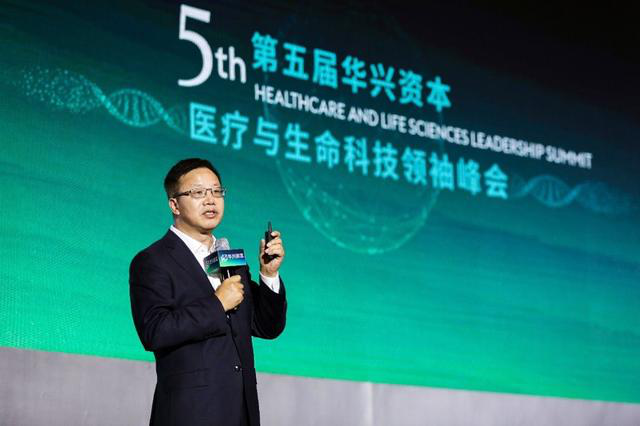
Yu Dechao, Founder, Chairman, and President of Innovent Biologics
In addition to Yu Dechao, other industry luminaries—including Hu Zhengguo, Chief Investment Officer and Chief Financial Officer of WuXi AppTec; Chen Li, Founder and CEO of Hua Medicine; Xie Xin, Executive Director and Vice President of Sino Biopharmaceutical Limited; Chen Haibin, Chairman of Dian Diagnostics; and Chen Zhisheng, CEO of WuXi Biologics—attended the event and participated in the roundtable discussion.
On the first day of the summit, with reflections on the development of the healthcare and life sciences industry,Dozens of Top Entrepreneurs and InvestorsCentered on the EnterpriseNearly ten topics were discussed in depth, including IPO pathway selection, innovation strategies under the current policy landscape, tumor immunology, CAR-T therapy, new pathways for innovative drugs, monoclonal antibody drug development, trends in targeted drug research and development, the advancement of modified new drugs, and antiviral medications.
November 3 marked the second day of the summit. At today’s sessions, entrepreneurs and investors will continue to jointly explore topics such as genomic big data, early cancer screening and personalized therapy, and new capital opportunities emerging in the healthcare investment landscape.