

AI-Driven Eco-Hospital Model Facilitates Tiered Diagnosis and Family Doctor Contracting Services
From November 3 to 5, the 11th China Hospital Presidents’ Annual Conference 2017—the largest gathering in the field of healthcare management in China—was grandly held at the Zhuhai International Convention and Exhibition Center.
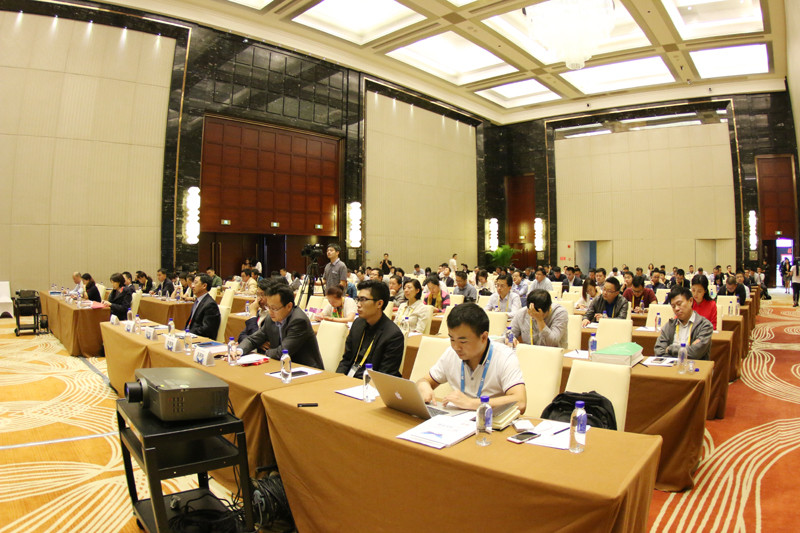
As one of the key sub-forums of the conference, the “Smart · Ecological Hospital – Internet + Healthcare” seminar, co-hosted by Tencent and Zhuojian Technology, was held with great enthusiasm on the afternoon of November 4. Multiple “high-profile” attendees engaged in dynamic discussions and reflections on the topic of “Artificial Intelligence + Ecological Hospitals.”
No matter how it is interpreted, one basic fact remains inescapable: China’s healthcare industry has entered a “new normal.” In this new normal, artificial intelligence has emerged as a powerful force, with medical AI flourishing, while traditional doctor-doctor and doctor-patient relationships are being restructured and redefined.
Undoubtedly, adopting an open and collaborative approach to deepen the connectivity of internet platforms, integrating them into services that address profound healthcare needs, and building a new “AI + Ecosystem Hospital” model will become a crucial pathway for the transformation and upgrading of traditional medical services.
In recent years, the concept of “AI + Healthcare” has been gaining momentum. While some view it as an adversary and others as an ally, Tencent Miying, a pioneer in this field, regards it as a friend. By empowering hospitals, physicians, and patients alike, AI is gradually forging a new path for the “Internet + Healthcare” ecosystem.
It is precisely for this reason that the theme attracted nearly 400 hospital presidents and medical IT elites from across China to gather and jointly explore how “AI + Ecological Hospitals” can be developed in the Internet Plus era, as well as practical approaches for leveraging the internet to deepen and solidify medical consortia and family doctor contract services within the framework of tiered diagnosis and treatment.
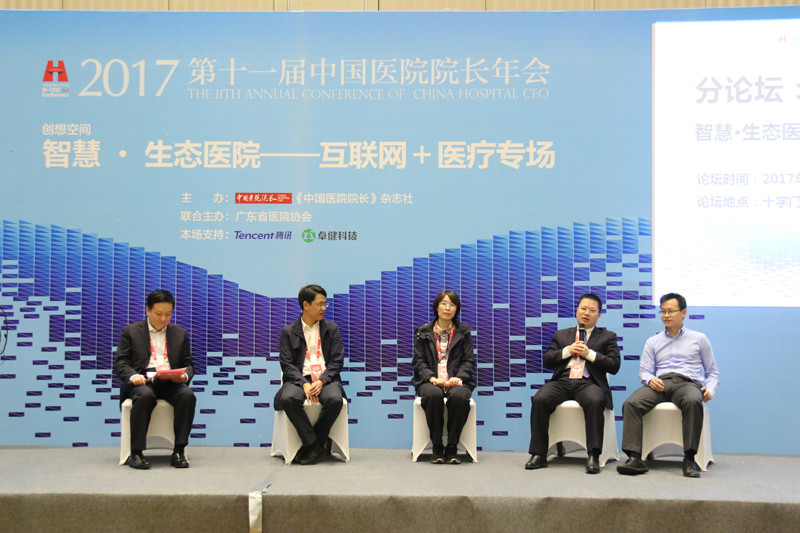
At the conference, Wang Caiyou, former Deputy Director of the Statistical Information Center of the National Health and Family Planning Commission, delivered an opening address. A number of distinguished guests, including Gu Jianqin, President of Henan Provincial People’s Hospital; Zhou Dian, Vice President of the First Affiliated Hospital of Anhui Medical University; Qiu Yunqing, Vice President of the First Affiliated Hospital, Zhejiang University School of Medicine; Li Bing, President of Liuzhou Workers’ Hospital; Wang Xiaoying, Director of the Department of Medical Imaging at Peking University First Hospital; Liu Qiong, Deputy Director of the Big Data Center at Tencent Research Institute; and Wei Jianfeng, President of Zhuojian Technology, delivered specialized academic reports. The presentations covered both policy interpretations at the national macro level and practical experiences in the development of smart healthcare initiatives in hospitals.
Wang Caiyou, former Deputy Director of the Statistical Information Center of the National Health and Family Planning Commission, delivered an address. The principal contradiction facing Chinese society has evolved into one between the people’s ever-growing needs for a better life and unbalanced development. The original intent behind advancing hospital informatization is to provide the public with more convenient medical services. “Internet + Healthcare,” which integrates foundational capabilities such as artificial intelligence, payment systems, big data, cloud computing, location-based services (LBS), and security, empowers hospitals and medical research institutions, representing a key focus in promoting hospital informatization.
Wang Caiyou emphasized that, in the course of implementation, it is essential to align with three key directions: national policy requirements, the necessities for one’s own survival and development, and the inevitable trends of industry evolution. Failure to conform to these natural developmental trends will inevitably lead to obsolescence.
Gu Jianqin, President of Henan Provincial People’s Hospital, drew on the hospital’s practical experience in smart healthcare development to outline four key strategic directions: (1) maintaining a moderate scale across multiple campuses and hospitals; (2) highlighting the distinctive strengths of key disciplines; (3) fostering connotative development guided by institutional culture; and (4) delivering interconnected, smart health services. Currently, the hospital’s Interconnected Smart Tiered Diagnosis and Treatment Collaboration Platform has accumulated 10,000 remote consultation cases per year and has established in-depth collaborative relationships with 132 county- and city-level hospitals within Henan Province.
Li Bing, President of Liuzhou Workers' Hospital, stated that patients visit hospitals primarily for medical consultation. Currently, China's healthcare services face challenges such as scarce medical resources, high medical costs, and a high prevalence of chronic diseases. The widespread adoption of internet-based healthcare will significantly enhance the modernization of medical services, alleviate pressure from resource shortages, and reduce medical costs. Furthermore, it will provide the public with more convenient access to mobile health information services.
At the forum, Liu Qiong, Deputy Director of the Big Data Center at Tencent Research Institute, delivered a keynote speech titled “From Healthcare Big Data to AI: New Breakthroughs and New Challenges.” She elaborated on the new drivers propelling internet healthcare, presented Tencent’s latest advancements in artificial intelligence, and introduced its “Internet + Healthcare” solutions for hospitals.
Liu Qiong introduced that the rapid development of artificial intelligence has brought about technological innovations in computer vision, natural language processing, and speech recognition. These new technologies can be applied to various scenarios within the healthcare industry, covering the processing of case information, imaging data, pathological data, laboratory test results, and general health information. This assists physicians in making comprehensive judgments and supports hospitals in improving medical quality management.
Zhou Dian, Vice President of the First Affiliated Hospital of Anhui Medical University, delivered an inspiring speech on “Modern Hospitals Approaching Smart Healthcare Practices.”
Zhou Dian stated that in 2015, Premier Li Keqiang proposed the “development of smart cities.” Against this backdrop, hospitals began to advance their informatization and intelligent construction. Although there is no precise definition of a “smart hospital” at present, such a hospital should be patient-centric, grounded in internet information technology, and use structured electronic medical records (EMRs), physician orders, and other medical documentation as the primary input for information. It should establish an information platform capable of data integration, consolidation, interaction, and analysis, thereby providing comprehensive, mobile, efficient, convenient, real-time, and integrated services to hospitals, healthcare professionals, and patients. Through big data analytics, it aims to achieve artificial intelligence.
At the conference, Qiu Yunqing, Vice President of The First Affiliated Hospital, Zhejiang University School of Medicine, delivered an insightful presentation on “Service Innovation in ‘Internet + Healthcare.’” He highlighted the hospital’s innovative capabilities in this domain and shared practical case studies from The First Affiliated Hospital Internet Hospital, demonstrating how it has optimized the allocation of medical resources, improved healthcare efficiency, and enhanced patient experience. His presentation offered attendees a compelling lesson on hospital information technology innovation.
Subsequently, Wei Jianfeng, President of Zhuojian Technology, delivered a keynote speech titled “Internet+ Building a Smart Hospital Ecosystem.” He outlined new directions for smart hospital ecosystems, introduced Zhuojian Technology’s core capabilities in Internet+ healthcare, highlighted its latest advancements in two key areas—mobile remote medical consortiums and family doctor contracted services—and presented internet-enabled solutions tailored for hospitals.
Zhuojian Technology has provided solutions for numerous hospitals, covering online appointment scheduling and consultations, examination reports, electronic prescriptions, remote consultations, medical payments, and online medication purchases, thereby delivering efficient IT infrastructure and management solutions.
“At Zhuojian Technology, we have remained steadfastly committed to being hospital-needs-driven and dedicated to advancing hospital informatization—from our early entrepreneurship driven by patient education to our later product philosophy centered on doctor-patient friendliness,” said Dr. Wei Jianfeng firmly at the conference.
Wu Mingzhu, Director of the Tencent Miying Application Center, introduced that in August this year, Tencent officially launched its first AI medical imaging product, “Tencent Miying.” This product leverages AI technology for early cancer screening and promotes the application of AI in medical imaging through the establishment of joint laboratories. Tencent Miying screens an esophageal endoscopy image in less than 4 seconds, with an accuracy rate exceeding 90%. For pulmonary nodules, it can detect minute nodules measuring 3 millimeters or larger, with a detection accuracy rate surpassing 95%. In the future, Tencent Miying will collaborate with medical schools and healthcare institutions to facilitate the detection of additional conditions, such as diabetic retinopathy screening, cervical cancer screening, and breast cancer screening.
Wang Xiaoying, Director of the Department of Medical Imaging at Peking University First Hospital, stated that artificial intelligence will inevitably emerge driven by the wave of medical technological advancements. As an ordinary physician, she noted that while technological progress has been substantial, the current reality creates a genuine sense of urgency. Nevertheless, she believes that healthcare professionals should embrace AI, adapt to it, and actively participate in its application.