

Yaeher Health Founder Dr. Pei Honggang Achieves Million-Dollar Monthly Cash Flow with Asset-Light Maternal and Child Health Platform, Plans Clinic Expansion and IPO
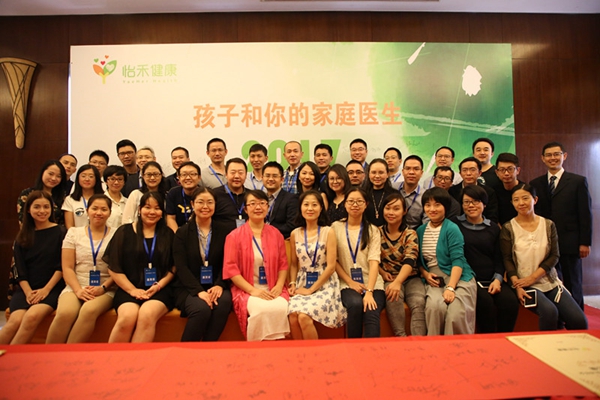
On November 5, more than 40 physicians convened in Huizhou for a distinctive conference. During the event, participants discussed best practices for online medical consultations, strategies for producing high-quality medical science popularization content, and the feasibility of establishing pediatric clinics, among other topics.
Some of these doctors flew in from the United States and Singapore, while others came from across China. They share a common identity: they are physicians providing consultation services on Yihe Health, a maternal and child health consulting platform.
Why would an online consultation platform motivate so many physicians to pay for their own airfare and travel long distances to attend such a conference? How has Yihé Health managed to attract such extensive physician participation? To address these questions, VCBeat conducted an exclusive interview with Pei Honggang, founder of Yihé Health.
On March 1, 2016, Pei Honggang made a significant decision: he resigned to start his own business and announced the news on his personal WeChat public account (drpei). As a pediatrician at Shenzhen Children’s Hospital, he enjoyed compensation and prestige envied by many of his peers. Yet he chose to resign solely to establish a clinic that aligned with his own medical philosophy.
Although Pei Honggang’s decision appeared abrupt to outsiders, it was by no means an impulsive move. While working at the hospital, he used his spare time to write and publish popular science articles on his WeChat Official Account and Weibo. Thanks to the rigor and practicality of his content, he amassed a large base of loyal readers. At the time of his resignation, his Weibo account had 410,000 followers, and his personal WeChat Official Account (“drpei”) had over 120,000 subscribers, establishing him as an internet-famous physician.
Since resigning, he has become even busier. In May this year, he joined forces with another prominent medical influencer on Weibo, Dr. Han, an obstetrician and gynecologist holding a Medical Doctorate based in Australia (known on Weibo as “Dr. Han of Australian Obstetrics and Gynecology”), to co-found Yihe Health. The company is dedicated to providing professional, reliable, and high-quality maternal and child health management solutions, including daily caregiving guidance and disease-related health management, marking his formal entry into entrepreneurship.
Over the past year, Yihe Health’s small core team has brought together nearly 200 physicians, completed more than 160,000 consultations, and delivered online lectures to over 80,000 listeners. In his view, “I have been consistently putting my medical philosophy into practice, reaching far more doctors and patients than a single clinic could ever serve.”
According to Pei Honggang, since starting his business, he has often been asked about his reflections. From a personal perspective, entrepreneurship is no easier than working in a hospital; it merely offers greater freedom of choice and provides pathways to realize one’s own ideas.
The most noticeable change is that he has gained more weight than when he was at the hospital. He used to enjoy working out while employed at the hospital, but since starting his own business, he exercises less, works more overtime, and has put on considerable weight.
“Moreover, entrepreneurship differs significantly from my previous work as a physician. First, it pushed me out of my comfort zone; second, I had to confront challenges in technology, product development, funding, and team building. Through accumulation and continuous learning, each obstacle overcome broadened my horizons and brought a greater sense of accomplishment.”
It has been over a year since Dr. Pei Honggang resigned from his previous position. Although his aspiration to open a private clinic remains unfulfilled, Yihe Health has earned the deep trust of both parents and physicians. So, what has he accomplished over the past year?
Although the asset-light model is not widely applied in the healthcare industry, Pei Honggang’s entrepreneurial journey can be described as a typical example of asset-light operations. Asset-light, also known as the asset-light operating model, refers to a strategy wherein companies focus tightly on their core business activities while outsourcing non-core functions. Asset-light operation is a value-driven capital strategy.
Yihe Health’s core competitiveness lies in its three founders, two of whom are influential physician-influencers. The platform has also influenced and attracted a large cohort of professional physicians, positioning itself as one that deeply understands the needs of both doctors and patients. It possesses insights into physicians’ competency levels and recognizes which services better meet patient demands.
Meanwhile, throughout its development, it has cultivated a base of users who deeply trust the platform, as well as physicians who align with its philosophy. As these users and doctors are distributed across China, the company initially adopted an online-to-offline (O2O) entrepreneurial pathway.
Unlike other consultation platforms, Yihe Health does not engage in proprietary technology development; all its products leverage existing internet tools. Its promotion relies on established Weibo and WeChat channels, with user acquisition driven by word-of-mouth referrals stemming from quality-controlled services.
This year’s online business operations leveraged WeChat Service Accounts combined with Tencent Ai Yisheng’s paid consultation feature for paid consultations, while online popular science lectures were conducted using WeChat-based live streaming tools.
The majority of consultations on the platform involve pediatrics and dermatology, along with common issues such as cough, fever, and diarrhea. Due to the limitations of online communication, the platform does not recommend that patients with acute or severe conditions seek consultation here. Consultation fees are set independently by physicians. Initially, the average cost for an online consultation was around RMB 30. However, with the introduction of the rating system and improved quality control efficiency, physicians face increasing pressure and devote more time and effort to each consultation. Consequently, the current average fee has risen to approximately RMB 70.
Unlike other paid consultation platforms that offer completely open registration, Yihé Health imposes stringent requirements on its online physicians. In addition to requiring at least five years of work experience in tertiary hospitals (Grade 3A), physicians must endorse the principles of evidence-based medicine and demonstrate strong service orientation. The platform has established detailed operational guidelines; before going online, physicians are required to read these guidelines and complete a sample test. Only those who meet the standards are granted access to the platform. Furthermore, even after being approved, physicians may be suspended if they are found to have repeatedly violated the operational guidelines in their responses.
While strictly vetting the qualifications of practitioners for platform onboarding, the platform grants users the right to set their own prices. This approach not only strengthens the alignment of physicians who endorse these principles but also provides users with more professional and reliable services. As a result, the number of paying users has been steadily increasing. To date, through word-of-mouth recommendations among its user base, the Yihe Health official WeChat account has amassed nearly 400,000 followers, with daily consultation revenue exceeding RMB 30,000.
Online courses are currently delivered primarily via digital platforms. Although offline interactions offer greater engagement, they are less efficient than online delivery. The instructors are physicians who also provide consultations on the platform. Each session is priced at RMB 20–30 and promoted through channels such as Weibo, WeChat Moments, and WeChat Official Accounts. Each online lecture attracts thousands of attendees, with cumulative enrollments exceeding 80,000, enabling instructors to earn substantial income.
As of now, the consulting and course services on the Yihe Health platform generate over one million in monthly cash flow.
For Yihe Health, the goal is to serve as a “healthcare filter.” On one hand, it produces professional and reliable health education content; on the other, it screens physicians and standardizes the services they provide. This approach maximizes the value of healthcare professionals while delivering more professional and reliable services to users.
This creates a virtuous cycle, resulting in strong user reputation and a 50% repurchase rate, while also enabling physicians providing consultation services to earn an average monthly income of over RMB 5,000. The highest-earning physicians can make up to RMB 50,000 per month, with many surpassing their hospital-based incomes.
“Although our platform generates substantial cash flow, the majority of our revenue is paid to physicians. In the early stages of our venture, we are more focused on refining the platform and validating our business model—namely, enabling physicians to earn income and build their professional reputation through their expertise, thereby realizing their own value,” said Pei Honggang.
In this process, he found that it is feasible and marketable to provide high-quality professional services through doctors while selecting both physicians and users who align with Yihe Health’s philosophy. Due to the significant heterogeneity in China’s healthcare system, there is considerable variation in physicians’ competence, leading to highly inconsistent and often unreliable user experiences. Unlike other internet healthcare companies that strive to register as many doctors as possible to present impressive data metrics, Yihe aims to “subtract” by curating a select group of high-quality doctors to deliver more professional and reliable services that are truly beneficial to users.
In the future, Pei Honggang hopes that Yihe Health will continue to uphold its existing philosophy, expanding from online to offline services, and delving deeper into the medical and maternal-infant sectors to provide users with a comprehensive maternal and infant health management solution.
In his future plans, he will continue to develop pediatric clinics in line with this philosophy, and even provide training for nannies, thereby filtering and upgrading current medical and maternal-infant care services.
“What we are doing now is like a small ripple in a lake. In the future, there will be more and more entrepreneurs with professional backgrounds like ours, creating more ripples, which may eventually change the direction of the tide.”