

Mingyi Zhonghe Secures RMB 60 Million Series A Funding to Scale Rural Clinic SaaS Platform
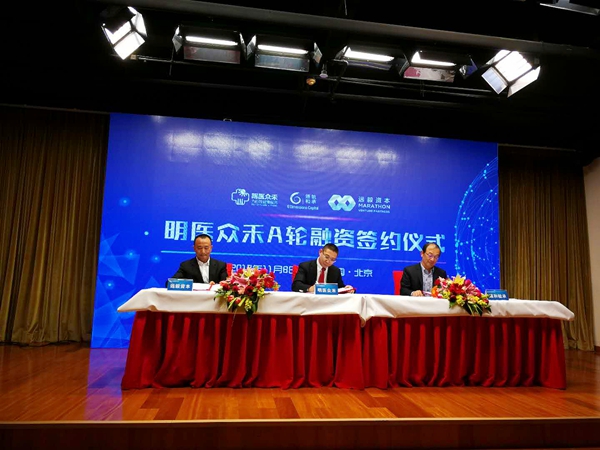
On November 8, Mingyi Zhonghe held a financing signing ceremony at the Celebrity International Grand Hotel in Beijing. At the event, it was officially announced that the company had successfully secured RMB 60 million in Series A financing, led by Alliances Healthcare Venture Capital and participated by Yuanyi Capital. Notably, Yuanyi Capital was also an investor in Mingyi Zhonghe’s Pre-A round.
Previously, Jiang Qiang had been extremely busy. His interview was originally scheduled for 1:30 PM, but as the preceding meeting ended 30 minutes early, the interview was moved up by 30 minutes. The interview lasted less than half an hour before he was urged by colleagues to rush to his next meeting, which continued until late that evening.
Jiang Qiang is the founder and chairman of Mingyi Zhonghe, a company dedicated to primary healthcare—a sector that may not sound particularly “profitable.”
This is an industry entangled with aspirations and reality, surrounded by a host of exciting policies and impressive data. For instance, in September 2015, the General Office of the State Council issued the “Guiding Opinions on Advancing the Construction of a Tiered Diagnosis and Treatment System,” which established assessment and evaluation criteria for pilot programs on tiered diagnosis and treatment. These criteria included a target that, by 2017, the proportion of consultations handled by primary healthcare institutions should account for no less than 65% of the total number of consultations. According to the 2016 Statistical Yearbook of Health and Family Planning, the number of consultations at primary healthcare institutions nationwide reached 4.34 billion in 2015, accounting for 56.4% of the total, with an average outpatient cost of RMB 97.7 per visit. If the proportion of consultations at primary care facilities were to reach 65%, assuming the average outpatient cost remained unchanged at the 2015 level of RMB 97.7, the annual outpatient expenditure at the primary care level would amount to RMB 488.7 billion. This figure would be even higher if inpatient costs incurred at primary healthcare institutions were also included.
There is, of course, an awkward side to this. China suffers from a severe shortage of high-quality medical talent at the primary care level, with a significant deficit in the number of general practitioners. Moreover, most of these practitioners have not undergone standardized residency training, resulting in relatively weak clinical diagnostic and treatment capabilities. Misdiagnoses are prone to occur in routine clinical practice. The gap between China’s primary care services and those in foreign countries is substantial, indicating that the market remains largely untapped. To a large extent, the primary care market in China is merely “appealing in appearance.”
However, this has not dampened the enthusiasm of numerous entrepreneurs to establish roots in grassroots healthcare. According to statistics from VCBeat in February 2017, more than 80 companies were already tapping into the grassroots medical market, offering various portable smart medical hardware, express delivery services for medical test specimens, and private chain community clinics. Among these, the most heavily entered sectors were information technology systems, chain clinics, and third-party services.
Most companies involved in primary healthcare focus on urban areas, but Mingyi Zhonghe has plunged headfirst into rural primary care. To gain a genuine understanding of the realities on the ground, Jiang Qiang, at the age of forty, resolutely gave up a comfortable and privileged lifestyle to live in villages, spending his days chatting and working alongside village doctors. “My wife often complains that instead of enjoying leisurely travels, I’ve embarked on yet another entrepreneurial journey,” says Jiang Qiang, with a look of pure contentment on his face.
As a pioneer and trailblazer in primary healthcare, Jiang Qiang led his team to immerse themselves at the grassroots level, conducting research, gathering requirements, testing, and refining their product, ultimately developing a clinic ecosystem service cloud SaaS platform named “Yidebang.”
Leveraging clinic informatization as its entry point, the platform comprehensively enhances clinics’ operational capabilities, systematically streamlining the workflows of village doctors to facilitate medical resource sharing and address the practical challenges of insufficient medical personnel and medications in primary healthcare. Currently, it has connected nearly 30,000 clinics, tangibly improving their diagnostic and treatment service capabilities.
The company’s rapid growth has attracted the attention of investors. Since June 2017, Jiang Qiang has been in frequent contact with investors and has received numerous offers.The closing of this financing round has bolstered Mingyi Zhonghe’s confidence. In addition to expanding its team, the funds will be used to strengthen marketing efforts and further penetrate the primary healthcare market.
Mingyi Zhonghe is preparing to launch a “scaled-up” campaign in the grassroots medical market of rural areas.
In this round of large-scale campaign, the battlefield selected by Jiang Qiang includesShandong, Henan, Hebei, Guangdong.“Why choose the rural markets in these regions?” This is a question Jiang Qiang and his team often face, including from senior executives at investment firms.
Before founding Mingyi Zhonghe, Jiang Qiang conducted extensive research. Based on a comprehensive evaluation of local grassroots demographics—including population size, density, and economic factors—he concluded that the ideal primary healthcare market for the project must feature a large population and a scarcity of high-quality medical resources. Provinces such as Shandong, Henan, Hebei, and Guangdong all meet these criteria. By accurately targeting these regions, Mingyi Zhonghe has achieved rapid growth. Currently, it covers nearly 30,000 clinics, with a future goal of capturing at least one-third of the market share in these areas, equivalent to serving 100,000 clinics.
Since launching his venture, Jiang Qiang, who has remained based in rural areas, has observed qualitative shifts in China’s grassroots healthcare market over the years, primarily in the following aspects:
First, in terms of the content of the policies issued, there are hierarchical diagnosis and treatment, the integration of two types of insurance, consistency evaluation of drugs, reform of the circulation system, and the two-invoice system. Each policy has proposed many specific measures that can be implemented and operated, and local governments at all levels have responded positively. In the past, medicines that could not be purchased at the grassroots level can now mostly be bought, even at your doorstep.
Second, the internet has permeated various industries, leading to highly developed integrated order-based transaction processes that are widely applied in urban areas. Meanwhile, rural internet infrastructure is also well-established, allowing urban internet services to be replicated in rural settings. In particular, with the continuous improvement of internet technologies and the ongoing advancement of healthcare policies, this dual-drive mechanism further facilitates the development of primary healthcare.
Third is the implementation of rural land transfer policies. Through land transfers, scaled-up, intensive, and modern agricultural business models can be developed, transforming farming from a mere social status into a true profession. In the past, constrained by traditional agricultural techniques and restrictive land policies, farmers were confined to their small, fragmented plots. Now, with land transferability, this change will inevitably drive a transformation in China’s rural economic model.
Changes in productivity will inevitably drive population development and spur the growth of modern service industries. Within this context, healthcare represents a rigid-demand service. Its operational model is shifting from isolated small clinics to scaled-up clusters in concentrated villages and small towns. This transformation will further mitigate the tendency of large hospitals to siphon off patients from primary care settings. As numerous centralized village communities are established, small and medium-sized clinics offering consolidated services will inevitably emerge. In these areas, the landscape will irreversibly evolve toward either chain clinics or specialized specialty clinics.
“I have personally witnessed many small villages grow into larger ones. Originally, three to five village clinics were consolidated into a single, larger clinic, which now generates an annual revenue of two to three million yuan,” said Jiang Qiang.
Fourth, rapid advancements in medical technology have led to the emergence of various intelligent, miniaturized, and portable medical devices. Leveraging advantages such as affordability and rapid test results, these devices have addressed the limitations of traditional diagnosis methods—relying solely on observation, auscultation, inquiry, and pulse-taking—in small clinics. They have also transformed village health rooms by moving beyond reliance on the “old trio” of traditional sphygmomanometers, thermometers, and stethoscopes. Widely embraced by rural physicians, these innovations have encouraged more patients to seek and remain within primary care settings.
In fact, these changes have propelled the growth of Mingyi Zhonghe. Since Jiang Qiang launched the company’s fundraising plan in June this year, it has attracted interest from numerous investment institutions; however, he has remained cautious throughout. He seeks investment partners who deeply align with the startup’s vision and possess a thorough understanding of the demands within the primary healthcare market.
During his engagements with these investment firms, Jiang Qiang ultimately chose Tonghe Yucheng and Yuanyi Capital. “They understand primary healthcare and have conducted on-site due diligence themselves, strongly aligning with our philosophy.”
Previously, these institutions also conducted field research at rural clinics, including those served by Mingyi Zhonghe and those that were not. In-depth visits and investigations revealed that the current status, changes, clinic needs, and future development trends at the grassroots level all align with the descriptions provided by Mingyi Zhonghe.
Following the completion of their due diligence, they swiftly reached an investment agreement, deciding to invest RMB 60 million in Mingyi Zhonghe and committing to work together toward shared goals in the future.
The “scaled replication” referred to by Jiang Qiang mainly means accelerating the expansion of market territory to cover more users.
Over the past few months, in addition to fundraising, he has been focused on developing the SaaS platform for Yidebang’s clinic ecosystem services, conducting frontline data research, and promoting its business model. He has also refined the roadmap for platform users’ medication purchasing needs and transaction behaviors, while streamlining processes across drug distributors, manufacturers, GSP-compliant warehousing and logistics providers, clinics, and service representatives within the cloud pharmacy model. Pilot deployments have now been completed and are operating efficiently, with partners across all sectors expressing strong alignment with his proposed model for restructuring pharmaceutical supply chains in primary healthcare.
In the primary healthcare market, particularly in rural clinics, the majority of revenue is derived from pharmaceuticals. Centered around the distribution of these drugs, there exists a large workforce of third-terminal pharmaceutical sales representatives at the grassroots level, serving as the bridge between clinics and drug suppliers.
Within the traditional pharmaceutical supply chain for primary care, each sales representative handles only a limited range of drug varieties. With the support of Mingyi Zhonghe’s “Cloud Pharmacy,” clinics can expand their drug offerings, while sales representatives can earn higher service fees from the increased product portfolio—achieving a win-win outcome.
“In fact, the strategy and logic behind the product are not complicated. The key lies in determining which model and methods to use to gain this group’s acceptance of our system for restructuring primary healthcare drug supply, and to unite them with us in promoting the product,” Jiang Qiang added.
So, how can the demand for medications at so many clinics be met?
On the one hand, Jiang Qiang has extensive resources due to his prior experience at a major pharmaceutical company. On the other hand, most members of his team also come from pharmaceutical companies, providing access to substantial manufacturer resources. This round of financing will significantly support the company’s future business development.
“Beyond the promising outlook for the primary healthcare market, the strong confidence instilled by founder Jiang Qiang and his team was a key factor in our partnership with Mingyi Zhonghe. We believe that Mingyi Zhonghe will play an increasingly vital role in the development of primary healthcare in China,” said Chen Lianyong, Founding Managing Partner and CEO of Tonghe Yucheng.
Yang Ruirong, a partner at Yuan Yi Capital, believes that “primary healthcare institutions are a key focus of Yuan Yi Capital’s strategic investments. Addressing the contradiction between public health needs and the inadequate, unbalanced development of healthcare services is a crucial starting point for China’s future medical reform policies. The advancement of internet technology will provide new approaches and tools to resolve this principal contradiction in the new era. ‘Primary Healthcare + Internet’ represents an explosive growth point driven by the dual forces of ‘policy + technology,’ holding immense potential.”
Additionally, the Yidebang platform comprises three components: Cloud Clinic, Cloud Healthcare, and Cloud Education. The Cloud Clinic is designed to enhance the daily management capabilities of village doctors. By leveraging cloud-based integration (iHIS + iERP + iCRM), it provides modules for electronic prescriptions, electronic medical records, patient management, and financial management, along with cloud-based solutions for health insurance interface integration. Furthermore, by integrating an intelligent clinical decision support system and a knowledge base, it standardizes clinical pathways and reduces misdiagnosis rates.
Cloud healthcare aims to establish specialized centers of excellence by connecting clinics with top-tier specialized hospitals and renowned experts, thereby forming a consortium that facilitates multidisciplinary consultations, bidirectional referrals, hierarchical coordination, information interoperability, and operational synergy, ultimately enhancing the brand recognition and reputation of primary care institutions within their local communities.
Cloud Education helps clinics enhance their diagnostic and treatment capabilities by providing offline training and a remote medical education platform for rural doctors, thereby continuously improving the clinics' diagnostic and therapeutic proficiency.
Jiang Qiang and his team believe that by leveraging internet technology and using clinic informatization as an entry point, it is possible to comprehensively enhance the operational capabilities of clinics, systematically streamline the workflows to meet the needs of village doctors, achieve the sharing of medical resources, and address the practical issues of insufficient medical personnel and medication in primary healthcare.
Currently, most entrepreneurs in primary healthcare focus their efforts on urban areas, with little expansion into rural regions. The vast distances and scattered distribution of rural clinics result in high costs for team expansion. These factors collectively deter many from investing substantial time, energy, human resources, material resources, and financial capital into developing the rural market.
However, the most critical factor in implementing tiered diagnosis and treatment is strengthening primary care. Only by improving the service quality of primary healthcare institutions, perfecting the primary medical service system, enhancing the medical environment, and reinforcing infrastructure can we ensure a more satisfactory healthcare experience for the public.
For a long time, the weakness of grassroots medical care in terms of human resources, financial support, and materials has made it an unpopular market. With policy inclination and continuous issuance of policies, this market has been reactivated, transforming it from an unpopular sector into a hot industry.
In a bustling industry, it is crucial to quickly identify breakthrough opportunities, develop products, and meet the needs of the majority. The past two years of practice by Mingyi Zhonghe have demonstrated that its clinic-centric services have gained recognition from partners, bringing Jiang Qiang considerable reassurance.
As primary healthcare initiatives advance, insurers, pharmaceutical companies, financial institutions, and internet firms have increasingly entered the field. Prior to this trend, Jiang Qiang had already explored the most effective ways to integrate grassroots healthcare with internet-based solutions, identifying their demand roadmaps and practical implementation pathways. This has given Mingyi Zhonghe a first-mover advantage in the new round of corporate competition.
“Our original aspiration is to serve the public’s health. We have always seen ourselves as road builders, paving a path toward ‘strengthening primary healthcare.’ Therefore, we have strategically focused on the most foundational levels of the medical network—such as grassroots clinics and village health rooms—the healthcare facilities closest to the people. We empower these institutions by providing comprehensive support services covering operational management, pharmaceutical supply, and tiered diagnosis and treatment. We will continue to uphold the philosophy of ‘empowerment, sharing, and restructuring’ to help address the difficulties and high costs faced by rural residents in accessing medical care. In the future, growth in the non-pharmaceutical sector will undoubtedly surpass that of the pharmaceutical sector,” said Jiang Qiang with confidence.
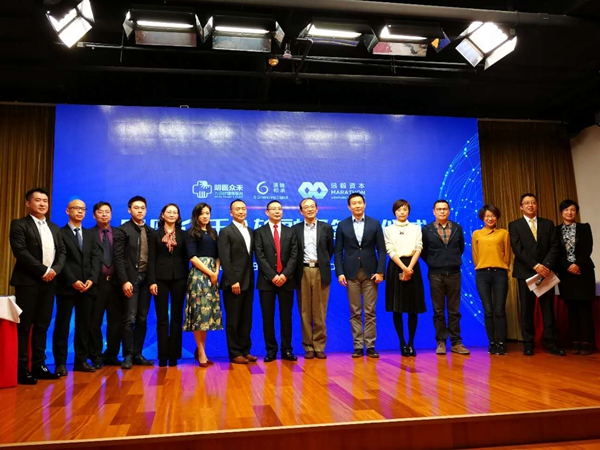
About Tonghe Yucheng
Tonghe Yucheng is a leading investment firm dedicated to the healthcare sector, with deep focus and extensive coverage of both the Chinese and U.S. markets. With offices in Shanghai and Hong Kong, China, as well as Boston and San Francisco, the United States, it has invested in and nurtured nearly 60 companies to date. Tonghe Yucheng was formed in May 2017 through the merger of two specialized and complementary healthcare investment firms with operations spanning China and the United States: Allpharma Capital and Yucheng Capital. Following the merger, Tonghe Yucheng has become one of the largest professional investment institutions in the industry, serving as a powerful engine driving innovative investment opportunities in life sciences and healthcare across the Pacific.
About Yuanyi Capital
Yuan Yi Capital is a venture capital fund established by industry veterans, managing both USD and RMB funds. It focuses on investing in early-stage and growth-stage enterprises in the healthcare and innovative financial technology sectors. Leveraging in-depth, continuous industry research and support from world-class industry experts, Yuan Yi is committed to identifying the most innovative rising stars globally. By capitalizing on the significant opportunities arising from market-oriented reforms, it closely monitors advanced technologies and innovative models that play a pivotal role in building new ecosystems. Yuan Yi seeks out innovative companies with prominent growth opportunities, high-caliber teams, and strong core competencies. Post-investment, Yuan Yi works closely with its portfolio companies to significantly enhance their capabilities in strategy, operations, market expansion, and international collaboration.