

Ningbo No.2 Hospital Vice President Zheng Jianjun Outlines Four Key Considerations for Adopting Medical AI Products
Medical AI has now evolved to produce several relatively mature products that are capable of entering clinical trials in hospitals. However, due to the incomplete regulatory framework, the clinical implementation of medical AI has drawn significant attention.
“A transitional approach can be adopted first by issuing a ‘temporary license’ to AI products, allowing them to undergo initial clinical trials to assist in clinical diagnosis and treatment decision-making, while continuously improving the products themselves.”At this year's China Hospital Presidents Conference, Zheng Jianjun, Vice President of Ningbo No. 2 Hospital, responded to VCBeat when addressing this issue.
This year, amidst the wave of artificial intelligence, Ningbo No. 2 Hospital partnered with Yasen Technology to customize an AI system tailored for both the hospital itself and its affiliated hospitals within the medical consortium. In light of this collaboration, VCBeat conducted an exclusive interview with them.
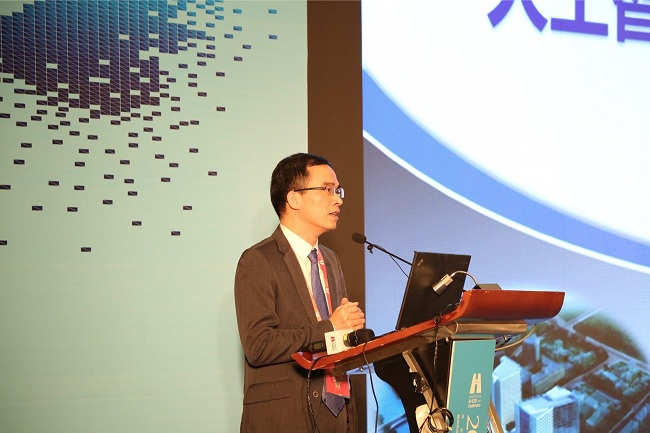
Zheng Jianjun
In the development of a tiered diagnosis and treatment system, the “Two Downward Transfers and Two Improvements” initiative strengthens primary care. Strengthening primary care requires a multi-faceted approach.
In terms of diagnosis, primary care physicians lack sufficient ability to analyze and apply medical data from X-rays, ultrasounds, laboratory tests, electrocardiograms, and other sources. Throughout the entire medical process, patients possess 100% of the information regarding their disease. If physicians can obtain and process 100% of this disease information through diagnostic examinations, primary care physicians would perform as if they were “Hua Tuo reincarnated.” However, if physicians only acquire 30% of the information, the reliability of the diagnosis and treatment outcomes cannot be guaranteed.
The advent of artificial intelligence technology can help primary care physicians access more information related to patients' diseases and assist them in processing and analyzing this data, thereby enhancing the diagnostic and treatment capabilities of primary care physicians.
In terms of treatment, primary care physicians often have insufficient knowledge of clinical guidelines, medical literature, and decision-making frameworks. Zheng Jianjun believes that leveraging artificial intelligence to help primary care physicians enhance their understanding and mastery of these areas significantly aids them in making rational diagnostic and therapeutic decisions. This is also a key reason why many intelligent computer-aided diagnosis systems are being deployed in primary healthcare institutions.
It is worth noting that AI systems serving primary care must be designed as general practitioner systems, rather than simply replicating the specialized diagnostic and treatment technologies and expertise of tertiary hospitals directly to the grassroots level.
Digitalization and intelligence are current development trends in healthcare. The daily operations of hospitals are divided into three components: clinical care, teaching, and scientific research. These three aspects mutually reinforce and integrate with one another. Zheng Jianjun stated that hospitals also take these factors into consideration when introducing medical AI products.
First, the most pressing issue in China’s healthcare sector is the lack of standardized diagnosis and treatment. Zheng Jianjun stated that, compared with Western countries, difficulties and high costs in accessing medical care are not the primary contradiction in China. The core issue lies in the uneven clinical competence among physicians; however, many patients insist on seeking consultations only with top-tier domestic experts, which constitutes the main contradiction.
For instance, the capabilities of high-level physicians in China are no weaker than those in the United States; however, the overall standard of clinical care in the U.S. is generally higher because American specialists must score 90 out of 100 to obtain a medical license, whereas the passing score in China is 60. As a result, there is 90% consistency among U.S. physicians in diagnosing and treating the same disease, while in China, the management of the same condition may yield four to five different opinions, leading to non-standardized clinical practices.
This issue can be addressed by enhancing physicians’ diagnostic and treatment capabilities through AI-based clinical decision support systems, such as Yasen’s current “Tianji” system.
Second, enhance the acquisition and analysis of information. The diagnostic and treatment process is akin to solving a criminal case; it is based on the collection of information, where the greater the amount of information obtained, the higher the likelihood of reaching an accurate diagnosis.
Typically, the naked eye can only perceive morphological features, grayscale boundaries, and metabolic information from medical images. However, hidden image information such as structural details and texture patterns can only be extracted through computational techniques. The application of artificial intelligence technologies assists physicians in acquiring and analyzing these data.
Third, hospital operational management. By leveraging artificial intelligence to optimize clinical pathways and patient care processes, hospitals can reduce diagnostic and treatment errors while enhancing patients’ experience and sense of benefit. Intelligent assessment of pharmaceuticals, medical consumables, and cost control contributes to rational medical practice, improves performance, and lowers both medical expenses and operational costs.
Fourth, in the realms of teaching and scientific research. By leveraging artificial intelligence (AI) technology to provide intelligent assistants for resident physicians, it is beneficial to enhance the standardization of residency training. The big data platform for scientific research, built upon AI technology, plays a crucial role in assisting physicians with information collection and analysis. A user-friendly research platform can help hospitals cultivate medical talent and continuously strengthen their competitiveness.
Overall, artificial intelligence can help hospitals improve efficiency and effectiveness in areas such as disease diagnosis and treatment, clinical research, talent development, hospital management, medical quality control, and rational cost containment.
Zheng Jianjun stated that, in the past, domestic R&D efforts typically saw hospitals and enterprises operating in silos, developing independently and remaining disconnected from one another, which resulted in wasted time and financial resources and hindered technological advancement.
For enterprises, product research and development should be guided by clinical needs, market dynamics, and policy regulations. Physicians possess extensive clinical experience and a clear understanding of clinical pain points; however, they often lack the IT expertise to address these issues technically. This necessitates a collaborative approach between medicine and engineering, whereby physicians communicate their requirements to technical professionals, who then develop solutions to resolve clinical challenges.
In the course of its collaboration with Yasen, Yasen did not simply deploy off-the-shelf products at Ningbo No. 2 Hospital. Instead, the process began with a letter of intent, after which the hospital specified its requirements. Yasen then modified its existing products, building upon its prior R&D efforts, to meet the hospital’s specific needs.
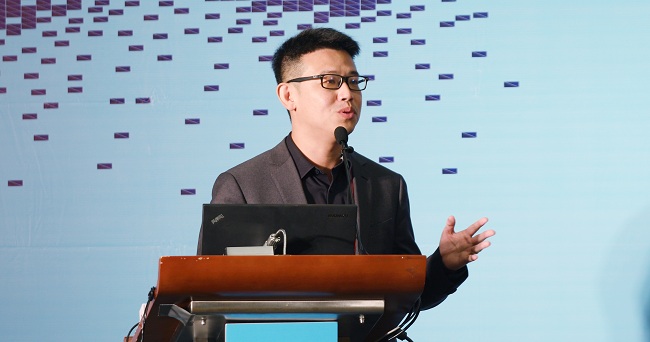
Yasen Technology CEO Chen Hui
Such collaboration enables the integration of industry, academia, medicine, research, and application. Enterprises, hospitals, and research institutions each fulfill their respective roles and contribute their expertise.
During this integration process, corporate collaborations were also facilitated through the hospital’s intermediation.
Zheng Jianjun stated that artificial intelligence is still in its early stages, with enterprises typically focusing on isolated points of research. However, modern healthcare is characterized by integrated care, requiring multi-party participation. For instance, the diagnosis of lung cancer involves not only the identification of pulmonary nodules but also multimodal, multidisciplinary integration encompassing clinical, pathological, and even genetic information.
On the other hand, many AI companies currently focus solely on software development; however, it is the integration of hardware and software that yields superior performance, thereby necessitating collaboration among enterprises.
This idea aligns perfectly with Chen Hui, CEO of Yasen Technology. When discussing Yasen’s business model, Chen noted that gaining hospital access with a single product can be challenging. However, products that enhance a department’s overall capabilities in screening, diagnosis, and prognosis are welcomed by hospital administrators, who are willing to pay for such value.
Yasen is currently developing a comprehensive diagnostic platform for pulmonary diseases, which requires the collection of multi-modal data—including clinical cases, pathology, CT, and PET scans—to perform whole-lung analysis.
In this process, Yasen will choose to collaborate with other AI companies to jointly build this platform. Currently, Yasen is already in discussions with several companies, including those specializing in case structuring and medication adherence, among others.
Furthermore, hospitals are also responsible for medical quality management. For instance, the data provided by hospitals to enterprises must be secure and compliant with the requirements of evidence-based medicine, clinical guidelines, and clinical pathway standards. Once enterprise products reach maturity, hospitals must also exercise rigorous oversight to ensure the safety and efficacy of clinical products introduced into their facilities.
Regarding the shortcomings in industry development, Zheng Jianjun stated that current publicity surrounding artificial intelligence has been somewhat exaggerated. While such promotion may accelerate public awareness of the technology, industry professionals must remain discerning. Medical AI products are still in their early stages and have substantial room for growth.
Secondly, there is an urgent need to establish standards for the healthcare industry and data.Just as a stable foundation ensures a sturdy house, the establishment of standards enables enterprises to optimize integration, focus their efforts, and pursue differentiated development. Zheng Jianjun stated that they are currently advocating for the drafting of such proposals...
Finally, legal frameworks need to be improved.In certain areas, the development of AI applications in China has surpassed that of the United States. This is partly due to regulatory gaps in this field, which have spurred companies into a phase of rapid, unchecked growth. However, when these companies seek certification from the China Food and Drug Administration (CFDA), they encounter significant hurdles. AI products often have extremely short update cycles—sometimes as brief as a few days or one week—yet China lacks dedicated teams or departments specifically tasked with certifying such products. This absence inadvertently hinders industry progress. Therefore, there is an urgent need to refine relevant regulations and policies, or at least implement interim transitional measures.
Zheng Jianjun suggested that transitional policies be adopted to provide initial regulation for industry development. By issuing “temporary licenses” for relatively mature products, they could be allowed to enter the market. In an era of cautious exploration, this approach is certainly worth considering.