

LM-Dental Files IPO Prospectus: Pioneering Early Orthodontic Intervention for Mixed Dentition Children with Myobrace-Based Technology from Finland
Chinese parents often spare no expense on their children’s education and emotional intelligence training, yet they remain vague in their awareness of oral health management or struggle to find appropriate solutions for dental issues. According to surveys, the caries prevalence among 5-year-old children in China is 71.9%, with a mean dmft (decayed, missing, and filled teeth) score of 4.24, indicating that each child has an average of 4.24 decayed teeth.
The survey on the prevalence of malocclusion in China conducted by the Orthodontic Professional Committee of the Chinese Stomatological Association showed that the prevalence was 51.84% during the primary dentition period, 71.21% during the mixed dentition period, and 72.92% during the permanent dentition period.
The prevalence of dental caries and malocclusion in children is very high and continues to rise. Due to a lack of parental awareness, the optimal treatment window during the mixed dentition stage (ages 5–12) is often missed, leading to irreversible consequences for the child’s long-term oral health.
Furthermore, the shortage of pediatric dentists is a major pain point in the industry. There are only 2,200 pediatric dentists registered with the Pediatric Dentistry Committee of the Chinese Stomatological Association, making it difficult for parents to find suitable specialists locally. The key to addressing these issues lies in early prevention and intervention.
Romu Chimeikang appliances are specialized products designed for the early orthodontic treatment of malocclusions in children aged 5–12 during the mixed dentition stage. With over 600,000 cases completed worldwide, Romu entered the Chinese market in 2011. What technologies and philosophies does the company advocate? To find out, VCBeat (WeChat ID: vcbeat) conducted an exclusive interview with Professor J. Varrela, the inventor of Romu’s occlusal guidance system.

Prof. J. Varrela, Inventor of the Romu Occlusal Guidance System
Romu originates from Planmeca, the largest multinational dental equipment group in Finland. As is well known, the latter enjoys a reputation as an “innovation leader” in the global dental industry and allocates 10% of its annual revenue to innovative research and development of its products.
LM-Dental (commonly known as LM) is a subsidiary of Planmeca, established in 1973. Many of its advanced products, including orthodontic devices, ultrasonic instruments, and dental tracking systems, are exported globally. Among these, LM’s occlusal guidance technology is widely used in developed countries across Europe and the United States, serving as one of its best-selling and flagship product lines. The LM Activator appliance enables the prevention and management of malocclusion during the mixed dentition period in children.
In 2011, Romu entered the Chinese market, initially conducting clinical research at prestigious institutions such as Peking University School of Stomatology, West China School of Stomatology, and Shanghai Ninth People’s Hospital. By the end of 2014, it received authoritative certification from the China Food and Drug Administration (CFDA) and began operations in select high-end dental clinics across China, accumulating extensive clinical expertise. As an early orthodontic system for children, Romu Chimeikang has obtained authoritative certifications from the U.S. FDA and the European CE mark, and is widely used in many countries from Europe to North America.
Professor Varrella, the inventor of Romu occlusal guidance, visits China for academic exchanges one to two times annually. He actively participates in high-end domestic academic forums on pediatric dentistry, promoting advanced international concepts of early orthodontic intervention for malocclusion through occlusal guidance, thereby introducing this early intervention treatment philosophy to us.
Professor Vorrela told reporters, “In Finland, there are approximately 50,000 newborns each year, with a malocclusion prevalence of 25%. Children establish positive relationships with dentists at an early age, and thousands of pediatric malocclusion cases are treated annually in Finland.”
Professor Vorrela earned his Ph.D. in Orthodontics from the Faculty of Dentistry at the University of Turku, Finland, as early as 1984. He has taught, conducted research, and worked in Finland, the United Kingdom, and Canada. For over two decades, he has been dedicated to the prevention and treatment of early malocclusion in children, establishing himself as an international leader in this field.
In recognition of his contributions to Finland’s national oral health, he was awarded the First Class Knight’s Cross of the Order of the White Rose of Finland and named a Gold Member of the Finnish Dental Association. It is reported that fewer than ten individuals in Finland have received this honor.
In addition, Prof. J. Varrela serves on the editorial boards of 18 international medical journals, is a member of six international orthodontic associations, and has published 72 academic papers and patents. Currently, Prof. Varrela is the Dean of the Faculty of Dentistry at the University of Turku in Finland and has been invited as a keynote speaker at more than 30 international conferences.
Although the early intervention effects of the Romu occlusal guidance technique are promising, Professor Vorrela conducted a 13-year longitudinal study in two small towns in Finland to substantiate its efficacy through large-scale evidence-based medicine and clinical practice, thereby confirming the advantages and stability of the Romu occlusal guidance technique in early orthodontic correction for children.
He stated, “The two towns are ten kilometers apart. One town selected 167 children to wear orthodontic appliances, while the control group consisted of 104 children, with a mean age of 5.1 years. After three years, it was found that the treated group showed significant improvement in nearly all aspects of oral health compared to the untreated group. The control group then received orthodontic appliance treatment for an additional two years. We followed these children until age 17, and ultimately, none required traditional extraction-based orthodontics, nor did any require Phase II orthodontic treatment.”
These are the substantial benefits of early childhood intervention, which have also become a national policy in Finland, where early orthodontic correction for children under the age of 12 is provided free of charge. He stated, “Parents in Europe and the United States already recognize the importance of early orthodontic correction, which offers superior cost-effectiveness and clinical outcomes compared to adult orthodontics covered by insurance claims.”
Regarding the current state of parental awareness in China, he stated: “In Finland, parents are very strict about managing their children’s health. In contrast, Chinese parents have yet to develop even the most basic habit of taking their children to hospitals regularly for pediatric fluoride varnish applications and dental sealants.”
The traditional view holds that the optimal time for orthodontic correction of malocclusion in children is after the age of 12. However, by this stage, children have already completed the transition from primary to permanent dentition, which may necessitate tooth extraction as part of the orthodontic treatment.
“The mixed dentition stage (ages 5–12) is the golden period for orthodontic treatment. We should help more children develop straight and healthy permanent teeth from the onset of tooth eruption.” Professor Vorilla has consistently emphasized the importance of early intervention for the permanent dentition during the mixed dentition stage.
The 2017 Shanghai Summit on Pediatric Malocclusion was successfully convened. Academician Zhang Zhiyuan presided over the establishment of the “Expert Group on Pediatric Occlusal Guidance.” Leading stomatologists across China jointly advocated for early orthodontic intervention during the mixed dentition stage, marking a new milestone in pediatric malocclusion treatment and garnering increasing attention from dental professionals and parents alike. Professor Worrell, as the sole invited international oral health expert, attended the summit and became a member of the “Expert Group on Pediatric Occlusal Guidance.”

“Expert Group on Pediatric Occlusal Guidance” Established in Shanghai
Reporters learned that the Romu occlusal guidance appliance, supported by medical-grade silicone safe for the human body, can expand dental arch length, guide jawbone development, improve the occlusal relationship between the upper and lower jaws, and enhance tooth alignment.
When worn by children, the device is used only at night. In addition to early correction of malocclusion, it can also improve poor oral habits such as bruxism, snoring, and mouth breathing. It offers the advantages of being painless, invisible, safe, comfortable, effective, and worry-free.
The benefits of occlusal guidance in children include boosting their confidence during growth and development, guiding normal skeletal development to enhance facial aesthetics, increasing the likelihood of preserving permanent teeth, reducing the risk of dental trauma, correcting malocclusions, and lowering subsequent treatment costs.
Regarding the opinions of Chinese parents, Professor Vorella stated, “For early orthodontic treatment of malocclusion, parents should choose professional and reliable medical service providers; quality of service and reputation are more important than price.”
Physician training is the most critical component in the promotion of Romu occlusal guidance appliances. Its physician training system comprises three aspects:
1. Specially developed training courses for physicians to facilitate mastery;
2. Establish a Romu training base in collaboration with authoritative medical institutions;
3. Jointly offer Romu continuing education courses with dental schools.
After Romu was introduced to China, clinical studies were first conducted at the Peking University School of Stomatology. Professor Ge Lihong from the Peking University School of Stomatology carried out extensive clinical research, demonstrating the efficacy of Romu’s occlusal guidance. Subsequently, clinical studies were also conducted at the West China School of Stomatology, Shanghai Ninth People’s Hospital, and the Affiliated Stomatological Hospital of Guangzhou Medical University.
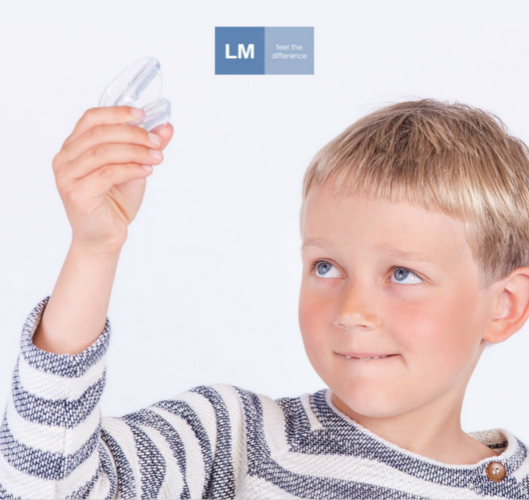
Children only need to wear it at night for early correction of malocclusion.
In 2014, Romu Occlusal Guidance received certification from the China Food and Drug Administration (CFDA). In 2015, it began providing medical services at Qingmiao Children's Dentistry and optimized and upgraded its products based on the oral health conditions of Chinese children. In 2017, Romu Occlusal Guidance products were officially launched to support social medical institutions in delivering treatment services. Romu has primarily expanded in the following four areas:
Clinical Research:Collaborating with China’s top stomatology institutions, Remu Occlusal Guidance is being used in clinical studies for the early orthodontic treatment of malocclusion in children across China. Partner institutions include Peking University School and Hospital of Stomatology, Shanghai Ninth People’s Hospital, West China School of Stomatology, and The Affiliated Stomatological Hospital of Guangzhou Medical University, among others.
In terms of medical services:Collaborating with leading domestic dental chains, including Qingmiao Children's Dentistry, Arrail Dental, Ruitai Dental, and Happy Dental, to provide Romu occlusal guidance and early orthodontic services, thereby supporting the healthy growth of children.
Market Education:Conduct oral health education for parents in collaboration with schools, kindergartens, and children’s training or activity institutions. Meanwhile, partner with renowned oral care brands Crest and Oral-B, as well as BabyTree, to carry out oral health education initiatives.
Regarding the Training Base:Romu is actively collaborating with domestic dental institutions to establish Romu training centers in Beijing, Shanghai, Guangzhou, Shenzhen, and Chongqing, training dentists to provide early orthodontic treatment for children with malocclusion.
During its promotional campaigns, Romu has consistently focused on first-tier cities such as Beijing, Shanghai, Guangzhou, Shenzhen, and Chengdu, partnering exclusively with professional dental institutions and prioritizing education for families with strong oral health awareness.
Romu’s products are technology-driven solutions based on big data models. Romu is currently developing a digital medical record management platform for clinics and physicians, facilitating patient management and enabling timely access to technical support services from the Romu Center. The online platform is a cloud-based SaaS system, allowing clinics to easily integrate with its technical infrastructure. The platform is expected to launch and become operational within the year.