

Five Key Barriers to Clinical Adoption of Wearable Devices: Data Integration and Utilization Still in Early Stages
Nowadays, hospitals are increasingly adopting wearable and remote patient monitoring devices, but the widespread adoption of these tools still faces a series of obstacles.
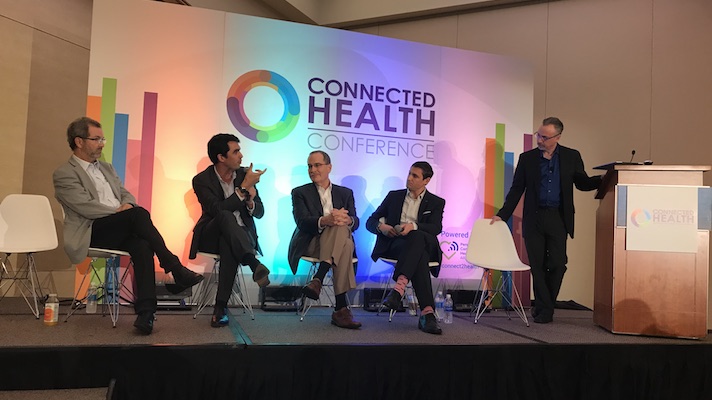
At the Connected Health Conference recently held in Boston, physicians and industry insiders repeatedly discussed the utility of wearable devices and offered a range of insights on how to prepare for widespread deployment. VCBeat (WeChat ID: vcbeat) has compiled the key highlights from the conference.
James Mault, Chief Medical Officer of Qualcomm Life, noted that the company provides remote monitoring technology to multiple healthcare providers, emphasizing the practicality of this technology in the current era. Mault stated, “As physicians, we tend to focus on clinical practices within hospitals. I believeThe problem is that once patients leave the hospital, we no longer have access to their data."This is actually a black hole."
He believes that currently, clinicians merely prescribe medications and schedule follow-up appointments, remaining entirely unaware of what happens to patients after they leave the hospital ward. “However, wearable devices can help us collect some basic data. Even this limited information is more than what I currently have access to.”
Healthcare innovators’ expectations for wearable devices extend far beyond “better than nothing.” Based on discussions among experts at the 2017 Connected Health Conference, we conclude that wearables must make strides in five key areas to truly shine in the healthcare sector.
Richard Milani, Chief Clinical Transformation Officer at Ochsner Health System, stated that the clinical application of wearable devices is not yet widespread.
He stated, “Clearly, we are already able to obtain important activity data from wearable devices. We often discuss sleep data, but it actually holds little value because it is not yet accurate enough. If you ask any healthcare provider whether these data are useful, their answer will be negative.” From the perspective of wearables, truly valuable insights are just one step away.
Now we canMonitoring atrial fibrillation, such data is of critical importance.. Milani believes this could be the most significant breakthrough we are likely to see in standard wearable devices.
In addition to atrial fibrillation, Milani also believes that once the technology further advances and can be truly implemented in non-invasive wearable devices,Blood glucose monitoring may also become a useful technology in the future.。
He stated, “Currently, the data we collect from wearable devices remains very limited, but the imminent advancements on the horizon will be quite exciting.”
Drew Schiller is the CEO and co-founder of Validic, a company dedicated to helping hospitals implement and manage data from remote monitoring devices. He stated that the company is working to address the fundamental contradiction between electronic health records and wearable technology.
How to Align Consumer Data Models from Wearables and Continuous Monitoring Devices with the Episodic Care Model in Clinical Settings? Schiller stated, “Electronic health record systems are highly episodic. The interaction begins when the patient enters the examination room and ends as soon as they leave. These two models do not integrate well, posing a significant challenge.”
Dr. Jordan Shlain, Founder and CEO of HealthLoop, believes that electronic health records and remote monitoring are like two pieces of a puzzle.
He stated, “Many of the technologies we have developed are excellent, such as Electronic Health Record (EHR) systems and Personal Health Record (PHR) systems, both of which end with the letter ‘R’ for ‘Record.’ This means thatThese technologies can only tell you what has happened in the past, not what is happening now.。”
Dr. Jordan Shlain explained, “I believe the more compelling aspect of remote monitoring is its ability to inform us about what is happening in real time, rather than merely recounting what has already occurred. We need both; documenting the past is not the sole solution—it is just one piece of the puzzle. I think the true power of technology will lie in informing us about current events and making predictions to apprise us of future developments.”
Easier said than done; the key to resolving this challenge lies in creating a suite of intelligent systems.
Mault said, “Frankly speaking, if you simply dump all the data into the electronic health record system, it’s basically a lost cause. Even with certain thresholds in place,”No one wants to see thousands of blood pressure measurements flooding into their electronic health record system every morning.。”
The intelligent system we envision is basically one thatA system for automated monitoring of data, where the data are not isolated but contextualized.This system is essentially an intelligent screening tool that monitors data and flags the portions requiring physicians’ focused attention. In this way, we can invert the cost curve, enabling us to care for more patients at a fraction of the cost while achieving better outcomes.
Mault pointed out that the data provided by the device must not only be accurate, but also convince physicians of its accuracy.
He said, “We will enable doctors to care for hundreds or even thousands of patients without the need for in-person consultations, relying entirely on electronic data reported through the system. Patients will measure their own blood glucose, blood pressure, and body weight, while physicians will make medical decisions, adjust medications, and modify treatment plans based on the data they review.”
As Chairman of the Consumer Technology Association’s Health and Fitness Technology Board, Mault is developing a plan aimed at addressing this issue through authorized labeling for monitoring devices.
If you purchase a device at Walgreens to measure heart rate or blood pressure, there should be a label on these devices, similar to the food labels on products you buy at a grocery store. One label might state that the device’s accuracy is ±3%, while another might indicate ±20%. Which device would your doctor recommend you use at home?
We hope that everyone can see this information and make their own decisions, but it is equally important that when data is transmitted to any electronic medical record system, clinicians need these systems to show us the source of the data and the accuracy of the measurement results from the devices.
Alexis Normand, Head of B2B at Nokia Digital Health, also believes that data accuracy is an issue. Furthermore, he stated that Nokia Digital Health has been considering how wearable devices can unlock their potential during everyday use.
He stated, “We recognize the value of wearable devices, but we also face challenges: how to retain users and encourage sustained use, and how to convince clinicians that the data generated are accurate and reliable. While we may achieve comprehensive health insights in the future, for now, the primary function of these devices is simply to maintain a continuous flow of data. Making these devices operational is straightforward; however, we must design products compelling enough to motivate long-term, consistent user engagement.”
Normand believes that a certain aspect of user retention has not been integrated with the concept of wearables. He stated, “Not everything needs to be tied to wearable devices. A significant portion of our work involves validating data, encouraging continuous device usage, and maintaining user engagement.”
Most of our current work is not about creating experiences or habits that people have never had before. For example, we designed a watch-based device by building on people’s existing habit of wearing watches. Our goal is not to create new devices but to enhance the devices people already use. Normand believes that generating user retention in this form is more valuable.
Milani also believes that limiting efforts solely to wearable devices is inadvisable.
He stated, “Wearable devices are an important component of our future, but what we fundamentally seek is information—the most perfect information. This does not necessarily have to be achieved through wearable devices. We can certainly obtain information via SMS or call tracking; this form of intervention is low-cost and provides me with a substantial amount of data.”
For Mault, the solution lies in making wearable devices smaller and more affordable, much like the biometric patch currently under development by Qualcomm Life.
He stated, “The key is that it must be extremely simple and effortless. This will make these devices more ubiquitous and cost-effective. When you are planning for surgery, your insurance company will send you some small devices. By wearing them around the clock, anesthesiologists can obtain your movement characteristics, breathing patterns, and body temperature data.”
The shift in nursing from volume-based to value-based care has been slower than expected, making it difficult to implement remote monitoring interventions.
Former National Coordinator for Health Information Technology Karen DeSalvo believes that, in addition to technology, payment models are also a driving force. He said, “The healthcare system,”The greater the flexibility physicians and others have in payment methods, the more creativity and innovation they will achieve.。”
For those still scrambling to cover medical expenses, reimbursement remains difficult.
Milani stated, “Medicare provides limited reimbursement for patients, while Medicaid effectively provides none.” These factors are highly variable, and we have a responsibility to ensure that our interventions are applicable to all individuals, not just those with insurance coverage. Therefore, these are all considerations we must take into account when aiming to deliver care that achieves the best outcomes at the lowest cost.
For suppliers, even efforts to attract customers are often hindered by budgets that are unfavorable to innovation.
He said, “When we present viable solutions to hospitals, they respond that, in fact, the hospital lacks the budget and is striving to cut costs.”
In the healthcare sector, products purchased by users often do not yield immediate results. Therefore, we must bridge this temporal gap. Changing a tire on a moving car is indeed extremely difficult, yet all companies engaged in therapeutic services have no other choice. This is the true adventure in the real world.
Wearable devices can bridge the data gap during the period when patients are away from the hospital, thereby helping physicians continuously monitor patients’ dynamic health information.Currently, the integration and utilization of these data remain at a preliminary stage., based on the efforts in the aforementioned five areas, wearable devices have substantial potential to contribute to the medical field in the future.
References:
http://www.mobihealthnews.com/content/five-barriers-wider-clinical-wearable-adoption