

QingMiao Children's Dental Files IPO Prospectus: Pioneering Early Orthodontic Intervention with Lumo Technology
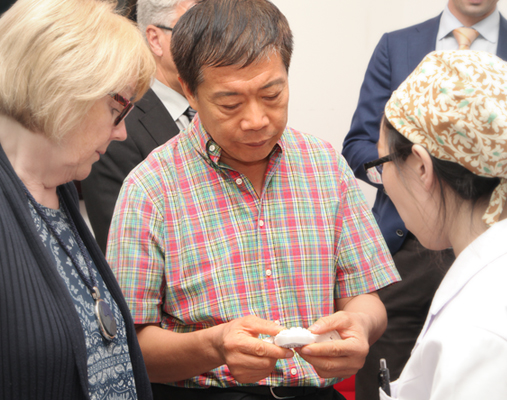
Dr. Yue Jiang (center), Founder of Qingmiao Children's Dental
The 2017 National Academic Conference on Preventive Dentistry was held at the School of Stomatology, Chongqing Medical University. During a break in the conference, the reporter met with Dr. Yue Jiang, founder of Qingmiao Children's Dentistry. After brief pleasantries, Dr. Yue emphasized the critical importance of preventive dental care to the reporter.
“Prevention is essential for pediatric oral diseases—a conviction I firmly hold,” he said.
The primary oral health issues in children are dental caries and malocclusion. The prevalence of dental caries among 5-year-old children in China is 71.9%. According to a survey conducted by the Orthodontics Committee of the Chinese Stomatological Association in 2000, the prevalence of malocclusion was 51.84% during the primary dentition stage, 71.21% during the mixed dentition stage, and 72.92% during the permanent dentition stage, indicating a considerably high incidence rate. Due to improvements in living standards and the increasingly refined nature of diets in recent years, the current prevalence of malocclusion is even higher than that reported in 2000.
Chinese parents generally have low awareness of oral health, rarely taking their children to hospitals for regular fluoride varnish applications and pit and fissure sealants. Furthermore, children have not developed habits such as rinsing their mouths after meals, brushing correctly using the Bass method, and limiting the consumption of acidic, irritating foods and high-sugar foods.
Additionally, pain points in pediatric dental care include a lack of specialized pediatric dental institutions and pediatric dentists, with orthodontically trained dentists being even scarcer.
Qingmiao Pediatric Dentistry is a specialized dental healthcare institution focused on the oral health of children in the mixed dentition stage (ages 5–12). What pediatric dental issues can this institution address, and what is its current development status? VCBeat (WeChat ID: vcbeat) conducted an exclusive interview with Dr. Yue Jiang, founder of Qingmiao Pediatric Dentistry.
Dr. Yue Jiang told reporters that his founding of Qingmiao Pediatric Dentistry was initially inspired by the fact that both his elder and second daughters effectively resolved malocclusion issues during their mixed dentition phase through the use of occlusal guidance appliances in the United States. At the time, this was already a widely adopted technique abroad for preventing malocclusion during the period of primary-to-permanent tooth transition.
However, in China, cases of malocclusion are often highly complex. “Doctors in Europe and the United States are puzzled as to why treatment is initiated only after a child’s malocclusion has become so severe, and why it is necessary to wait until age 12, when all permanent teeth have erupted. They believe that prevention is the most cost-effective and safest approach, and I am confident that China will gradually move in this direction.”
Qingmiao Children's Dentistry adopts the Myobrace occlusal guidance technology from Finland. As an early orthodontic system for children, it has received authoritative certifications from the U.S. FDA and European CE, and is widely used in many countries around the world.
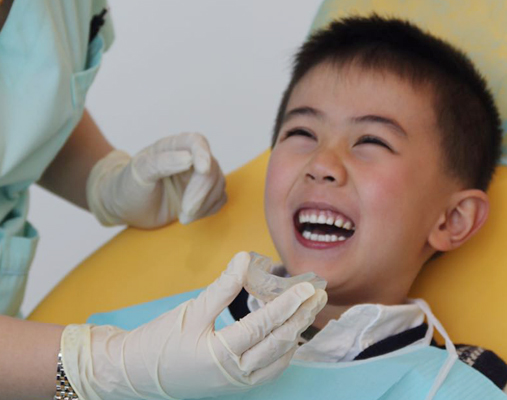
Worn only at night for sustained efficacy, with no impact on daytime study and daily life.
“A clear message is that malocclusion should be prevented early to keep protruding or misaligned teeth from worsening. In addition to early orthodontic correction of malocclusion, the Romu occlusal guidance appliance can also help correct unfavorable oral habits in children, such as bruxism, snoring, and mouth breathing. Even if a small number of children require phase II treatment, the orthodontic process will be much simpler.”
“I was deeply moved to learn that Professor Warreila, the inventor of Romu occlusal guidance, conducted a 13-year clinical study in Finland involving more than 200 children from an evidence-based medicine perspective. I am determined to apply this new technique, which offers advantages and stability in early orthodontic correction for children, to my young patients at Qingmiao Pediatric Dentistry. My third daughter also successfully had her malocclusion treated at Qingmiao Pediatric Dentistry during her mixed dentition stage,” he said.
Dr. Yue Jiang’s passion for cutting-edge products and technologies in pediatric dentistry is grounded in his profound technical expertise.
It has been learned that Dr. Yue Jiang studied in the United States in 1986, earned his Ph.D. from The Ohio State University in 1991, and subsequently became a postdoctoral fellow at the Massachusetts Institute of Technology (MIT). During his doctoral and postdoctoral studies in the U.S., he studied under Nobel Laureates Professor Alan MacDiarmid and Professor Richard Schrock.
After completing his postdoctoral research at MIT, he joined Procter & Gamble (P&G), where he became the inventor of multiple key technologies for the Crest brand and was promoted to Global Chief Scientist of P&G Oral Care.
Dr. Yue has over 20 years of experience in cutting-edge oral care knowledge and technological innovation, with a total of 22 U.S. and international patents filed and more than 20 academic papers published in international professional journals.
In 2011, Dr. Yue Jiang introduced advanced occlusal guidance techniques from Europe and the United States to China, with the aim of enabling every Chinese child to develop straight teeth, symmetrical facial features, and a confident smile from an early age.
In 2014, he co-founded Qingmiao Children's Dental Care with several executives from Fortune 500 companies. The company currently operates 10 directly-owned flagship clinics in Beijing, Shanghai, Guangzhou, Shenzhen, Tianjin, Chengdu, and Chongqing, and has received investments from Morningside Venture Capital and Shuanghu Capital.
The mixed dentition stage (ages 5–12) is the golden period for orthodontic treatment. Qingmiao Pediatric Dentistry is the first specialized dental healthcare institution in China dedicated to oral health of children during the mixed dentition stage, providing professional pediatric orthodontic services to thousands of children annually.
Dr. Yue explained, “During childhood development, misalignment of teeth, abnormal occlusal relationships, and anomalies in the shape and position of the jaws—caused by congenital genetic factors and acquired environmental factors—are collectively referred to as malocclusion. This includes conditions commonly known as prominent canines (‘tiger teeth’), protruding upper teeth (‘buck teeth’), and anterior crossbite (‘underbite’).”
He told reporters that the American Association of Orthodontists (AAO) states that screening for malocclusion in children should not be delayed beyond age 7. If issues are identified, early intervention can yield significant therapeutic benefits with a favorable non-invasive experience. Currently, however, less than 1% of children in China receive timely examination and correction.
Malocclusion not only affects facial aesthetics but also frequently impacts growth and development, leading to periodontal diseases and lifelong impairment of masticatory function.
“Compared with other treatment methods (such as root canal therapy and dental fillings), the biggest difference of this approach is that the results are visible, with significant changes in the teeth. Parents are primarily attracted through word-of-mouth recommendations.”
Qingmiao Children's Dentistry primarily generates revenue through consultation and treatment fees. The two-year fee for the Luomy occlusal guidance appliance is RMB 25,800. Additionally, the clinic offers other services such as caries management.
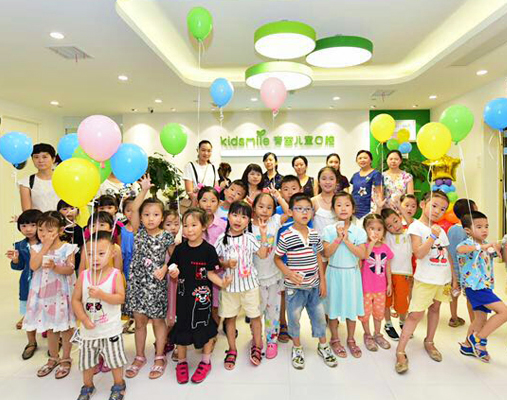
All Qingmiao Pediatric Dental clinics are company-owned and operated, featuring a unified interior design style.
The scarcity of specialized pediatric orthodontists, who typically require three to five years of training, presents a significant challenge for Qingmiao.
In terms of physician recruitment, Qingmiao begins training with young doctors, “because they have strong learning abilities and a good service attitude. The Romu Technology Center has provided significant support to Qingmiao by offering a range of corresponding services and auxiliary tools for patient intake, diagnostic analysis, and treatment process management,” said Dr. Yue. He is also currently collaborating with physicians from the School of Stomatology at Chongqing Medical University to discuss physician training initiatives.
It has been learned that the Romu occlusal guidance appliance, supported by medical-grade silicone that is safe for the human body, can expand dental arch length, guide jawbone development, and improve the occlusal relationship between the upper and lower jaws. Moreover, children only need to wear it at night.
“We repeatedly emphasize here: do not regard occlusal guidance as a treatment for disease. Since children’s teeth are changing every day, simply treat it as an oral hygiene habit. It is that simple.”
Since its inception, Qingmiao has consistently championed the philosophy of prioritizing prevention over treatment. Naturally, there has been a steady stream of interest in franchising. “Starting two or three years ago, we received inquiries from clinics nearly every week about joining our franchise network. However, to maintain strict quality control, we have not opened any franchising channels; all our clinics are company-owned and operated.”
In terms of staffing, Qingmiao Children's Dentistry is not significantly different from ordinary clinics, with a complete team comprising front-desk staff, dentists (mostly general practitioners), and nurses. However, at the operational, procurement, and subsequent management levels, Qingmiao has developed its own proprietary set of standard operating procedures.
“All of our Hospital Information System (HIS) medical management systems were developed in-house, which actually required a substantial investment. It took more than two years for a team of over a dozen software engineers to build the system,” said Dr. Yue.
Longfor possesses a vast network of communities and high-quality kindergartens across China. Regarding Shuanghu Capital, an investor in Qingmiao, Dr. Yue stated, “It would be more accurate to describe Longfor as a strategic partner. It has provided substantial support in operational management, customer acquisition, marketing, and the expansion of urban clinics. The depth of our collaboration goes far beyond financial investment.”
Reporters have learned that the single-store investment cost for Qingmiao Children's Dental is not particularly high within the industry. "This aspect does not burn through investors' capital. Moreover, in terms of clinic reputation, for instance, the Chengdu clinic maintains an excellent word-of-mouth presence despite its close proximity to West China School of Stomatology. The revenue generated per doctor is by no means lower than that of other institutions."
Regarding future development, Dr. Yue stated, “We will continue to promote the concept of interventional treatment. Meanwhile, we hope that physicians in the future will, in a sense, also become partners. In addition, we are exploring a membership system similar to that of foreign family doctors.”