

Alipay's "Credit-Based Medical Care": Enabling Patients to Access Healthcare Even Without Immediate Funds
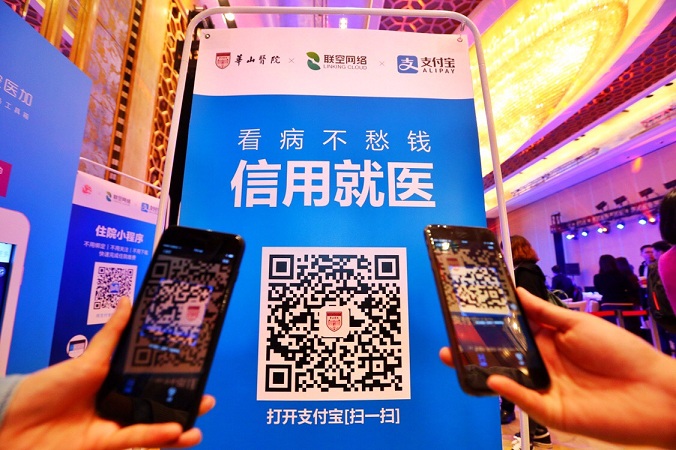
Since November 8, 2017, at Huashan Hospital Affiliated to Fudan University in Shanghai, Alipay Huabei users with a Zhima Credit score of 650 or above can obtain an additional medical treatment credit line of RMB 1,000 provided by Huabei. To qualify, users must successfully activate the “Credit-Based Medical Treatment” service within the “Outpatient Services” section of the hospital’s Alipay Lifestyle Account and add patient information as instructed. This service, named “Credit-Based Medical Treatment,” is an innovative healthcare product jointly launched by Alipay, Zhima Credit, Huabei, and Liankong Network.
Once patients activate “Credit-Based Medical Care,” they can proceed directly to consultation and medication pickup after completing their appointment registration, with each examination item automatically charged via Huabei. In short, patients not only avoid queues and bypass point-of-care payments but also gain access to temporary “medical fee” coverage through their personal credit in times of urgent need.
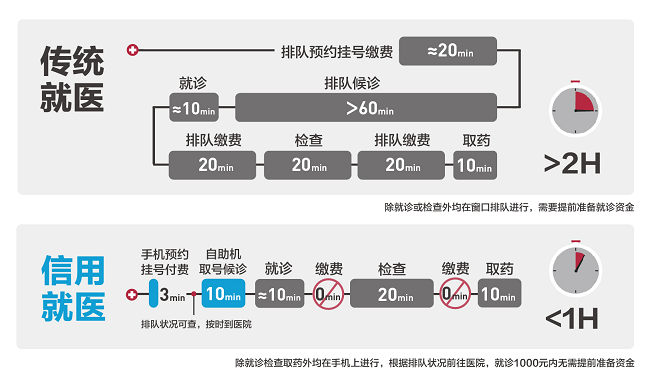
Skip the Queue, Pay Without Visiting the Consultation Room: Save an Average of 60% on Medical Visit Time
Although mobile payments and smart self-service kiosks have been widely adopted in hospitals, the pain point of “hassle” associated with point-of-care payment persists. Patients often need to shuttle between different consultation rooms and service windows, queuing repeatedly to make payments, which consumes a significant amount of their time seeking medical care.
According to Hu Shijie, Deputy Director of the Information Department at Huashan Hospital, the credit-based medical treatment model can reduce average consultation time by 60%. While greatly facilitating patients, it also provides safeguards for hospital fund management. For diagnostic and treatment services that follow a “treatment first, payment later” approach, such as those in dentistry, credit-based medical treatment with automatic deductions effectively prevents fee evasion.
Yang Xueqing, an expert in the healthcare industry at Alipay, believes that a prominent feature of “credit-based healthcare,” compared to existing mobile healthcare solutions, is the elimination of the need for payment at the point of care. “By integrating Zhima Credit with Huabei, automatic online deductions replace offline queuing for payments, allowing patients’ medical consultations and billing to occur almost simultaneously.”
From "Diagnosis and Treatment First, Payment Later" to Credit-Based Payment
As early as February 2016, Alipay and the Guangzhou Women and Children’s Medical Center made initial explorations in building a “credit-based hospital,” piloting the launch of a “treatment first, payment later” service. The initiative yielded promising results: it reduced queuing time by three-quarters and increased average patient satisfaction by 13%.
Recalling the launch, Wang Bo, General Manager of the Healthcare Industry Division at Ant Financial’s Payment Business Group, stated: “In February, we launched the ‘Treatment First, Pay Later’ service, which to some extent made it a hot topic in the healthcare industry. However, unexpectedly, it did not gain widespread adoption in hospitals after its launch. At that point, we began to question whether our strategic direction was incorrect.”
After analysis and investigation, Ant Group identified the root cause of the issue:
First, the “treat first, pay later” model imposes relatively high requirements on hospital information systems and financial management. Hospitals are often concerned about the financial risks associated with patient default.
Second, post-payment is not a pain point for patients visiting hospitals. “The optimal approach is to ensure that patients do not have to think about payment; the core focus should remain on their medical care experience.”
Third, if patients lack sufficient funds, will they still be able to access medical care? This is especially critical in emergency situations—is this not a very tangible pain point?
So, what exactly can “credit-based medical services” bring to hospitals?
“Undoubtedly, ‘Credit-Based Medical Payment’ represents an innovative upgrade built upon pilot program experiences. The integration of Huabei means that hospitals face virtually no financial risk from user defaults, while significantly reducing onboarding costs and enhancing industry-wide applicability,” said Wang Bo.
According to Wang Bo, over the next five years, Ant Financial will expand its services in three areas based on its “Credit-Based Medical Payment” model:
First, Inclusive Care+. Given the low level of internet integration in community hospitals and primary healthcare institutions at all levels, Ant Financial aims to leverage an open-platform model in the future to enable more grassroots medical service centers to benefit from the conveniences offered by Future Hospitals and digitalization.
Second, Credit+. Credit holds extensive application value in many healthcare scenarios. For instance, patients can waive deposits for renting medical equipment such as wheelchairs, stretchers, and electrocardiogram (ECG) monitors by leveraging their credit scores.
Third, Intelligence Plus. Ant Financial will comprehensively export technologies such as biometrics, security, artificial intelligence, and blockchain to partners and medical institutions. By leveraging intelligent solutions, it aims to help all medical institutions elevate their management and service capabilities to a higher level.
Currently, “Credit-Based Medical Services” are being implemented in more than 10 hospitals across Shanghai, Hangzhou, Guangzhou, Wuhan, and other cities. By the end of this year, the service is expected to be further expanded to additional public hospitals nationwide. In the future, credit systems may be integrated into inpatient procedures, offering patients medical services such as deposit-free hospitalization based on their creditworthiness.
Wang Bo revealed that Ant Financial’s credit capabilities may be integrated into hospitalization processes in the future, providing patients with medical services such as deposit-free admission based on credit. Notably, leveraging ZOLOZ (Ant Zorro)’s financial-grade facial recognition technology, it will be technically feasible to achieve “face-scanning for medical care” by identifying user identities through biometric technology in hospital settings.
Ant Financial is the foundation, while Liankong Network is the extension.
In this tripartite collaboration on “Credit Payment,” Liankong Network primarily assumed responsibilities for both technology and operations.
Kuang Hua, CEO of Linkong Network, told VCBeat: “Building on Ant Financial’s foundational capabilities in credit and payment, Linkong Network has developed a product called Linkong Yijia to help hospitals serve patients. At its core, Linkong Yijia facilitates medical care payments, enabling patients to complete all payment steps throughout their hospital visit using this tool.”
According to him, Liankong Network provides the application systems deployed at hospitals, while Ant Financial provides the foundational capabilities for credit-based medical services. After the launch of the credit system, the promotion, improvement, requirements gathering, and customer service for the entire application are jointly handled by Ant Financial and Liankong Network.
Access to credit-based medical services is currently divided into online and offline channels. The online channel operates through Alipay’s Lifestyle Accounts, which function as each hospital’s dedicated mini-app within the Alipay platform.
Regarding the offline component, patients can activate credit-based medical payment services using their hospital visit cards when obtaining prescriptions from physicians at hospitals. “Currently, only the online component is available; the offline component will be launched in the near future,” said Kuang Hua.
It is reported that Liankong Network has been collaborating with Huashan Hospital since the fourth quarter of 2015. Starting with the integration of Alipay QR code payments, the company has gradually helped the hospital establish a unified payment platform across the entire institution, centralizing the management of all payment channels. Furthermore, it has assisted in building an overall mobile internet platform based on web technologies and provided supporting operational services, thereby facilitating the hospital’s digital transformation and supplementing its non-clinical services.
In Kuang Hua’s view, Ant Financial’s core capabilities—including payments, security, and marketing—are all built upon the broader framework of mobile payments. As a provider of internet infrastructure, Ant Financial requires industry-specific product operations and service providers when engaging with sectors such as education, healthcare, or any other industry. Liankong Network is one such partner.
Leveraging the ecosystem capabilities provided by Ant Financial, a range of in-depth, industry-specific applications have emerged, fostering a symbiotic and mutually prosperous industrial model between enterprises and Ant Financial.
During the collaboration with Ant Financial, LinkSpace Network has also been exploring which of Ant Financial’s innovative technologies can be integrated into healthcare. For instance, Ant Financial’s security capabilities far exceed those of traditional industries.
Similarly, biometric authentication technologies and big data analytics, while seemingly unrelated to the healthcare industry, can generate significant synergistic effects once integrated with the sector.
Meanwhile, the traffic from Ant Financial also serves as a core driver for LinkSpace Network. As healthcare reforms advance, hospitals’ traditional benefit structures are tightening, and conventional revenue models based on pharmaceuticals and consumables are being increasingly disrupted. “Hospitals aim to amplify their service capabilities and make them more precise. The aggregation of traffic from various sectors and industries can help hospitals maximize their service resources and capabilities,” said Kuang Hua.
To date, payments processed through the collaborative platform of Ant Financial and Liankong Network have exceeded 11 million transactions, with a cumulative transaction volume surpassing RMB 1.5 billion.