

Hybrid Medical Group's 'Physician Group + Hospital Group' Strategy: A Blueprint for Integrated Orthopedic Care and Investment Growth
Healthcare system reform has always been a focal point of public attention, with explorations both within and outside the existing system never ceasing. In the United States, physician groups represented by the Mayo Clinic have long established mature operational mechanisms. In China, the first physician group was not formally established until 2014. Over the past three years, various specialized physician groups have sprung up like mushrooms after rain, revealing trends in medical practice among Chinese physicians. However, stakeholders are still experimenting with how to balance the interests of parties inside and outside the public healthcare system to benefit millions of patients.
Liu Hua, Chairman of Huigu Qinxing Medical Group, stated that China’s aging society has arrived quietly. Authoritative data indicate that by 2020, China’s elderly population would reach 240 million, facing threats from chronic non-communicable diseases such as osteoporosis, fractures, cardiovascular and cerebrovascular disorders, diabetes, and cancer. Among these, bone diseases demonstrate favorable treatment outcomes, strong synergy between new technologies and equipment, and significant improvements in patients’ quality of life.
However, a significant portion of the elderly population resides in areas with weak primary healthcare infrastructure. These regions suffer from a shortage of orthopedic surgeons and limited diagnostic and treatment modalities, resulting in medical services that fail to meet actual demand. For hospitals, the lack of high-level experts constrains physician training and departmental development, leading to brain drain and creating a vicious cycle.
In his report to the 19th National Congress of the Communist Party of China, General Secretary Xi Jinping stated: “The principal contradiction facing Chinese society has evolved into one between unbalanced and inadequate development and the people’s ever-growing needs for a better life.” Among these issues, the imbalance in the allocation of medical resources is particularly pronounced.
Driven by the vision of enhancing primary orthopedic care capabilities, fostering extensive collaboration among orthopedic surgeons, highlighting physicians’ brand value, safeguarding their independent practice, and ultimately matching patients with appropriate specialists to deliver high-quality, full-cycle orthopedic services, Liu Hua and colleagues established Huigu Qinxing—the first “hybrid” physician group in the vertical orthopedic sector.
The establishment of a physician group encompasses four key aspects: expert resources, capital, operational teams, and business models. What are the competitive advantages of Huigu Qinhang’s model? What are the prospects for project financing? With these questions in mind, VCBeat attended the investment exchange meeting hosted by Huigu Qinhang in Xi’an on October 28, aiming to gain a more comprehensive and clear understanding of investors’ and physicians’ evaluations and perspectives on Huigu Qinhang.
Liu Hua stated, “Huigu Qinxing Physician Group is a hybrid physician group in the field of orthopedics, composed of both physicians within the public healthcare system and those outside it. This structure allows us to fully leverage the technical expertise, academic standing, and time-management advantages of physicians within the public system, while integrating with physicians operating outside the system through PHP (Physician-Hospital Partnership) models, departmental trusteeship, and hospital joint ventures. We do not require all contracted experts to leave the public system; rather, we encourage some physicians joining our group to remain within it. Our model is unique and has been proven effective.”
Maximizing the individual rights and interests of physicians was one of the original intentions behind the establishment of the Huigu Qinxing Physician Group. In just half a year since its inception, Huigu Qinxing has signed contracts with over 100 orthopedic experts and established formal collaborations with more than 40 county-level hospitals across 11 provinces and municipalities in China, demonstrating rapid expansion.
Meanwhile, Huigu Qinhang provides comprehensive support to contracted physicians, including preoperative examinations, guidance in formulating surgical plans, and advance preparation of pharmaceuticals and medical devices. The company also purchases commercial insurance for physicians to alleviate concerns, safeguard their practice safety and income, thereby facilitating the recruitment of orthopedic experts for the enterprise.
For physician groups, specialists are the core assets of the enterprise. Therefore, Huigu Qinxing has focused from the outset on building a premier team of orthopedic specialists in China. Liu Hua stated, “We are open to collaborating with physicians regardless of whether they practice within or outside the public healthcare system, particularly those who are widely recognized as top-tier experts in the industry.”
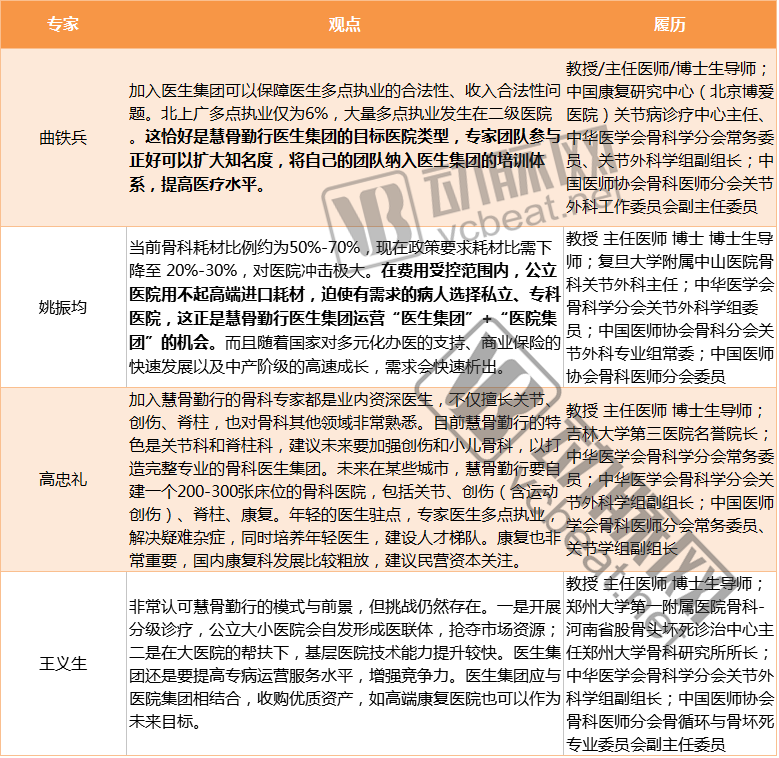
Taking Professor Qu Tiebing as an example, he pursued advanced training at the Diakonie Hospital of the German Center for Rheumatology Therapy in Rothenburg ob der Tauber, the Endo-Klinik Hamburg (a specialized hospital for joint replacement) in Hamburg, and Queen Mary Hospital at the University of Hong Kong. Specializing in artificial joint surgery, he personally performed numerous operations and earned a strong local reputation. Upon returning to China, Professor Qu engaged in both basic research and clinical practice in joint replacement, establishing profound expertise in artificial joint surgery. He is particularly renowned for minimally invasive total knee arthroplasty, which is characterized by minimal trauma, rapid recovery, and excellent functional outcomes. To date, he has successfully performed thousands of joint replacement surgeries both domestically and internationally. Professor Qu possesses unique expertise in primary knee arthroplasty and revision surgery following joint replacement, attracting numerous patients from across China to seek his medical care.
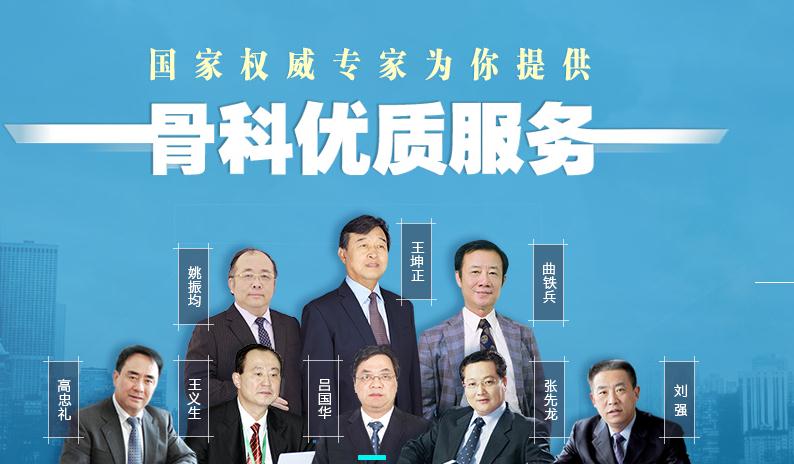
The Qu Tiebing Team is just one of the expert teams under Huigu Qinxing. A number of leading domestic orthopedic specialists, including Wang Kunzheng, a renowned Chinese orthopedic expert and President-Elect of the Orthopaedic Branch of the Chinese Medical Association, as well as Gao Zhongli, Lv Guohua, Guo Wei, Liu Qiang, Wang Yisheng, Zhang Xianlong, and Yao Zhenjun, have joined the platform to provide professional diagnostic and therapeutic services to patients with various conditions.
While factors such as the level of therapeutic care, the advancement of medical devices and consumables, physicians’ clinical experience, and the professionalism of rehabilitation guidance all directly influence patient outcomes, the pivotal role of physicians is evident. High-caliber specialists are a prerequisite for delivering first-class professional medical services.
Since its inception, Huigu Qinxing has integrated its development strategy with the career paths of physician experts. “Only when corporate strategic goals align with physicians’ career development can both parties weather challenges together and achieve a win-win future.” Favorable reputation and peer referrals have motivated experts to proactively join the Huigu Qinxing Physician Group.
Liu Hua stated that the first step is to establish a physician group combined with a specialized medical consortium.
Huigu Qinxing has established a "hybrid" physician group by assembling leading orthopedic experts in China. Leveraging an O2O model, it provides four core empowerment supports—medical, technical, managerial, and operational support—along with seven product offerings: discipline co-construction, expedited surgical scheduling, training and education, brand building, expert outpatient services, consultation and referral, and technology introduction. Serving mid-tier and primary healthcare institutions, the company standardizes service processes and integrates two platforms—orthopedic medical services and orthopedic physicians’ social branding and education—to build regional orthopedic specialty medical consortia.
Step 2 is to establish a physician group + hospital group.
By establishing self-operated, holding, and equity-participated specialized hospitals, we are fully committed to building a “1+N” medical complex model centered on orthopedics and rehabilitation. We will establish regional orthopedic and rehabilitation diagnosis and treatment centers in suitable cities, implementing unified operational, service, and brand standards. Leveraging these regional centers as hubs, we will collaborate to develop a service model combining day surgery and community-based rehabilitation in surrounding areas. By introducing local expert teams as partners for resource sharing, and operating hospitals through models such as technology transfer and shared studios, we provide patients with professional orthopedic diagnosis and treatment, rehabilitation, and health management services. Our goal is to build China’s most trustworthy orthopedic physician group and hospital group.
Step 3 is to establish an orthopedic platform-based medical group.
By leveraging the “orthopedic surgeon group + Internet” model and capitalizing on the advantages of “professionalism, authority, aggregation, and sharing,” we have built an integrated, full-chain orthopedic platform medical group and an orthopedic big data integration platform. This entity seamlessly combines online and offline services, encompassing orthopedics, rehabilitation, academic training, talent development, an orthopedic physician community, information systems, hospital management, and supply chain solutions.
“The state emphasizes the decentralization of physicians to primary care settings. Once multi-site practice is officially permitted, a substantial volume of direct demand will immediately emerge. However, issues regarding subsequent medical safety and income distribution remain unclear. Therefore, from both a management perspective and that of orthopedic surgeons, as long as Huigu Qinxing effectively balances the interests of the public, physicians, and investors, and establishes a sound business model, its prospects are undoubtedly promising.” Liu Hua expressed strong confidence in this outlook.
Wang Jianfei, Executive Director at Legend Capital; Wang Shaowen from Huarong Asset Management; Liu Huiwen from Dongzhao Changtai; Cui Qianpeng from China Minsheng Healthcare; Yang Denggui and Xu Zhaocheng from Zhenshanmei Investment; Qiu Fei and Zhang Liang from Hualing Capital; and Ding Feng and Chen Xuguang from Guijing Capital participated in the investment communication meeting of Huigu Qinhang.
Investor:The nation is currently promoting medical consortiums, yet primary care hospitals and tertiary (Grade 3A) hospitals are “in the same bed but dreaming different dreams”: large hospitals hope for more referrals of critically ill patients, while primary care hospitals aim to retain more patients. How can this issue be resolved?
Liu Hua:By enhancing primary healthcare service capabilities through “four major empowerment supports and seven product systems,” and collaborating with hospitals to establish a tiered diagnosis and treatment model characterized by clear positioning, matched capabilities, and coordinated care across different levels, Huigu Qinhang has established a clear strategic direction and service orientation. The so-called “shared bed but different dreams” phenomenon fundamentally stems from the weak service capabilities of primary healthcare institutions, leading to patient distrust and an inability to retain patients. Beyond financial considerations, the difficulty in referring patients downward from tertiary hospitals is primarily due to concerns over the inadequate service capabilities at the primary level, resulting in reluctance to refer for fear of poor management. These are precisely the issues that Huigu Qinhang aims to address.
At the initial stage, when we were still merely a physician group, it was precisely the “divergent interests within shared frameworks” characteristic of public hospital medical consortia that provided Huigu Qinxing with development opportunities. The state has issued the Guiding Opinions on Advancing the Construction of a Tiered Diagnosis and Treatment System, and we are confident that, with the support of relevant policies, we will gradually achieve our objectives. At the appropriate time, we will certainly operate our own hospitals, establishing a synchronized development model of “physician group + hospital group.”
Investors:Physician Groups and Individual Practices: Some domestic physician groups merely form loose associations of physicians; how can issues regarding individual-team dynamics and benefit distribution be resolved?
Liu Hua:Physician groups must first address the interplay among physicians’ practice risks, medical quality, and individual career development. By enabling physicians to envision a clear future and feel confident in earning income, transparent and compliant remuneration will follow naturally. Huigu Qinxing establishes collaborative relationships with physicians through contractual agreements or partnership models, employs a corporate structure for professional operations, and customizes service offerings based on physicians’ practice preferences, individual expertise, and service pricing. It provides comprehensive support—including matching with primary-care hospital needs, facilitating multi-site practice registration, building personal brands, managing orders, and arranging schedules—thereby allowing physicians to focus on delivering specialized clinical and management expertise while significantly reducing their time costs.
Building on this foundation, Huigu Qinxing provides personal accident insurance for each contracted specialist and individual medical malpractice liability insurance for every surgical procedure, thereby safeguarding physicians’ practice safety. Physician compensation is administered in strict accordance with service agreements, a model fundamentally distinct from the concept of “moonlighting.” This approach fosters mutual trust between physicians and Huigu Qinxing, resulting in strong collaborative stickiness.
In addition to leading specialists serving as core expert partners, we will also recruit other partners at the provincial level. Huigu Qinxing has also gathered outstanding technical and operational talent from China’s internet healthcare industry, which forms the foundation of our successful physician operations.
Investors:Who covers the additional fees paid to physicians for performing surgeries at grassroots healthcare facilities—fees that are borne as out-of-pocket expenses by patients? What specific services are included in bundled payment arrangements? Do grassroots medical institutions have relevant service demands?
Liu Hua:There are four payment channels. First, the primary hospital specialty service packages launched by Huigu Qinxing, where each hospital customizes personalized specialty development service packages according to its needs, with the hospital paying for the services. Second, supply chain payments; once the Huigu Qinxing Physician Group reaches a certain scale, it will inevitably establish its own supply chain. Third, voluntary patient payments, which fall under special-needs services. Fourth, cooperation with insurance companies, where commercial insurance and foreign-funded insurance serve as the payers. Domestic commercial insurance accounts for less than 3% of medical payments in China, but it is bound to grow rapidly following healthcare reforms, generating substantial demand for collaboration. The core philosophy of physician groups is to mitigate physicians’ risks, ensure transparent income, and address to the greatest extent possible the various forms of risk faced by both doctors and patients.
Investors:What is the vision for building hospital groups in the future?
Liu Hua:Some investors aim to pursue an “asset-light healthcare” model, but in reality, medical services cannot be streamlined in this manner; the core competitive advantage still lies in physical institutions such as hospitals and clinics. As operators of medical institutions, even if we engage physicians practicing at multiple sites, we still require full-time doctors for regular consultations. While investing in physician groups involves a relatively small scale, the capital requirements for establishing hospitals are substantially different. Founding a hospital demands 3–5 years of foundational development and a strategic plan spanning 20–30 years. Even building a new small-scale clinic with only a dozen beds faces numerous practical challenges, including environmental impact assessments and licensing. Therefore, acquiring suitable hospitals offers greater operational feasibility. Supply chain benefits are predicated on economies of scale. The first hospital should be established as a benchmark, enabling replication of the model. Meanwhile, it is essential to have renowned experts overseeing clinical quality and technical standards.
Hospital management is also a key challenge and priority; technology, brand, management, and operations must all meet the needs of corporate development.
Investor:Hospitals have achieved success primarily through individual cases, but the market lacks relevant talent. How can this successful model be replicated?
Liu Hua:From three perspectives: first, the expert talent required by patients. The expert teams signed by Huigu Qinhang are all industry leaders, and the company has in-depth collaborations with top-tier physicians such as Wang Kunzheng and Qu Tiebing. Second, through professional operations and a partnership model, the company fosters dependency between contracted physicians and physician groups. Third, the company’s professional sales, operations, and technical teams ensure effective linkage across the upstream and downstream value chain.
Investors:How do you approach patient acquisition in hospital operations?
Liu Hua:From a positioning perspective, we aim to establish a boutique specialized orthopedic hospital. Through brand building and word-of-mouth promotion, patients will proactively seek our medical services. On one hand, with the steady development of the socio-economy, the explosive growth of the middle class, and the current reality of cost containment in hospitals, there will be a segment of self-pay patients. We are committed to serving high-end clientele while continuously addressing the needs of primary care populations.
Investors:Commercial insurance providers are increasingly leaning toward medical collaborations, such as single-disease insurance and coronary stent insurance, operating under a model that integrates healthcare institutions, device manufacturers, and patients. What are Huigu Qinxing’s strategic visions for commercial insurance partnerships?
Liu Hua:Both enterprises and commercial insurance providers will be our partners. In the United States, it is common for large corporations to collaborate directly with healthcare institutions. Currently, China’s healthcare payment system relies primarily on basic medical insurance and the New Rural Cooperative Medical Scheme. However, the rapidly growing commercial insurance sector is expected to cover a portion of patients in the future, leading to more diverse payment options and greater choices for patients. This trend serves as the driving force behind the emergence of “physician groups + hospital groups” models such as Huigu Qinxing. We will deepen our collaborations with more enterprises and commercial insurance institutions to deliver high-quality products and service packages, alleviating patients’ suffering and improving their quality of life.
The policy on multi-site practice is still in a phase of gradual liberalization; for us, greater deregulation translates into larger opportunities. The segmentation of healthcare demand in China is an inevitable trend. In the United States, each city has regionally chained physician groups that establish clinics as regional hubs and contract with large hospitals to manage specific departments. The challenge for Chinese physician groups lies in the fact that specialists are more scarce relative to patients. From a cost-effectiveness perspective, it remains more appropriate for patients to seek out doctors rather than the other way around. I believe we should shift our mindset and focus on building strong regional centers, achieving a degree of centralization.
Another issue concerns physician branding. Many specialists enjoy prominent reputations within academic institutions and major cities, yet remain largely unknown to patients at the primary care level. When specialists establish long-term practices in a specific region, they can accumulate a substantial local patient base, eliminating the need to seek patients from other areas. Furthermore, it is essential to consider using equity incentives to strengthen physicians’ sense of ownership.
We are committed to building our own hospitals. We emphasize enabling experts to practice in areas where they have significant influence. However, even the most renowned professors cannot fill 200–300 hospital beds overnight, so multi-party collaboration remains essential. Equity incentives for physicians are an area of expertise for corporate and capital partners. We implement a three-tier partnership structure—General Partners, Regional Partners, and Hospital/Virtual Partners—to allocate equity incentives to the most promising collaborators.