

Five Key Questions on China's Hospital Rankings: Gao Jiechun Explains the Fudan Version
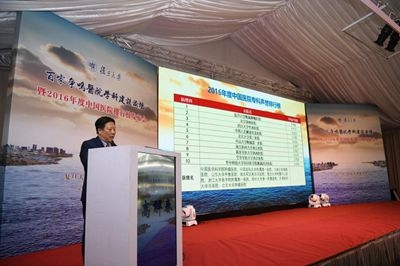
On November 11, the annually anticipated Fudan University “China Hospital Rankings” and “Rankings of Specialist Reputation of Chinese Hospitals” were released in Shanghai.
After eight years, the ranking has long become an annual November offering from the Institute of Hospital Management, Fudan University, to the medical community. Whether regarded as a lavish feast or an appetizing dessert, it has become commonplace both within and outside the industry and is gaining increasing recognition. For hospitals, the ranking serves as a benchmark and impetus for disciplinary development; for patients, it facilitates the identification of appropriate healthcare institutions.
On the day of the list’s release, Health界 interviewed Gao Jiechun, Director of the Institute of Hospital Management at Fudan University and the mastermind behind the China Hospital Rankings. The 60-year-old veteran in hospital management stated that he does not take criticism to heart, emphasizing that the rankings represent merely one perspective and should be used for reference only. However, dozens of hospital presidents who came to observe filled the first three rows of the venue; when faced with the rankings, they were perhaps far less composed than Mr. Gao had imagined.
Question 1: Why Was the China Hospital Ranking Established?
Gao Jiechun’s decision to establish the China Hospital Rankings stemmed from a personal obsession.
Twenty years ago, while serving as a visiting scholar at the Children’s Hospital of Philadelphia in the United States, he noticed that the entire hospital staff was closely following a hospital ranking list. This immediately led him to realize that China lacked a widely recognized hospital ranking system. This absence has resulted in two phenomena: first, hospital administrators and discipline leaders lack benchmarks for disciplinary development; second, without external references, most hospitals tend to have an inflated sense of their own performance.
Since the inception of the rankings, hospitals have been able to identify their gaps relative to peers, thereby establishing clear directions for catch-up and goals for advancement. In Gao Jiechun’s view, the rankings have fostered an atmosphere in which disciplines must advance or risk falling behind, evolving into a widely adopted hospital management tool. This aligns precisely with his original intent in creating the rankings: to set industry benchmarks and serve as a reference for disciplinary development across hospitals.
Question 2: Why not adopt a more multidimensional approach to evaluating hospitals?
Gao Jiechun is not unwilling to incorporate medical insurance data from various hospitals into the ranking evaluation system. However, as of today, China’s medical insurance system has not yet achieved nationwide network integration. As an independent third-party institution, the Hospital Management Institute of Fudan University is unable to access comprehensive data.
The hospital ranking released by Peking University includes medical record front sheet data as one of the evaluation dimensions. Gao Jiechun believes that the reliability of medical record front sheets in China needs to be improved, and since the medical record front sheets of all military hospitals cannot be made public, this dimension had to be abandoned. Obviously, the prerequisite for incorporating objective quantitative indicators is a nationwide networked system.
Nowadays, various hospital rankings are emerging one after another. Some rankings consider research funding input and output as important dimensions. Gao Jiechun, who once served as the director of the Research Department, is well aware of the intricacies involved. He frankly stated that in scientific research, the principle of "judging heroes by results" should be upheld, and the amount of investment should not be the dominant factor. "In many cases, today's research investment may become tomorrow's output, but it is important to be alert to the fact that there are also numerous instances where research investments yield no returns," said Gao Jiechun.
Question 3: What changes have occurred in the latest rankings? What trends do they reveal?
As the analysis clearly shows, the first tier in the rankings remains relatively stable, the second tier experiences slight turnover, and significant fluctuations occur beyond the 12th position. This outcome stems from the relative consistency of hospitals’ clinical reputation, coupled with minor year-to-year variations in research output.
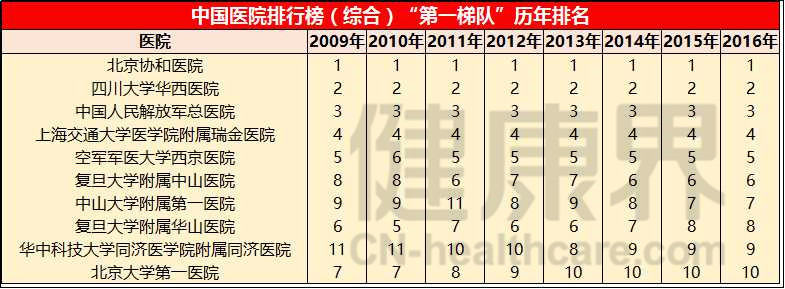
The range of comprehensive rankings has been continuously narrowing and gradually stabilizing. Gao Jiechun believes that this indicates a high level of feasibility in the evaluation system.
Another pattern revealed by the rankings is that teaching hospitals score higher in research, while traditional, long-established hospitals tend to prevail in clinical reputation.
Q4: How should we view the issue of “rankings exacerbating patients’ difficulty in accessing medical care”?
For eight consecutive years, the China Hospital Rankings have faced the same question annually: Do the rankings steer patients to flock to “top-tier” hospitals?
Gao Jiechun noted that the guided approach to orderly medical care involves establishing a tiered diagnosis and treatment system, which includes referral mechanisms, health insurance payment methods, and reimbursement rates. However, patients must have the right to informed consent, enabling them to promptly identify the hospital best equipped to address their condition when suffering from complex or critical illnesses, thereby avoiding unnecessary transfers among multiple institutions. “If ‘difficulty in accessing medical care’ is attributed to hospital rankings, then consider this: Was it difficult for people to seek medical attention before such rankings existed?” Gao Jiechun countered.
Question 5: What improvements will be made to the rankings in the future?
Different dimensions and methodologies confer varying reference values for hospitals. Regarding hospital rankings, Gao Jiechun has never wavered in his original commitment. He hopes that future rankings will continue to prioritize disciplinary reputation and clinical excellence. On this basis, research and validation will be conducted on multiple influencing factors such as hospital scale, geographic region, risk profiles, and disease spectra, with comparative analyses performed against national benchmarks and the National Health Commission’s Key Clinical Specialties. Meanwhile, the expert panel will be expanded and updated in a timely manner, and statistical methods will be continually refined.
Onlooker at a Tier-3A Hospital: Who Says I Don’t Care?
As is customary, the release of the rankings has once again drawn considerable controversy. Regardless of how fervent the debate may be, the China Hospital Rankings have been published for eight consecutive years, and it is foreseeable that Gao Jiechun will continue to lead his team in advancing the initiative in the years to come.
Some hospital presidents laughed off the rankings, while others kept a close eye on them. Xiong Lize, President of Xijing Hospital of Air Force Medical University, chose to obtain and carefully review the list on the spot. Although the overall ranking remained unchanged, the department of Ultrasound Medicine at Xijing Hospital dropped from sixth place last year to seventh in the specialty rankings. “We will present the rankings to our hospital staff again upon our return. Departments that have stagnated or declined must identify the underlying reasons,” said Xiong Lize.
Notably, at the press conference, even a hospital with only one specialty nominated sent a mid-level manager to attend. This attendee traveled a great distance to the event for one purpose: to clarify why their hospital’s leading specialty had dropped from the national top five in the previous year to being excluded from the regional top five, despite having higher outpatient volumes and publishing more papers last year.
Discipline construction is the top priority in hospital development and the cornerstone of a hospital’s brand, reputation, and status. How to enhance the influence of key disciplines is a critical issue that hospital presidents must address, and rankings, to some extent, accurately reflect a hospital’s disciplinary strength. Peking University Third Hospital attaches equal importance to these rankings. Jin Changxiao, Secretary of the Party Committee, stated at the press conference that orthopedics and clinical pharmacy are both strong disciplines at Peking University Third Hospital. Although these two disciplines are already at the pinnacle nationwide, the hospital remains vigilant and never complacent. “In discipline development, failure to advance means falling behind; even slow progress amounts to regression. The more advantageous a discipline is, the more it requires an international perspective, with substantial efforts devoted to talent acquisition and international exchange.”
When discussing the gaps between his hospital and others in terms of disciplinary development, Jin Changxiao appeared unfazed. He believes that the existing disparities among hospitals have long been established, stemming from factors such as institutional history, prolonged accumulation of expertise, and the construction of talent pipelines. “A significant leap in disciplinary proficiency cannot be achieved overnight; at present, the correct approach is to proceed with steady and solid steps,” said Jin Changxiao.
Click to view the latest rankings
Source: HJCircle