

From Racing for Lanes to Competing on Capabilities: Internet Healthcare Companies Penetrate Core Medical Scenarios for Diversified Monetization (2017 Year-End Review)
In 2017, the entire internet healthcare sector underwent significant changes. The most notable change was in the internet healthcare industry,The competition has gradually shifted from vying for market lanes to competing on core strengths.
From 2011 to 2016, internet healthcare passed through several key growth milestones of an emerging industry. These included the disruptive innovation in 2011 when Chunyu Yisheng (Spring Rain Doctor) first launched its mobile consultation services, the industry boom during the capital investment frenzy in 2014, and the subsequent downturn in both the industry and capital markets from 2015 to 2016 as the traffic dividend came to an end.
After five years of ups and downs and adjustments, internet healthcare began to gradually enter a phase of rational development in 2017. Specific manifestations include:
1) Leading enterprises are no longer pursuing business coverage in a one-sided manner, but are increasingly focusing on business growth potential and conversion rates;
2) The so-called competition in niche market segments has essentially concluded. Previously, areas such as appointment registration, online consultations, triage, and patient education were regarded as business models and core competencies; however, they have proven to be merely incremental innovations. Ultimately, companies have continued to pursue a multi-pronged strategy.
3) The essence of competition in this sector is a battle for entry points, and the core of this battle is a contest of strength. Those with more substantial capital, broader channels, stronger connectivity capabilities, and more mature systems in product, technology, and service are poised to gain an early advantage in the race for dominance in internet healthcare entry points;
4) Internet-based healthcare is gradually returning to its essence, namely, leveraging internet technologies to achieve comprehensive digitalization, mobilization, and intelligentization of medical services. "Online consultations," which connect doctors and patients in real time via the internet, are increasingly becoming instrumentalized—serving not only as a means of delivering medical care but also as a platform for managing medical data and as a conduit for integrating emerging technologies.
Based on the above assessment, we believe that online medical consultation is not a standalone industry but rather a component of internet healthcare. Beyond long-term trends, the key developments in this segment over the past year include: investors have gained a more objective understanding of the industry’s growth potential; users are gradually forming the habit of paying for services; service models are evolving from B2C to B2B2C; corresponding policy regulations and technical standards are being progressively established, with issues such as legality and efficacy expected to be resolved; and online consultations are becoming standardized tools and entry points.
First, let’s take a look at a summary of companies that secured financing and investment this year:
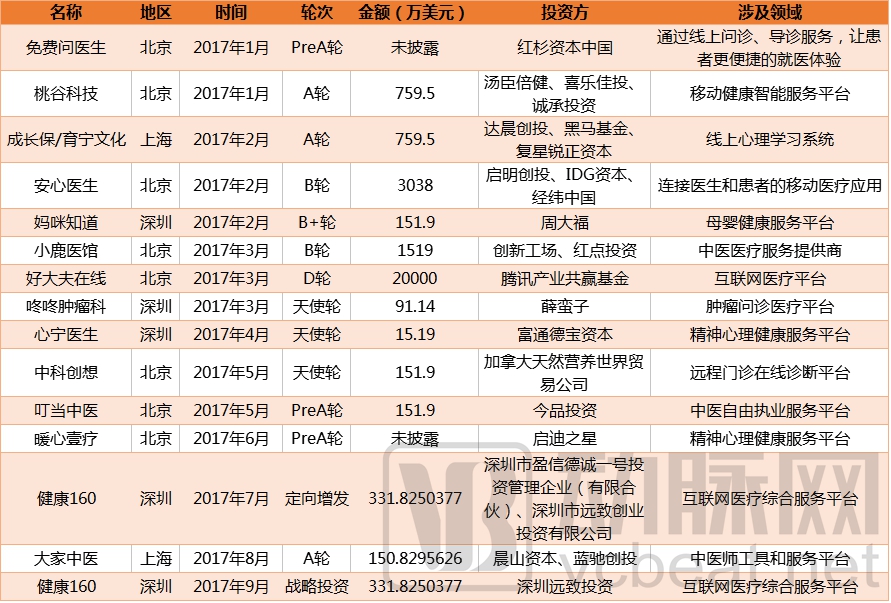
Note: The above data were retrieved by VCBeat from publicly available sources.
A further comparison of the companies that secured financing and investment in 2016 is summarized below:
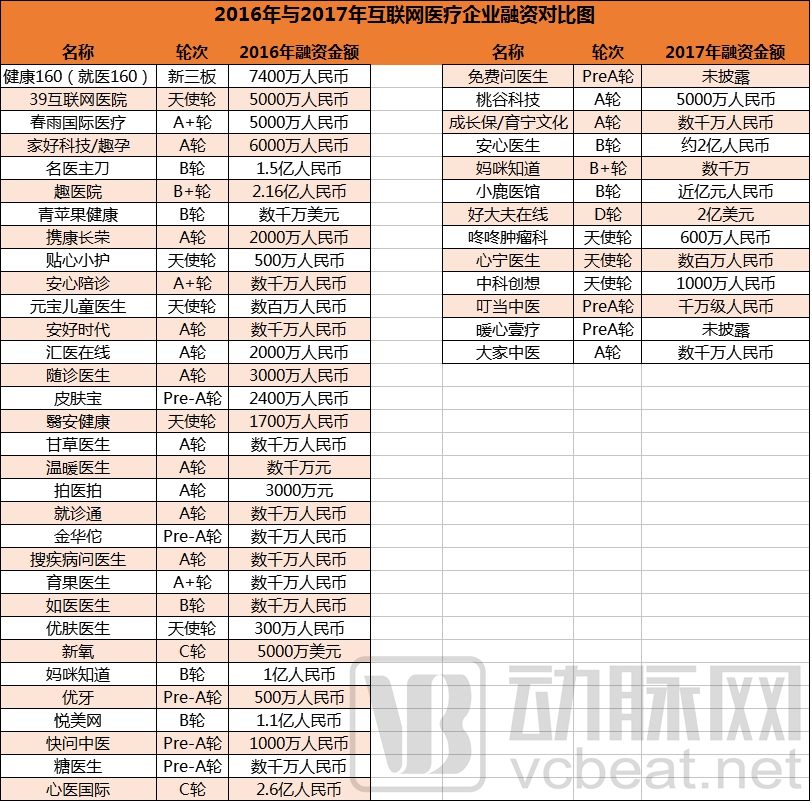
Note: The above data were retrieved by VCBeat from publicly available sources.
A comparison of the two charts above reveals that, in terms of the number of companies securing financing, there were exactly 19 fewer companies in 2017 than in 2016;
In terms of financing amount, there was only one large-scale financing deal in 2017, namely Haodaifu Online’s Series D round, which secured $200 million from Tencent Industrial Investment Fund.
In terms of funding sectors, the areas that secured financing in 2017 included comprehensive online consultation platforms and vertical-specific online consultation services, primarily focusing on maternal and infant care and mental health. Compared with 2016, the nursing care and physician group sectors were absent.
The underlying reasons are that the nursing care sector faces several major challenges:
1. The policy on multi-site practice for nurses awaits liberalization.Although China has opened policy channels for physicians to practice at multiple locations, there has been no policy relaxation regarding “nurses practicing at multiple locations.” It was only in May 2016 that the Guangdong Provincial Health and Family Planning Commission issued the Key Work Plan for Continuously Improving Nursing Services in Guangdong Province, which included provisions explicitly supporting the exploration of multi-site nursing practice. These provisions encouraged eligible regions to explore multi-site practice for nurses; urged specialist nurses from tertiary hospitals to establish specialist nursing clinics in primary healthcare institutions; encouraged nurses from hospitals at or above the county level to provide post-discharge transitional care and long-term care services through various forms; promoted home-based nursing services by primary healthcare institutions; and supported nurses in conducting outpatient visits or working part-time at nursing homes and long-term care facilities. Once multi-site practice for nurses is fully permitted, it will mean that nurses can practice flexibly at multiple locations after registering in one place. Nurses’ practice through online appointment platforms will also have clear policy backing.
In December of the same year, Beijing will implement six new favorable policies for medical insurance, focusing on the implementation of tiered diagnosis and treatment and the integration of medical care with elderly care. These measures include expanding the scope of medications covered by basic-level medical insurance, increasing the reimbursement rate for outpatient visits at community clinics, allowing reimbursement for long-term prescriptions issued to patients with four types of chronic diseases, and incorporating home-based medical services and the establishment of home hospital beds into the scope of medical insurance coverage.
2、Home visits by nurses are beneficial to patients, especially those with limited mobility, and represent a future trend. It is also a promising direction for current or retired nurses to provide home-based care services. Meanwhile, it is emphasized that while patient needs can be met, potential risks must be regulated and mitigated in advance, and there should be established bases and channels for resolving disputes and issues.
It is advisable to avoid selecting nurses who are young, have short nursing tenure, or lack sufficient practical experience. There should be certain thresholds in terms of nursing tenure and experience for nurses providing home visits.
3. Enhance nurses’ awareness and competence in emergency resuscitation during home visits.Nurses providing home-based care outside of hospital settings face numerous challenges, such as medication safety and allergic reactions.
4. The scope of nursing services provided by nurses during home visits must be clearly defined, and patients requesting such services must undergo an assessment.It is recommended to sign a Community Home Health Service Agreement, Informed Consent Form, and other relevant documents with the community health center nearest to the patient. Physicians or nurses must complete the Home Visit Assessment Form, Initial Consultation Record, and other required documentation. It is mandatory to ensure that documentation is retained for every step and that each procedure is fully traceable.
5. Mitigate risks, such as medical risks, legal risks, and personal accident risks.To mitigate these risks, in addition to the nurse home-visit service platform itself ensuring the legality and compliance of the services provided, it should establish standardized processes and secure insurance coverage as a basic safeguard.
For physician groups, although they appear to grant physicians greater autonomy, disrupt the traditional hospital model, facilitate the development of individual physician brands and reform compensation structures, and enable multi-site practice thereby optimizing the utilization of specialist resources, most hospitals do not actually support multi-site practice. Consequently, collaborations between physician groups and medical institutions inevitably encounter numerous legal risks and obstacles in carrying out diagnostic and therapeutic activities.
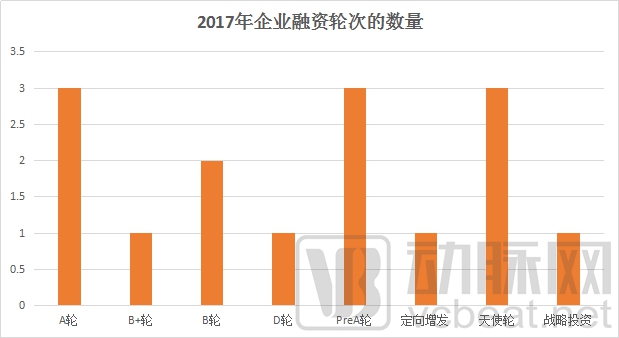
From the perspective of financing rounds: The highest number of companies, four in total, secured Series A funding in 2017. These companies were primarily concentrated in the fields of traditional Chinese medicine, mental health, and mobile health intelligent diagnostic platforms.
The most significant event impacting the internet healthcare industry this year occurred on March 19, when Yinchuan City simultaneously signed agreements with multiple internet hospitals. The companies present at the signing ceremony included: DXY, Peking University Medical Information Technology, Chunyu Doctors, Jinglian Technology, Taoyibao, 7LeKang, Giant Network’s Healthcare Division, Daxiang Doctors, Anxin Doctors, Medlinker, Weiyi, Hao Rensheng, Miaoshou Doctors, Side Sunshine Dental Hospital, and Shenghe Mobile Intelligence.making Yinchuan the focal point of attention in the internet healthcare industry.
Following the initial agreement, Yinchuan City subsequently signed agreements with four additional internet hospitals, as listed below:
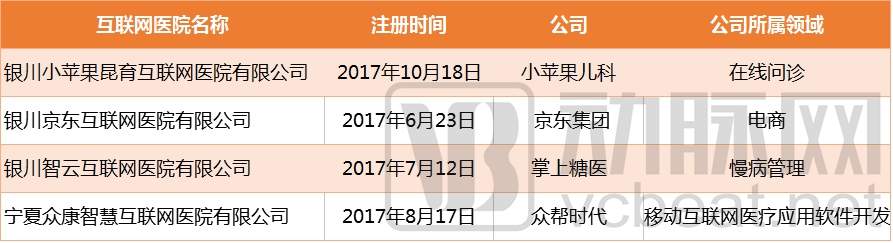
Meanwhile,Yinchuan City has once again introduced three policies: “Access and Grading System for Licensed Physicians in Internet Hospitals,” “Detailed Implementation Rules for the Administration of Internet Hospitals in Yinchuan City (Trial),” and “Administrative Measures for Medical Insurance Personal Accounts and Outpatient Pooling in Internet Hospitals in Yinchuan City (Trial).” This move further refines regulations concerning physician professional titles and integration with medical insurance systems.
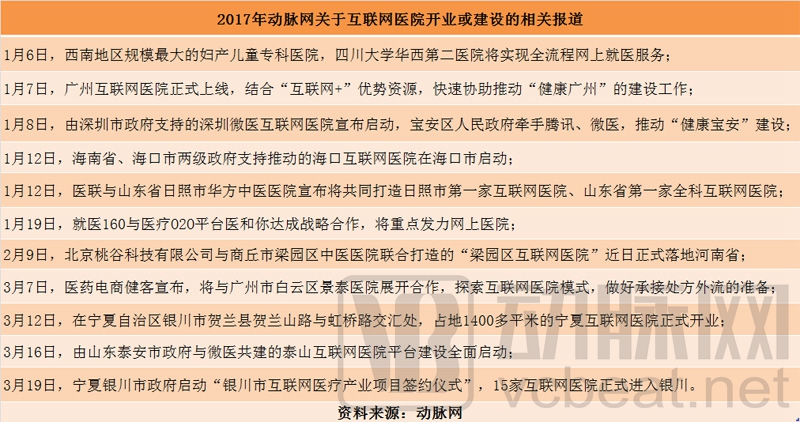
Prior to this, VCBeat also published articles on internet hospitals across China:
To explore the development and changes of internet healthcare companies in 2017, VCBeat interviewed the founders and executives of nine well-known companies in the industry, including WeDoctor founder Liao Jieyuan, DXY founder Li Tiantian, Chunyu Doctor PR Director Tan Wanneng, Haodf Online CEO Wang Hang, Xinyi International CEO Tai Congyue, Anxin Doctor CEO Ge Xing, Almond Doctor CEO Martin, Kangyou Baby CEO Hu Anyu, and Qingpingguo Health CEO Xu Jiazi.
WeDoctor Deploys Artificial Intelligence to Strengthen Online-Offline Integration
Liao Jieyuan, Founder of WeDoctorsaid: "Overall, there are two aspects: one is the strategic deployment of artificial intelligence,On the other hand, there is a continuous strengthening of the integration between online portals and offline service bases.”
In the field of artificial intelligence, on November 15 this year, at the inaugural International Smart Healthcare Conference, WeDoctor released its intelligent healthcare cloud platform, “WeDoctor Cloud,” and demonstrated a -based solution at the venue.WeDoctor Cloud’s Ruiyi Intelligent Doctor and Huatuo Intelligent Doctor.
This is the world’s first cloud platform dedicated to intelligent healthcare. Built on WeDoctor’s seven years of experience in internet-based healthcare, and leveraging cloud computing, big data, and artificial intelligence technologies, it provides one-stop, multi-scenario cloud-based solutions for governments, hospitals, primary care institutions, and healthcare enterprises.
Ruiyi Intelligent DoctorIt is an AI-powered diagnostic and treatment application for Western medicine, jointly developed by WeDoctor and the Zhejiang University Ruyi Artificial Intelligence Research Center. Compared with IBM Watson and Baidu Medical Brain, Ruyi Intelligent Doctor can only be considered a “newcomer.” However, after more than a year of deep learning on millions of high-quality data records, Ruyi Intelligent Doctor has achieved key breakthroughs in over ten specialized fields, including pulmonary nodule detection, diabetic retinopathy screening, cervical cancer screening, bone age assessment, and general practice auxiliary diagnosis.
Huatuo AI DoctorCentered on the core principles of TCM syndrome differentiation and treatment, this AI-driven diagnostic and therapeutic application consolidates the clinical expertise of renowned TCM practitioners and their classic prescriptions. Currently, the Huatuo Intelligent Doctor has been deployed in 400 TCM clinics across 11 prefecture-level cities in Zhejiang Province, having assisted in generating over 1.6 million prescriptions. It has become the most widely applied “Cloud-based TCM Brain” internationally.
In addition to its two flagship AI products, Weiyi Cloud leverages Weiyi’s seven years of deep expertise in the internet healthcare industry to deliver a series of cloud-based solutions across diverse medical scenarios, including internet hospitals, medical consortia, regional population health information platforms, family doctor contracting platforms, health insurance platforms, and pharmaceutical enterprises.
“Connectivity and cloud-based transformation have broken down the walls of hospitals, gradually achieving data, workforce, and resource synergy, thereby bringing breakthrough capability enhancements to the entire healthcare industry.” At this conference, Liao Jieyuan, founder of WeDoctor, unveiled WeDoctor’s latest smart healthcare strategy and stated that WeDoctor has evolved from an internet healthcare platform into an internationally leading smart healthcare platform.
On the other hand, it continues to strengthen the integration of its online portal with 18,000 offline service bases., coupled with the imminent launch of intelligent terminal products covering diverse scenarios, to enhance the universality and accessibility of smart healthcare, enabling users to experience the convenience of medical services brought by new technologies and products.”
DXY Accelerates Industry Collaboration, Expanding into Offline Clinics and Artificial Intelligence
Dingxiangyuan Founder Li Tiantian Completed Five Initiatives Over the Past Year
First, accelerate collaboration with pharmaceutical companies. In February 2017, Eli Lilly and Company, Tencent’s Tang Daifu, and DXY established a tripartite partnership for chronic diabetes management, jointly launching the “Eli Lilly Diabetes Youxing Care Program.” This initiative aims to enable physicians and patients to better manage diabetes and achieve treatment goals sooner through intelligent blood glucose monitoring devices, internet technologies, disease education, and supportive care services.
Second, on March 19, 2017, DXY’s first internet hospital and big data center will be established in Yinchuan. This marks another firm step in responding to the national call and exploring new models of medical services in the internet era. Meanwhile, this also represents a significant move for DXY’s expansion into the consumer-facing sector, as its core product, DXY Doctor, officially upgrades from a lightweight online consultation model to providing comprehensive online diagnosis and treatment services for users.
Third, leverage favorable policies and market development opportunities to establish a presence in offline general practice clinics;
Fourth, on May 19, 2017, DXY, the Second Xiangya Hospital of Central South University, and Dana Technology jointly announced an exclusive strategic partnership to develop AI-assisted diagnosis for dermatological conditions. This collaboration aims to help patients better understand dermatological diseases while establishing a rational triage system and facilitating convenient access to medical care for skin conditions.
Fifth, on August 17, 2017, at the 2017 Healthcare Reform Promotion Conference in Pengyang County, Ningxia, DXY signed a cooperation agreement with the local Health and Family Planning Bureau focusing on physician training and chronic disease management. Leveraging DXY’s advantages in internet technology and the healthcare sector, the partnership aimed to build a primary care physician training platform and a chronic disease care service platform for Pengyang, thereby boosting its grassroots medical services.
Strategic Upgrade of Chunyu Doctor
For Chunyu Doctor, this year marked a strategic upgrade, with the primary adjustment being the evolution of its online consultation services from a standalone product into a connectivity platform. This transformation is manifested in three key aspects:
1) Scenario-based and open C-end services, i.e., the output of online consultation capabilities based on an open platform;
2) Development of hospital-side services, which involves integrating Chunyu Doctor’s internet products, services, and operational systems with hospitals’ informatization needs to assist hospitals in process reengineering, efficiency improvement, cost control, and user management;
3) In B2B sales, deeply explore channel and data value to build a precise digital marketing service system.
“The rationale behind these adjustments is straightforward: they align with both industry trends and the inevitable trajectory of Chunyu Yisheng’s own development—namely, to build partnerships with all key stakeholders in the healthcare sector, particularly by embracing medical practice and empowering hospitals, thereby effectively addressing industry pain points and fostering overall innovation,” said Tan Wanneng.
Haodaifu Online: Leveraging Doctors' Fragmented Time to Serve Patients Across China
Wang Hang, CEO of Haodf.com, believes that in the medical field, gaining recognition from doctors and patients and changing their habits does not require “clever tricks.” Instead, the most straightforward approach—sustained, large-scale investment and greater patience—is the key to earning trust.
Although the internet healthcare industry has entered a period of rapid development in recent years, with a dazzling array of emerging concepts—such as big data, O2O (Online-to-Offline), the Kaiser Permanente model, and artificial intelligence—the lifespan of these novel concepts is becoming increasingly short. In Wang Hang’s view, “the proliferation of novel concepts only underscores that the industry has yet to identify its core focus; it should return to addressing customer needs and the primary contradictions in medical development to find answers.”
Haodf Online has consistently maintained a rational perspective on trending concepts, returning to fundamental issues and focusing on key industry points. It has continuously invested in and broken new ground in leveraging the fragmented resources of medical experts. By harnessing experts’ fragmented time and allocating it to primary care physicians, Haodf empowers grassroots healthcare providers, which is essential for the successful implementation of tiered diagnosis and treatment. Participating in the broader wave of healthcare reform, using sound business practices to drive social change, and realizing corporate social value are the goals pursued by Haodf Online.
To date, 170,000 doctors across China have provided consultation services to patients nationwide through the Haodf Online platform. Statistical data shows that in the first ten months of 2017 alone, doctors contributed a total of 1.66 million hours of their spare fragmented time on the Haodf Online platform, primarily used for providing direct disease consultation services to patients.
Xingren Doctor: Online Consultations, Offline Clinics
Meanwhile, Martin, CEO of Almond Doctor, has consistently adhered to the establishment of an online doctor-patient communication platform and an offline clinical consultation platform (Almond Clinic).In early 2016, he shifted his focus to preparing for multi-site medical practice. Leveraging the doctor-patient trust established by Xingren over the previous three years and its existing base of highly active physicians, Xingren launched the Xingren Multi-Site Practice Studio in 2017. To date, it has established outpatient clinics in five cities: Guangzhou, Shenzhen, Shanghai, Chengdu, and Shenyang, with a target of reaching 50 clinics by 2018.
Anxin Doctor Obtains Internet Hospital License, Expands into Offline Clinics
Ge Xing, CEO of Anxin Doctor, summarized: “In 2017, we kept pace with the trend by obtaining qualifications for an internet hospital, while actively expanding our offline clinic network to contribute comprehensively to women’s and children’s health.”
Sichuan Province Awards Another Internet Hospital License to Kangyou Baobei Internet Children's Hospital
Another internet hospital has been established in Sichuan Province: Kangyou Baobei Internet Children's Hospital. Its CEO, Hu Anyu, reviewed the development of the past year as follows:
A. Leverage favorable policies and market development opportunities to establish a specialized pediatric medical consortium, expanding the community-based child healthcare service model into an offline service model centered on the pediatric medical consortium (community child healthcare + regional tertiary Grade A pediatrics) as its core support;
B. Establish a pediatrician group to enhance professional services for pediatricians and unlock their value;
C. Establish a R&D center for children’s medical and health products, conduct in-depth research into market demands for children’s medical and healthcare services, and strengthen R&D capabilities to support the standardization and scaled operation of service offerings for children;
D. Apply for the establishment of an Internet-based children’s hospital, obtain governmental regulatory approvals, build a shared medical platform for pediatric healthcare services, achieve full integration of online and offline diagnosis and treatment, and realize monetization across the entire service chain, including clinical care, diagnostic and technical services, pharmaceutical services, and insurance services.
Green Apple Health Continues to Explore Monetization, Targeting E-commerce
As a consistent advocate of“Acquaintance Economy”-driven Qingpingguo Health explored several business models last year, including the “Flying Knife Model” and online multidisciplinary consultations.After a period of research and pilot testing,Its CEO, Xu JiaziStill not optimistic about thisTwo Directions.
Finally, Xu Jiazi chose e-commerce., providing patients with professional and reliable medical products, dedicating ourselves to delivering excellent service, and truly achieving step by step the vision of making healthcare access simple.
Xinyi International Upgrades Its Smart Healthcare Innovation Strategy to Create an Open Ecosystem for Medical and Health Services
Unlike internet healthcare companies that focus on consumer-facing (C-end) users, XinYi International has consistently concentrated on the business-to-business (B-end) sector. In an interview with reporters, its CEO, Tai Congyue, stated, “In 2017, XinYi International comprehensively upgraded its smart healthcare innovation strategy, committing to serving physical medical institutions, developing ‘Internet Plus’ value-added services, and innovatively building an open ecosystem platform for medical health.”
It mainly manifests in the following four aspects:
1. By leveraging information technology and professional operational services, establish a high-speed network connecting medical institutions at all levels, experts, physicians, and patients. Driven by the synergistic effects of resources, technology, and services, enhance the capacity and efficiency of healthcare delivery, and facilitate the effective implementation of tiered diagnosis and treatment.
2. Focus on the development of telemedicine, remote education, and co-developed medical disciplines; leverage “Internet Plus” to effectively achieve multi-terminal interactive connectivity with primary care physicians, providing comprehensive solutions for government agencies, public hospitals, and private hospitals.
3. Promote medical collaboration across multiple dimensions—including disease sources, medical technologies, pharmaceuticals, equipment, information, and data—to achieve a closed loop of “medical care + pharmaceuticals” and “medical care + treatment.” Continuously integrate stakeholders such as pharmaceutical companies, drug distribution channels, retail pharmacies, banks, and insurance providers to build a more valuable circulation chain.
4. Build an open, collaborative platform for the internet-based healthcare ecosystem, activate value through partnerships, engage in deep cooperation with enterprises across all sectors of the healthcare industry, reshape the ecological value chain, actively empower the pharmaceutical industry, and provide more shared, convenient, efficient, and diverse medical services.
As the Internet of Things (IoT) and internet connectivity expand, new technologies and applications in smart healthcare are being rapidly implemented, necessitating continuous upgrades to existing medical and health service models. Leveraging a remote collaboration system for medical consortia that covers more than 4,300 hospitals across 31 provinces in China, Sinyi International has built the largest tiered diagnosis and treatment service platform in the country. This platform achieves effective intelligent connectivity among hospitals, physicians, and between physicians and patients, providing an interconnected, closed-loop ecosystem for partners across various sectors. With years of experience in platform construction and operation, Sinyi’s services now cover more than 60 national- and provincial-level remote consultation centers, with an annual volume of 150,000 remote consultation cases. The company has supported the development of over 120 medical consortium projects, with its services reaching approximately 160 regional leading hospitals.
During an interview with VCBeat, another key insight emerged: at its core, mobile health serves as a supplement to traditional healthcare. Currently, major monetization models—such as online consultations, hospital resource services (e.g., appointment registration), e-commerce for pharmaceuticals, and medical hardware—are all striving to address the thorny issues and doctor-patient conflicts inherent in the traditional healthcare system.
Although internet healthcare has improved the efficiency of the traditional medical industry, enabling patients to access care more efficiently and maximizing the utilization of medical resources, relying solely on online consultation services is insufficient to build a unicorn company, and achieving break-even is also highly challenging.
Only platforms that focus on the core of healthcare—“doctors” and “patients”—meet their practical needs, and gradually address the difficulty of accessing medical care will gain a firm foothold among the many companies in the healthcare industry.
Future Industry Development Trends: Toolization and Gateway Integration.From the perspective of corporate development, several trends are emerging: companies will continue to invest more human and material resources into online consultation services, potentially leading to a modest market surge; these services will gradually penetrate third- and fourth-tier cities; vertical-specific consultation services will progressively transition toward health management models such as private physicians or family doctors; and it is also possible that medical institutions themselves may enter this sector.
From an industry perspective, the future development of internet healthcare will become increasingly standardized. Issues such as patient health information and medical quality involved in the operations of “Internet + Healthcare” enterprises will inevitably be brought under the supervisory and regulatory scope of the National Health and Family Planning Commission. Platforms that have not yet obtained qualifications for internet hospitals will strive to secure such credentials or pivot toward areas unrelated to diagnosis and treatment, such as patient education.
With the emergence of innovative technologies such as big data and artificial intelligence, most internet healthcare companies have begun to enter this field, using these technologies as their core drivers. As a result, internet healthcare has entered the era of intelligent healthcare. The Internet Healthcare 2.0 era, which focused solely on physician search and lightweight consultations, is now undergoing a period of transformation. Driven by technological innovation, intelligent healthcare has reached the core of medical practice—assisting in diagnosis and treatment—liberating physicians from tedious and repetitive tasks, improving overall healthcare efficiency, and enhancing the service capabilities of primary care physicians and grassroots medical institutions.
The integrated development of online and offline services remains a significant trend. Streamlining the healthcare service workflow—from online consultations, intelligent triage, and appointment scheduling to insurance payments, medication purchases, and delivery—to create a comprehensive healthcare service ecosystem that provides convenient, efficient, and professional integrated medical services to the public will be a key focus for future development.
With limited space and service hours in medical institutions, and as demand for comprehensive health systems continues to intensify alongside the widespread adoption of wearable devices and smart mobile terminals, the home will become the core scenario contested by major companies in the era of smart healthcare.
Furthermore, the emergence of the shared medical services model has opened up significant opportunities for the internet healthcare industry, which is gradually maturing in scale. In-depth development of specialized disciplines constitutes the primary battlefield for the growth of “Internet + Healthcare” and serves as a critical factor for corporate survival. The integration of medical resources and deep operational capabilities in business activities will form the core competitiveness of enterprises, while in-depth collaboration with basic medical insurance and commercial health insurance lays the foundation for long-term development.
WholeHealthcareThe industry is massive, with abundant opportunities. Each company needs only to focus on a single direction to achieve significant scale. Every enterprise will have its own path; by maintaining the right pace and continuously creating value for users, it can go further.