

Ping An Wan Jia Medical Files IPO Prospectus: Building China's JCI for Primary Care Through Certification Standards
"Here, the fire extinguisher location needs to be adjusted."
“There, a partition curtain needs to be added.”
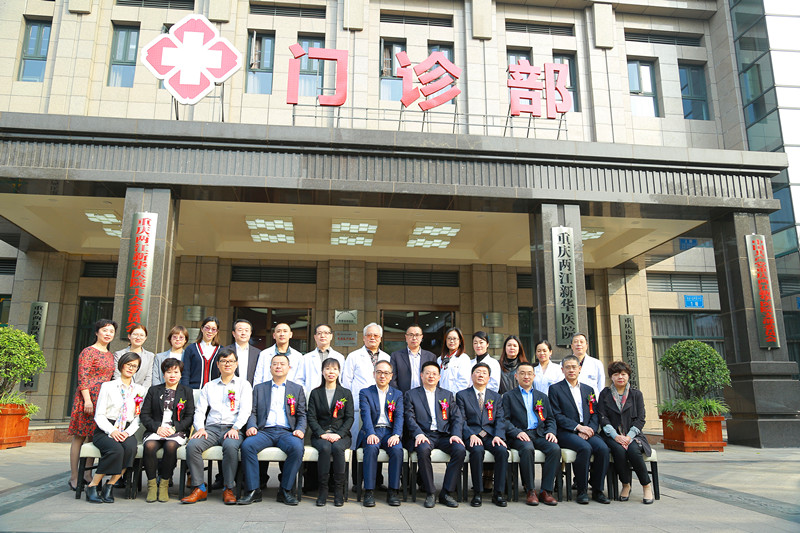
On November 9, a reporter from VCBeat (WeChat ID: vcbeat) accompanied Zhou Kang, General Manager of the Strategic Development Department at Ping An Wanjia, on a visit to Chongqing Liangjiang Xinhua Hospital. This was the question he discussed most frequently with the hospital’s executives.
To this end, he even went to the designated locations to personally demonstrate how the items should be placed. From the hospital’s main entrance to the inpatient department, covering corridors, laboratories, clinical departments, wards, and pharmacies, Zhou Kang meticulously labeled every visible area, laying a solid foundation for the hospital’s certification process.
The hospital visited on this occasion was just one of the many primary healthcare institutions included in his survey. This survey marked the first step for the institution to initiate the Ping An Wanjia Medical Certification Standard. It is understood that it takes approximately 3–4 months for a primary healthcare institution to complete the certification process, after which Ping An Wanjia Medical will continue to provide services such as training and coaching. Meanwhile, the communication and exchanges during the initial survey also served to reassure the Wanjia Certification Team, with the hope that the president and senior executives of Liangjiang Xinhua Hospital would fully support the team’s subsequent certification efforts.
“I know that for these primary healthcare institutions, taking the first step is easy; what’s difficult is the accreditation process. I have led many evaluations, and because our rectification requirements are extremely detailed—so much so that they could even be described as stringent—many staff members at these institutions complained to the hospital director or considered backing out during the accreditation process,” said Zhou Kang.
So, what are the certification standards of Ping An Wanjia Medical? What do they entail? And what is the significance for primary healthcare institutions after participating in the certification?
For years, the tiered accreditation of public hospitals has served as a foundation for government stratified regulation, enabled patients to assess hospital service capabilities, and underpinned medical service pricing and institutional capacity building. However, institutions operating in the primary healthcare sector lack comparable accreditation standards and mechanisms. This absence has made it difficult for the government to select designated medical providers, eroded public confidence in primary care institutions, and deprived these facilities of a clear roadmap for continuous improvement as well as the incentive to deliver high-quality medical services.
With the new healthcare reform proposing a top-level design of “ensuring basic coverage, strengthening primary care, and establishing mechanisms,” primary healthcare has been placed at the core of development. The state has issued a series of policy documents to promote private medical practice, tiered diagnosis and treatment, and family doctor contracting, thereby effectively implementing the development of primary healthcare.
In June 2016, the State Council Office for Medical Reform, the National Health and Family Planning Commission, the National Development and Reform Commission, the Ministry of Civil Affairs, the Ministry of Finance, the Ministry of Human Resources and Social Security, and the State Administration of Traditional Chinese Medicine jointly issued the "Guiding Opinions on Advancing Family Doctor Contracted Services." The goal was to achieve a family doctor contracted service coverage rate of over 30% by 2017, with a coverage rate of over 60% for key populations. By 2020, efforts were made to expand contracted services to the entire population, establish long-term and stable contractual service relationships, and basically achieve full coverage of the family doctor contracted service system.
Although the industry is developing rapidly, primary healthcare institutions are facing issues of insufficient service capacity and inadequate facility utilization. On one hand, there is an urgent public demand for increased medical resources; on the other hand, personnel and facilities remain underutilized due to limited service capabilities at clinics.
Amidst these conflicting tensions, Ping An Wanjia Medical was established to fill the market gap, driven by the vision of enhancing patient safety and the quality of medical care.
Ping An Wanjia Medical is committed to integrating China’s primary healthcare service resources. By implementing initiatives such as the Wanjia Medical Certification Standards, it aims to achieve the goal of “Three Improvements, Two Reductions, and Two Connections”: enhancing the capacity and quality of primary healthcare services; promoting tiered diagnosis and treatment and family doctor contracting; improving patient satisfaction; reducing medical risks; lowering healthcare costs; connecting basic medical insurance with commercial health insurance; and facilitating referrals across tertiary care institutions.
“We spent a year establishing partnerships by signing agreements with JCI, DNV GL, and industry experts both in China and abroad. After comprehensively soliciting professional opinions from multiple stakeholders, and aligning with national tiered diagnosis and treatment policies as well as the Wanjia Strategy, we developed the certification standard system for Wanjia’s primary healthcare institutions,” remarked Zhou Kang.
It can be said that standards represent the crystallization of best practices, while certification is the process of acquiring the essence of these best practices. In this context, the Wanjia Certification Standard has played a significant role in helping China’s private primary healthcare institutions improve their service levels.
According to Zhou Kang, primary healthcare institutions participating in the Wanjia Medical certification standards include: general/specialty clinics, comprehensive/specialty outpatient departments, community health service centers, and traditional Chinese medicine (TCM) outpatient departments/clinics. The certification standards are divided into two levels: preliminary assessment and professional evaluation. Following rigorous preliminary assessments, reviews, and irregular spot checks, applicant institutions will be awarded three-star, four-star, or five-star certificates.
The professional evaluation and certification standards are patient-centered, emphasizing both the establishment of standards and continuous process improvement. The framework is divided into nine sections: clinical services, patient rights, medication management, auxiliary examinations, infection control and prevention, facility and equipment management, staff management, quality and safety management, and information and documentation management. The Wanjia Medical Certification Standards comprehensively cover both the hardware and software aspects of primary healthcare services, evaluating institutions based on their overall capabilities, thereby ensuring highly accurate and authoritative results.
Meanwhile, Wanjia Certification has drawn on the management and operational practices of JCI, DNV GL, and the Taiwan Accreditation Commission. Under the guidance of domestic associations, it established the “Wanjia Accreditation Committee” to provide effective organizational support for the continuous advancement of certification and accreditation activities, thereby ensuring the fairness and authority of the certification process.
The primary responsibilities of the Evaluation Committee include participating in the formulation and implementation of various evaluation-related procedures; engaging in on-site evaluations, standard updates, and development activities, such as seminars and conferences related to the accreditation of primary healthcare institutions; establishing and revising evaluation criteria, key points, and other consensus-based matters; providing improvement recommendations to evaluated primary healthcare institutions; and completing the evaluation report and rectification suggestions within five working days after the on-site evaluation for submission to the accrediting body. In addition to continuously developing and implementing evaluation functions, the Evaluation Committee also serves as a professional platform for Ping An Wanjia Medical to consistently train qualified evaluators and facilitate industry exchanges on safety quality management and evaluation skills.
“We have adopted a free certification model for primary healthcare institutions joining the Wanjia Platform, bearing the costs of system operations and upgrades,” introduced Zhou Kang. On another front, Ping An Wanjia Medical is also establishing a tiered certification system tailored to Chinese perceptions. Regarding international quality accreditation systems such as JCI, DNV GL, and ISO, there is merely a pass-or-fail outcome, unlike the “three-tier, nine-level” classification system used for hospitals in China.
During the certification process, Ping An Wanjia Medical implements a tiered certification system based on five dimensions—hardware management, personnel management, operational management, medical quality management, and social impact—to progressively enhance the service level of primary healthcare institutions. Through comprehensive professional evaluations, it certifies primary healthcare institutions with robust management systems.
Furthermore, Ping An Wanjia Medical can directly facilitate certified primary care institutions in accessing precise, high-quality resources. Certified medical institutions on the Wanjia platform will receive support across multiple domains, including information technology systems, talent training, medical insurance, marketing, and operations, thereby breaking down barriers between government-sponsored medical insurance and commercial health insurance.
The Wanjia Certification Standard provides primary healthcare institutions with the opportunity and support to benchmark against international standards and achieve systematic development, empowering them to implement differentiated pricing with greater confidence. It offers commercial health insurers a streamlined pathway for selecting qualified service providers, assists the government in promoting tiered diagnosis and treatment and enhancing the quality of primary care, and enables patients to make informed choices rather than selecting clinics blindly, allowing diverse customer segments to easily connect with service providers that offer appropriate pricing and satisfactory care.
From Zhou Kang’s perspective, Chongqing Liangjiang Xinhua Hospital’s decision to partner with Ping An Wanjia Medical and join the Wanjia Certification Standard System at this juncture represents a promising initiative.
As the hospital is currently in its trial operation phase, patient volume remains low. The majority of visitors are undergoing health check-ups, which require minimal adjustments to the authentication process and do not disrupt hospital operations during implementation.
Upon completion of the accreditation process and receipt of the evaluation level certificate, Liangjiang Xinhua Hospital was also poised for its official opening. With the launch of specialty departments such as medical aesthetics, oncology, and traditional Chinese medicine, the hospital is well-equipped to deliver high-quality services to patients, while ensuring that medical staff are not disrupted in their routine duties by accreditation-related obligations.
From the perspective of its establishment background, this hospital is a key healthcare project in Liangjiang New Area, Chongqing. With a construction area of approximately 15,000 square meters and a total investment of 150 million yuan, it integrates extensive resources from top-tier universities and Grade A tertiary hospitals both in Chongqing and across China. The hospital has established an exclusive expert committee to strive for providing optimal diagnostic and treatment services, aiming to become a high-end medical institution.
Regarding the collaboration with Ping An Wanjia Medical, Qin Fanke, Director of the External Development Department at Liangjiang Xinhua Hospital, stated that there were three main reasons:
1. Medical personnel in private hospitals come from diverse medical institutions, leading to varied diagnostic and treatment practices, standards, and protocols; therefore, standardizing these standards and protocols is a fundamental requirement. Ping An Wanjia Medical’s certification system, based on the localization of JCI standards, offers extensive reference experience for private hospitals in China.
2. Given that Ping An Wanjia Medical Certification Services aggregates advanced professional resources from both domestic and international sources, its certification system is leading the trend of innovative development in China’s primary healthcare sector. Therefore, our hospital has taken a proactive step to position itself strategically, establishing the conditions for rating private medical institutions through standardized operations and management, thereby making thorough preparations for the gradual implementation of tiered diagnosis and treatment under future national healthcare reforms.
3. The strategic blueprint of Liangjiang Xinhua Hospital is highly aligned with that of Wanjia Medical, leading to a deep partnership. Leveraging the certification system as an entry point, extensive and deeply integrated collaborations will be established in the future across medical resource platforms, commercial sectors, and insurance, fostering high-stickiness partnerships.
“We hope to maintain collaboration with Ping An Wanjia Medical at every stage of development, so that we can complement each other and achieve mutual benefits,” Qin Fanke told VCBeat.
Cases similar to that of Chongqing Liangjiang Xinhua Hospital are numerous on the Ping An Wanjia Medical Platform. To date, more than 5,400 primary healthcare institutions have been certified by Wanjia, with the vast majority located in first- and second-tier cities to achieve a certain degree of geographic alignment with the customer distribution of Ping An Group.
These primary healthcare institutions that have obtained Wan Jia certification are obligated to implement standards effectively over the long term and pursue continuous improvement. Ping An Wan Jia Medical ensures standardized operations and ongoing improvements at certified clinics through phased reviews and platform-based performance tracking, thereby comprehensively upgrading medical services.
From patient admission to discharge, the procedural framework establishes a series of standardized protocols to regulate all medical practices. Healthcare professionals are required to consciously adhere to these procedural standards in their conduct, thereby minimizing the occurrence of medical incidents to the greatest extent possible.
Meanwhile, Ping An Wanjia Medical will establish complaint and appeal channels to provide timely solutions and better services for patients and clinics.
By leveraging certification standards to penetrate primary healthcare, Ping An Wanjia Medical is building the JCI of China’s primary care sector. The government can guide clinics toward sound development and continuously enhance their service capabilities; commercial insurance companies can establish mature primary care service networks, breaking the curse that most commercial health insurance reimbursements are restricted to “public hospitals at Level II or above”; clinics can stand out, command brand premiums, achieve scalable replication through chain operations, and unlock greater growth potential; and the public can access clinics that are convenient, high-quality, and reasonably priced, no longer blindly judging medical quality based on location and décor.
Perhaps, through the Wanjia Certification, most primary healthcare institutions can find a guideline and concrete pathway for continuous improvement, and this standard will also benefit all sectors of society.