

Where Should Chinese Biotech IPO? A Comparative Look at A-Share, Hong Kong, and U.S. Markets
From2007Since [year], innovation and novel drug development have become the central theme of the pharmaceutical industry. A decade later, China’s pharmaceutical innovation has grown from scratch, nurturing a cohort of leading enterprises such as Hengrui Medicine and Innovent Biologics, marking modest yet notable achievements.
However, unlike other industries, the R&D cycle for innovation takes at least 10 years. In the absence of profits and revenue, how these companies seek to go public and how capital can exit have become matters of widespread concern.
The day before yesterday, at the 5th China Renaissance Medical and Life Sciences Leadership Summit hosted by China Renaissance Capital, industry leaders discussed the selection of IPO pathways for new drug R&D companies. The following is a curated report brought to you by VCBeat.
Guest Introduction
Li Bin (Moderator) | Partner, Huiqiao Capital
Fu Wei | CEO and Partner, QiaoKang Capital
Hu Zhengguo | Chief Investment Officer and Chief Financial Officer of WuXi AppTec
Lu Xiaobo | Partner, Sequoia Capital
Zhong Chuangxin | Senior Vice President, Listing and Issuance Services Department, Hong Kong Stock Exchange
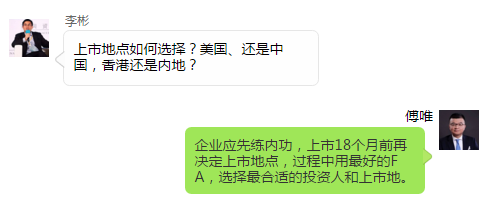
Fu Wei of Qiao Capital: The Choice of IPO Path Should Be Analyzed Step by Step from Various Levels
If a company chooses to go public within the next 18 months, the A-share market is not a favorable option, as it is unrealistic for companies with no revenue or profits to list on the A-share market within this timeframe; similarly, the Hong Kong stock market is also not an ideal choice. Therefore, for such companies, Nasdaq represents their best option.
If a company has a medium- to long-term plan for an initial public offering (IPO), it need not rush into making immediate decisions. Timeframes of 18, 24, or 36 months are neither particularly short nor long; many developments can occur during this period, regulatory policies in the capital markets may change, and the “Innovation Board” could potentially make a comeback. Therefore, such companies should focus first on refining their products and ensuring sound corporate operations; where to list in the future is merely a matter of pathway.
Looking back at the capital markets over the past decade or so, the preferred listing venue has shifted five or six times. In 2004 and 2005, attention was focused on Hong Kong stocks; after a while, NASDAQ became hot; and later still, the ChiNext board sparked a new trend.
For a strong company, it is more important to first strengthen its core competencies and defer strategic decisions until 18 months prior to the initial public offering (IPO).
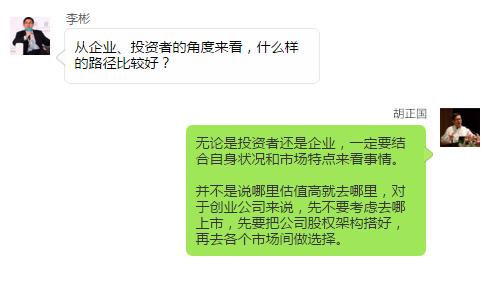
WuXi AppTec’s Hu Zhengguo: Assess Matters in Light of One’s Own Circumstances and Market Characteristics
WuXi AppTec has navigated three capital markets: it initially listed on the New York Stock Exchange (NYSE) in 2007; following its privatization in 2015, WuXi Biologics listed in Hong Kong, while WuXi AppTec is now pursuing an initial public offering (IPO) on the Main Board of China’s A-share market.
From a corporate perspective, if substantial overseas M&A-driven expansion is planned in the future, U.S. equity markets are undoubtedly more convenient. For A-share listed companies, overseas acquisitions require approval from the China Securities Regulatory Commission (CSRC), which means that whether issuing new shares or conducting refinancing, there is a heightened risk of missing optimal timing.
From a market perspective, each of the three markets has its own advantages and disadvantages. The US stock market and the Hong Kong stock market are both dominated by institutional investors, where company stock prices are influenced by corporate performance and fundamentals. In contrast, the A-share market offers significant potential for individual investors, with trends and broader market directions playing a more prominent role.
At present, it seems unlikely that a company solely focused on innovative drugs can achieve an A-share listing within 10 years, as A-share listings require two consecutive years of profitability.
WuXi Biologics chose to list on the Hong Kong stock exchange primarily due to strategic development considerations, as it needs to expand globally. Another subsidiary under WuXi AppTec, NextCODE Health, has a global footprint with teams and operations in China, the United States, and Iceland. Such a company is less suited for listing on the A-share market.
Therefore, whether from an investment or corporate perspective, the choice of listing venue must be tailored to a company’s specific circumstances and market characteristics; it should not be driven solely by where valuations are highest.
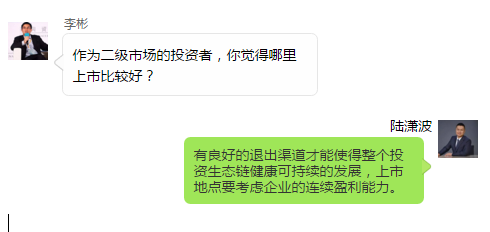
Sequoia Capital Partner Lu Xiaobo: Sound Exit Channels Are Essential for the Healthy and Sustainable Development of the Entire Investment Ecosystem
The cycle of innovative pharmaceutical research and development is exceptionally long, with extended periods devoid of profitability. From an exit perspective, opportunities in China’s A-share market are currently limited, placing both investors and founders under significant pressure. Consequently, the choice of listing venue has become a widespread concern among investors and entrepreneurs in this industry, as robust exit channels are essential for fostering a healthy and sustainable investment ecosystem.
If a company is profitable, demonstrates strong sustainable earnings capability, and derives the majority of its business from the domestic market, then listing on China’s A-share market is undoubtedly the preferred choice. Although the waiting period may be longer, A-shares can command higher valuations. Currently, leading innovative enterprises listed on the A-share market are not cheaply valued; Hengrui Medicine has surpassed a market capitalization of RMB 200 billion, with a price-to-earnings (P/E) ratio exceeding 60x, while BGI Genomics’ market capitalization has also exceeded RMB 80 billion. Such valuation advantages can further facilitate corporate mergers and acquisitions, enabling companies to expand and strengthen their market position.
Of course, for innovative drug companies that are not yet ready for an IPO, being acquired by these leading firms offers a viable exit strategy. Not every company can go public. On the Nasdaq, many innovative drug companies ultimately exit through acquisition by larger corporations, often at a premium.
If a company is not yet profitable but is innovation-driven, NASDAQ is currently the preferred choice. To list on NASDAQ, a company’s level of innovation and team structure must meet its requirements. Is the innovation at an international or domestic level? Companies with only domestic-level innovation may face certain difficulties in listing on NASDAQ.
However, this is merely the current status quo; new developments may emerge in the future, particularly with respect to opportunities likely to arise on Hong Kong’s Innovation Board.
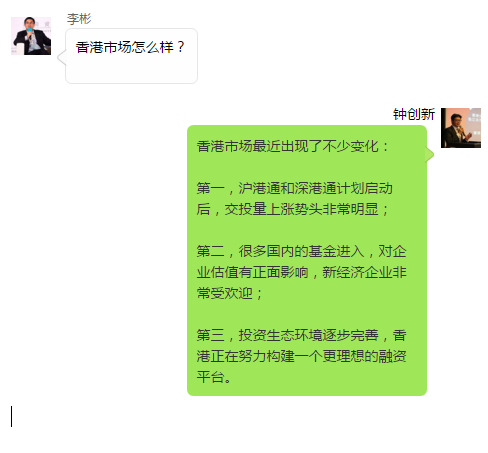
HKEX Zhong Chuangxin: The Hong Kong market has recently seen significant changes.
The Shanghai-Hong Kong Stock Connect was launched approximately three years ago, and the Shenzhen-Hong Kong Stock Connect was also launched in late 2016. In 2016, the average daily trading volume in Hong Kong was around HK$67 billion; by 2017, it had reached approximately HK$100 billion, representing a growth of 30% to 40%.
In 2016, mainland Chinese capital accounted for 1%-2% of the daily trading volume on the Hong Kong Stock Exchange. This proportion rose to 3%-4% last year and has reached 5%-6% this year, showing a clear upward trend. Companies such as Meitu and WuXi Biologics have successively listed on the Hong Kong Stock Exchange, achieving relatively favorable valuations.
In June 2017, Hong Kong initiated discussions on the establishment of an Innovation Board, which would allow companies without realized profits and Chinese enterprises seeking to return from overseas markets for listing to list locally. These discussions are currently ongoing.
Summary:
Huiqiao Capital’s Li Bin: IPO Pathways Require Multi-Layered Thinking
When selecting an IPO pathway, a three-dimensional assessment of the options should be conducted: first, a horizontal analysis to evaluate potential listing venues; second, a vertical top-down review to examine the maturity of the economy, government policies, and industry infrastructure; and third, a deeper-level evaluation from multiple perspectives, including those of the enterprise and investors.
When it comes to expectations for the Hong Kong market, investors are naturally eager to see the opening of the Innovation Board. Many attendees at this conference included peers from Hong Kong. Looking back ten years, Hong Kong investors were largely unfamiliar with both large-molecule and small-molecule therapeutics, and had little understanding of medical insurance reimbursement and tendering processes. Today, however, with the listing of companies such as WuXi Biologics and 3SBio on the Hong Kong Stock Exchange, investors have gradually developed a deeper understanding of the industry.
If the Innovation Board can be opened up, it will certainly be good news for the pharmaceutical innovation industry. As for valuation, this is a relative concept.
Other Highlights of the Conference:
Innovations in Medicine: A Discussion on the R&D Trends of Targeted Drugs
The Story of Pharmaceutical Innovation: CAR-T Therapy, from Hope to Prospects