

Pharmaceutical Innovation Insights: Trends in Targeted Therapy Development
Cancer treatment is a long and arduous journey, and the development of targeted therapies has demanded immense dedication and resources from scientists and pharmaceutical companies. Driven by both capital and policy support, research into targeted drugs has rapidly become a focal point, giving rise to a cohort of outstanding companies and products within the industry, while an increasing number of publicly listed companies have joined the competitive fray.
However, the development of targeted therapies has long remained a high ground in the pharmaceutical R&D industry, with numerous uncertainties throughout the process. Rather than being a matter of industry competition, the development of targeted drugs is more akin to a race against oneself.
How to build on past achievements and pave the way for the future in the current environment, and how to usher in an era of true diversity and flourishing?
At the 5th China Renaissance Healthcare and Life Sciences Leaders Summit hosted by China Renaissance, Wu Hui of Zai Lab, Hu Shaojing of Jacobio Pharmaceuticals, Tong Youzhi, founder of Kintor Pharmaceutical, Xue Qun of CanSino Biologics, and Li Hanzhong of Ascentage Pharma discussed this topic. The following is a curated report by VCBeat.
Guest Introduction
Wu Hui (Host) | Co-founder of Zai Lab, Managing Director of Quanchuang Capital
Hu Shaojing | President of R&D, Jacobio Pharmaceuticals
Tong Youzhi | Founder and CEO of Kintor Pharmaceutical
Xue Qun | Founder, Chairman and CEO of Canaan Pharmaceuticals
Li Hanzhong | Chief Financial Officer, Ascentage Pharma
Guest Perspectives:
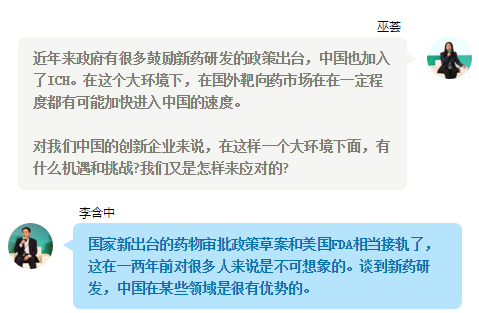
China’s newly released draft policy on drug approval is largely aligned with the U.S. FDA, a scenario that would have been unimaginable to many just one or two years ago.
When it comes to the differences between new drug development in China and the United States, China holds distinct advantages in certain areas.
China boasts abundant patient resources, but its regulatory procedures are more complex than those in the United States. If the new draft regulations are approved, it will be a positive development for pharmaceutical R&D and clinical trials in China.
But returning to the specific issue, domestic pharmaceutical R&D also faces challenges. Many companies now conduct Phase I clinical trials in the United States, not because it is difficult to recruit patients in China, but because of the distribution of physician resources in China with experience in Phase I oncology clinical trials.
Phase III clinical trials can generally be conducted by following standard procedures, whereas Phase I trials are entirely different and demand a high level of expertise and experience. Therefore, China still has room for improvement in the practical implementation of clinical trials.
Guest Perspectives Summary:
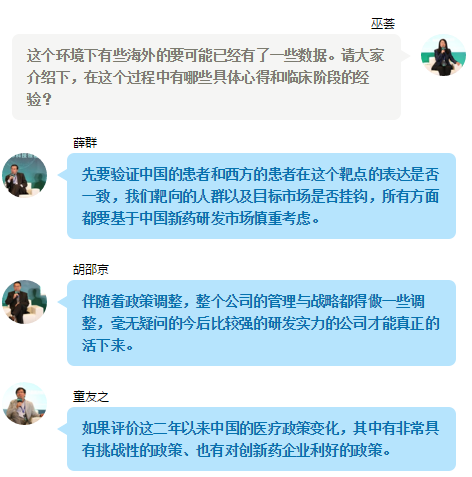
New drugs from abroad must undergo clinical trials again for registration in China, including those already conducted overseas. In the early stages of drug development, it is essential to first verify whether the drug acts on the specific target pathway. If the drug is to enter the Chinese market, it is also necessary to confirm whether the expression of this target is consistent between Chinese and Western patients, and whether the target population aligns with the intended market.
With China’s accession to the ICH, drugs originating from China must integrate global data. On this basis, all processes, including CMC, must comply with international standards. Furthermore, pharmaceutical R&D in China must pursue innovation; every aspect should be carefully considered in the context of new drug development in China, leveraging policy benefits to create innovative drugs that meet international standards.
Meanwhile, with policy adjustments, pharmaceutical R&D companies need to make corresponding adjustments to their management and strategies.Undoubtedly, in the future market, only companies with strong R&D capabilities will truly survive.This process will eliminate a large number of companies lacking R&D capabilities.
When it comes to China’s pharmaceutical market, both innovative drugs and generics face two challenges: quality and the degree of innovation.
Under the new registration regulations, companies must identify a drug’s uniqueness, advantages, and target population during the initial screening phase. This places stringent demands on the entire R&D team’s scientific capabilities in biology, genetics, and chemistry.
Policy revisions are entirely intended to encourage innovation in the healthcare industry, but they have also posed significant challenges to research and development across the entire biopharmaceutical sector.
Moreover, Chinese biopharmaceutical companies should set higher and more long-term strategic goals at this stage. The market will face intense competition in the future, as multinational corporations’ pharmaceutical products will rapidly enter China following amendments to registration regulations.
How can Chinese pharmaceutical companies gradually align with international standards in the process of globalization, survive, and stand out? How can they create treatments with genuine clinical value? These questions pose significant challenges for every enterprise and warrant deep reflection on product portfolio strategy.
Guest Perspectives Summary
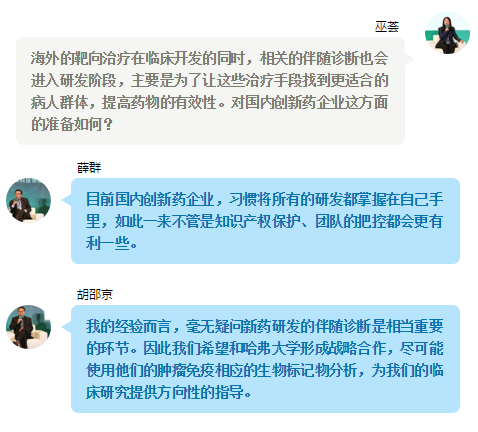
Currently, innovative pharmaceutical companies in China tend to keep all R&D activities in-house, which offers greater advantages in terms of intellectual property protection and team management.
In contrast, companies abroad that develop diagnostic services possess strong R&D capabilities. By partnering with several such companies to drive business expansion, while leveraging sufficient capability to identify all eligible patients, a win-win scenario can be achieved.
There is no doubt that companion diagnostics play a crucial role in the development of new drugs. Taking Jacobio’s first-in-class small-molecule tumor immunotherapy project as an example, the company faced significant challenges in its clinical trials. This was primarily due to limited understanding of the potential beneficiary populations and mechanisms of action in immuno-oncology therapy, compounded by insufficient sample sizes.
Cancer treatment can be divided into three eras: the chemotherapy era, the targeted therapy era, and the immunotherapy era.
In the era of chemotherapy, the medical understanding of cancer cells was that their excessively rapid growth could be controlled by using chemotherapeutic agents to kill them. Later, researchers discovered that tumor growth is driven by signaling dysregulation caused by genetic mutations, leading to the emergence of the concept of targeted therapy.
Animal models were used in the development of targeted drugs, and tumor immunogenicity was not considered during the screening phase, as the relationship between targeted therapy and immunotherapy was not yet understood at that time. As interest in tumor immunology has grown, a substantial body of research has demonstrated that many targets of targeted therapies are themselves associated with immune responses.
Therefore, targeted therapy and immunotherapy should not be strictly delineated, as many targeted therapeutic agents inherently possess immunomodulatory functions.In future clinical applications, companion diagnostics will play a valuable role in considering the dual functions of drugs in targeted therapy and immunotherapy, thereby identifying patients most likely to benefit.
Other Highlights of the Conference:
Innovations in Medicine: CAR-T Therapy, from Hope to Prospects