

Proteus Digital Health Files IPO Prospectus Following FDA Approval of World’s First 'Talking' Smart Pill, Abilify MyCite
Doctor: Have you taken your medication?
Patient: Yes!
Doctor: Are you sure?
Patient: Of course!! ...Um... I should have taken it. Oh, I'm not entirely sure; I think so... probably... Oh, what was the question you just asked?
Doctor: Let's just ask the pill directly.
On November 13, the FDA approved Abilify MyCite, the first smart pill from Japan’s Otsuka Pharmaceutical, for the treatment of schizophrenia, manic episodes associated with bipolar I disorder, and epilepsy, as well as for use as an adjunctive therapy for major depressive disorder in adults.
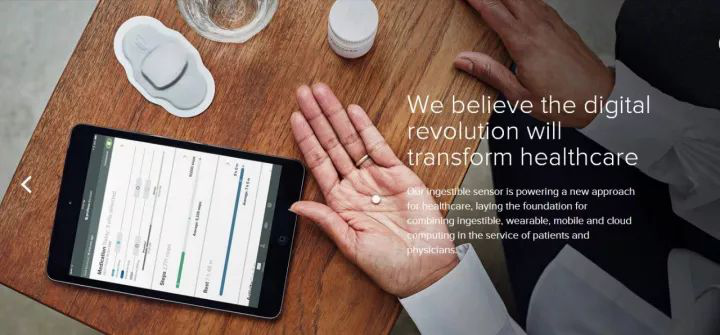
Abilify MyCite is an aripiprazole tablet equipped with a gastrointestinal tracking system and an embedded ingestible sensor. After ingestion, the sensor’s electrodes generate power through interaction with gastric acid. In conjunction with a wearable skin patch, it transmits medication adherence data (such as exact time of ingestion and dosage) and physiological metrics (including heart rate, body temperature, respiration, and sleep patterns) to an application on the patient’s smartphone. This pill effectively “speaks” much like Siri. With the patient’s consent, caregivers and physicians can also access this information via their personal mobile devices.
Aripiprazole, a blockbuster drug with annual sales in the billions of dollars, was first approved by the FDA in 2002 for the treatment of schizophrenia. However, medication non-adherence is very common among patients with psychiatric disorders, leading to treatment failure or suboptimal disease control, which in turn results in disease progression or increased healthcare costs.
An article published in Mayo Clinic Proceedings by Marie Brown of Rush University Medical Center and Dr. Jennifer from the University of Chicago states that approximately half of patients do not take their medications as directed in the package inserts. They cite various reasons, such as difficulty understanding the instructions, dislike of side effects, forgetfulness, or taking doses at incorrect times. When multiple medications are taken concurrently, adhering to the correct dosing schedule becomes increasingly challenging.
Adherence to medication schedules is not merely an individual patient issue but also a public health concern. For instance, a patient with tuberculosis must take the necessary medications to treat the disease and prevent transmitting the pathogen to others. Researchers, physicians, and healthcare workers have explored various strategies to promote patient adherence, such as phone calls, text message reminders, and even the development of smart pillboxes that alert patients to take their medication on time.
Abilify MyCite, the “talking” pill, helps doctors and patients better monitor medication adherence. Mitchell Mathis, Director of the Office of Psychiatry Products at the FDA’s Center for Drug Evaluation and Research, stated: “For certain patients with mental illness, monitoring medication ingestion and absorption is meaningful. The FDA supports the development and application of new technologies in pharmaceuticals and is willing to collaborate with industry to explore how these innovations can bring convenience and benefits to patients and physicians.” The prescribing information for Abilify MyCite indicates that this product can improve patient treatment adherence; however, before using this product, clinicians should help patients transitionally adapt to the medication, wearable sensor, and mobile app, ensuring that patients are both able and willing to use the entire digital medicine system.
The sensing technology and wearable device used in Abilify MyCite were both developed by Proteus Digital Health, a U.S.-based company. Notably, Proteus Digital Health also has significant ties to Yuheng Pharmaceutical (stock code: 002437).
Proteus Digital Health, founded in 2001, specializes in the research and development of digital pills, their manufacturing, and the planned construction of a comprehensive disease management platform. Its core product, Proteus Discover, designed for disease management, consists of an ingestible sensor, an abdominal patch, a mobile app, and a cloud-based platform. In 2012, the FDA approved Proteus’s ingestible sensor as a medical device, marking the first demonstration that the integration of digitally enabled medications with wireless devices could become a new standard for improving medication adherence and effectively supporting disease management. Currently, Proteus Discover is undergoing clinical trials in various therapeutic areas, including hypertension, diabetes, heart failure, and schizophrenia.
From the perspective of clinical application value, ingestible sensor-enabled medications do more than just remind patients to take their drugs; they provide the most accurate medication monitoring data. This ensures that patients adhere to their prescriptions by taking the correct dosage at the scheduled times, thereby enhancing medication adherence. It also facilitates physicians’ understanding of patients’ physiological conditions, allowing them to monitor the medication process and therapeutic responses, and subsequently develop personalized treatment plans. For the healthcare system as a whole, this technology can reduce medical cost waste resulting from non-adherence, alleviating the burden on both patients and society. Undoubtedly, ingestible sensors and “smart pills” hold strong commercial prospects in the field of chronic disease management.
On February 23, 2016, Yuheng Pharmaceutical issued an announcement stating its intention to invest $40 million, either directly or indirectly, to subscribe for Series H preferred shares issued by Proteus Digital Health, accounting for 1.99% of the total preferred share capital after the completion of this Series H financing. Yuheng also confirmed this investment in its semi-annual report for that year. The FDA approval and market launch of Abilify MyCite not only validated Yuheng’s strategic foresight but also further solidified its footprint in the chronic disease management sector.
As a traditional pharmaceutical company, Yuheng Pharmaceutical previously focused its product portfolio on cardiovascular and cerebrovascular diseases, musculoskeletal disorders, and oncology. In early 2015, the company embarked on a strategic transformation. In addition to investing in Proteus for chronic disease management and partnering with JD Bangneng, Yuheng Pharmaceutical also expanded into gene testing and innovative biologics. After more than two years of effort, the results of this transformation have gradually become evident. The PD-1 biologic product, jointly filed by Yuheng Pharmaceutical and WuXi Biologics (WuXi AppTec’s subsidiary), has entered Phase I clinical trials in China. Meanwhile, the exclusive rights for North America, Europe, and other overseas markets have been licensed at a premium to Arcus Biosciences, Inc., enabling collaborative efforts to advance the clinical registration of multiple immuno-oncology products both domestically and internationally.
Zhu Jiman, Chairman of Yuheng Pharmaceutical and a former physician, is leveraging his unique vision and extraordinary resolve to build a new, imaginative Yuheng after more than two decades of deep engagement in the industry.
[Part of this article is reposted from the PharmaCube WeChat official account]