

Youmai Clinic Files IPO Prospectus: Pioneering a Precision Medical Poverty Alleviation Model with PUMCH Experts and Local Hospitals
“Poverty caused by illness and relapse into poverty due to illness” are common phenomena in impoverished areas. In these regions, if one family member suffers from a severe disease, it burdens the entire household. Not only does the patient lose their ability to work, but the family’s financial expenditures also become centered on the patient’s medical treatment, leading to a decline in the family’s economic situation and ultimately dragging down the whole family.
Medical poverty alleviation aims to reduce the financial burden on patients in impoverished areas and improve local healthcare conditions through measures such as support from large hospitals, tiered diagnosis and treatment systems, and fiscal subsidies. In this process, the primary participants are government agencies and public institutions, including public hospitals, health departments, and finance departments, with minimal involvement from privately run medical institutions.
Beijing Youmai Medical Clinic, as a privately operated healthcare institution, has actively participated in medical poverty alleviation efforts and pioneered a new model for targeted poverty reduction. This model involves the participation of experts from Peking Union Medical College Hospital, payment by enterprises and charitable foundations, and collaboration with local hospitals. By implementing policies on medical poverty alleviation and tiered diagnosis and treatment, it has benefited patients, local hospitals, and large tertiary hospitals alike.
Recently, VCBeat (WeChat ID: vcbeat) interviewed Beijing Youmai Medical Clinic and its partner hospital, the People’s Hospital of Tailai County in Qiqihar, Heilongjiang Province, to gain a detailed understanding of how Beijing Youmai Medical Clinic organizes and implements its precision medical poverty alleviation initiatives.
"China's Exploration of 'Re-diagnosis of Major Diseases'"
Beijing Youmai Medical Clinic is a comprehensive clinic offering appointment-based consultations and multidisciplinary consultations with medical authorities, including senior experts from Peking Union Medical College Hospital. To fully leverage the expertise of these seasoned specialists, it focuses on“Re-diagnosis of Critical Illnesses” and Optimization of Treatment Plans.2016Year6officially commenced operations in [Month]. The clinic is adjacent to Peking Union Medical College Hospital, with a total area of2800square meters, equipped with a clinical biochemistry laboratory, an ultrasound diagnostic room, an electroencephalogram (EEG) room, an electrocardiogram (ECG) room, and a gastrointestinal endoscopy room. The physicians at Beijing Youmai Medical Clinic are primarily from Peking Union Medical College Hospital, with over 100 consulting doctors covering30Multiple clinical departments, including many nationally renowned experts.
The core business features of Beijing Youmai Medical Clinic are “PUMCH Senior Specialists,” “Second Opinion for Major Diseases,” and “30-Minute Consultations,” leveraging high-end physician resources from Peking Union Medical College Hospital (PUMCH) to provide patients with authoritative, meticulous diagnostic opinions and treatment plans.
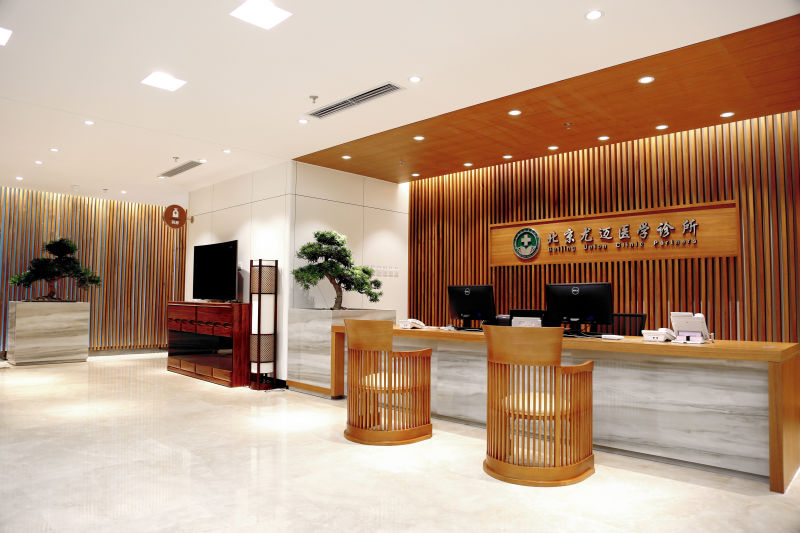
Exterior View of Beijing Youmai Medical Clinic
“Major Disease Re-diagnosis” and “30-Minute Consultation” are both modeled after international practices. “Major Disease Re-diagnosis,” also known as “second opinion,” aims to ensure that no diagnoses were missed or misinterpreted during the initial consultation, providing patients with an authoritative assessment and treatment plan. Currently, few medical institutions in China offer this service.
“30-Minute Consultation” originates from regulations and practices regarding outpatient consultation durations in healthcare institutions in developed countries. Its purpose is to facilitate thorough communication between physicians and patients, allowing sufficient time for explaining disease-related knowledge, analyzing medical conditions, and informing patients of risks, thereby addressing information asymmetry between doctors and patients and improving the doctor-patient relationship.
“A physician’s career path is long, with expertise and experience reaching their peak at retirement; practicing in privately run medical institutions allows doctors to fully realize their professional value. For patients, the diagnostic opinions and treatment plans provided by specialists from Peking Union Medical College Hospital are sufficiently authoritative to comprehensively meet their healthcare needs.”
“Due to systemic factors, China has long experienced an inverted distribution of medical resources, with patients concentrated in large hospitals. Doctors lack the time and energy to provide meticulous care, leading to numerous healthcare access issues. Implementing 30-minute consultations can effectively improve diagnostic and treatment quality, thereby demonstrating the value of high-quality medical services.”
Regarding the fee structure, Beijing Youmai Medical Clinic charges fees ranging from RMB 800 to RMB 2,000 based on the rank of the consulting specialist, from attending physician to chief physician. The clinic does not participate in revenue sharing or receive incentives from laboratory testing fees or medication costs.
“Many patients who visit the Beijing Youmai Medical Clinic have already undergone basic examinations and imaging tests, so there is no need for them to incur duplicate expenses. The specialists’ income is not tied to these services, truly achieving a separation between medical treatment and pharmaceuticals, as well as between medical care and diagnostic testing. This ensures that specialists’ income is transparent and aboveboard, reflecting the value of their professional labor, while also alleviating the financial burden of redundant costs for patients.”
Youmai Medical Clinic’s “Second Opinion for Major Diseases” and “30-Minute Consultation” models were praised by Liu Yandong, former Vice Premier of the State Council. She commended them for “leveraging the expertise of retired Peking Union Medical College Hospital specialists to actively participate in privately run healthcare, meet diverse societal needs, control unreasonable costs, and explore innovative approaches worthy of affirmation.”
According to Ms. Dai Jinjin, Director of Beijing Youmai Medical Clinic, the clinic has cumulatively treated more than 5,000 patients since its opening, with cases involving corrected misdiagnoses, mistreatments, and overtreatment accounting for 40%.
A New Model of Medical Poverty Alleviation with Tripartite Participation
During its operations, Beijing Youmai Medical Clinic has also treated patients from impoverished regions. These patients often travel to Beijing with their entire families for medical care, incurring substantial expenses. After receiving these patients, and with the aim of reducing their medical costs, Beijing Youmai Medical Clinic guides them to return to hospitals in their home regions for continued treatment following a confirmed diagnosis, thereby facilitating follow-up care through local healthcare institutions.
“Leveraging local hospital systems offers several benefits: first, it reduces patients’ travel burdens and out-of-pocket expenses for accommodation and meals unrelated to medical care; second, it keeps patients within their local communities, aligning with the policy of tiered diagnosis and treatment; third, through consultations and exchanges with specialists from Peking Union Medical College Hospital, local physicians can enhance their clinical diagnostic and therapeutic capabilities, thereby improving the overall quality of local medical services.”
The development of precision medical poverty alleviation is also based on this type of remote consultation model. Earlier this year, Beijing Youmai Medical Clinic established contact with the Heilongjiang Provincial Government and, after securing its support, launched pilot programs for precision medical poverty alleviation in Tongjiang City, Tailai County, and Suibin County in Heilongjiang Province.
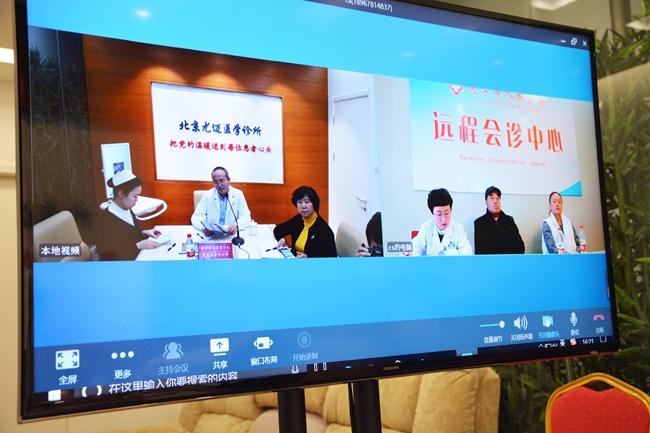
Three-Party Remote Consultation Model
Beijing Umai Medical Clinic’s Model for Precision Medical Poverty AlleviationThe model adopted by Beijing Umai Medical Clinic for precision medical poverty alleviation involves a tripartite agreement among local hospitals, government departments such as the Poverty Alleviation Office, and Beijing Umai Medical Clinic. Under this framework, the Poverty Alleviation Office and other relevant authorities identify individuals living in poverty. When these patients encounter complex or refractory conditions that cannot be managed by local physicians, they are provided with remote online consultations and multidisciplinary case discussions with specialists from Peking Union Medical College Hospital who practice at Beijing Umai Medical Clinic, thereby facilitating collaborative problem-solving.
During this process, local hospitals and Peking Union Medical College Hospital experts did not participate on a pro bono basis. The payers were Heilongjiang Chenneng Investment Group, a local enterprise in Heilongjiang Province; the Heilongjiang Provincial Xieli Poverty Alleviation Foundation; and the Beijing Youmai Charity Foundation.
“The specific implementation process is as follows: patients undergo their initial consultation and examinations at local hospitals. Prior to the teleconsultation with Peking Union Medical College Hospital (PUMCH) specialists, physicians at the local hospitals thoroughly collect patient data and prepare medical records, including test results and imaging studies, to ensure the consultation is targeted and efficient. This enables them to obtain authoritative, precise guidance and optimized treatment plans from PUMCH experts via remote connection. During the subsequent treatment phase, Beijing Youmai Medical Clinic will conduct irregular follow-ups to monitor the ongoing treatment progress of indigent patients,” introduced Ms. Yang Qingfeng, Project Leader of Remote Consultation at Beijing Youmai Medical Clinic.
Government functional departments, local hospitals, and Youmai Clinic participated as three parties in signing contracts; social enterprises and charitable foundations covered the costs, benefiting patients in impoverished areas. In the long term, this precise medical poverty-alleviation model adopted by Beijing Youmai Medical Clinic can be sustainably implemented.
Ms. Dai Jinjin told VCBeat that since the launch of the precision medicine-based poverty alleviation model, over 100 video expert consultations have been conducted, with more than 100 experts participating in these remote consultations.
As a poverty alleviation initiative, the project prioritizes cost efficiency by minimizing resource consumption throughout the medical process. During the entire remote consultation, there are no expenses beyond those directly related to diagnosis and treatment. The transmission of imaging and other data relies on general-purpose network software, operated in conjunction with simplified mobile workstations, thereby achieving cost minimization while meeting the basic requirements for consultations.
Aligned with the Direction of Tiered Diagnosis and Treatment
Tailai County, under the jurisdiction of Qiqihar City in Heilongjiang Province, is located in the southwestern part of Heilongjiang Province at the junction of Heilongjiang, Jilin, and Inner Mongolia."Where Three Provinces Meet at Cockcrow"
Tailai County People's Hospital is the largest medical institution in the region. According to Xia Jinglin, the hospital’s president, it not only meets the healthcare needs within the county but also serves residents from Jalaid Banner, Hinggan League, Inner Mongolia Autonomous Region, with cross-regional health insurance reimbursement already enabled.
“We are currently under significant pressure in handling patient visits. Tailai County has a permanent population of 320,000, and our hospital sees approximately 300,000 outpatient visits and around 23,000 hospital admissions annually, with these figures continuing to grow steadily. During the course of treatment, we encounter some complex and rare conditions that may be beyond our doctors’ capacity to manage, or cases where patients disagree with the proposed treatment plans. As a result, they often need to seek care at larger hospitals, which is both time-consuming and labor-intensive.”
President Xia Jinglin stated that conducting remote consultation services with Beijing Youmai Medical Clinic offers several significant benefits: First, it enables patients to receive care locally, which supports the hospital’s development. Second, it alleviates the burden on patients who would otherwise need to travel for medical treatment, thereby reducing healthcare costs—a benefit particularly pronounced for impoverished patients. Third, the collaboration between local physicians and experts from Peking Union Medical College Hospital serves as a valuable learning opportunity, helping to enhance the clinical service capabilities of local doctors.
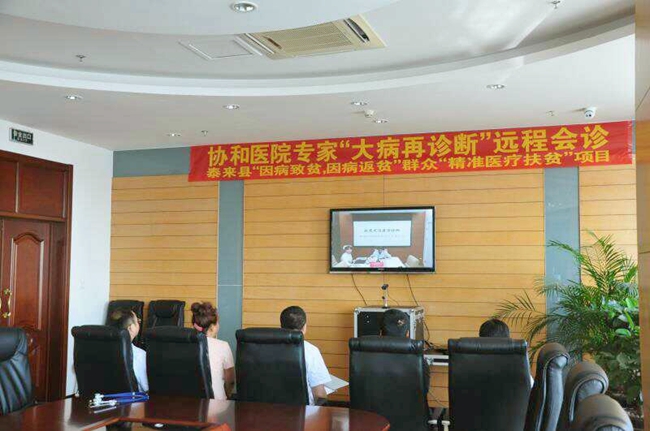
Tailai County Precision Medical Poverty Alleviation Project
“Keeping patients in their local areas aligns with the tiered diagnosis and treatment model’s goal of ‘managing serious illnesses within the county.’ Local physicians can facilitate communication between patients and authoritative specialists, thereby preventing situations where patients struggle to access medical care.”
According to Dr. Xia Jinglin, the hospital’s president, the institution had previously engaged in telemedicine collaborations with higher-level hospitals. However, this partnership with Umai differs in several key aspects. First, it offers richer medical resources, enabling precise appointment scheduling with top-tier experts from Peking Union Medical College Hospital. Second, it genuinely benefits impoverished populations; the presence of a payer ensures that patients do not incur additional financial burdens for seeking medical care. Third, physicians demonstrate high levels of engagement, as they can both acquire new knowledge and earn supplementary income.
Dean Xia Jinglin stated that Tailai County Hospital will continue to offer remote expert consultation services in collaboration with Beijing Youmai Medical Clinic. These services will not be limited to impoverished populations; ordinary patients with the ability to pay may also participate, enabling them to access expert consultations from Peking Union Medical College Hospital specialists locally.
From the perspective of policy alignment, China’s current healthcare resources are heavily skewed: 80% are concentrated in urban areas, and of that, 80% are further concentrated in large and medium-sized hospitals, forming an “inverted pyramid” resource structure. In contrast, the majority of demand for healthcare services lies at the primary care level, forming a “regular pyramid” demand structure. This mismatch between the inverted pyramid of medical resources and the regular pyramid of medical needs has led to difficulties in accessing medical care. Tiered diagnosis and treatment can effectively address this challenge, curb the inappropriate phenomenon of “over-treating minor illnesses,” and, when combined with policies such as the separation of prescribing from dispensing, help control health insurance expenditures. Beijing Youmai Medical Clinic, as a private healthcare institution, has leveraged expert resources from Peking Union Medical College Hospital to serve local hospitals and impoverished populations, making valuable contributions to tiered diagnosis and treatment and poverty alleviation through healthcare.
Dai Jinjin, head of Beijing Youmai Medical Clinic, stated that building on its core offerings of “Peking Union Medical College Hospital Senior Specialists,” “Second Opinions for Serious Illnesses,” and “30-Minute Consultations,” the clinic will explore additional models for decentralizing medical resources. Following local pilots, these models will be gradually replicated nationwide to provide higher-quality, more accessible healthcare services to society.