

Zhang Wei: Innovating Community Healthcare Models in the Digital Era to Empower Primary Care
Prof. Zhang Wei
International Expert Cooperation Committee on Clinical Economic Evaluation, Chinese Medical Doctor Association
Peking University Guanghua School of Management
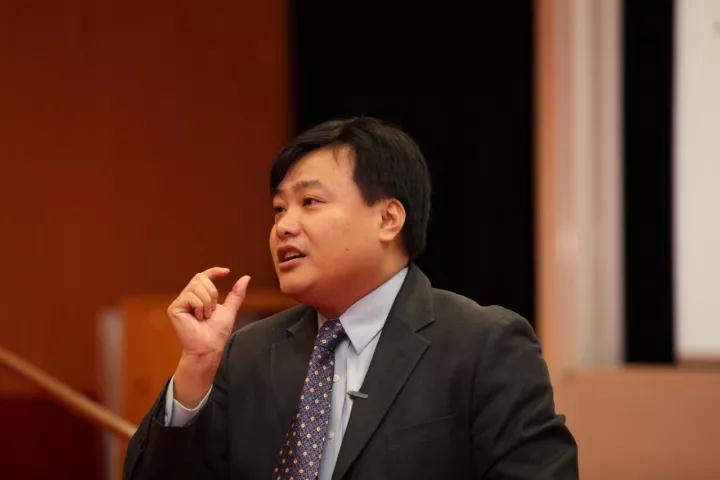
The dividends released by deepening healthcare reform need to be realized through primary medical services; therefore, strengthening the grassroots level has always been a key focus in the government’s annual healthcare reform initiatives.
In response to challenges such as an imperfect standard system for primary healthcare services, a shortage of talent, and reforms constrained by institutional barriers that hinder progress, Professor Zhang Wei and his team from the International Clinical Economic Evaluation Expert Cooperation Committee of the Chinese Medical Doctor Association (hereinafter referred to as the “Special Committee”) have provided a practical case of innovative primary healthcare services in the digital era, offering solutions tailored to the current status of general practitioners in domestic communities.
The report of the 19th National Congress of the Communist Party of China pointed out that China has entered a new era of socialism, and the principal contradiction in Chinese society has evolved into the one between the people’s ever-growing needs for a better life and unbalanced and inadequate development. In the field of public health and medical care, this manifests as follows: People are paying increasing attention to their own health and have raised higher expectations for the convenience, timeliness, and comfort of medical services. However, the long-standing highly specialized model of medical service has led specialists to focus more on disease management, often neglecting humanistic care for patients. Meanwhile, the continuous emergence of advanced diagnostic and therapeutic technologies and equipment, while potentially beneficial for disease diagnosis and treatment, has driven up the cost of medical services. These factors have become significant contributors to the difficulties and high costs associated with accessing medical care, as well as the strained doctor-patient relationship in China.
Professor Zhang Wei pointed out that general practitioners (GPs) originate from Western medicine. They adopt a more person-centered approach, focusing not on the complex management of specific diseases but on the overall well-being of individuals. The philosophy of general practice compensates for the limitations arising from the increasing specialization of medical technology. Data shows that GPs can manage 80% of common and frequently occurring diseases. Family doctors can significantly improve self-management behaviors among patients with chronic diseases and enhance control over blood glucose and blood pressure levels. As GPs are responsible for initial consultations at the primary care level, they form the foundation of an effective tiered diagnosis and treatment system. Therefore, within the entire healthcare system, GPs play a crucial role as gatekeepers of public health.
“The term ‘health gatekeeper’ carries a dual meaning. First, general practitioners help patients identify appropriate medical services and institutions, adopting a patient-centered approach that prioritizes their long-term health. This not only enables patients to receive more suitable and effective treatment plans but also reduces their healthcare costs. Second, while maximizing patients’ medical benefits, the health insurance system provides incentives to general practitioners, thereby increasing their personal income,” emphasized Professor Zhang Wei.
The fundamental logic of the general practice model is to benefit both patients and physicians, thereby improving doctor-patient relationships, while reducing medical costs, enabling rational cost containment for health insurance, and optimizing resource allocation, ultimately benefiting the government as well.
On the other hand, unlike the long-standing, deeply entrenched and complex web of vested interests in large tertiary hospitals, which has posed significant obstacles to the genuine advancement of healthcare reform, general practice is relatively “new.” Whether in terms of operational models or stages of development, it remains largely a “blank slate.” Consequently, advanced internet and digital technologies have become effective levers for improving healthcare delivery models, offering excellent opportunities for the development of general practice in the digital era. This enables more extensive exploration and experimentation in promoting the growth of general practice.
Promoting the Enhancement of Efficiency in Primary Healthcare Services
When discussing how to address the current issues in China’s primary healthcare system, Professor Zhang Wei argues that this is fundamentally a matter of improving healthcare service efficiency. Physicians’ diagnosis and treatment of diseases should be based on established standards, such as clinical pathways, practice guidelines, and formularies. Clinical practices implemented in accordance with these diagnostic and therapeutic standards can maximize healthcare service efficiency, not only providing patients with appropriate treatment plans but also reducing the waste of medical resources. However, we currently observe inadequate adherence to diagnostic and treatment standards in primary care, along with inconsistent quality of these standards at the grassroots level. Furthermore, physicians’ treatment decisions lack corresponding feedback mechanisms, leading to phenomena such as “non-standardized diagnosis and treatment” and “irrational drug use” in primary healthcare settings. The key challenge we must address is how to effectively integrate these standards into the daily diagnostic and therapeutic routines of primary care physicians, thereby establishing standardized practices.
First, from the perspective of clinical economic evaluation, this term refers to the application of economic evaluation methods to assess technical interventions used in clinical practice—such as pharmaceuticals, medical devices, and diagnostic and therapeutic procedures—with the aim of improving the allocation and utilization efficiency of healthcare resources. As an authoritative academic organization directly affiliated with the Chinese Medical Doctor Association and aligned with the latest international medical frontiers, the Special Committee has taken the lead in China in pioneering research innovation and translating achievements in the field of clinical economic evaluation. Through extensive grassroots surveys, academic exchanges, and scientific research, the Committee has launched pilot projects to promote authoritative diagnostic and treatment standards and medication guidelines. These efforts are designed to advance standardized services, enhance the quality of primary healthcare services, promote standardized treatment and rational drug use at the primary care level, and thereby support the sustainable development of the medical insurance system.
"As China’s disease spectrum undergoes a significant shift, chronic non-communicable diseases have become the primary threat to public health and the main conditions encountered in primary care. 'For patients with chronic diseases, the interventions they require extend beyond medical treatment to encompass nutrition, emotional well-being, social support, and other factors. Therefore, we need to provide holistic solutions based on specific diseases. But how should the value of such solutions be evaluated?' Professor Zhang Wei stated, 'Many nutritional or emotional interventions do not require clinical trials, and data on them are scarce. Consequently, physicians are often uncertain about the benefits of these interventions. To address this, we propose clinical economic evaluation. This approach involves selecting a specific disease, proposing several intervention strategies, and calculating the returns of each strategy across different patient populations. The results can then serve as a reference for physicians, enable patients to make informed choices, and even assist future insurers and payers in decision-making. This is why we emphasize "clinical economics" rather than "pharmacoeconomics." As a product, medication is only one component of the solution; what we need is a comprehensive plan that integrates all the aforementioned factors.'"
Secondly, a new standard system for primary healthcare services will be established, including the development of formularies that define standards for rational diagnosis, treatment, and medication at the primary care level. These formularies cover concepts, etiologies, clinical manifestations, complications, examinations, diagnoses, treatments, and prevention strategies for over 500 diseases. They incorporate nearly 10,000 laboratory and diagnostic test indicators, along with symptoms, test results, and more than 10,000 corresponding treatment protocols. Pilot projects will provide reliable evidence for establishing these standards. By leveraging real-time treatment and follow-up data, as well as intelligent clinical decision support systems, physicians’ diagnostic and therapeutic practices will be evaluated and fed back to improve medical education and training models. Furthermore, this initiative will standardize clinical practice, implement credentialing and certification processes, and incorporate patient-driven service evaluations to continuously refine primary care diagnostic and treatment standards.
Professor Zhang Wei added, “Much like the currently popular concept of ‘blockchain,’ establishing a ‘blockchain’ in the healthcare sector means making every standardized, granular diagnostic and therapeutic action traceable. During this tracing process, it is possible to assess whether the action complies with standards, whether there is room for improvement, and whether it can be made more cost-effective. This approach decomposes complex work into individual tasks, which are then completed by individuals through traceability. Similarly, advanced technologies where China leads globally, such as artificial intelligence and big data, can also be applied within the general practice model.”
Nanchang Takes the Lead in Piloting the “Optimization of Primary Healthcare Services and Management” Project
Theories must be linked to practice; new models must also “connect with reality” before their feasibility and effectiveness can be validated in return.
To establish a “new standard system for primary healthcare services,” under the leadership of the Special Committee, Professor Zhang Wei and his team implemented the outcomes of the “Optimization of Primary Healthcare Services and Management” project in Nanchang as a pilot. Leveraging the Nanchang Regional Medical and Health Cloud Platform, and drawing on domestic and international clinical guidelines, literature, and monographs, they developed a decision-support system for evaluating appropriate diagnosis, treatment, and medication practices based on the research findings of the Expert Committee and national expert consensus. This system aims to standardize clinical practices and rational drug use, enhance the work efficiency of primary care physicians, and promote homogenization of primary healthcare services.
By efficiently collecting and organizing clinical information in accordance with standardized protocols, the system alerts physicians to relevant clinical manifestations and preferred treatment regimens, while providing timely and standardized evaluations of these treatments. This approach not only offers multifaceted support to junior physicians but also captures and reflects their feedback. Currently, the system has been deployed and is operational in 11 community health service centers, including those in Changnan, Aixihu, and Honggutan, covering approximately half of the common diseases encountered in general practice.
“After the project was implemented, we conducted field visits and surveys. We found that primary care physicians place great emphasis on improving their clinical skills and are strongly motivated by the potential for better financial returns. Their enthusiasm upon learning about and engaging with the project exceeded our expectations,” Professor Zhang Wei told reporters. “At the same time, we recognized that due to regional disparities, the standardized system needs to be adjusted according to local conditions during implementation. It is essential to respect physicians, carefully consider their clinical practices and needs, and avoid rigidly imposing our standards. Furthermore, the collection, organization, and feedback of primary healthcare data form the foundation for advancing the project. However, there are still many ‘hard nuts to crack.’ For instance, although a large volume of primary care clinical data is currently being collected, questions remain regarding its meaningfulness, usability, and alignment with standard structures. To use an analogy, data is like crude oil buried underground; what we truly need is the refined product extracted from it. This process requires substantial effort.”
“At present, our team primarily brings together experts from four fields: clinical practice, pharmacy, economics, and policy. We plan to incorporate physicians with extensive grassroots experience in the future, and our team will continue to expand. Professor Zhang concluded, ‘Despite numerous challenges, we remain committed to advancing the project and are confident that results will be shared soon.’”