

Rainbow Medical Files IPO: Led by Prolific Inventor Yossi Gross with 700+ Patents and 40+ Medtech Ventures
No matter how busy he is during the week, Yossi Gross always returns home on Friday evenings to share dinner and conversation with his family. For Jewish people in Israel, this day is the Sabbath, ordained by God, and thus not suitable for work.
Yossi Gross is a globally renowned medical device inventor and entrepreneur, holding over 700 personal intellectual property patents in the field of medical devices, and is highly respected by prominent venture capital firms in the United States and Israel.
Now in his seventies, Yossi could have retired and become a “hands-off househusband,” but being naturally restless, he still insists on going to the office every day. He currently serves as the Chief Technology Officer (CTO) of Rainbow Medical, an Israeli medical device group, overseeing its 12 subsidiaries specializing in cutting-edge technologies.
This Jewish entrepreneur’s approach is somewhat unconventional.
Yossi’s life can be described as “legendary.” Born in Budapest, Hungary, in 1947, he immigrated to Israel with his parents at the age of three. He formerly served as a designer for Israel’s defense industry before building multiple medical device companies from scratch, including his current venture, Rainbow Medical.
Before founding Rainbow, Yossi had already founded more than 30 medical device companies., covering dozens of fields including diabetes, gastroenterology, neurology, ophthalmology, asthma, cardiovascular diseases, and urology, it has attracted the attention of investors such as Medtronic, Boston Scientific, Teva Pharmaceutical Industries, and Elan.
Early Sense, an Israeli manufacturer of smart mattresses previously covered by VCBeat (WeChat ID: vcbeat), is one of the more than 30 companies founded by Yossi. It can be said that the currently booming fields of telemedicine and the Internet of Medical Things are actually areas Yossi pioneered over a decade ago, demonstrating his extraordinary thinking and unique vision.
Ye Xiurong, head of Rainbow Group’s China operations, described him as follows: “Yossi is a man ahead of his time; the research he conducted years ago has finally garnered attention.”
Early Sense is just one small example. It is reported that before founding Rainbow, Yossi transferred Valtech Cardio, a company specializing in mitral valve repair and replacement, to his son, Amir Gross.In 2016, the company was successfully acquired by U.S.-based Edwards Lifesciences for $980 million. This marked one of the rare major acquisitions in the global medical technology sector in recent years.
Ye Xiurong told VCBeat that Edwards had compared more than 30 companies worldwide engaged in mitral valve repair and replacement, and ultimately selected Valtech Cardio after a rigorous screening process.
Three’s a Crowd: The Birth of Israel’s “Super Patent Company”
Managing over 30 companies single-handedly is by no means an easy task. Therefore, in 2008, Yossi joined forces with Efi Cohen-Arazi and Leon Recanati to establish the Rainbow Group, aiming to develop more products that enhance people’s quality of life and well-being under a more systematic management framework.
Efi Cohen-Arazi, formerly a Vice President at Amgen, the world’s largest biopharmaceutical company, currently serves as the CEO of the Rainbow Group. It is reported that when Efi left the United States to return to his homeland, Israel, he was featured in a special report by Israeli newspapers. This very article facilitated the introduction between Yossi and Efi, two heavyweight figures in the healthcare industry.
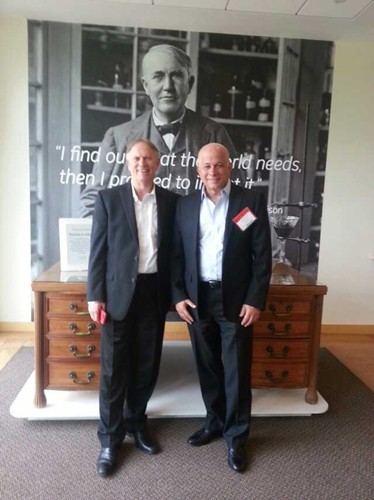
Yossi Gross (left), Efi Cohen-Arazi (right)
Leveraging the substantial influence of Yossi and Efi in the international medical community,Rainbow received strong support from international medical device giants Medtronic and Abbott at its inception.Later, Sony, Johnson & Johnson, and LivaNova, a global leader in cardiac surgery and neuromodulation, also joined Rainbow’s investor roster. Subsequently, during 2013–2014, Chinese funds and companies began seeking out technologies in Israel, with Ping An, Yongjin, and ZTE sequentially investing in the Rainbow Group.
Another founder, Leon Recanati, hails from the prestigious Recanati family in Israel. It is said that streets (Recanati Street) and schools (Recanati School) in Israel are named after the Recanati family. Leon currently serves as a member of the Board of Directors of the Rainbow Group and is not involved in the group’s operations or management.
Yossi, Efi, and Leon have each achieved remarkable success in their respective fields, yet they share a common goal: to provide solutions for major diseases affecting humanity. Therefore,Most companies under Rainbow are engaged in therapeutic medical devices.
Yossi believes that the ultimate purpose of diagnosis is to enable patients to receive treatment. He hopes to leverage the company’s limited resources to focus on developing therapeutic solutions for critical diseases, aiming to address conditions that currently lack treatment options or to significantly improve existing standards of care.
What It’s Like to Own 12 Deep-Tech Companies
Currently, the Rainbow Group comprises 12 subsidiaries, covering multiple therapeutic and technological areas including atrial fibrillation, peripheral neuropathic pain, heart failure, uterine fibroids, diabetes, dentistry, retinal diseases, drug delivery, robotic surgery, aesthetics, and hypertension. Each subsidiary operates as an independent innovative technology company, with products that rival cutting-edge “black tech.”

Maxillents is the world’s only provider of a comprehensive, minimally invasive solution for “maxillary sinus lift + dental implant” procedures.
The company’s flagship product, iRaise, is the most advanced sinus lift system currently available. Its specially designed implant enables hydraulic balance of the nasal mucosa, injection of fluid-like bone powder, and completion of implant placement without the need for open surgery.
iRaise transforms originally complex traumatic surgical procedures into simple, non-invasive interventions, eliminating postoperative swelling, bruising, and discomfort, while significantly improving surgical success rates. Moreover, patients undergoing Maxillents dental implant surgery can immediately resume work and daily activities. Reportedly, the product has obtained CE certification and is currently available in the European market, with FDA and CFDA approvals pending.
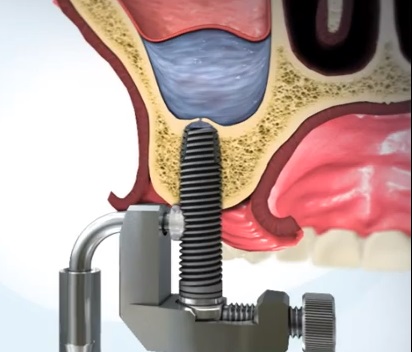
In fact, there is an interesting story behind Maxillents. Yossi, an older gentleman, began experiencing tooth loss and consulted his dentist for dental implants. However, the dentist informed him that his alveolar bone ridge was insufficient, requiring a sinus lift procedure with bone grafting prior to implant placement. This surgery carries a high failure rate of up to 30%, and patients require nine months for full postoperative recovery.
As a natural-born inventor, Yossi immediately recognized that there must be a better way to address the issues of prolonged duration and high risks associated with traditional surgery. Consequently, Yossi collaborated with his dentist to invent the iRaise product, becoming its first patient.

Vascular Dynamics is primarily dedicated to developing catheter delivery technologies, aiming to improve the quality of life for patients with refractory/resistant hypertension.
The MobiusHD implant, developed by the company, is a passive baroreceptor amplification device for the treatment of resistant hypertension. Leveraging Laplace’s law from physics, it is delivered via the aorta to the carotid sinus to remodel the sinus and increase wall stress on the vessel. The device is equipped with numerous sensors that enhance the carotid sinus’s sensitivity to blood pressure; once a patient’s blood pressure rises, it sends signals to the brain to trigger active blood pressure reduction.
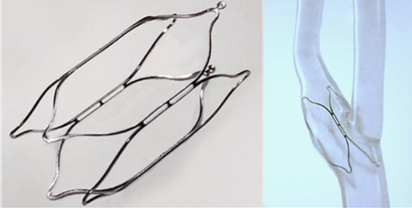
According to Ye Xiurong, this device currently reduces blood pressure by an average of 25 mmHg, with individual variations; in some patients, blood pressure can even drop by 40–50 mmHg. For context, antihypertensive devices launched by industry giants such as Medtronic typically achieve an average reduction of only 5 mmHg. Therefore, Vascular Dynamics’ MobiusHD implant can be regarded as the best available product for treating resistant hypertension. The product received CE marking in 2015 and has since entered FDA clinical trials, with FDA approval expected by 2019.
“The products developed by Yossi have a distinctive feature: they leverage fundamental physiological principles to assist the brain in automatically regulating the body through minimal external signals. He is not inclined toward researching large, highly complex devices. Instead, he aims to use a compact device to make subtle alterations in the body and transmit a signal to the brain, thereby prompting it to carry out regulatory adjustments,” said Ye Xiurong.
BlueWind Medical is an innovative medical device company dedicated to transforming neuromodulation therapy. Founded in 2010, the company counts Medtronic as a major shareholder.
The company’s flagship product, BlueWind, is a miniature, injectable, wirelessly powered neurostimulator that delivers wireless electrical stimulation. It can be used to treat various conditions, including urinary incontinence, epilepsy, chronic pain, and Parkinson’s disease. The product has obtained CE certification for the treatment of urinary incontinence and chronic pain.
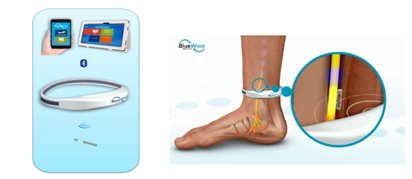
Currently available neurostimulators on the market are bulky, require built-in power sources, and involve leads; implanting them necessitates open surgery. Furthermore, due to their internal batteries, which deplete after five years, patients must undergo a second replacement procedure. Consequently, their therapeutic efficacy is suboptimal, and patient acceptance remains low. The BlueWind neurostimulator minimizes device size (approaching that of a pencil lead), thereby reducing surgical trauma and lowering the risk of complications. Additionally, BlueWind employs an external power source and wireless design, allowing for permanent implantation without the need for secondary surgery, thus enhancing patient acceptance.
Ye Xiurong stated, “We have miniaturized a large product to make it safer and more effective, thereby enhancing the patient experience. This encourages many patients to proactively seek treatment, thus expanding the overall market.” Neurostimulators were the fastest-growing segment of the global medical device market in 2016, with a market size exceeding $3 billion and an annual growth rate of 9%. The market was projected to reach nearly $5 billion by 2020.

Nano Retina is dedicated to helping those who have lost their vision due to retinal degenerative diseases (such as macular degeneration, pigmentary retinopathy, and diabetic retinopathy) regain their sight.
Retinal degenerative diseases lead to blindness because the disease causes all photoreceptor cells in the retina to die. Research has demonstrated that electrical stimulation can induce visual perception. Nano Retina leverages this principle by implanting an artificial retinal prosthesis in patients to restore their vision. The product consists of external eyewear and an internal composite chip. The chip features a camera-like layer with a pixel count of 600 (compared to only 60 in currently available products). It transmits image signals to the chip, which then delivers these signals to the brain via 600 3DNi™ electrodes connected to the nerves.
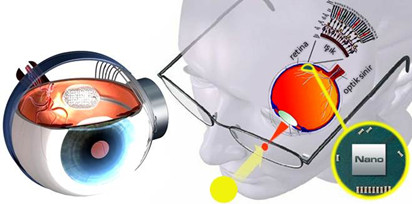
For the chip implanted in the eye to function, it naturally requires electricity. So, how is this device powered? This is where the external glasses play a crucial role. The glasses emit infrared light, which, upon reaching the intraocular chip, is converted from light energy into electrical energy to support the device’s operation. However, since the chip lacks energy storage capabilities, it must perform this conversion continuously, second by second. Therefore, this represents a highly breakthrough technology. Currently, the device is being prepared for European clinical trials and is expected to receive CE certification in 2019.
GluSense Medical is developing an implantable continuous glucose monitoring device based on cell sensors.
Glusense extends device longevity by implanting live, engineered cells that express specialized fluorescent glucose-binding proteins into the device. It is a long-term implantable continuous glucose monitoring (CGM) system that eliminates the need for frequent replacements and delivers highly stable signals, thereby avoiding the necessity for frequent accuracy calibrations.
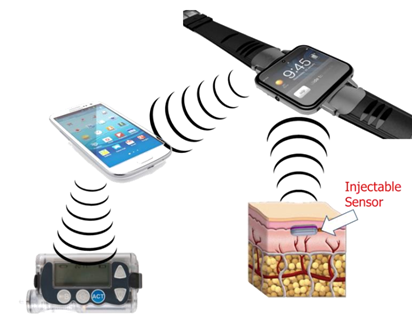
Ye Xiurong told VCBeat, “The ultimate dream of diabetes treatment is the artificial pancreas, but the products currently on the market cannot yet be called artificial pancreases. First, their accuracy still falls short of that of a true artificial pancreas; second, these products must be replaced after at most 10–14 days of use. What GluSense aims to do is to form a closed-loop system by integrating with an insulin pump, thereby achieving the effect of an artificial pancreas. First, it offers higher accuracy; second, it enables continuous glucose monitoring for one year or longer.”
However, given the lengthy certification processes for CE and FDA approval, Glusense’s first-generation product is designed to provide continuous glucose monitoring for 3–6 months. It is reported that Ping An is one of the investors in this project.
By examining these “black tech” companies, we have found that Yossi has indeed undertaken many audacious initiatives. Yet these bold moves are not entirely without rationale. According to Ye Xiurong, whenever Yossi conceives a promising startup idea, he immediately directs his team to conduct market research to assess whether viable solutions already exist globally and whether the concept warrants further in-depth investigation in terms of time and effort.
After nine years since its establishment, Rainbow Group still has a long way to go in the innovation of medical devices. Yossi’s interdisciplinary knowledge and exceptional insights are like golden seeds that require teamwork, expert involvement, and the trust and support of investors—nurtured like sunlight, air, and water—to finally flourish.