

Wuzhou Model: A Leading Template for Separating Medical Services and Pharmaceutical Sales in China
At 1:50 p.m. on November 15, VCBeat arrived at the outpatient building of Wuzhou Red Cross Hospital, ten minutes before the start of the afternoon shift for medical staff.
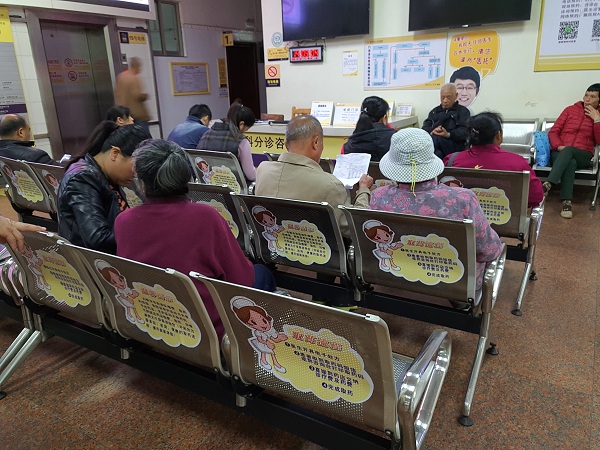
In the outpatient hall, no clamor could be heard; patients sat quietly in the hospital’s waiting chairs, patiently awaiting their turn.
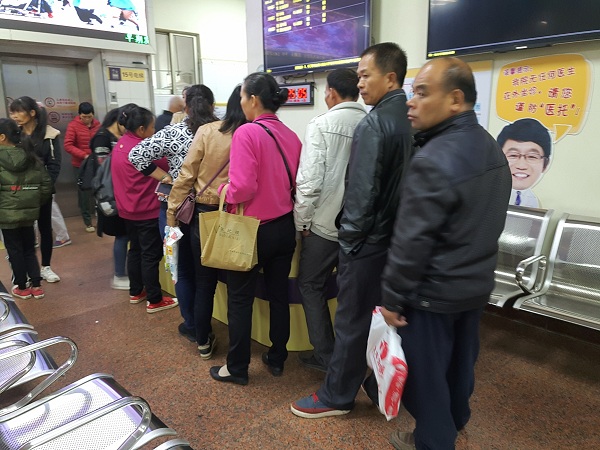
At 2:00 p.m., the nurse arrived at the triage desk on schedule. Patients, holding their national ID cards, spontaneously formed an orderly queue to begin real-name registration for medical consultations.
Established in 1911, Wuzhou Red Cross Hospital has witnessed a century of distinguished history and is among the earliest Red Cross hospitals in China. The hospital’s annual patient volume is approximatelyOver 700,000 people(Wuzhou has a population of 3.475 million, according to 2016 data from the Wuzhou Municipal Bureau of Statistics.) It is the largest large-scale national Grade A tertiary general hospital in Wuzhou, with strong comprehensive strength, and its medical services cover southeastern Guangxi and western Guangdong.
Moreover, the Wuzhou Red Cross Hospital is the first pilot unit in China for the Prescription Information Sharing Platform.
The Wuzhou Model—Prescription Sharing Platform
On May 23, 2017, Wuzhou Red Cross Hospital in Guangxi launched China’s first prescription information sharing platform, implementing the separation of prescribing and dispensing through the “Wuzhou Model.” The initiative achieved remarkable results during its initial months of operation and gained recognition from all sectors of society. On November 15, the Wuzhou Municipal Health and Family Planning Commission of Guangxi, together with Baiyang Intelligent Technology’s Yifuzhen platform, initiated the establishment of a citywide prescription information sharing system across Wuzhou City.More than 20 Tier II and higher-level hospitalswithOver 100 pharmacies will jointly integrate with the prescription information sharing platform.
Qingdao Yi Fuzhen Network Technology Co., Ltd. is a holding subsidiary of Baiyang Intelligent Technology, specializing in healthcare informatization. The Yi Fuzhen System it has developed is a comprehensive and professional post-consultation management linkage and service platform. It provides doctors and patients with more specialized post-consultation management tools, comprehensively improving doctor-patient relationships and the level of post-consultation disease management. In alignment with the policy direction of pharmaceutical reform, it also offers hospitals a professional platform for prescription information sharing.
Prescription Sharing Platforms vs. “Internet Hospitals”: A Distinct ModelThe prescription sharing platform differs significantly from the “Internet hospital.” It is an information technology platform built around the patient, jointly developed by hospitals, government health commissions, drug regulatory authorities, social security agencies, and retail pharmacies. This platform enables interconnectivity and real-time sharing of prescription data from medical institutions, medical insurance settlement information, and pharmaceutical retail sales data.
Furthermore, the platform can directly integrate with hospital HIS systems. During consultations, physicians issue prescriptions based on the patient’s condition, allowing patients to choose whether to fill their prescriptions within the hospital or at external pharmacies. Moreover, if a pharmacy lacks real-time inventory to fulfill the entire prescription, the system will not generate a shared prescription, thereby ensuring that patients can successfully obtain their medications at the pharmacy.
Each shared prescription issued by a physician must be reviewed and approved by the hospital’s rational drug use system and the Pharmacy Department before it can be uploaded to the platform. For example, in accordance with the national Measures for the Administration of Prescriptions, a prescriptionNo more than five varieties.of drugs, once a physician prescribes six types of medications, the system will pop up an alert prohibiting the physician from prescribing additional drugs.
Upon approval, the platform will immediately push the prescription information to the patient via SMS, enabling the patient to independently choose any affiliated pharmacy on the platform to complete the offline purchase. The pharmacy will verify the patient's prescription information, print the prescription, and finalize the sale. Additionally, the platform recommends partner pharmacies and provides map navigation to help patients select the nearest location. The names of the pharmacies included in the SMS are determined by their inventory management status.
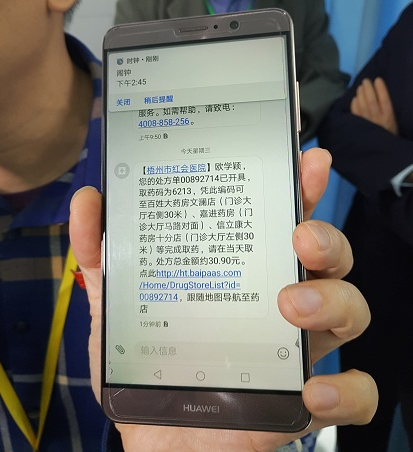
Staff members are displaying SMS messages.
Additionally, patients’ medical insurance cards can also be used for extended prescriptions. The figure below shows a patient obtaining medication by swiping their medical insurance card.
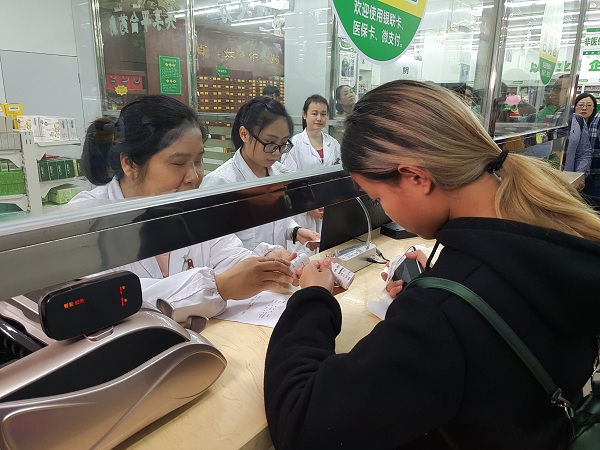
The patient picks up medication at the pharmacy.
To ensure patient safety, Wuzhou Red Cross Hospital monitors the specifications, varieties, and manufacturers of medications dispensed by pharmacies on the prescription-sharing platform, ensuring they are consistent with those stocked in the hospital pharmacy. Furthermore, when dispensing medications to patients, pharmacists provide detailed administration instructions, thereby maximizing patient confidence and sense of security.
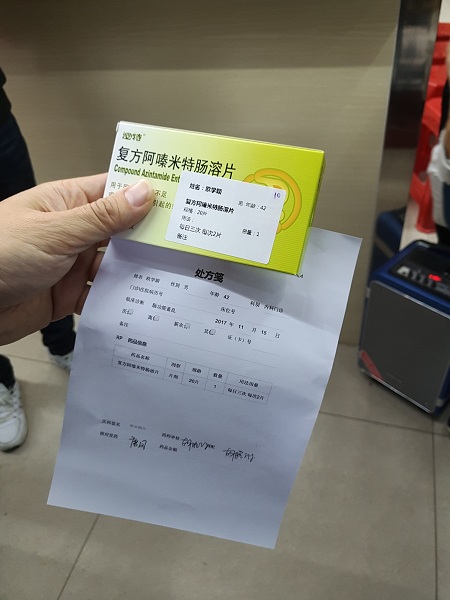
Medications and Prescription Printouts Received by the Patient
According to Huang Yunqi, President of the Wuzhou Red Cross Hospital, the hospital currently averages a daily prescription volume ofApproximately 2,000 sheets, among whichApproximately 300 external prescriptions and 200 emergency prescriptions, there are already approximately1/7 of the prescriptionAccess pharmacies via the prescription sharing platform,The prescription fulfillment rate also reached 90%.The above. Furthermore, given the real-time nature of emergency care, hospitals generally do not issue extended prescriptions for emergency patients. In the future, President Huang hopes to have70% of prescriptionscan be extended to pharmacies,Only 30% of Prescriptions RemainHandled internally within the hospital.
In fact, compared with hospitals, pharmaceutical companies are more willing to sell their drugs in pharmacies. The evaluation criteria for tertiary hospitals strictly stipulate that the drugNo more than 1,200 types of Western medicines, Traditional Chinese MedicineNot exceeding 300 types. And the hospital's medications are"One Product, Two Specifications", a drug can only have two specifications. Strict controls prevent many pharmaceutical companies' products from entering hospitals. However, although pharmaceutical companies need to pass GSP certification to supply pharmacies, the variety of drugs available is far greater than in hospitals.Ranging from 3,000 to 5,000 types. For patients, there are more selective options.
For patients, the primary reason for reluctance to collect medications from hospital pharmacies remains queuing. Tertiary hospitals are often overcrowded, and medication pickup frequently requires patients to wait in long lines, consuming a significant amount of valuable time. Retail pharmacies not only eliminate the need for queuing but also offer prices no higher than those in hospitals, along with better service. Coupled with various promotional discounts, these factors have significantly strengthened patients’ willingness to purchase medications outside of hospitals.
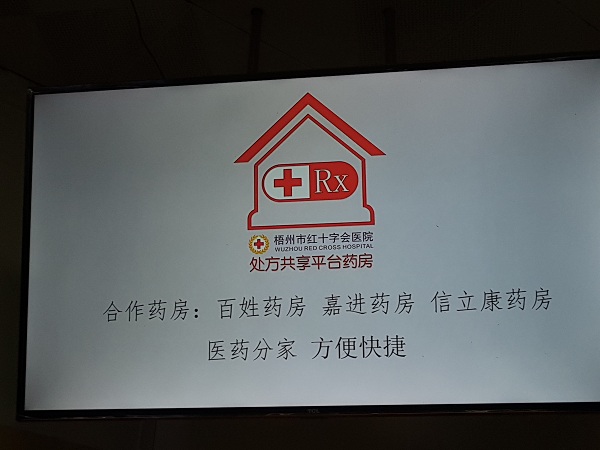
Pharmacies Currently Partnered with the Prescription Sharing Platform
To date, prescriptions have been issued through the Prescription Information Sharing Platform.Over 20,000 sheetsShared prescriptions, accounting for hospital outpatient prescriptions11%, among the first to join the Prescription Sharing Information PlatformThree Pharmacies(Baixing Pharmacy, Jiajin Pharmacy, Xinlikang Pharmacy) are now open700+ Prescription Medications, with varieties and specifications consistent with those of hospital pharmaceuticals, and drug prices aligned with hospital pricing.
As the platform developer, Yi Fuzhen has not only launched a prescription information-sharing platform across Wuzhou City in Guangxi, but also initiated pilot programs in six cities in Guangdong Province, Harbin, and Qingdao in Shandong Province, covering more than 40 hospitals across seven cities.
Doctors Are More Motivated to Prescribe Off-Label Medications Than Traditional Prescriptions
Regarding physician incentives, President Huang Yunqi stated that as healthcare reforms have deepened, hospitals have progressively eliminated drug markups, leading to a gradual decline in the proportion of pharmaceutical costs. Since medications no longer contribute to revenue, physicians are also motivated to reduce the rate of drug prescriptions. Consequently, doctors are willing to have patients fill their prescriptions at external pharmacies.
Furthermore, the process of further communication between doctors and patients regarding medication purchase channels can facilitate the establishment of doctor-patient relationships; therefore, compared with traditional prescriptions, doctors are more motivated to issue extended prescriptions.
Separation of Prescribing and Dispensing: An Irresistible Trend
For a long time, hospital revenues have relied heavily on drug sales. Under the “drug-funded healthcare” system, outpatients could only purchase medications at the hospital after receiving prescriptions from physicians, often leading patients to seek medical care primarily to obtain drugs. The year 2017 marked the inaugural year of the separation of prescribing and dispensing, with multiple government documents calling for “exploring the interconnectivity and real-time sharing of prescription information from medical institutions, medical insurance settlement data, and retail drug consumption information.”
To implement the "Implementation Opinions on Further Reforming and Improving Policies for Drug Production, Distribution, and Use," more than 20 provinces and municipalities across China have recently issued relevant policies to enhance drug quality and efficacy and standardize drug distribution and usage practices. These local policies stipulate that medical institutions shall prescribe medications by their generic names and proactively provide prescriptions to patients. Patients are free to choose whether to purchase their medications at medical institutions or retail pharmacies, and medical institutions are prohibited from restricting outpatients from purchasing medications at retail pharmacies with valid prescriptions.
From the 2014 exploration of a “new model allowing patients to autonomously purchase medications with prescriptions at medical institutions or retail pharmacies,” which encouraged patients, to the 2015 policy of “prohibiting hospitals from restricting the outflow of prescriptions,” which pressured hospitals, and further to the latest 2017 “healthcare reform” tasks, it is evident that the separation of prescribing and dispensing has become an irreversible major trend for hospitals.
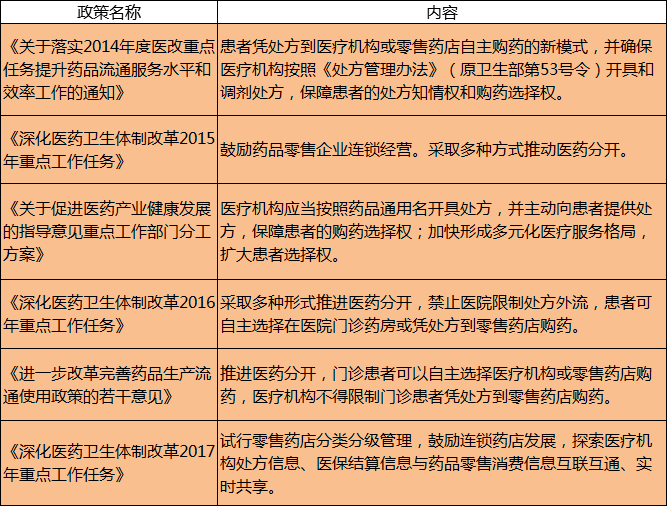
“Overview of Policies on the Separation of Pharmaceutical Services from Medical Services”
The progressive nature of the policies also reveals that regulators aim to achieve the separation of prescribing and dispensing by facilitating the outflow of prescriptions. The first step is to mobilize patient initiative, remove obstacles to this separation, and empower patients to decide independently where to purchase their medications. The second step involves enhancing the medication purchasing experience at social pharmacies or through other channels—by integrating medical insurance systems and enabling interoperability of prescription information—thereby creating a substantive “diversion” of demand away from hospital pharmacies.
In terms of the prescription drug market, IMS data shows that the size of China's prescription drug market in 2015 was approximately RMB 990 billion, accounting for about 70% of the total pharmaceutical market. Regarding specific channels, since the sale of prescription drugs must rely on prescriptions and medical advice issued by doctors, the proportion of in-hospital sales of prescription drugs is higher compared to the overall pharmaceutical market. According to IMS, the shares of the three major channels (hospitals, retail pharmacies, and tertiary terminals) in the 2015 prescription drug market were 77%, 10%, and 13%, respectively.
Based on industry estimates regarding the volume of prescriptions that can be diverted outside hospitals during the separation of prescribing and dispensing, it is broadly projected that over the next five years, outflowing prescriptions will account for approximately one-fifth of total prescription volume, with rapid growth anticipated. Considering the overall expansion of the pharmaceutical retail market, the incremental revenue brought to retail pharmacies by prescription outflow is expected to exceed RMB 250 billion by 2018. By 2020, out-of-hospital prescription purchases are projected to reach one-third of the total prescription volume, with the market size approaching RMB 800 billion.
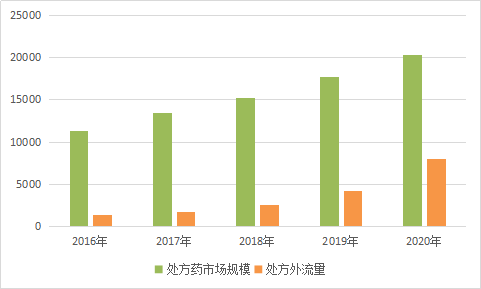
Prescription Outflow Market Forecast
The Replicable Wuzhou Model
Given that the separation of prescribing and dispensing can create such a vast market opportunity, the key to addressing this lies in how an excellent model can be replicated. In this regard, Ma Guanglei, Executive Deputy General Manager of Yi Fuzhen, believes that the Wuzhou Model is highly replicable due to the following three characteristics:
① The Wuzhou Model has a complete policy basis;
② The Wuzhou Model is relatively comprehensive in terms of information capabilities, service capabilities, and regulatory systems, demonstrating a high degree of professionalism.
③ The Wuzhou Model will enable hospitals to monitor rational drug use, provide patients with convenient and accessible channels for purchasing medications, and offer pharmacies a compliant mechanism for filling out-of-hospital prescriptions, thereby enhancing the marketing efficiency of prescription drugs, reducing transaction costs, and achieving a win-win outcome for all stakeholders.
In terms of pharmacy standardization, each partner pharmacy undergoes standardized storefront renovations to align with hospital prescriptions. Ma Guanglei stated that the hospital and Yifuzhen jointly establish access standards. Pharmacies may apply for onboarding on a voluntary basis, subject to joint verification by the hospital and Yifuzhen. If a pharmacy fails the verification, it will not be permitted to join the prescription-sharing platform. Therefore, pharmacies independently assess their return on investment regarding renovation costs.
“The standards we have established span nearly six pages, covering areas such as inventory management, store image, and staff protocols. Renovation costs vary across different pharmacies, with an average cost of approximately RMB 50,000 per store.“To fully achieve this, pharmacies will inevitably need to make some efforts,” said Ma Guanglei.
Building on Prescription Sharing, Phase II Will Extend to Hospital Services
If you think this project is nothing more than a prescription-sharing platform, you are greatly underestimating its scope.
According to VCBeat, the overall project will be implemented in two phases. The currently launched Phase I primarily focuses on building the “separation of prescribing and dispensing” module within the Prescription Information Sharing Platform. By integrating with hospital HIS systems, the platform ensures the authenticity of prescription sources and proactively provides prescription information to patients through multiple channels. Integration with pharmacies’ inventory and sales systems facilitates convenient and accessible medication purchases. Additionally, the platform offers comprehensive services, including operational oversight and data management.
The Phase II project, currently under construction, will focus on buildingMedical Insurance Pooled Retail Settlement PlatformandDrug Centralized Procurement Platform。
These two platforms enable multiple medication dispensing models, including online ordering with in-store pickup and online ordering with home delivery. Hospitals can establish smart medical consortium service platforms and pilot health service stations to extend their services, enhance physician brand building and post-consultation doctor-patient communication management, promote the decentralization of medical resources, and comprehensively improve patients’ healthcare experience.