

2017 Women in Healthcare Workplace Report: Dominance in Nursing, Underrepresentation in VC Partnerships, and Rising Leadership in Digital Health Startups

Women are a critical component of the healthcare sector, serving in vital roles such as physicians and caregivers within the medical system, yet they lack equal voice in leadership positions.
Rock Health has released a report on the employment status of women in the healthcare industry, aiming to foster meaningful and actionable dialogue around women’s leadership. VCBeat (WeChat: vcbeat) has compiled the key highlights of this report for you.
Since Rock Health published its first report on this topic in early 2012, it has been analyzing gender data among leadership in the healthcare industry. The findings have remained virtually unchanged: while women are key stakeholders in healthcare delivery, they remain severely underrepresented in leadership roles across the sector. This persistent disparity has left many women feeling deeply pessimistic about the future.
In a 2017 survey of more than 300 women in the healthcare industry, 45.4% of respondents believed that achieving gender balance in the workplace would take at least 25 years or longer. Only 7.5% indicated that gender equality would be achieved within the next five years. As many as 16.1% believed that our society would never achieve gender equality.
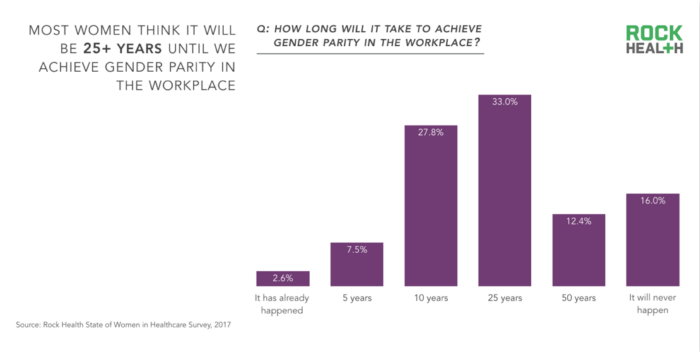
How long do you think it will take to achieve gender equality in the workplace?
Although numerous media outlets have published extensive reports on the challenges faced by female leaders, the slow progress on this issue continues to raise concerns among many people.
According to a LinkedIn survey, 40% of male investors and 37% of male founders believe that the media spends too much time focusing on diversity in technology. In contrast, only 15% of female investors and 10% of female founders hold this view.
Women account for 46.8% of the total labor force, yet on average, they spend more than twice as much time caring for and assisting their family members. In their roles as family members, friends, and neighbors, women also bear the burden of informal caregiving, representing 66% of all caregivers (the value of informal care is estimated to exceed $148 billion).
In addition,Women also often serve as the “Chief Medical Officer” of the household, making the majority of healthcare decisions for the entire family.and the procurement of medical care services. However, within our healthcare system, women do not have an equal voice.
None of the CEOs at Fortune 500 healthcare companies are women. Women account for only 22.1% of board members, a figure roughly on par with the overall average for the Fortune 500 (20.2%).
This situation has improved slightly since then: in 2015, women accounted for 21.0% of board members in the healthcare industry among Fortune 500 companies. At this rate, gender parity on boards in the healthcare industry will not be fully achieved by 2049.
The proportion of female executives (including vice presidents, presidents, and other C-suite titles) at Fortune 500 healthcare companies also saw a slight increase this year, rising from 20.0% in 2015 to 22.6% in 2017.
However, none of the healthcare companies on the Fortune 500 list have achieved full gender balance within their management teams.As of the date of this report, there were no women in the C-suite executive leadership at LifePoint Health or Kindred Healthcare.。
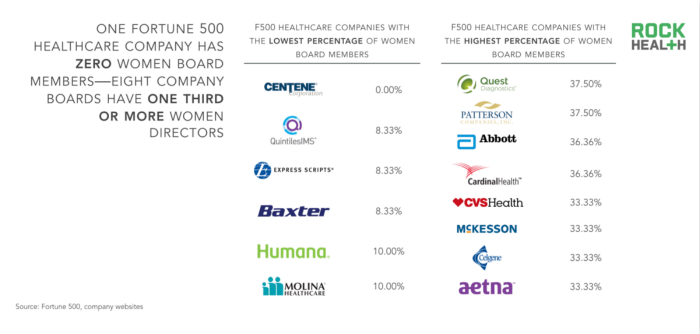
Proportion of Female Board Members in Fortune 500 Healthcare Companies
Truly EnteredWomen in leadership roles are also predominantly responsible for human resources, legal, and marketing departments., and are unlikely to enter operational or technical departments.
As is well known, the human resources department has historically been predominantly female. According to 2016 data from the U.S. Bureau of Labor Statistics, 74% of human resources managers were women.
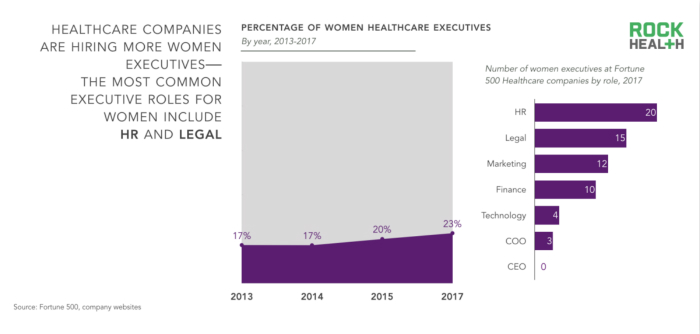
Trends in the Proportion of Female Executives in the Healthcare and Nursing Industry
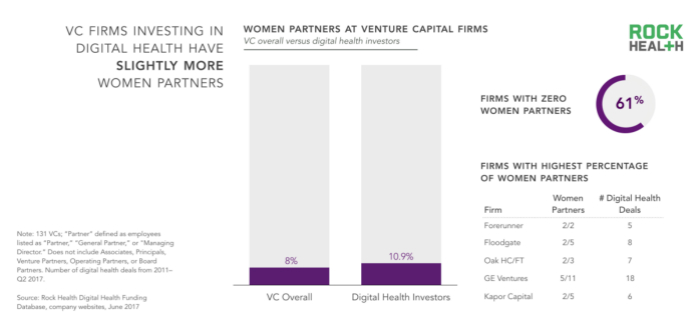
Compared with the venture capital industry, these Fortune 500 companies are still doing better. Among 131 venture capital firms that have invested in five or more digital health projects, female partners account for only 10.9%, down from 11.4% in 2015.
Female partners in hospital investment teams (such as those at Mayo Clinic and UPMC) account for 13.0%, slightly higher than in other types of companies. Unfortunately, we found that61% of venture capital firms investing in digital health have no female partners。
Female investors account for a slightly higher proportion in digital healthcare than in the venture capital industry overall, where women make up only 8% of partners at the top 100 VC firms.
Venture capital is an internet-driven industry. The partnerships among these companies are multi-year agreements that connect partners, portfolio companies, and limited partners with one another.
Partnerships are typically not formed through formal, HR-led recruitment and interview processes, but rather emerge from existing friendships and collegial relationships. Venture capital firms constitute a tight-knit, private community with minimal internal checks and balances, aside from the fiduciary constraints imposed by limited partners on capital. To create a level playing field, the culture of venture capital requires a comprehensive transformation.
Annie Lamont, Founder and Managing Partner of Oak HC/FT, stated, “We have an absolutely exceptional venture capital fund in Oak HC/FT. Founding my own firm alongside individuals I deeply respect, who share the same core values of fairness, inclusivity, collaboration, and honesty, is an unparalleled experience. Our goals are aligned: we strive for both our firm and the entrepreneurs we support to achieve the greatest success. We solve problems together, celebrate our successes jointly, and sincerely believe in a better future.”
An examination of the 100 largest hospitals in the United States, as selected by Becker’s Hospital Review, reveals that women account for nearly one-third (32.4%) of the leadership personnel listed on hospital websites, while female CEOs constitute only 11%.
When a hospital’s chief executive officer is female, the proportion of female managers rises to 40%.
Chief Nursing Officer is the most common hospital leadership position among female leaders, with 60% of these roles held by women. Nursing has long been a female-dominated field, and today, women account for 83% of actively practicing professional nurses.Despite the large number of female nurses, men in the same profession earn higher salaries., and are also more likely to become managers.
Allyson Herbst, an internal medicine resident at Emory University, stated, “Daily contempt and structural bias against women are rampant in the medical field. Every woman who becomes a physician must undergo training marked by gender discrimination, which poses a serious problem for the entire industry.”
Among physicians, more than one-third of practicing doctors are now women, compared with only 17% in 1990. Their presence may be associated with better health outcomes attributable to female clinicians. In a study of Medicare beneficiaries, patients treated by female physicians had significantly lower mortality and readmission rates than those cared for by male physicians within the same hospitals.
Unfortunately,Female physicians face higher rates of professional burnout and depression, all of which contribute to their earning $91,000 less annually than their male counterparts.Compared with their male counterparts, female physicians are 1.6 times more likely to experience occupational burnout, and 19.5% of female physicians are affected by depression (versus 12% among male physicians). Furthermore, the suicide rate among female physicians is 2.27 times that of women in the general population (and 1.41 times higher than that of male physicians).
Lesley Solomon, Chief Innovation Officer at Dana-Farber Cancer Institute, stated, “I work alongside many women, including our CEO, in an incredibly supportive environment. I am highly satisfied with the academic medical environment here, as I know that I am contributing to the delivery of the highest quality medical care in the pursuit of treatments and life-saving interventions.”
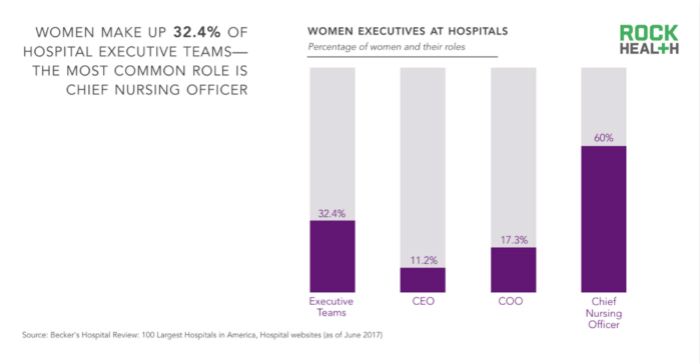
Proportion of Female Executives Among the 100 Largest Hospitals in “Becker’s Hospital Review”
Despite these shortcomings, in recent years we have witnessed significant progress in one area: gender equality.Digital Health Companies。
Among digital health companies founded in 2016 that raised more than $2 million in funding, nearly one-quarter (24%) of the CEOs were women, representing a significant increase from previous years.Among all digital health companies founded since 2011, the proportion of female CEOs is 9.7%.
There are several key reasons why more women are founding digital health companies. First, a growing number of investors are eager to support diverse founders and are intentionally engaging with female founders through meetings, shared dinners, and office hours.
Civil society organizations such as Disruptive Women in Health Care, CSweetener, and Rock Health Women are joining forces to support women in the healthcare industry.
Finally, some women are starting their own companies to build female-friendly cultures that were lacking in their previous employers.
Feyi Olapade, Founder and CEO of CancerIQ, stated, “I founded CancerIQ not only to address the needs of the oncology market but also to build the company I have always dreamed of. My mother is my co-founder, and nearly half of our employees are women. However, my goal is to make women the majority within our company, as this is the way to effectively address women’s health issues.”
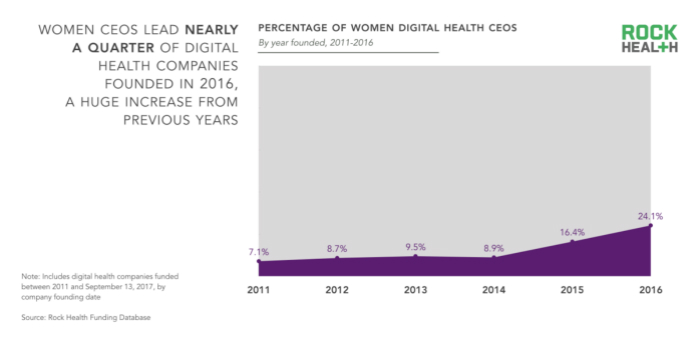
Proportion of Female CEOs in Digital Health Companies
So, is the situation for women in the healthcare and nursing industry better than in other industries?
Currently, more than 13% of the U.S. workforce is employed in healthcare and nursing roles, and job growth in this sector is projected to exceed twice the rate of overall economic growth by 2020.
However, unlike other industries, healthcare does not have a “pipeline problem.” Women account for 80% of the healthcare workforce, 84% of those earning bachelor’s degrees in health professions, 58% of those earning bachelor’s degrees in biological and biomedical sciences, and 85% of those earning bachelor’s degrees in nursing. They also constitute half of all medical students.Women account for a large proportion of the healthcare workforce, though they are underrepresented at the highest levels.
In this survey, 42% of women believed that women have more opportunities to enter leadership positions in the nursing field than in other industries, 22% believed that such opportunities are fewer than in other industries, and 36% believed that the opportunities are comparable.
We recognize that, as employees, women bring critical advantages to this industry. However, there is still a long way to go before women achieve equal representation in hospitals, Fortune 500 companies, venture capital firms, and startups.
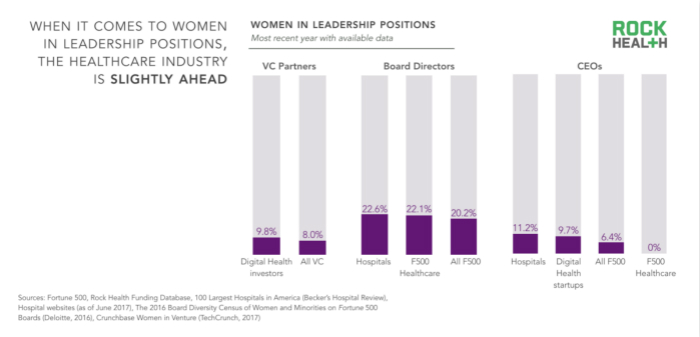
Proportion of Female Leaders
We can all strive to create an environment that facilitates and supports employees in their work. We should oppose gender biases, whether overt or subtle, and advocate for policies that promote inclusivity. Specifically, this survey has identified three areas for employers to focus on:
1. Provide better career development opportunities
In this survey, women reported moderate satisfaction with their current company’s career development opportunities. Surprisingly, however, as employer size increased, women’s satisfaction with career development declined. Career development opportunities include leadership training, career coaching, formal mentoring/sponsorship programs, and time and funding to attend industry conferences.
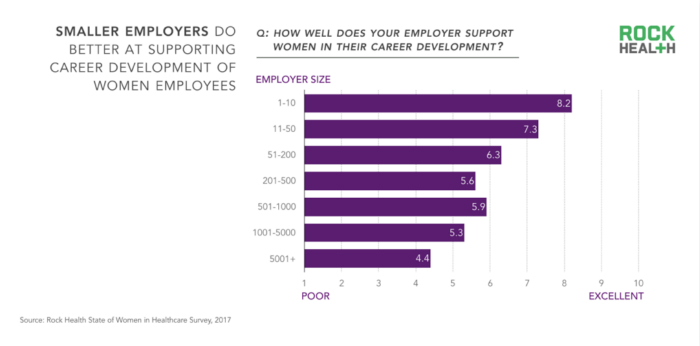
Women’s Satisfaction with Current Career Development Opportunities at the Company
2. Provide family-friendly benefits
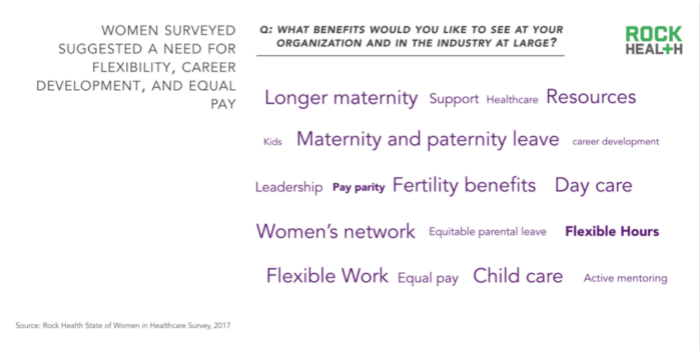
When asked what benefits they hoped to see within their organizations and across the industry, the most common responses from female respondents were flexibility (flexible hours, remote work) and family-friendly policies (childcare, maternity insurance, and extended maternity/paternity leave). Specifically, survey participants recommended that companies offer “flexible working hours not subject to managerial discretion” and “gender-neutral family leave.”
3. Establish Female Role Models
The majority of women (58.8%) in our survey believed that their male colleagues had more role models. As activist Marian Wright Edelman once said, “You can’t be what you can’t see.”
High-profile female role models can demonstrate to other women that leadership positions are attainable for both men and women. Finally, if you are someone seeking to drive change within your company, seek out opportunities to discuss these critical issues with leadership, as they are vital to both you and your colleagues.
If you are in a position of power, create and articulate your ideas, provide feedback, and recognize that there is much to learn from those directly affected by corporate culture and policies.
As long as gender inequality persists in this industry, news coverage will continue to follow. However, gender equality is merely the first step; achieving true diversity and inclusion requires substantial efforts from both the entire industry and society at large. As Werner Myers stated, “A culture of diversity and inclusion is about to take center stage.”
References:
https://rockhealth.com/reports/women-in-healthcare-2017-how-does-our-industry-stack-up/