

Qing Apple Health Secures Series B+ Funding, Expands from Familiar Doctor-Patient Model into Medical E-commerce
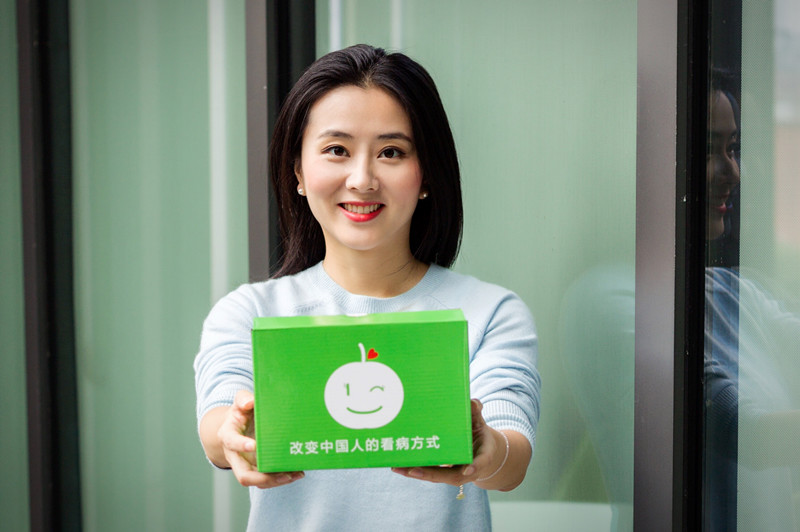
Recently, Xu Jiazi, CEO of Qingpingguo Health, told VCBeat: “We have completed our Series B+ financing round, and the funds have been received. The entire communication process with investors took less than three weeks. Compared to previous funding rounds, securing this financing was much easier.”
Following the financing, Qingpingguo Health will expand from its acquaintance-based doctor-patient model into e-commerce, exploring pathways for platform commercialization.
In fact, following the 2016 capital winter, the entire internet healthcare industry underwent a major shakeout, with many long-tail companies disappearing or dissolving. The remaining players spent 2017 reflecting and adjusting, seeking more sustainable business models.
In the second half of 2017, companies charted their own distinct courses. Some opted to vigorously develop internet hospitals but encountered regulatory constraints and uncertainty. Others chose to pivot offline by establishing clinics. Qingpingguo Health, however, embraced medical e-commerce, providing patients with professional and reliable healthcare products while dedicating itself to service excellence, thereby steadily realizing its vision of making medical care truly simple.
Green Apple Health was founded in 2013, coinciding with the boom in mobile healthcare. At that time, Xu Jiazi established a “acquaintance-based doctor-patient” model to enter the market. “The acquaintance-based doctor-patient model can help us attract doctors to join more quickly.”
Acquaintance-Based Doctor-Patient Relationships: As the term suggests, doctors and patients are not strangers, which resolves the issue of trust in online medical consultations. Theoretically, this model grants physicians greater control, allowing them to determine whom they will serve on an ongoing basis.
Over the past three years, Qingpingguo Health’s approach of leveraging acquaintance-based doctor-patient relationships has yielded quite favorable results. With a primary focus on physicians from Tier 3 Grade A hospitals, Qingpingguo Health’s products have now covered more than 60% of such doctors in Beijing and Shanghai. Moreover, physicians have shown considerable enthusiasm for this model.
“To date, our platform has accumulated 100,000 doctors and 2 million patients,” said Xu Jiazi.
As its user base grows, Xu Jiazi is also striving to diversify her service capabilities. Previously, she established a strategic partnership with Cardinal Health, a top-100 global company and U.S. healthcare services provider, enabling online prescription dispensing; entered into a long-term strategic collaboration with Hongyan Club, a premium women’s club founded by Yang Lan, to provide more targeted medical services for female users; and forged a strategic partnership with Cedars-Sinai Medical Center, the hospital of choice for Hollywood celebrities.
Although Qingpingguo Health has established partnerships with numerous well-known enterprises, Xu Jiazi has not ceased exploring innovative models that benefit both doctors and patients, such as the “Flying Knife Model” and online multidisciplinary consultations.
After a period of research and pilot operations, Xu Jiazi remained skeptical about these two directions. First, let us examine the “Flying Knife Model.” The stakeholders involved include specialists, junior doctors in second- and third-tier cities, and patients, each with distinct needs. While specialists and renowned physicians have a clear demand for performing surgeries in relatively remote areas, junior doctors can also invite specialists through their existing professional networks, resulting in weak platform stickiness. Furthermore, cultivating patients’ willingness to pay requires a prolonged educational process. Second, there is the “Online Multidisciplinary Team (MDT) Consultation” model. This approach facilitates more efficient communication among physicians and holds significant clinical value. However, although both the initiating physicians and the invited experts are receptive to this model, the challenge lies in patients’ lack of strong willingness to pay. Moreover, as many hospitals currently provide MDT services free of charge, it is even more difficult to foster a habit of payment among users. After subsidizing more than ten MDT consultations at low prices, Qingpingguo Health discontinued this service.
Ultimately, Xu Jiazi chose e-commerce to provide patients with professional and reliable medical products, focusing on delivering high-quality service and steadily realizing the vision of making healthcare access truly simple.Currently, the majority of Qingpingguo Health’s users are post-surgical patients. These patients have clear demands for nursing products and medical devices during their postoperative recovery period and are willing to pay for them. Therefore, by partnering with medical device manufacturers to establish a medical e-commerce platform, Qingpingguo Health has identified its monetization strategy.
Xu Jiazi believes that “acquaintance-based doctor-patient relationships are the most fertile ground for e-commerce.”Thanks to Qingpingguo Health’s professional, targeted medical products and AI-driven selection capabilities, patients are helped to find the products best suited to their needs.
Post-diagnosis, patients require prolonged, repeated medical consultations and the use of medical products for support, leading to a greater demand for such products than ever before. However, the quality of medical devices on the market is uneven, making safe and professional medical products crucial for mitigating medical risks. Coupled with crowded and cumbersome hospital processes, most patients choose to search online for medical products they deem suitable after leaving the hospital. Yet, as most consumers lack professional expertise, purchasing inappropriate or counterfeit medical products can compromise overall treatment efficacy, rendering physicians’ efforts futile.
All of these factors urgently call for a comprehensive disease management solution—a platform that connects physicians, patients, and professional medical products.
As an internet healthcare platform, Qingpingguo Health has inherent advantages in providing patients with professional and reliable medical products. Patients already conduct follow-ups and consultations with their doctors on the platform, demonstrating a natural demand for related products. Unlike traditional e-commerce platforms, there is no need to drive external traffic. For Xu Jiazi, the top priority is to serve patients well by offering them the products they need (product selection).
Amidst the sweeping transformation of the healthcare industry, traditional models adopted by medical device manufacturers are encountering significant challenges, including cumbersome processes, high labor costs, and low efficiency.
Medical products differ from consumer goods in that they are more specialized and require professional guidance, necessitating dedicated platforms. This presents a collaborative opportunity for medical manufacturers and the mobile internet sector, as the internet can facilitate precise matching between manufacturers and users.Green Apple Mall began its trial operations in April and officially launched on November 25. With initial monthly sales of RMB 500,000, achieving RMB 5 million in monthly sales by year-end is well within reach.