

Exploring Three Integrated Diabetes Management Models in the Internet Era: A Prospectus on Digital Chronic Care Solutions
When it comes to diabetes, as the third largest chronic disease threatening human health after tumors and cardiovascular diseases, it is considered a major challenge that internet healthcare needs to overcome in the next five years. Currently, there are nearly 100 million people with type 2 diabetes in China, but only about 30% of those receiving treatment achieve target blood glucose levels.
VCBeat (WeChat ID: vcbeat)In order to further implement the "13th Five-Year Plan for Health and Wellness" issued by the State Council in January 2017, the 21st National Academic Conference of the Chinese Diabetes Society (CDS), hosted by the Chinese Medical Association (CMA) and its Diabetes Branch, and organized by the Chongqing Medical Association, was held in Chongqing on November 22, 2017. Meanwhile, centered on the conference theme of "Collaborative Innovation and Integrated Development," a special forum sponsored by Zhiyun Group was grandly convened on the afternoon of November 23.
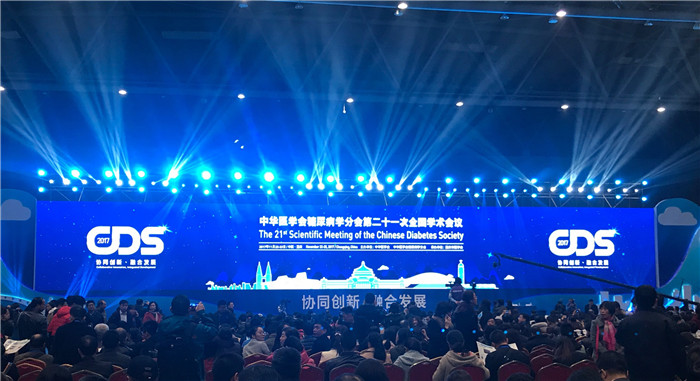
The forum featured a gathering of experts and compelling topics, closely aligned with“Discussion on the Integrated Management of Chronic Diseases in the Internet Environment”At this focal point, Luo Gang, Editor-in-Chief of Health News; Professors Sun Zilin and Jin Hui from Zhongda Hospital Affiliated to Southeast University; Professor Feng Bo from Shanghai East Hospital Affiliated to Tongji University; and Professor Zhong Shao from Kunshan First People’s Hospital successively shared their unique insights and clinical practices with the attendees.
At the opening of the conference, Luo Gang, Editor-in-Chief of Health News, provided an in-depth interpretation of a series of chronic disease management policies under the “Internet+” framework, offering insights into potential future policy directions. In recent years, as the “Internet+” concept has gained widespread acceptance, the State Council and the National Health and Family Planning Commission have successively issued multiple policies for the prevention and control of chronic diseases, with particular emphasis on the application of internet and mobile technologies in chronic disease management. Therefore, integrating traditional diabetes management models with internet and mobile health technologies may represent one of the key directions for addressing the challenges in diabetes prevention and control in the future.
Sun Zilin: The Value of Internet and Mobile Healthcare in Diabetes Management
As a country with a high prevalence of diabetes, China allocates 13% of its total national healthcare expenditure annually to diabetes treatment. The substantial economic burden, coupled with highly uneven distribution of medical resources, has resulted in suboptimal diabetes management outcomes in China, characterized by low patient adherence and a high incidence of complications.
With the in-depth development of internet technology and mobile healthcare, diabetes management in China has entered a new phase. Major medical institutions are beginning to leverage internet-based technologies, such as informatization and artificial intelligence (AI), to explore new models of diabetes management.
At the conference, Professor Sun Zilin from Zhongda Hospital Affiliated to Southeast University pointed out that there are currently three models of diabetes management in China: “integrated in-hospital and out-of-hospital care,” “integrated online and offline services,” and “integrated tertiary hospital and community care.” These three new internet-based integrated models of diabetes management hold significant promise for strengthening patients’ self-management capabilities, improving doctor-patient relationships, and enhancing the quality of diabetes care in the future.
However, this new model also faces a series of challenges. For instance, how to improve healthcare professionals’ proficiency in internet technologies; how to persuade hospitals to achieve networked interoperability of patient information; and how to encourage community physicians to proactively enhance their professional medical management capabilities. These are all issues that the novel diabetes management model needs to address.
Jin Hui: Sharing Clinical Practices for Integrated Inpatient and Outpatient Diabetes Management
Diabetes management is divided into standardized in-hospital care and out-of-hospital self-management. Many patients achieve well-controlled blood glucose levels with the assistance of medical staff during hospitalization; however, after discharge, their glycemic control often deteriorates significantly due to a lack of awareness and ability in self-management. To address the current challenges in both in-hospital and out-of-hospital diabetes care, the Department of Endocrinology at Zhongda Hospital Southeast University has developed an integrated in-hospital and out-of-hospital diabetes management model.
By leveraging the integrated chronic disease management solutions of Zhiyun Yihui and Zhangshang Tangyi, the hospital has not only achieved more comprehensive, effective, and precise management for inpatients but also extended patient care beyond the hospital setting. Through the Zhangshang Tangyi out-of-hospital management platform, physicians provide online remote management, monitoring, and guidance to patients after discharge. Patients can promptly report any changes in their condition to online doctors via the patient-facing interface. Additionally, patients can continue to receive systematic diabetes education remotely through the Zhangshang Tangyi patient platform.
Zhongda Hospital Affiliated to Southeast China University, with the aid of two major management platforms under Zhiyun, conducted a three-month follow-up management program for 30 patients with type 2 diabetes from June to August 2017. Practice has proven that integrated in-hospital and out-of-hospital management can bridge the gap between hospital discharge and home care, significantly improving post-discharge blood glucose control rates and enhancing patients’ self-management capabilities.
Feng Bo: Sharing Clinical Practices in Diabetes Management Through Integrated Online and Offline Care
With the development of mobile health technology, diabetes management encompasses not only horizontal in-hospital and out-of-hospital care but also vertical online and offline management.
In-person outpatient follow-up and patient education currently represent the mainstream model for diabetes management. However, this traditional approach is often hindered by short consultation times and inadequate monitoring, leading to poor patient adherence to blood glucose monitoring, pharmacotherapy, and scheduled follow-up visits. Consequently, effective glycemic control is difficult to achieve, which can easily precipitate doctor-patient conflicts.
The emergence of various mobile management tools (out-of-hospital diabetes management apps) has undoubtedly compensated for the limitations of purely offline management. By connecting patients and physicians via mobile devices, physicians can provide remote management and education, while patients can seek medical assistance at any time. Increased communication between physicians and patients has naturally led to a significant improvement in the doctor-patient relationship.
In recent years, the Department of Endocrinology at Dongfang Hospital has implemented an integrated online-offline management model for patients with diabetes by leveraging the Palm Sugar Doctor mobile management platform in conjunction with regular offline education. This approach has not only enhanced communication between healthcare providers and patients but also significantly improved post-discharge glycemic control rates among diabetic patients.
Zhong Shao: Sharing Clinical Practices in Integrated Management of Diabetes Between Tertiary Hospitals and Communities
Due to the unequal distribution of medical resources and the insufficient capacity of community hospitals in managing diabetes, tertiary hospitals remain the mainstay of diabetes prevention and control. However, given their high daily patient volume and limited medical resources, it is challenging for tertiary hospitals to provide personalized management and education for diabetic patients.
It is crucial to leverage the collaborative synergy between tertiary hospitals and community health centers by utilizing the medical resources of tertiary hospitals to establish a medical consortium network. This approach aims to enhance the diabetes management capabilities of community health centers, thereby supporting the implementation of tiered diagnosis and treatment, as well as improving community patients’ awareness and ability in self-management.
In the Jiangsu region, particularly at Kunshan First People’s Hospital, active exploration has been conducted into integrated diabetes management spanning tertiary hospitals and community health centers. According to Professor Zhong Shao from Kunshan First People’s Hospital, in recent years, physicians from community hospitals in Kunshan have regularly attended training sessions at tertiary hospitals to enhance their diagnostic and therapeutic capabilities for diabetes, while specialists from tertiary hospitals have also routinely visited community hospitals to provide outpatient consultations and conduct ward rounds.
Through this approach, resources between tertiary hospitals and community health centers have been rationally allocated, which not only enhances the professional expertise of community physicians in diabetes management but also improves patients’ awareness, consultation rates, and treatment target achievement rates.
Furthermore, the integrated chronic disease management platform in the internet environment plays a significant role in promoting the integrated management of diabetes across tertiary and community healthcare settings. Kunshan First People’s Hospital leverages the internet platform under Zhiyun to conduct remote education for diabetic patients through live online broadcasts, facilitating the referral of patients identified by community hospitals to tertiary hospitals for standardized treatment.
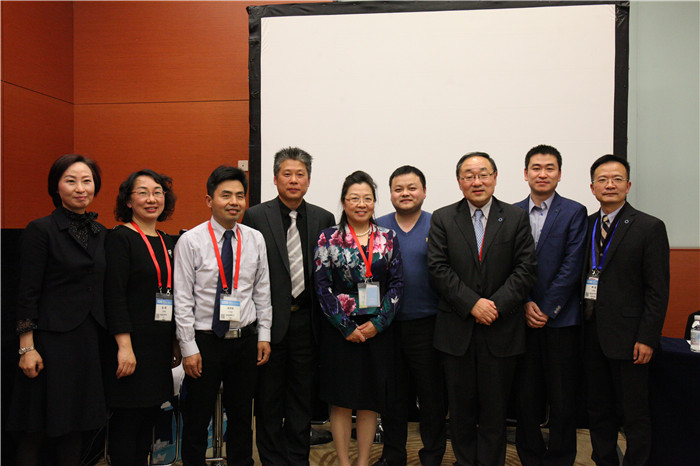
Finally, all attendees gathered for a group photo. Zhiyun Group stated, “By collecting comprehensive medical data and analyzing big data through proprietary algorithms, we provide auxiliary decision-support information to hospital administrators, physicians, and nurses. This approach fundamentally helps healthcare institutions enhance clinical outcomes, patient safety, cost efficiency, and the operational effectiveness of hospital management systems.”
“We hope that, through the continuous evolution of our systems and technological innovation, Zhiyun’s Yihui Series Hospital SaaS Platform and the Handheld Glucose Hospital External Management System will help more users achieve efficient data interoperability and decision support, thereby providing patients with higher-quality and safer medical service guarantees.”