

AysHealth Secures Tens of Millions RMB Series A Funding from Legend Capital, Deploys GDS AI Chronic Disease Management System in Luohu and Fangzhuang National Healthcare Reform Pilot Zones

Legend Capital
Early-stage venture capital and growth-stage private equity investment institutions
In November 2017, Jin Xin, founder and CEO of Aiyisheng Health (hereinafter referred to as “Aiyisheng”), toVCBeat (WeChat: vcbeat)Reporter confirms: Aiyisheng has completed a tens-of-millions-level Series A financing round invested by Legend Capital.
Including the previous angel round and angel+ round, this is Aiyisheng Health's third round of financing.
This collaboration with Legend Capital was clearly so memorable that Jin Xin can vividly recall that her first conversation with Qi Fei, Vice President of Legend Capital, took place on September 20, 2016.
Jin Xin told VCBeat that, following this round of financing, Aiyisheng Health plans to cover 1,000 medical institutions and 10 million patients with chronic diseases within the next two to three years with its AI-powered chronic disease management system based on the national GDS guidelines (hereinafter referred to as the “GDS System”).
Implementing Primary Healthcare
At the outset of his entrepreneurial journey, Jin Xin aimed to tap into a vast potential market that was underserved by internet applications yet highly susceptible to digital disruption. After positioning himself in the healthcare sector, he considered ventures in health management and even contemplated establishing large-scale hospitals.Ultimately, the focus was placed on primary healthcare and chronic disease management.His aspiration is simple yet steadfast: “Aiyisheng, caring for the lifelong health of hundreds of millions of people—doing something we love and are committed to for a lifetime!”
Jin Xin graduated from Shanghai Jiao Tong University with a Bachelor’s degree in Computer Science and Technology and a Master’s degree in Computer Networks, and obtained an Executive Master of Business Administration (EMBA) from Tsinghua University in 2011.
Prior to founding his own venture, he served as the head of marketing and market operations management for China and Greater China at several globally leading high-tech multinational corporations in the IT, internet, and telecommunications sectors, including HP (Hewlett-Packard), Redback Networks, and Ericsson. He brings 20 years of experience in high-tech marketing within the IT and internet industries.
Founders with a TMT background naturally focus on the development of intelligent systems in their spin-off projects.
When it comes to research and development, mention must be made of Professor Zhang Mingqun, Co-founder and Chief Scientist of Aiyisheng. Born into a family of medical practitioners, Professor Zhang is formally trained in the medical field. He holds a Master’s degree in Hematology from Capital Medical University in Beijing and a Ph.D. from the Carver College of Medicine at the University of Iowa. He conducted postdoctoral research as part of scientific projects at the U.S. National Institutes of Health (NIH) and later served as a Senior Researcher at multiple U.S. research institutions, where he engaged in translational applied research bridging basic science and clinical practice in the fields of cardiovascular and cerebrovascular diseases and geriatrics.
Currently serves as Vice Chair of the Expert Committee on Prevention and Treatment of Cardiovascular and Cerebrovascular Diseases under the Medical and Pharmaceutical Professional Committee of the China Association of Senior Professors; Deputy Head of the Informatics Group of the Chinese Society of General Practice; Convener of the Informatics Group of the Geriatrics Branch of the Chinese Preventive Medicine Association; Council Member of the China Hypertension League; and Vice President of the Beijing Peigen Neurological and Cardiovascular Medical Public Welfare Foundation.
When mentioning Zhang Mingqun, Qi Fei stated, “Chronic disease management is a relatively complex and specialized endeavor. Professor Zhang has over a decade of experience in the field of chronic diseases.” The core technologies underlying the GDS system were primarily developed by Zhang Mingqun.
In the GDS system, which integrates 18 national clinical practice guidelines for chronic diseases, empowering primary care has become one of its key objectives.
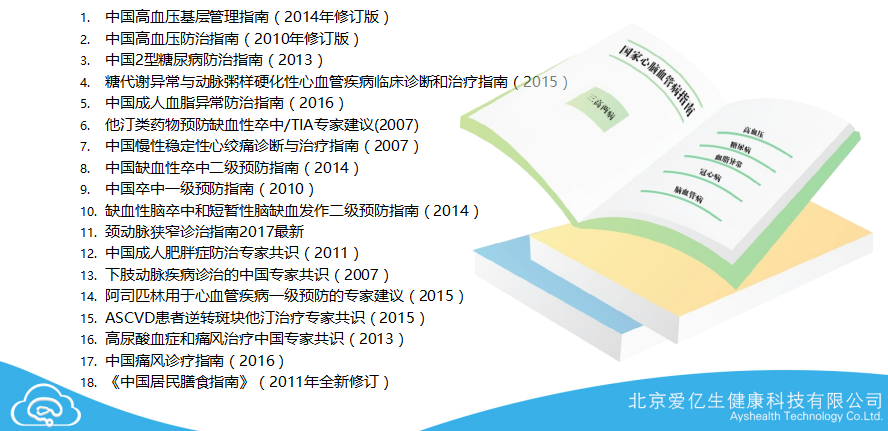
18 National Guidelines for the Prevention and Control of Chronic Diseases Covered by the GDS System
According to Jin Xin, “We currently cover 100 medical institutions, mostly primary-care hospitals, and through these institutions we manage one million chronic-disease patients using the GDS system.”
Three Major Application Scenarios, Five Management Modules
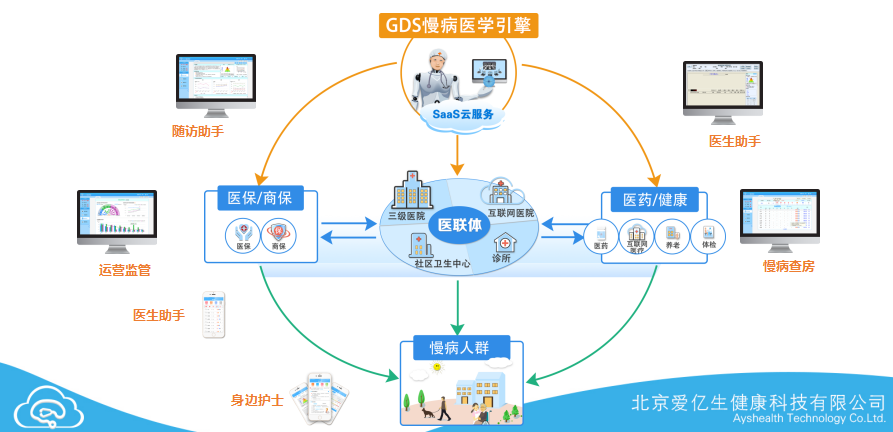
GDS System: Building an Intelligent Medical Engine for China’s Chronic Disease Healthcare Ecosystem
The GDS National Guideline AI-Based Chronic Disease Management System currently coversHypertension, diabetes, dyslipidemia, coronary heart disease, cerebrovascular disease, gout, and hyperhomocysteinemia: seven major diseases,It comprises five major modules: individual management, population management, collaborative management, patient guidance, and medical management.。
InThree Major Application Scenarios: Community Hospitals, Regional Medical Consortia, and Urban Chronic Disease EcosystemsThe GDS system assists physicians by acting as a clinical decision support tool and providing patient guidance; serves as a virtual nurse for patients; supports hospital administrators, the National Health and Family Planning Commission, and social security agencies by offering a medical management platform; builds an integrated ecosystem linking healthcare services, medical insurance, and pharmaceuticals (“Three-Medical Linkage”), while providing operational platforms for commercial insurance and pharmaceuticals; and supports the management of contracted populations for community family doctors, collaborating with specialists, general practitioners, and health managers to play a pivotal role in tiered diagnosis and treatment within medical consortia.
In community-based application scenarios, the physician assistant embedded in the PC version of the hospital’s HIS system enables GDS to automatically generate personalized and refined guideline-based chronic disease management information in the background while physicians provide diagnostic and treatment services. This information is displayed adjacent to the HIS window on the physician’s workstation.
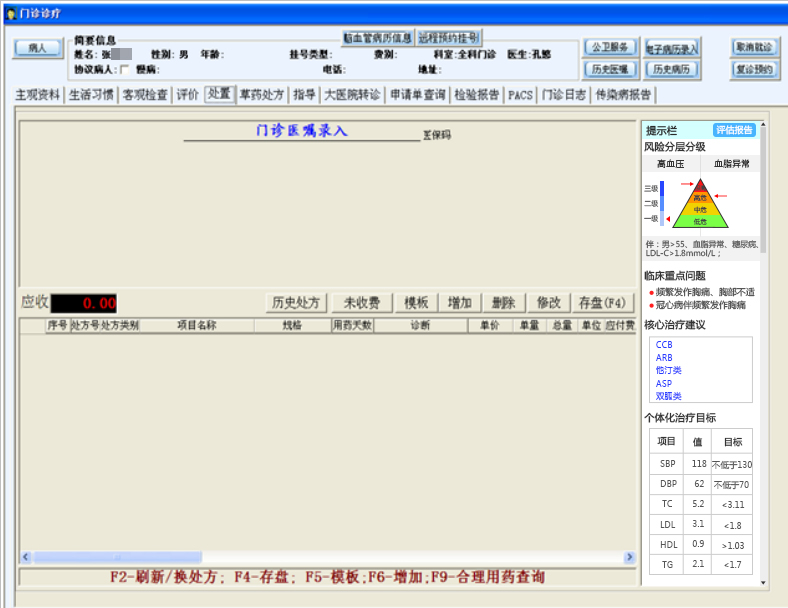
Physician Assistant Prompt Interface
“When a patient visits, the doctor simply swipes the medical insurance card, and clinical recommendations for the patient are immediately displayed. Jin Xin stated, ‘The Doctor Assistant functions like a robotic aide, always available to primary care physicians. It provides timely guideline prompts and assistance tailored to the specific patient being seen.’”
Quantification Technology for Chronic Disease Conditions, is one of the key technologies currently applied by the Beijing Fangzhuang Community Health Service Center and other primary healthcare institutions in implementing the Guideline-Directed Strategy (GDS). It uses a red-yellow-blue color-coding system to indicate the severity and urgency of patients’ conditions, offering a clear and concise approach that captures critical clinical aspects and facilitates more effective chronic disease management. Jin Xin told reporters, “It is similar to the gear shifts in a car: red indicates clinical issues that must be addressed immediately, yellow signifies cases requiring close monitoring, and blue denotes problems that need to be resolved, and so on. This is a highly effective method and tool for the process-based management of chronic disease populations.”
In addition, the GDS system also providesChronic Disease Ward Round Techniques“We have applied the inpatient ward round model to chronic disease management, providing patients with a virtual in-hospital experience. Through home-based care or follow-up visits, patients can receive top-tier chronic disease medical services comparable to those provided during hospitalization.”
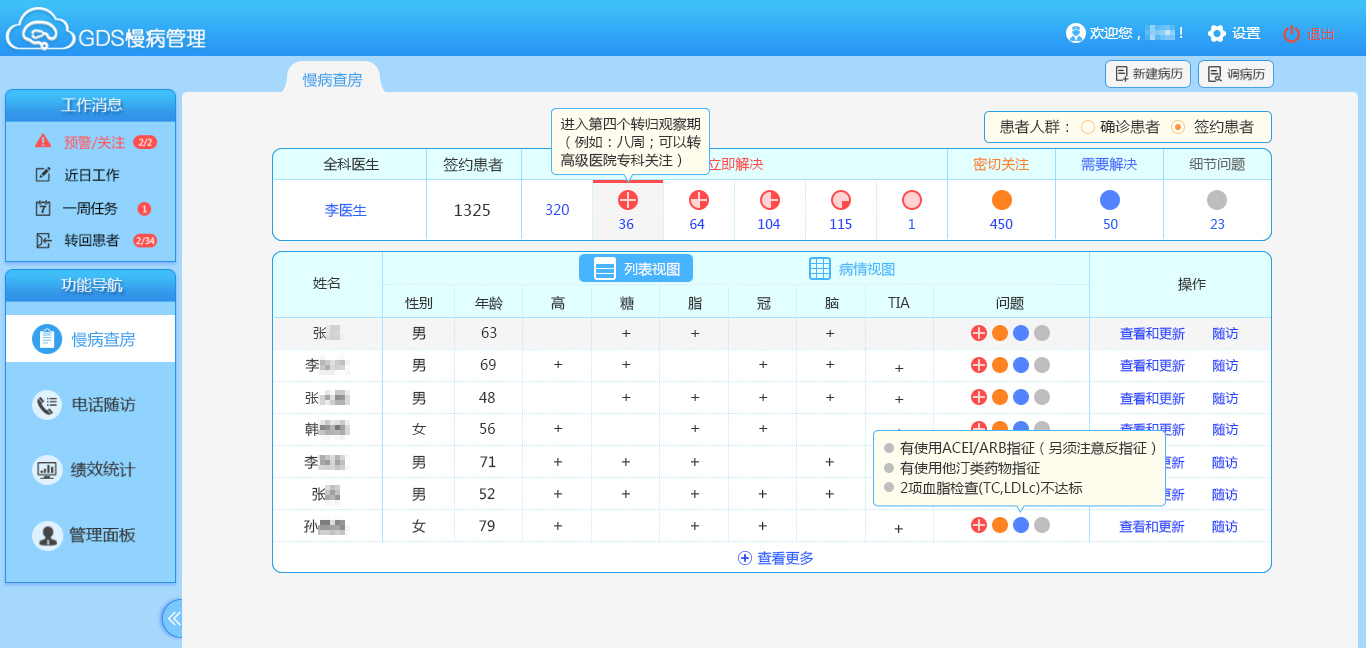
GDS System Interface for Chronic Disease Ward Rounds
andNurse by Your Side, it leverages artificial intelligence technology to provide continuous cloud-based patient monitoring. Through patients’ mobile apps or WeChat official accounts, it offers on-demand professional guidance, including chronic disease assessments that generate comprehensive evaluation reports to assist physicians in assessing patients’ health status. It intuitively displays post-visit adherence to medical advice, as well as understanding and tracking of treatment goals, and provides clinical interpretations for home monitoring of blood pressure, blood glucose, and other parameters.
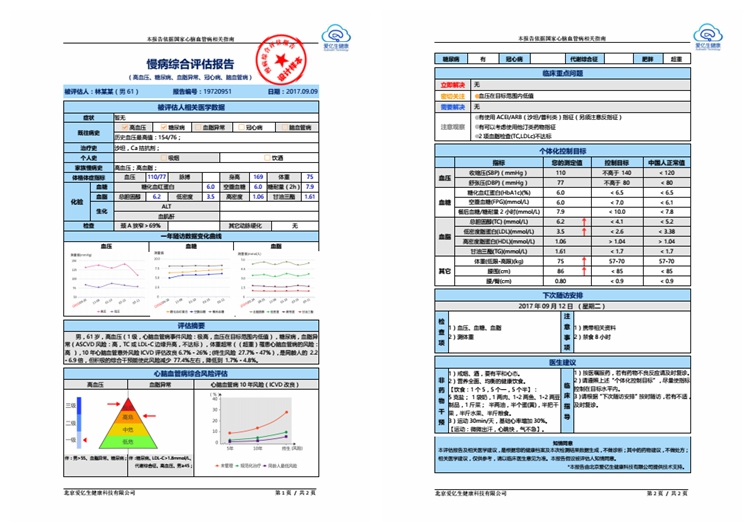
GDS System Generates Comprehensive Assessment Report for Chronic Diseases
Furthermore, from the perspective of hospital management, Aiyisheng also provides hospital directors and government departments withMedical Statistics and Performance Managementa platform that includes the distribution and trends of chronic diseases and conditions among patients in the jurisdiction, treatment and follow-up tracking, as well as statistics on individualized target achievement rates for blood pressure, blood lipids, and blood glucose based on guidelines. It combines big data on populations with precise, detailed individual indicators, making the contracted services of the entire family doctor team more effective. Government policies on chronic disease management for large populations are supported by clinical data.
Jin Xin pointed out,The objective of the GDS system is to implement chronic disease prevention and control for the entire population, while simultaneously providing refined chronic disease management for key populations.The implementation of the GDS system in community health service centers often enables coverage of the entire chronic disease population requiring management within a given region. By leveraging chronic disease screening tools, comprehensive assessment reports, and an outpatient chronic disease physician assistant, standardized chronic disease management for the entire population is achieved.
The concepts of refined management and focus on key populations are primarily reflected in personalized treatment goals, individualized treatment plans, tailored follow-up schedules, and precise, patient-centered doctor-patient communication. These approaches significantly enhance the effectiveness of chronic disease management, while maximizing control over disease progression and preventing complications.
“For example, in Fangzhuang, Beijing, which has a population of 100,000, the prevalence of chronic diseases is approximately 20%. With the support of the GDS system, the Fangzhuang family doctor team manages 16,000 patients, exemplifying the gradual achievement of full population coverage. Meanwhile, refined and personalized chronic disease management is implemented for the ‘red-flag’ patient group—i.e., the key populations targeted by family doctor contracted services.”
Primary Care + Medical Insurance Positioning: An AI-Powered Chronic Disease Management Tool Endorsed by the National Health and Family Planning Commission
In the field of intelligent chronic disease management, Aiyisheng’s advantages are manifested in three aspects:
First, the strategic positioning of "Primary Care + Medical Insurance."Many entrepreneurs have stated that chronic disease management is a highly complex field, and effective management faces numerous challenges. The primary care level serves as the foundation of the entire chronic disease ecosystem, with the two key concepts of “primary care + medical insurance” forming the unwavering strategic positioning of Aiyisheng.
In Jin Xin’s view, this is also one of their advantages. “Primary care is the foundation of the entire chronic disease management ecosystem, but primary care alone is insufficient. To transform chronic disease management at the primary level into an ecological and sustainable environment, insurance must be integrated.”
Second, it has evolved from community-based development to medical consortia, serving as a pillar for national-level healthcare reform demonstration projects.Among startups in smart chronic disease management, few have gained national recognition, yet Aiyisheng has emerged as a provider of smart healthcare systems for national-level healthcare reform demonstrations.Beijing Fangzhuang Community Health Service Center is the most advanced community medical institution in China, known for its particularly innovative practices. As early as 2014, the first year of Aiyisheng’s establishment, Beijing Aiyisheng Healthy Science And Technology Co., Ltd. forged a close partnership with Fangzhuang, successfully launching its first pilot project there.
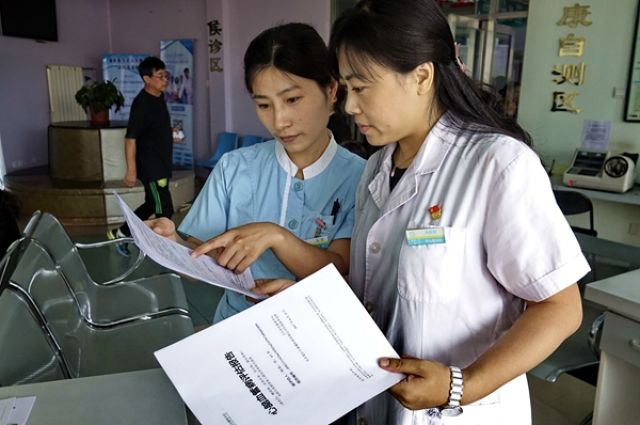
Medical staff at the Fangzhuang Community Health Service Center analyze residents’ health status using GDS comprehensive chronic disease assessment reports. (Image source: Xinhua News Agency, photographer Li Xin)
Wu Hao, Director of the Beijing Fangzhuang Community Health Service Center, told reporters,“The GDS system has been fully implemented in the daily clinical practice of family physicians and in the chronic disease management workflows of 23 family physician teams. More than 16,000 patients with chronic diseases utilize the backend services supported by the GDS system, which has improved the quality of chronic disease diagnosis and treatment, enhanced consistency in clinical proficiency among physicians, facilitated chronic disease prevention and control, reduced labor costs, and increased management efficiency and effectiveness.”
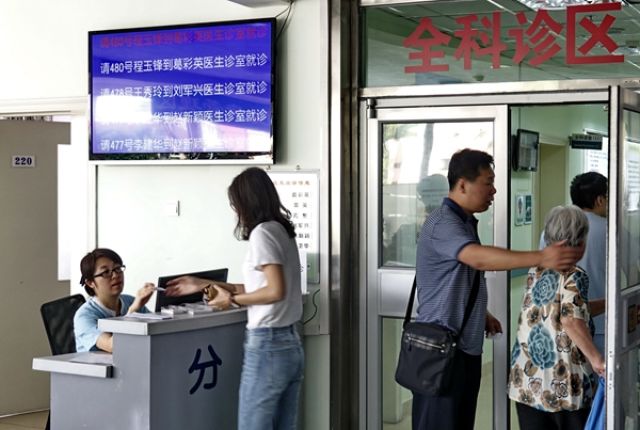
In the General Practice Area of Fangzhuang Community Health Service Center, the GDS system isTechnical Support for General Practitioner Contracted ServicesSupport (Photo by Li Xin, Xinhua News Agency)
Having accumulated over two years of innovative practical experience in community-based chronic disease management, and particularly through close collaboration with Fangzhuang, Beijing Aiyisheng Healthy Science And Technology Co., Ltd. has had the opportunity to work alongside the team at the Fangzhuang Community Health Service Center,Participated in the formulation of the “Guidelines for Standardized Construction of ‘Internet+’ Community Health Management” issued by the National Health and Family Planning Commission (NHFPC). The guidelines underwent expert review and acceptance organized by the NHFPC this February and were publicly published in relevant core journals.
Jin Xin revealed, “In the words of the leaders of the National Health and Family Planning Commission, this is a model project for community healthcare in China. As we have become a key participant in the intelligent chronic disease management section of this guideline, it represents a significant milestone.”
Furthermore, in 2015, Beijing Aiyisheng Healthy Science And Technology Co., Ltd. began collaborating with Shenzhen Luohu Hospital to implement its AI-based chronic disease management system.In the healthcare reform of Luohu Hospital Group, chronic disease management has been a key focus, with the GDS system playing a significant role.
In September this year, the National Health and Family Planning Commission and the State Council’s Office of Healthcare Reform held a national conference on the development of medical consortia in Shenzhen, where the “Luohu Model” received high recognition and was vigorously promoted.Chen Jialin, Vice President of Shenzhen Luohu Hospital, stated, “The shortage of general practitioners has constrained the effectiveness of our healthcare reforms. After adopting the GDS system tools, physician efficiency has been significantly improved.”
Third, the development of a chronic disease medical ecosystem extending from communities and medical consortia to cities.Starting with a pilot program at the Fangzhuang Community Health Service Center in 2014 and expanding to Shenzhen Luohu Hospital in 2015, Aiyisheng began integrating the coordinated reform of medical care, health insurance, and pharmaceutical supply (“Three-Medical Linkage”) in 2016. Building upon its foundation in promoting family doctor contract services and medical consortia, the company launched support for operations such as health insurance cost containment and co-insurance for chronic diseases. In 2017, Aiyisheng partnered with Ping An Insurance to launch China’s first HMO/PBM pilot program in a major coastal city in northern China.
Jin Xin told the reporter, “In 2014, the first year of our company’s establishment, we signed a strategic cooperation agreement with Ping An Insurance. Our goal is to collaborate with commercial insurance companies and pharmaceutical enterprises to support government health commissions and social security agencies in building an urban chronic disease healthcare ecosystem.”
4. Core technologies based on national guidelines.Jin Xin summarizes the GDS system as “the integration of artificial intelligence and clinical medicine based on national guidelines.” By combining AI with 18 national guidelines for the prevention and control of chronic diseases, GDS has formed a powerful engine for chronic disease management.
“It acts like an engine, driving every aspect of the chronic disease ecosystem—including physicians, patients, hospital administrators, the National Health and Family Planning Commission, social insurance, commercial insurance, and pharmaceutical resources—to form a community of shared interests centered on therapeutic efficacy and health outcomes.”
Future: Promote pilot programs at the urban district and county levels to practice and validate replicable business models.
Specifically, the funds raised in this round of financing by Aiyisheng Health will be allocated to the following three areas:
First, the development of Aiyisheng Health has accelerated.“The Series A financing has brought Aiyisheng to a new milestone,” Jin Xin told reporters. From a market perspective, Aiyisheng Health will establish five major strategic regions; the Northern, Southern, and Western regions have basically taken shape, while the Eastern and Central regions have already been launched.
Second, pilot validation of the business model.Jin Xin stated that, within current explorations and practices, there is a need for concrete, implementable projects—particularly large-scale pilots—to validate business models that are replicable and scalable, “especially those integrating insurance and pharmaceuticals.”
Third, the improvement of the team.In such a cross-disciplinary project combining artificial intelligence with clinical medicine, talent is indispensable. Jin Xin describes his company as a “high-tech software company”; therefore, as the company grows, it will continue to strengthen its capabilities in product management and research and development. At the same time, it aims to rapidly build a highly effective marketing team capable of winning large-scale campaigns.
When referring to the GDS system, Qi Fei, Vice President of Legend Capital, mentioned three key terms: “efficiency,” “homogenization,” and “personalization.”This is demonstrated through the two pilot partners where Aiyisheng has been implemented: one is the Beijing Fangzhuang Community Health Service Center, ranked among the top 100 community health service centers nationwide; the other is Shenzhen Luohu Hospital Group, a pioneer in China’s healthcare reform. These two partners hold significant importance for the practice of primary healthcare in China.
As a tool for physicians, hospital management, and chronic disease management, the GDS system enables most primary care physicians to provide patients with “efficient,” “standardized,” and “personalized” services. This is also a key reason why Legend Capital chose to invest in Aiyisheng Health.
Qi Fei stated that, leveraging years of accumulated expertise, Aiyisheng has developed the GDS system. “Such specialized tools are relatively rare in the market and can significantly assist primary care physicians in chronic disease management and family doctor contract services. In the future, the system can deliver greater value in areas including healthcare cost containment under medical insurance and medication management for patients with chronic diseases. Aiyisheng still has substantial room for expansion.”
As one of the partners, Chen Jialin stated, “The GDS system can automatically extract data on patients with hypertension and diabetes from the community health center system, generate health assessment reports and health guidance recommendations, and automatically prioritize alerts to draw physicians’ attention to key populations among those with chronic diseases, thereby improving management efficiency. For hospital administrators, it can also generate performance analyses, which align well with the healthcare reform requirements and management philosophy of the Luohu Group.”
In January this year, the State Council issued the "Medium- and Long-Term Plan for the Prevention and Control of Chronic Diseases in China (2017-2025)" based on the "Outline of the 'Healthy China 2030' Planning."Signifying that the state’s emphasis on chronic disease management has been elevated to the level of national strategy,In this field, healthcare reform, family doctor contract services, and the development of medical consortiums have imposed higher requirements on chronic disease management, particularly at the primary care level.
By leveraging artificial intelligence and information technology to integrate national medical guidelines into daily clinical practice, it is possible to comprehensively enhance the overall service capabilities of primary care physicians and improve the efficiency of family doctor contracted services. Through the implementation of chronic disease prevention and control for the entire population, along with refined chronic disease management for key populations, the strategic objectives outlined in the National Medium- and Long-Term Plan for Chronic Disease Prevention and Control can be accelerated. Therefore, the GDS National Guideline AI-Based Chronic Disease Management System holds broad application prospects.
About Legend Capital
Legend Capital, a member of Legend Holdings Corporation, was established in 2001 and manages total assets exceeding RMB 30 billion in both U.S. dollars and Renminbi. Since 2008, Legend Capital has been strategically positioning itself in the healthcare sector. In 2010, it established an investment team dedicated to the healthcare industry. In 2016, it raised a dual-currency (USD and RMB) specialized healthcare investment fund, focusing primarily on domestic investments while also engaging in cross-border and M&A investments.
To date, Legend Capital’s total investment in the healthcare and life sciences sector has exceeded USD 500 million. Its portfolio spans multiple subsectors, including healthcare services, biopharmaceuticals, diagnostics, gene technology, medical devices, and mobile health, with deep strategic positioning across disease areas such as cardiac medicine (both internal and surgical), neurosurgery, diabetes, and oncology.