

Digital Lives of Chinese Doctors and Patients 2017: Insights from China's Largest Online Survey
As the traffic dividends of the mobile internet dwindle, how can “Internet + Healthcare” seek new breakthroughs? How can existing mobile health products survive and promote themselves? How can healthcare companies conduct effective digital education for doctors and patients? To truly serve doctors and patients well, it is essential to first understand their genuine needs and concerns.
Since 2012, DXY has partnered with Kantar Health to continuously conduct surveys on physicians’ digital lifestyles, aiming to understand changes in their online behavior. We have observed that over the past five years, physicians have spent increasing amounts of time online, becoming more reliant on the internet and digital technologies for learning, work, and even service delivery. In this era of digitalization, patients are also demonstrating greater proactivity; accordingly, this year’s report includes an online survey targeting patients for the first time.
The data and insights conveyed in the report not only provide significant guidance for the company’s future operations but also remind professionals in marketing, product development, and operations to adapt their mindset. They must consider how to deliver more valuable and differentiated services to users in the digital era.
Sample Size
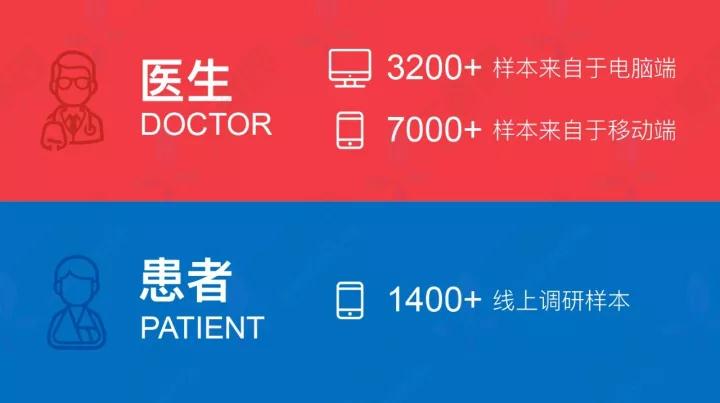
This survey collected a total of 10,325 physician records, with 3,242 sourced from desktop platforms and 7,083 from mobile platforms. It comprehensively covered physicians of various ranks across cities and towns at all levels, hospitals of all tiers, and 32 medical specialties. The patient segment gathered over 1,400 samples, including populations affected by respiratory, cardiovascular and cerebrovascular, psychiatric, and oncological diseases.
Physicians’ weekly online time spent on medical-related activities: 15.5 hours; satisfaction rate: 48%
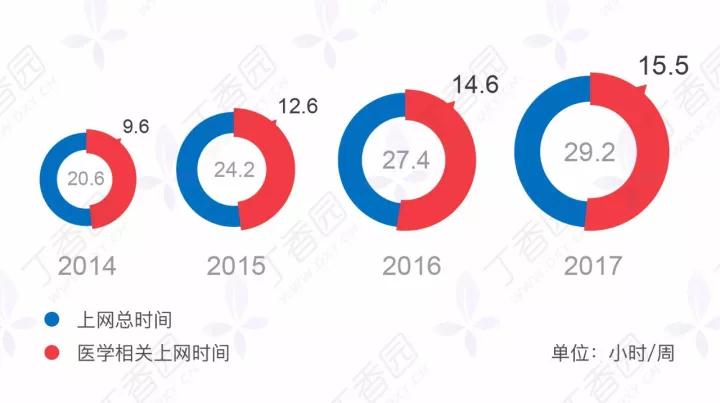
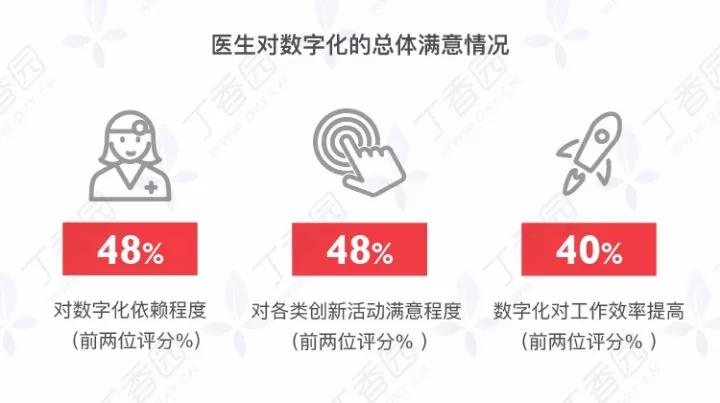
It must be acknowledged that digitalization has fully permeated physicians’ learning and professional practice. On average, physicians spend 29.2 hours per week online, with 15.5 hours—more than half of that time—dedicated to medicine-related activities. Digital tools have not only become increasingly indispensable for enhancing efficiency but have also garnered considerable satisfaction among physicians, with 48% reporting being either very satisfied or satisfied.
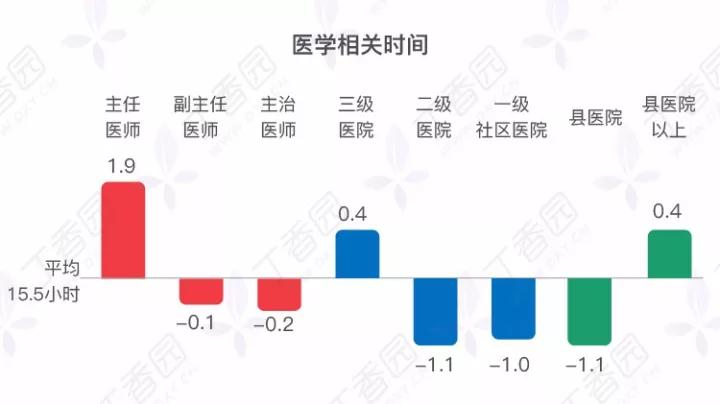
In terms of time spent online on medical-related activities, physicians with senior professional titles, those working in large hospitals, and those based in major cities exhibit greater reliance on digitalization. Surveys indicate that the average daily online time for medical-related purposes among physicians with senior professional titles exceeds that of their counterparts with other titles. Furthermore, physicians at tertiary hospitals and hospitals at or above the county level also report online durations surpassing the average.
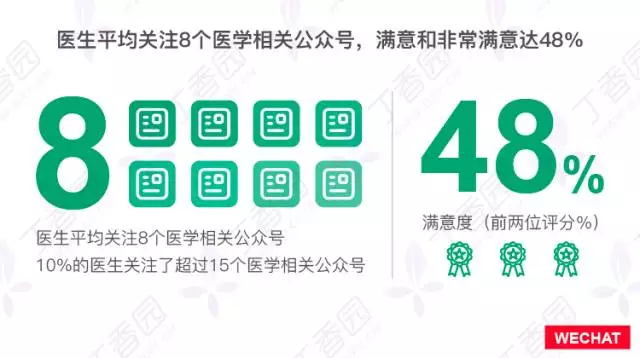
Like ordinary internet users, WeChat is also the most frequently used app among physicians. On average, they follow eight medical-related official accounts, with a satisfaction rate of 48% regarding the information provided by these accounts. Meanwhile, the average number of healthcare-related apps downloaded has declined. This may suggest that if a commonly used app integrates multiple functionalities to meet physicians’ diverse needs for clinical learning and work, it might indeed no longer be necessary to install numerous separate apps.
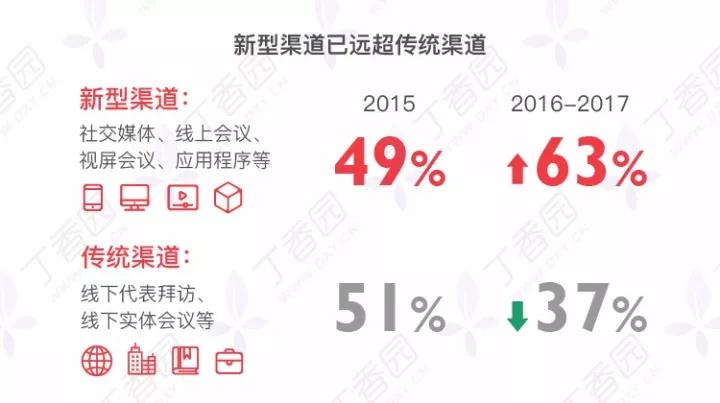
From an overall channel perspective, the proportion of doctors acquiring professional information through new digital channels has far exceeded that of traditional channels, at 63% vs. 37%.
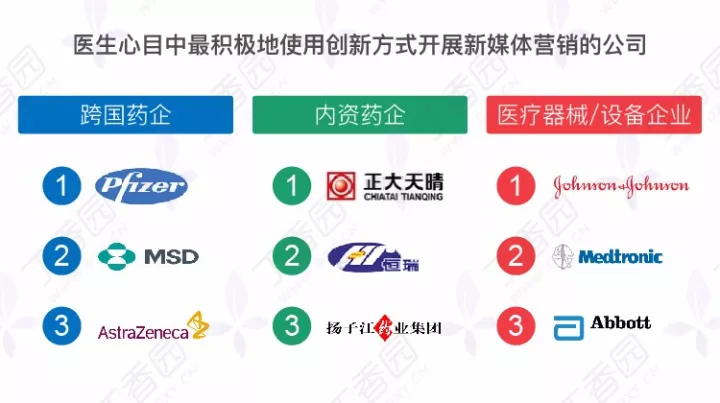
Time is the ultimate battlefield in business. An increasing number of healthcare companies are actively launching diverse innovative digital initiatives to compete for physicians’ digital attention.
In this survey, Pfizer was recognized by physicians as the multinational pharmaceutical company most actively engaged in innovative digital marketing in 2017, followed closely by Merck & Co. and AstraZeneca. Among domestic companies, Chia Tai Tianqing ranked first, followed by Hengrui Medicine and Yangtze River Pharmaceutical Group. Johnson & Johnson, Medtronic, and Abbott rounded out the top three among medical device/equipment companies.
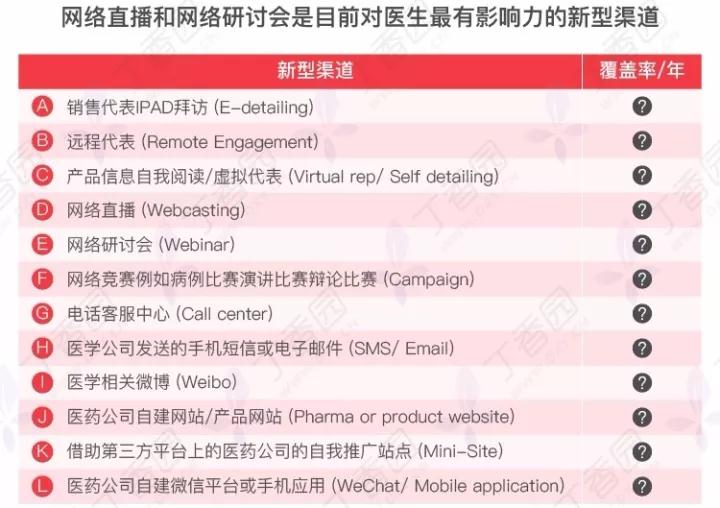
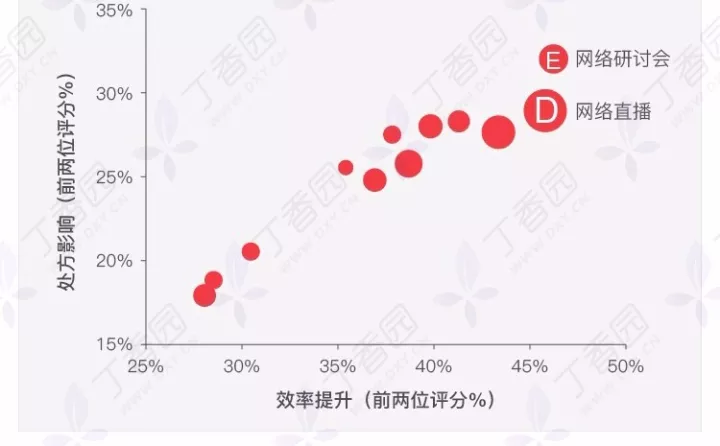
As new channels have far surpassed traditional ones, what is the actual influence of different channels on physicians? The study also examined the impact of various new channels from two dimensions (their influence on physicians’ work efficiency and prescribing behavior/rational drug use), revealing that live streaming and webinars are currently the most influential new channels for physicians.
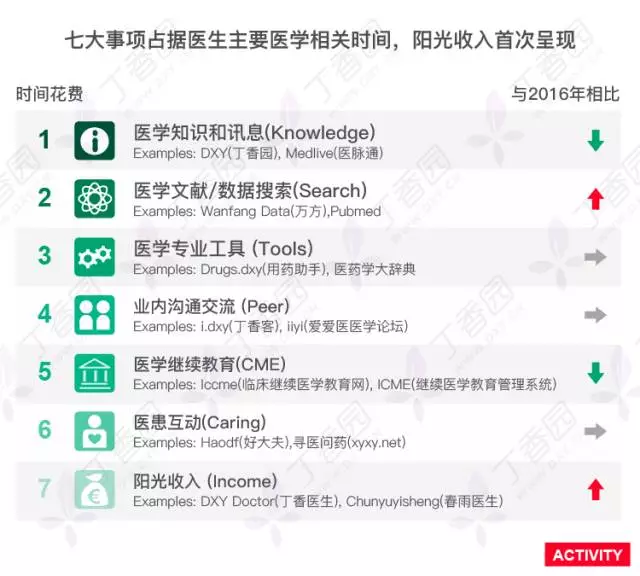
According to statistics, seven major activities account for the majority of physicians’ online time related to medical practice: accessing medical knowledge and information, searching medical literature/data, using specialized medical tools, participating in continuing medical education (CME), engaging in professional communication within the industry, interacting with patients, and managing compliant income (“Sunshine Income”). Notably, “Sunshine Income” emerged as one of the primary online activities for physicians, appearing for the first time in the 2017 survey.
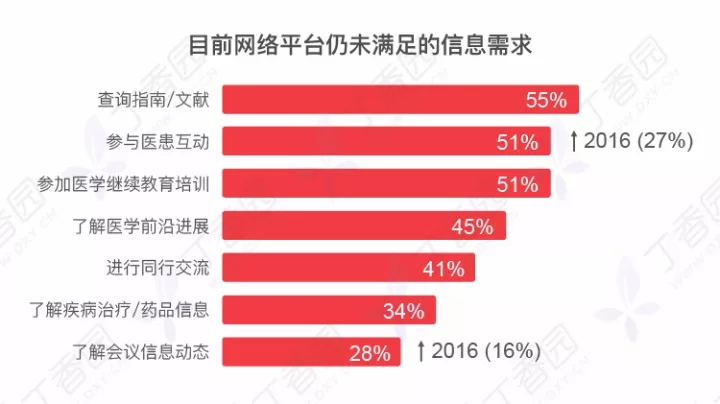
Physicians still have unmet information needs on online platforms, with searching for guidelines and literature ranking first. It appears that quantity does not equate to quality; providing physicians with more personalized, high-value content remains an effective approach for healthcare service providers to create value.
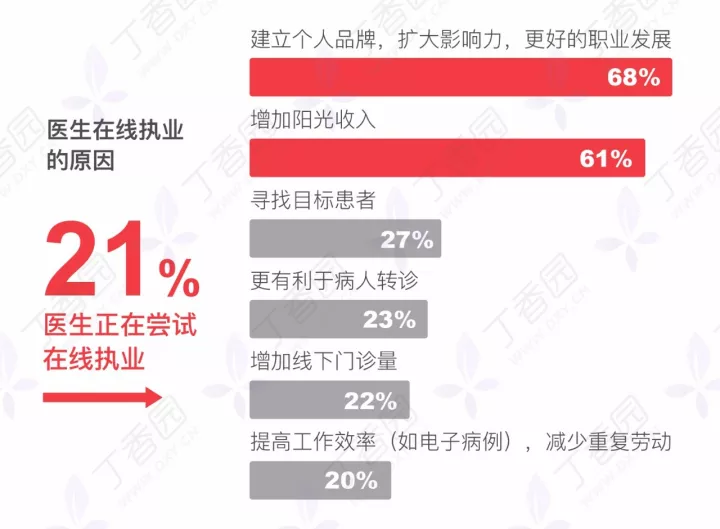
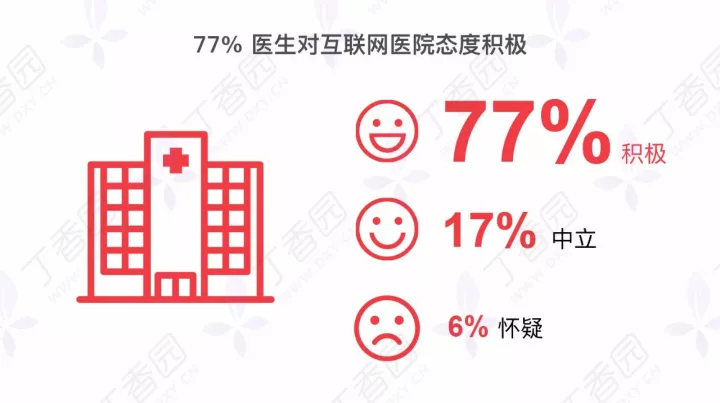
Notably, the number of physicians seeking doctor-patient interaction has surged, climbing to the second position. This trend is further corroborated by physicians’ attitudes toward online practice and internet hospitals revealed in the survey: 21% of physicians have already engaged in online practice, and 77% hold a positive outlook on the rapidly growing internet hospital sector this year. Learning is no longer the sole reason for physicians going online; their awareness of building personal brands is gradually strengthening, accompanied by a growing desire to increase legitimate income.
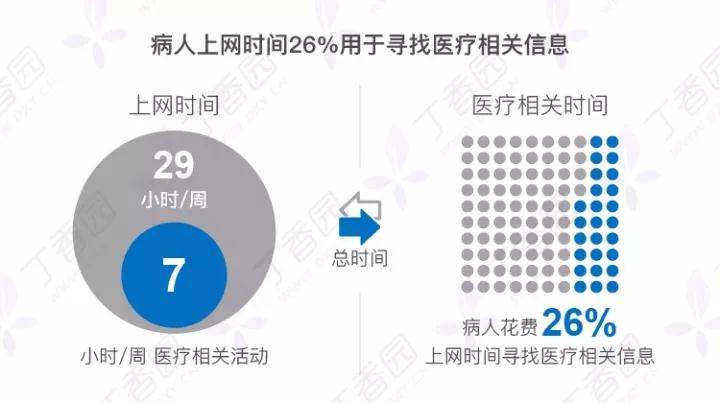
This report launched its first online survey targeting patients in 2017. The findings revealed that patients spend more time online than the average internet user, averaging 29.2 hours per week, with 26% of this time dedicated to disease-related activities. As patients gain more efficient access to information through digital channels, they are increasingly taking a proactive role in their own treatment decisions.
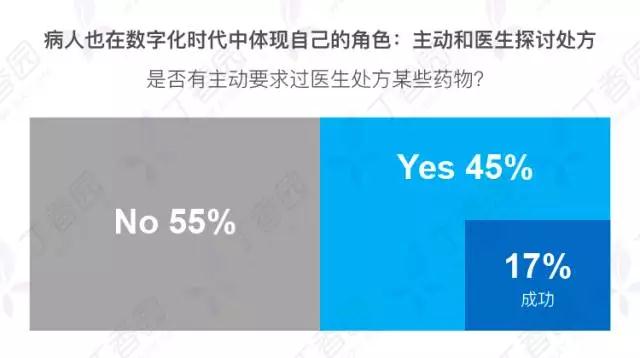
Data show that 45% of patients have proactively requested specific prescription medications from their physicians, with 17% of these patients successfully obtaining the prescriptions. From the physicians’ perspective, approximately 9% of all treatment regimens prescribed were adjusted in response to patient requests.
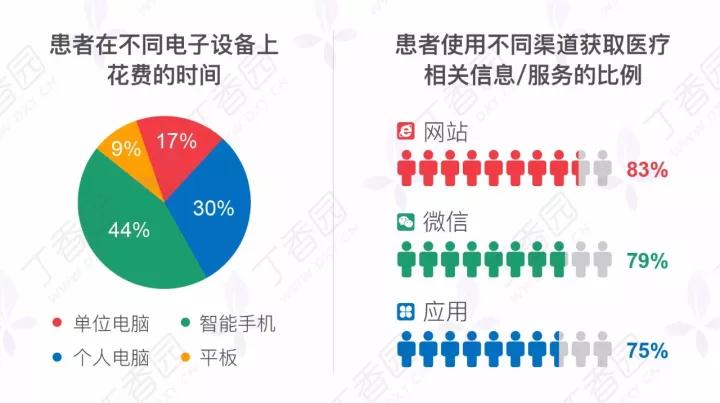
On the internet, patients are most interested in popular science information about medicine and diseases, followed by medication assistance and references. However, their satisfaction levels are not high, primarily due to skepticism about the quality of the information they find. Moreover, although patients spend more time on smartphones than on computers, 83% still access healthcare-related information via desktops. This indicates that there is still room for development and improvement in mobile health products on the market, providing reliable information in a convenient manner to better meet patients' needs.
What unmet needs do patients still have when going online? Which information channels most significantly influence patients? How do patients with different diseases differ in terms of their initiative and preferences for medication selection? To understand the real-life conditions of patients in the digital environment, this report investigates and analyzes these questions.
Summary
Overall, it is evident and irreversible that physicians are increasingly relying on digital technologies to support their medical practice. Physicians are becoming more conscious of building their personal brands and are eager to increase their transparent, legitimate income, for which digital technologies provide an effective pathway. Under the influence of healthcare reform policies such as multi-site practice and tiered diagnosis and treatment, more physicians are likely to embrace and attempt to conduct medical interactions and services via the internet in the future.
The gap in patients’ access to and understanding of disease-related information is steadily narrowing thanks to the internet, enabling them to participate more actively in decisions regarding their health and treatment. What the entire healthcare industry needs to do is provide them with more reliable information, particularly on digital platforms, so that they can make informed, reasonable decisions together with their physicians, supported by credible evidence.
“Digital Lives of Chinese Doctors and Patients 2017,” jointly released by DXY and Kantar Health, is currently the largest online survey project in China targeting physicians and patients. Since its inception in 2012, it has provided data and professional insights for five consecutive years to help the industry understand the real-life experiences of doctors and patients in the digital environment.
The above excerpt is taken from the report. This report is available for purchase in two versions: Standard and Customized. To obtain or purchase a copy, please follow DXY Forward and reply with “Digitalization 2017,” or contact Summer Chen at chensw@dxy.cn or 010-5705-0129.