

Li Jian'an: A Rehabilitation Expert's Vision for Soft and Human-Robot Collaborative Rehabilitation Robots
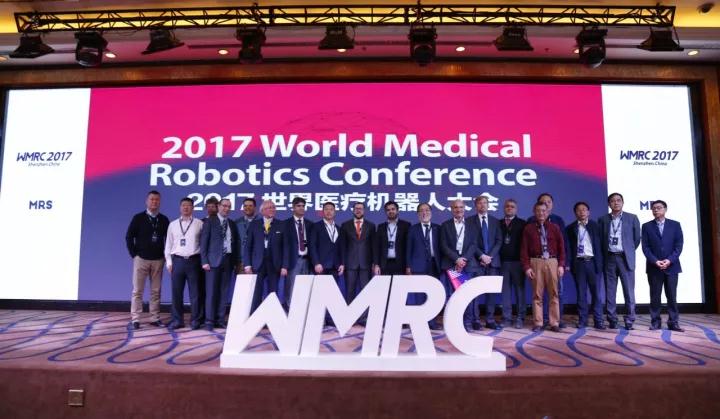
On November 25–26, 2017, the World Medical Robot Conference was held in Shenzhen, China. At the conference, Professor Li Jian’an shared his expectations for rehabilitation robots and offered recommendations for industry development from the perspective of a rehabilitation specialist. VCBeat conducted and compiled this interview.
Research directions should be comprehensive.
The rehabilitation process is essentially the process of addressing patients’ functional impairments. These impairments are not limited to physical deficits such as motor, speech, or hearing disabilities; rather, any inability of an individual to adapt to their surrounding environment can be termed a functional impairment. For instance, at the recent World Medical Robot Conference, more than twenty academicians and professors from China, Switzerland, the United Kingdom, the United States, France, Germany, India, Arab countries, and other regions presented in English with various accents. Without simultaneous interpretation, many attendees would have struggled to clearly understand the academicians’ presentations, which itself constitutes a form of functional impairment.
There are two approaches to addressing functional impairments: one involves environmental modifications, such as converting stairs into ramps to facilitate room access for wheelchair users; the other focuses on functional improvement, exemplified by paralyzed patients regaining the ability to walk independently with the assistance of exoskeleton robots. Regardless of the approach, any intervention that enhances the functioning of individuals with impairments and enables them to adapt to their environment can be regarded as promoting health.
When conducting preliminary research on rehabilitation robotics, researchers should not only focus on exoskeleton robots but also consider the needs of patients with other impairments, such as visual, auditory, speech, and cutaneous sensory deficits. Beyond developing assistive devices, another approach is to improve the environment.
Soft Robotics and Human-Robot Integration Are the Development Trends in Rehabilitation Robotics
When discussing rehabilitation robots, most people’s first thought is assistive devices, commonly known as exoskeleton robots. The technology for exoskeleton robots is essentially mature; they were launched abroad long ago, and multiple Chinese companies are conducting clinical trials. However, widespread adoption has been hindered by high costs and limited ease of use. According to VCBeat, the price of exoskeleton robots ranges from several hundred thousand to over one million yuan.
Therefore, the research trend is to develop affordable and convenient soft robots and human-machine collaborative robots.。
Exoskeleton robots are primarily designed for patients with paralysis. Individuals with paralysis cannot generate muscle force, but their skeletal structures remain intact, meaning they do not require an exoskeleton for structural support. The core need is for an external force to substitute for muscle contraction. However, exoskeletons may not be the optimal solution for generating such force; soft robotics could offer a lighter and more user-friendly alternative.
At the recent defense review for major projects of the Ministry of Science and Technology, I, as a panelist, indeed observed a trend toward replacing exoskeletons with soft robots.。
On the other hand, the R&D trend is human-machine integration.。
Current exoskeleton robots all employ a specific mechanism to trigger the device to drive the patient’s lower limbs forward according to the machine’s preset rhythm. Frequency and step length are essentially fixed; although patients can make adjustments, they cannot do so at will. For instance, when encountering ditches or ascending stairs, users must stop, adjust the settings appropriately, and then resume movement. This lack of on-demand control indeed causes inconvenience for users.
The inability to walk freely is mostly due to issues with signal acquisition.Currently, most researchers collect electroencephalogram (EEG) and electromyography (EMG) signals. EEG signals are overly complex; while coarse signals can be recognized, identifying fine-grained signals remains challenging.. Therefore, relying solely on electroencephalography (EEG) for control purposes is highly challenging.Furthermore, while electromyographic (EMG) signals from healthy individuals can be effectively utilized, those from paralyzed patients are abnormal and contaminated with numerous artifacts, such as muscle spasms, resulting in unstable performance.
ThereforeNew researchers are beginning to control movements in hemiplegic limbs by acquiring signals from healthy limbs.。
For example, in patients with hemiplegia affecting the left side while the right side remains normal, gait involves alternating movements; if the electromyographic (EMG) signals from the unaffected right side can be replicated, the affected left side can be mobilized. Similarly, we can combine arm swing dynamics with electroencephalogram (EEG) signals to control lower limb movement.
Such research is highly feasible, as the upper and lower limbs interact during movement, with upper limb actions driving lower limb movements. This approach is far more convenient than pressing individual buttons.
Three Core Technical Challenges
To achieve seamless human-machine integration, three core technical challenges must first be addressed:
First, movement intention recognition,This process involves more than just EEG signal acquisition and control; it integrates EEG, EMG, signals from intact limbs, and changes in body position as reference factors to achieve precise control through the combination of these signals. This is the core of the technology, and nearly all related projects funded by the Ministry of Science and Technology this year cover the recognition of movement intentions.。
Second, the power transmission device. Any robot requires power to drive patient movement. The current common practice is to mount batteries on the robot; although the robot carries the batteries while moving, this approach appears somewhat cumbersome. To better address this issue, researchers are considering replacing rigid exoskeletons with soft robotic structures. Furthermore, since the stance phase consumes the most energy compared to the swing phase, incorporating energy-saving strategies or substituting traditional materials with novel materials such as graphene represents an emerging trend in this field of research.
Third, battery life and charging speed.
In addition to addressing core technical challenges, Li Jian’an also recommends leveraging existing technologies for innovation, such as conversational robots. Patients with paralysis do not need small talk about the weather; rather, they require robots capable of delivering health education or engaging in normal communication, providing companionship when they feel lonely—similar to how Sophia, the robot granted citizenship, accompanies the elderly.
Furthermore, researchers should engage in more frequent communication with clinical practitioners during project initiation and product design to understand their actual needs. Occasionally, researchers develop products with high technical sophistication that do not meet clinical requirements, which constitutes a waste of resources. I emphasize this issue because I encounter such products every year.
Balancing Cutting-Edge Innovation with Practical Application
In the process of technological innovation, there is a common misconception that only cutting-edge, high-end technologies qualify as innovation. This mindset is incorrect. While surgical robots like the da Vinci system represent technological innovation, widely accessible smart wheelchairs are also a form of innovation. Moreover, such low-cost products are more likely to receive coverage from medical insurance programs, thereby benefiting a larger number of patients.
Healthcare is a highly complex endeavor. We must consider not only how to effectively treat diseases but also whether patients have the financial capacity to afford the associated costs, as we all wish to avoid the scenario where medical expenses drive families back into poverty.
This vision is readily achievable. During research and pilot studies, researchers should prioritize the general population over affluent groups, as product value can only be maximized when it gains widespread acceptance among the public.
World Medical Robotics Association
Medical Robotics Society (MRS)
MRS is the world’s first association dedicated to the application of robotics and artificial intelligence in healthcare, jointly founded by scholars and experts in the fields of robotics and AI from the United States, Switzerland, China, the United Kingdom, France, and other countries.
MRS aims to promote academic exchanges in the global field of medical robotics, strengthen connections and collaboration among research institutions, enterprises, and governments worldwide, and integrate core strengths in medical robotics from China and around the world through education, cooperation, and resource sharing, thereby advancing research and development in medical robotic technologies. The 2018 World Medical Robot Conference will be held in Germany.