

DXY Founder Li Tiantian Outlines the Future of Healthcare as 'ACID' in Upcoming IPO Filing
Recently, amid the series of events celebrating the 90th anniversary of Shanghai Medical College, Fudan University (formerly Shanghai Medical University), Li Tiantian, founder and chairman of DXY, was invited to attend and delivered a lecture on the future of healthcare to the school’s medical students.
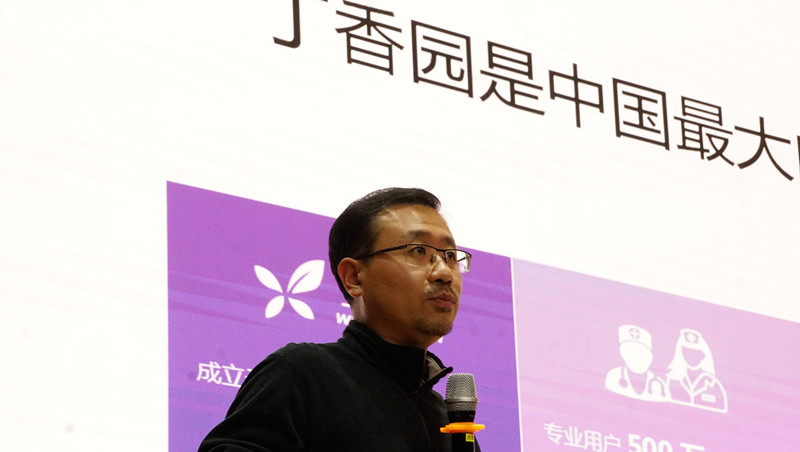
In his speech, Li Tiantian stated that “the future of healthcare is ACID.” The term ACID serves as a pun; while its literal English meaning is “sour; acidic; tart,” it also encapsulates his perspective on the future of healthcare.
People are no strangers to the sensation of sourness, such as that found in lemons, unripe tangerines, and vinegar.
Li Tiantian believes that the future of healthcare is “acidic,” which, when broken down, comprises A, C, I, and D.
“A” refers to an app, which is simply a mobile application on your smartphone. It is no different from the apps you use for checking the weather or reading news.
In addition to mobile apps, there is another category of devices also referred to as "apps," namely smart hardware devices such as smartwatches and fitness trackers.
Whether it is a mobile app or smart hardware device, both can collect basic-level data. However, you will find that such data remains isolated—each company measures its own metrics, and each device collects its own readings—making it difficult to integrate and interconnect these datasets, thereby creating data silos. If there were an app capable of integrating all our health data across platforms, systems, and hardware devices, the utility and value of such data would be significantly enhanced.
Two years ago, everyone was talking about apps and wearable devices; now, few people discuss these topics. The current focus is on how to comprehensively apply the collected data to serve patients.
C, Connected Health, aims to address the aforementioned issue of data silos. In the field of mobile health, the industry has long moved beyond the early stage where individual apps or devices operated in isolation; instead, it now focuses on transmitting more data to the backend. By collecting, storing, analyzing, transmitting, and sharing these data according to unified standards, a more comprehensive understanding of an individual’s physical, pathological, physiological, and health status can be achieved through data collected from various devices worn by the same person. Metrics such as blood pressure, blood glucose, blood oxygen saturation, and body weight, once processed, constitute an individual’s digital health profile.
This comprehensive digital image library connects healthcare institutions, chain pharmacies, family doctors, and community physicians, enabling participants from diverse sectors to engage in a unified ecosystem. By fostering interconnectivity and seamless data flow, it ultimately delivers holistic solutions to patients.
At Stage C, not only are the data interconnected, but they also acquire clinical diagnostic significance.
If you wear a smartwatch, it will tell you how many steps you take each day and how many calories you burn daily. However, if I print out this data and show it to a doctor, the doctor will not understand it, as it has no direct correlation with disease.
Doctors often advise patients to “move more and eat less,” emphasizing increased physical activity and better self-management. But when asked whether walking 10,000 steps or 6,000 steps per day is better, even doctors cannot provide a definitive answer due to the lack of clinical data. As a result, they can only offer patients general health anecdotes.
He believes that in the near future, most data collection can be performed by patients themselves at home, and the collected data can assist physicians in clinical diagnosis and treatment. It will no longer be limited to metrics such as daily step count, flights of stairs climbed, or calories burned.
What changes will such clinically significant data bring to our lives? Let’s take the most common step-counting apps as an example. For instance, if I walked 12,345 steps today and ranked first among my friends on social media, the system might even offer encouraging prompts: “You’ve outperformed 91% of users across China. Keep it up! Aim for 10,000 steps a day to build a healthier Chinese population.”
However, when clinical data is available, the conclusions we draw are different. Today, I took 12,345 steps, and the device engine noted that my peak heart rate exceeded 154 beats per minute during exercise. For patients with hypertension, strenuous exercise is not recommended; heart rate must be kept below 140 beats per minute.
This clinically significant medical data can be collected by the devices we carry with us, providing us with alerts that would represent a paradigm-shifting change. It is no longer just simple health reminders but rather clinical indicators based on your physical condition.
Although we have transformed a significant amount of data into clinically valuable information, environmental data remains lacking. What constitutes environmental data? Simply put, it refers to the conditions of our immediate surroundings, such as temperature, humidity, wind presence, and dryness. These environmental factors also impact our health. Humans do not exist in isolation from the external world; rather, we continuously interact with various environmental elements, which in turn affect our physiological well-being.
From C to I represents another new change. I stands for IoT, which is the abbreviation for Internet of Things, translated as the Internet of Things.
The Internet of Things (IoT) is by no means a novel concept; however, its application in healthcare remains limited. This is because it requires the collection of data from the living environment within a home, enabling dynamic monitoring of indoor temperature, carbon monoxide concentration, and other parameters.
When environmental data is collected, the benefits it brings will undergo new changes. In the absence of environmental data, our recommendations for hypertensive patients remain repetitive and limited: exercise more, engage in physical activity, reduce oil and salt intake, and adhere to the principle of “move more, eat less.”
If you say “two months,” patients listen; if you say “three months,” they get annoyed; and at “six months,” they simply block you, because you fail to deliver personalized care. However, once we integrate environmental data, the situation changes. Today, a cold wave has arrived, with outdoor temperatures dropping to -10°C. We have noticed that your indoor temperature is only 14°C, which is relatively low. As a patient with hypertension, exposure to such temperatures can cause constriction of small blood vessels, thereby exacerbating your high blood pressure. Therefore, we recommend maintaining your indoor temperature at or above 18°C.
We recently discovered that you purchased braised pork seasoning online. You are not supposed to eat braised pork, as it is too oily. Once we gain access to online shopping data—which itself constitutes a form of environmental data—and integrate this information with e-commerce platforms, particularly those focused on lifestyle products, I believe it will offer an entirely new perspective. Data analysts would systematically analyze and evaluate your purchases of fruits, vegetables, and daily dietary items, assigning you a profile code to predict your health-related information.
If we also engage in health management, the impact will be substantial. We can predict when patients may experience fluctuations in blood glucose and blood pressure, issue early warnings, and inform them in advance. As a result, they might choose to avoid eating braised pork belly. This is the new value that environmental data brings to us.
We have amassed vast amounts of data, including healthcare and environmental data. However, there is a critical step between data acquisition and action: determining who should intervene. This leads to the final level I will discuss today—Level D. What does this “D” stand for?
“D” stands for doctor, but not entirely so; I have added a word after “doctor” to make it “doctor-machine.”
It involves not only physicians but also artificial intelligence and machine learning. The era of AI has arrived; indeed, AlphaGo’s victory over Lee Sedol was a remarkable achievement, demonstrating that the trend toward deep learning in artificial intelligence is unstoppable.
We are now observing that machine-based diagnostic and therapeutic solutions in the field of oncology are increasingly approaching the proficiency level of human experts. Moreover, I believe that in the near future, machines will undoubtedly provide more objective, evidence-based recommendations for physicians to consider. For instance, IBM’s system already possesses self-learning capabilities; it reads medical literature, although the accuracy of its interpretation is not always guaranteed and ultimately requires correction by physicians. Having processed millions of medical publications, with an initial focus on oncology, the system has been trained by oncologists to enhance its diagnostic accuracy and the authority and professionalism of its treatment recommendations, achieving tangible results.
Can machines replace oncologists? Machines have never dared to make such a claim. They state that their purpose is to augment, expand, and accelerate human expertise. They would never assert that they intend to replace physicians, recognizing that once they do, physicians would no longer train them. Doctors understand that if they fully train an AI system, they risk rendering themselves obsolete.
Will there be robots like Baymax in the future? I believe it is possible, but certain prerequisites must be met. What are these conditions? Initially, basic sensor applications at the foundational level will gradually connect to various medical institutions and service platforms, integrating external data to ultimately develop algorithms. With the assistance of physicians, machines will then perform health interventions and provide guidance for humans.
Under such circumstances, how did DXY, as a commercial company, achieve this?
According to Li Tiantian, first, it is crucial to select the right domain, as not all areas are suitable for implementation using mobile health technologies. The mobile health sector gained significant traction starting in 2011, when many media outlets and investors held exceedingly high expectations for it. At that time, he remarked, “Healthcare Sometimes Cannot Be ‘Moved’.” This statement drew considerable criticism from many who felt he was dampening enthusiasm for the industry. However, to this day, he maintains that “Healthcare Sometimes Cannot Be ‘Moved’,” emphasizing that one should not attempt to address all healthcare issues through mobile internet solutions, as the contexts are often mismatched.
I have always believed that difficult, complex, and rare diseases requiring multidisciplinary collaboration are not suitable for resolution through mobile health solutions, whereas basic, common, and frequently occurring conditions can be readily addressed using mobile health approaches.
Diabetes Management in Collaboration with DXY
There are 105 million diabetes patients in China. In addition to these 105 million, there are another 150 million people with abnormal glucose metabolism who have not yet met the diagnostic criteria but are close to it. Combined, these two groups total more than 200 million people.
Using a smart blood glucose monitor, patients can self-monitor their blood glucose levels at home and transmit the data to the backend via WeChat. Physicians on the DXY platform will provide guidance and interventions based on changes in the patient’s blood glucose levels.
The chronic disease management team is busiest just before traditional Chinese holidays, particularly the Mid-Autumn Festival, as significant fluctuations in blood glucose levels are frequently observed among patients during this period. Even a small amount of mooncake can cause a sudden spike in blood sugar. If patients experience abnormal blood glucose levels, they are provided with guidance on medication use and necessary adjustments.
Over the past year and a half, DXY has served more than 15,000 patients with diabetes. In 2018, DXY’s chronic disease management program will be rolled out nationwide, with an expected reach of 100,000 diabetic patients.
Dingxiangyuan's AI-Assisted Diagnostic System
This year, DXY, in collaboration with Hangzhou Dana Technology and the Second Xiangya Hospital of Central South University, jointly launched an AI-based diagnostic system for dermatological conditions. Although there are over 2,200 types of skin diseases, DXY’s current efforts in this field have focused on a single condition: lupus erythematosus.
Patients upload a photo of their facial skin lesions to the backend system, which then assesses the probability of lupus erythematosus. DXY assists Dana Technology and the Second Xiangya Hospital in data collection and analysis, verifies all results, and optimizes the algorithms based on these findings. Currently, the system’s diagnostic accuracy reaches 92%.
Currently, the patient-facing component of this project is not yet fully open. The primary focus remains on enhancing physician efficiency and standardizing clinical diagnosis and treatment through physician education, prescription recommendations, and clinical promotion.
Therefore, I have some basic understanding of artificial intelligence in the medical field, and today I would like to take this opportunity to share it with you:
First, clinical care and diagnosis are relatively straightforward, whereas treatment is challenging due to severe contamination of treatment data.
Second, image processing is relatively straightforward, whereas text processing is challenging. Image processing is easier because many algorithms are highly mature. Text processing is difficult due to the need for semantic understanding. This process poses significant challenges because language in any country—not just Chinese—carries profound and extensive meanings. Consequently, it is difficult to truly discern a person’s genuine thoughts through semantic analysis alone.
What computers do best is handle “YES” or “NO” decisions, with no third option. However, many real-life scenarios do not lend themselves to such binary choices. For instance, if a computer asks, “Do you have a criminal record?” it expects a simple “yes” or “no.” But instead of answering directly, you might counter with, “Does illegal parking count?” In that case, the computer would not know how to respond. First, it must understand that illegal parking is not a criminal offense; it needs to possess this factual knowledge. Without being explicitly taught this information, it will never know.
Third, can doctors truly be replaced? Li Tiantian himself is a trained physician specializing in neurology. From both an emotional standpoint and in terms of his understanding of the industry, he finds it difficult to accept the notion that doctors could be replaced.
He came up with many reasons, such as the fact that medicine is a field with warmth and doctors need to convey emotions, which robots cannot do; or that some complex and difficult surgeries requiring multi-departmental collaboration are also hard for robots to replace.
With advancements in artificial intelligence, his perspective has shifted; he now believes that certain physicians, such as radiologists and pathologists, will be replaced.
The commonality between these two types of physicians is that they do not have direct contact with patients. The term "radiologists" here refers to physicians who interpret medical images. Currently, the accuracy of AI-assisted pathology diagnosis has reached as high as 99%. It can not only review hundreds of images per day but also operate 24 hours a day without rest, which is beyond the capability of human physicians.
Even so, AR serves merely as an auxiliary tool for physicians; final diagnoses and surgical procedures still rely on direct interaction with doctors. Physicians who do not engage in clinical practice or have direct patient contact, but only interpret medical images, are indeed at risk of being replaced.
The greatest advantage of mobile health lies in data collection, with its optimal application scenario being primary healthcare services, where it excels particularly in dermatology—a field characterized by holistic and continuous care. The integration of data and services can create a closed-loop business model, and our goal is to deliver the most trustworthy healthcare services.