

Proteus Digital Health and Otsuka Pharmaceutical Launch FDA-Approved Digital Pill Abilify MyCite Amid Ethical and Privacy Controversies
Recently, Proteus Digital Health of Silicon Valley, USA, and Otsuka Pharmaceuticals of Japan announced that Abilify MyCite, a schizophrenia medication developed by Otsuka Pharmaceuticals and equipped with a novel sensor, has received approval from the U.S. Food and Drug Administration (FDA) and will be used to treat mental disorders such as schizophrenia and bipolar disorder. However, the use of this drug and related ethical issues have sparked controversy among various parties.VCBeat (WeChat: vcbeat)Relevant reports have been compiled for you.
Abilify MyCite employs technology largely identical to Proteus’s FDA-approved medication management and adherence system; both comprise sensor-enabled pills, wearable biosensor patches, and companion smartphone applications. For the newly approved MyCite, the sensor and a new custom version of the patch are supplied by Proteus, while the application was designed by Otsuka Pharmaceutical.
It is important to note that Abilify MyCite has been approved by the FDA solely for monitoring drug ingestion, not for improving adherence. This may change in the future.
For those well-versed in Proteus, this approval news may not be a major event. This is far from the first time the FDA has given its nod to the technology; Proteus first received clearance for its patch in 2010 and obtained drug approval in 2012. Proteus has also been deploying its technology in small hospital settings.
“This FDA approval merely indicates that people can take this medication and have the chip added; I don’t consider it a particularly groundbreaking change,” said Eric Topol, founder and director of the Scripps Translational Science Institute.
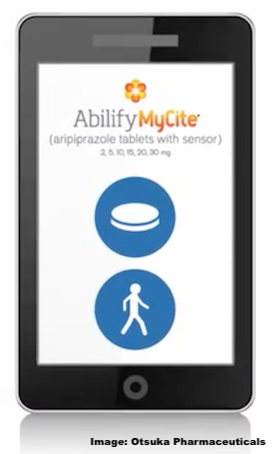
Nevertheless, this remains an emerging technology that is likely to reshape our future. Previously, regulatory approvals for Proteus’s technology followed the FDA’s medical device review pathway. In contrast, this sensor-drug combination marks the first time such a product has been approved as a drug, enabling it to be prescribed to patients just like any other medication.
Joseph Kvedar, Vice President of Connected Health at Partners HealthCare, stated, “I believe this is a milestone for the industry, as it marks the first time adherence technology has entered the supply chain.” He noted that one of the greatest challenges to medication adherence has generally been that such technologies cannot be included on physicians’ prescriptions. This approval brings that possibility to fruition, which is highly significant for clinicians.
This is also a historic move for the FDA, which has never before approved a combination of drug and software like Abilify MyCite.
Andrew Thompson, CEO of Proteus, stated, “This is the first time in our history that we have incorporated silicon and software into the definition of a drug.” He further emphasized that this development holds significant importance for the healthcare industry. While silicon and software are driving transformative changes across various sectors, we now have the opportunity to enable the pharmaceutical industry to embrace these technologies and integrate them into medicinal products, thereby reexamining existing drugs from an entirely new perspective. This may represent one of the most critical opportunities in the past century.
Informa Pharma Insight analyst David Filmore pointed out that this move also demonstrates that the U.S. Food and Drug Administration is undergoing changes.
He stated that this approval reflects the U.S. Food and Drug Administration’s growing support for and recognition of clinical-grade digital technologies. The approval process was challenging, as regulators had to consider how the target patient population—individuals with psychiatric disorders—could use the system safely and effectively. This is particularly complex because the system is not a traditional pharmaceutical product, but rather an integrated suite comprising a wearable patch and an application designed to monitor treatment adherence.
If Abilify MyCite ultimately receives certification for improving medication adherence, it would represent a significant leap forward in adherence monitoring; however, given the current landscape, this medication still has many shortcomings.
Kvedar pointed out that Blue Cross monitors adherence through patients’ medication refill rates, which are derived from CVS data. These are very crude metrics, and the system is easily gamed by patients.
Although many companies have attempted to measure adherence through technology, no integrated sensor with high accuracy and resistance to patient manipulation has yet emerged. These attempts include smart pill bottles, pillboxes, blister packs, and computer vision systems such as AiCure. However, Thompson does not regard these technologies equally.
He stated, “Other products do not measure medication adherence; they merely monitor whether the bottle has beeped, whether the blister pack has been emptied, or whether patients self-report their dosing status. Abilify MyCite is the first medical product to claim and demonstrably measure medication adherence. This is not an aspiration or a mere assertion, but a verified fact. To date, we have not identified any method to bypass this system. Patients must ingest the medication to trigger the system.”
Finally, although many news reports have focused solely on the drug, this approval indeed includes Otsuka Pharmaceutical’s application—the very component that had previously led the FDA to decline approval of the technology. Proteus and Otsuka Pharmaceutical believe that this application is far more than just a data-reading tool for the pill.
Thompson stated, “The true distinction between Abilify MyCite and other adherence tools lies not merely in our ability to measure adherence, but in our utilization of the device people prefer most for managing their daily lives—their mobile phones.” He further emphasized that this is critically important, as it renders the entire process fully automated. Thus, it offers a very simple, low-burden approach that enables individuals to gain detailed insights into their medication usage patterns and their body’s precise physiological responses.
Andrew Wright, Vice President of Otsuka Digital Health, responded to this view by pointing out that better patient engagement is the true goal.
He stated, “I believe this will usher in an era of collaborative partnership among physicians, patients, family members, and care teams. Future discussions on patient adherence will be more evidence-based, moving beyond the previous assumption that patients are taking their medications, while also enabling us to better understand the reasons behind non-adherence.”
Meanwhile, he pointed out that we should face the fact that “non-adherence is normal behavior.” Therefore, we only need to collaborate and engage in dialogue to understand these barriers, and work together to find a way forward. Indeed, this is fundamentally about achieving better patient engagement.
The integration of tiny sensors into pills and their association with paranoid delusional states appears deeply ironic. In 2012, Stephen Colbert joked about this issue, but Paul Appelbaum, Director of the Division of Law, Ethics, and Psychiatry in the Department of Psychiatry at Columbia University, raised the matter more seriously in an interview with The New York Times. He argued that it would be preferable to initiate such pharmacological trials for other diseases rather than starting with antipsychotic medications for schizophrenia.
Moreover, Kvedar pointed out that as the first test case, Abilify may not yield the clearest data.
“I think we can fairly say that there are many potential entry points for this technology, so I can only speculate that Abilify’s choice of this particular area was driven by certain commercial considerations,” he said. “I know they are exploring some antihypertensive medications. However, this is merely my conjecture; but I believe that if the approval they secure is for a more commonly used drug, they would be able to recoup their costs and generate returns more quickly. The cost-benefit model for companies like Abilify is relatively complex.”
However, Thompson and Wright stated that selecting schizophrenia is preferable to selecting other diseases, as the average non-adherence rate for mental health disorders is significantly higher than that for other conditions.
“We knew before partnering with Otsuka Pharmaceutical that mental health is one of the fields most eager to embrace technology. From the perspectives of patients, families, and care teams alike, the value of these tools is exceptionally high,” said Thompson.
Wright stated, “To some extent, patient stigma is a significant challenge.” He believes that what truly matters is the communication between doctors and patients, as well as whether doctors can ultimately make correct medical decisions.
Thompson pointed out, “What people really need to understand is that instead of resisting the stigma and speculation surrounding the nature of this group, they should focus on helping themselves manage their condition effectively—in fact, they can do very well.”
Otsuka Pharmaceutical plans to roll out Abilify MyCite slowly and cautiously, helping people adapt to the new therapy. “The initial launch of Abilify MyCite will be conducted in close collaboration with a select group of health plans and healthcare providers,” Wright emphasized. “We intend to limit the availability of this medication, as having fewer users of the system allows us to focus more intently on learning from patient experiences. Through continuous daily feedback from the system, we can further enhance the experience for potential users.”
Thompson stated that the company’s hospital trial team would continue to serve, as always, as a testing platform to evaluate how different patient populations respond to the system. He remarked, “You can effectively view this as a learning laboratory, enabling us to gain insights into and understand the impact of digital therapeutics, thereby empowering us to make informed decisions regarding next-step medication within a fully integrated care pathway.”
The company is exploring the fields of hepatitis C and cancer. Thompson pointed out that hepatitis C medications are extremely expensive, leading patients to often refuse treatment, with demographic factors further elevating the risk of non-adherence. Cancer patients face adherence challenges due to other stressors in their lives and complex dosing regimens. “There are not many therapeutic areas where medications are prohibitively expensive. In some cases, patients decline treatment due to adherence risks, while in others, significant adherence issues can lead to severe consequences.”
Many agree that Abilify MyCite is likely a pioneer in sensor-driven medical products. However, there is no consensus on whether this is truly a positive development. The Times has expressed concern that the medication could become an authoritarian “biomedical Big Brother,” while many others are uneasy about its specific implications, such as privacy and data security issues.
Lucia Savage, Chief Privacy Officer at Omada Health and former Privacy Lead at the Office of the National Coordinator for Health Information Technology (ONC), believes that such technologies are highly beneficial for healthcare providers aiming to support medication adherence. She notes that this represents a new type of digital signal. Therefore, physicians, patients, and caregivers who intend to use this medication should engage in open discussions about who can access these data, how the information is protected, and whether the patient should indeed use this medication. Such straightforward conversations are crucial to the physician-patient relationship.
Topol expressed specific concerns, arguing that even if everyone makes their best efforts, these data remain vulnerable to hacking. Furthermore, whether the public will accept this system remains uncertain.
He stated, “I believe the concept of ‘Big Brother’ is the real issue. People desire autonomy; they do not necessarily want others monitoring whether they take their medication on time.” This medication is critical for treating certain diseases, such as tuberculosis, which is difficult to cure without strict adherence. However, in many cases, insufficient adherence may not have significant consequences. Privacy and security are major concerns, so we need to weigh whether these issues are offset by the potential for improved medical outcomes.
Wright stated that Proteus and Otsuka Pharmaceutical have completed their work on privacy and security. “From Otsuka Pharmaceutical’s perspective, we consider patients to be the owners of these data, while we serve as stewards. We bear significant responsibility for safeguarding patient privacy and security.” Furthermore, he added, “We strive to be highly transparent, ensuring that patients understand how their data will be used and with whom it will be shared.”
He pointed out that the system is compliant with the Health Insurance Portability and Accountability Act (HIPAA), and data access rights belong entirely to patients. Otsuka Pharmaceutical has been collaborating with leading bioethicists.
“This system will only begin operating upon mutual agreement between both parties. Therefore, patients must initially consent to using the system and then determine the final disposition of their information. Initially, they will be required to share data collected by the device with their physician. Additionally, they can decide whether to share other data, such as rest, movement, and activity metrics, enabling them to selectively share data with up to five healthcare professionals. If they wish, they may also share any information with caregivers.”
However, Kirsten Thomson, Chair of the Medical Devices and Diagnostics Practice Group at McDonnell Boehnen Hulbert & Berghoff, has expressed concerns about this product and its future implications. She believes that as this technology becomes widespread, insurers may begin to mandate its use by patients in order to collect data on their adherence. To date, such data remains unprotected by law.
Thomson stated, “For decades, insurance companies have been trying every possible means to avoid covering pre-existing conditions that they cannot manage. Now, with reminder devices in place, medication adherence is entirely under individual control. Therefore, from a policy perspective, it is reasonable to assert that we will not pay for hospitalizations or treatments resulting from patients’ failure to take their medications, especially when we have clear scientific data proving non-adherence. Thus, I believe they now have a stronger rationale.” The high precision of Proteus data could indeed lead to such outcomes. However, as Wright pointed out, insurance companies have long had access to patient adherence data through claims records.
“I believe insurers have ample commercial rationale to seek patient authorization for accessing information. Medical costs resulting from non-adherence to these medications range from $100 billion to $250 billion. Therefore, I think insurers are highly motivated to obtain a certain level of authorization so they can better manage downstream costs while keeping patients in control. I believe the issue of patient authorization is something we need to closely monitor, as $250 billion is indeed a substantial figure.”
Kvedar believes that Thomson’s hypothesis is unlikely, in part because it is difficult to definitively establish a direct causal relationship between non-adherence and treatment outcomes in specific scenarios. However, he does acknowledge that payers will require such data, and individuals who opt out of tracking may ultimately incur higher costs.
He said, “In the field of medical care, we are beginning to see a trend emerge: you can exchange some of your personal information for something of value. This is not impossible. I believe that, ultimately, it is highly likely that individuals’ healthcare costs will increase due to their own non-adherence and unwillingness to share data.”
Proteus CEO Thompson considers everyone’s concerns to be very “disappointing.”
He stated, “These issues also exist when people use credit cards, telephones, or Google, so why is there no public concern about data privacy in those contexts? Such concerns are entirely misplaced. What we have created is a highly robust solution that helps patients and families struggling with medication management achieve better outcomes. Furthermore, it is a highly secure and private system that places patients at the center; nothing can proceed without their consent.”
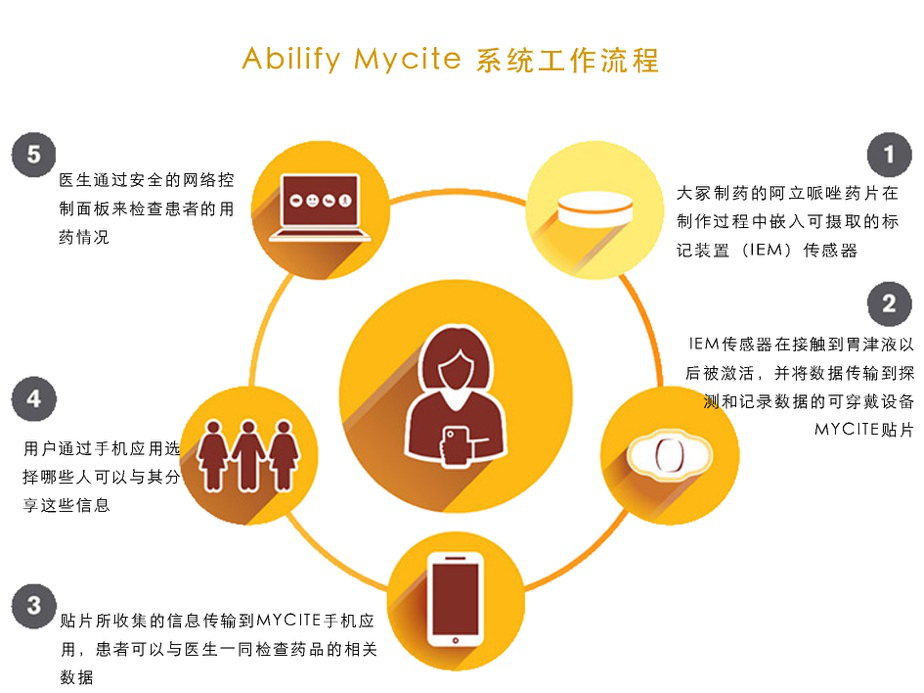
Abilify MyCite System Workflow
1. Otsuka Pharmaceutical’s aripiprazole tablets are embedded with an ingestible event marker (IEM) sensor during manufacturing, known as Abilify MyCite;
2. The IEM sensor is activated upon contact with gastric fluid and transmits data to the MYCITE patch, a wearable device that detects and records the data;
3. The information collected by the patch is transmitted to the MYCITE mobile app, allowing patients to review medication-related data together with their physicians;
4. Users can select via the mobile app which individuals are authorized to access this information;
5. Physicians review patients' medication regimens via a secure web-based control panel;
While it is prudent to worry about a future in which every pill contains a sensor, we should also remember that we currently live in a world where only one pharmaceutical product has a sensor. Although the FDA will certainly find it easier to approve a second sensor-enabled drug than it did the first, it is unlikely that we will see Proteus launch a second digital therapeutic in the near term, let alone competing products from its rivals.
Thompson stated, “We hold over 440 certified patents in the field of intellectual property, with more than 300 additional patents pending. We have made substantial investments in technology, dedicated to the rapid integration of semiconductors into pharmaceuticals. We have also devoted significant effort to human-body system design, thereby establishing an enterprise encompassing silicon-based pharmaceuticals. These represent vast and complex investments; I believe it would be difficult for any other company to replicate this achievement in the short term.”
It remains to be seen how this drug will perform in the market and whether its costs and benefits are justified.
“The next question is what impact this product will have on the market, which I believe remains an open issue,” said Filmore. “The process of bringing this drug to market will be gradual, but our plan is to work with healthcare providers, patients, pharmaceutical organizations, and payers to establish a standardized operating system. How we address this challenge will depend on the product’s uniqueness.”
In an interview last year, Thompson stated that Proteus is akin to Tesla, “showing the world that digital tool-driven drugs are like the advent of Tesla.” He noted that the company’s innovations have gone beyond technology itself; what they have created is a completely new way of viewing adherence.
He stated that the issue is not that products are incomplete or that designs fail to meet consumer needs and enable effective daily use; rather, the ongoing dialogue among large pharmaceutical companies, medication manufacturers, insurance providers, and medical device companies consistently frames consumers as the problem and emphasizes why consumers need to change their behavior.
References:
http://www.mobihealthnews.com/content/depth-how-digital-sensors-could-change-face-pharma