

12Sigma Secures RMB 200 Million Series B Funding, Highlighting Strong Commercial and Product Capabilities
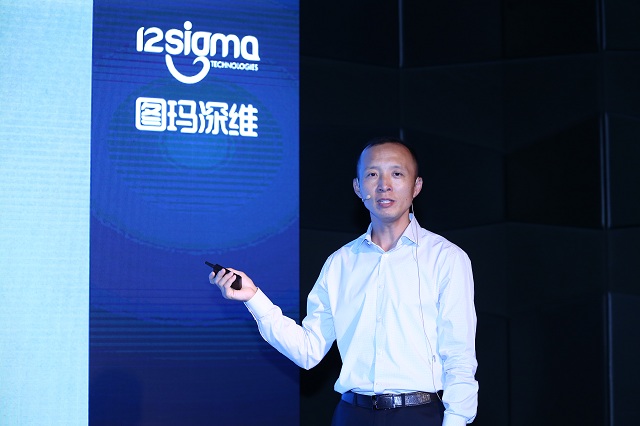
Zhong Xin, Founder and CEO of Tuma Shenwei
VCBeat has learned that Tuma Shenwei, an AI medical imaging company, announced on December 1 the completion of its RMB 200 million Series B financing round. The round was led by SoftBank Capital, with participation from Chende Capital and Delian Capital, as well as follow-on investments from existing investors Matrix Partners China and ZhenFund. With this achievement, Tuma Shenwei has joined the elite group of companies in the AI+medical imaging sector that have secured hundred-million-yuan Series B funding.。
Zhong Xin, Founder and CEO of Tumor Deepwise, stated that the funds from this round will primarily be allocated to two areas:
One is for expanding the product line and conducting in-depth product research. This process requires substantial capital investment for data acquisition and the recruitment of high-end talent, with an expected launch of 3–5 mature new products into the market each year;
Second, the funds will be allocated to market investment. As the company’s products have reached maturity and are ready for commercial launch, this round of financing will help accelerate market expansion.
According to VCBeat’s database, Tuma Shenwei had previously completed three rounds of financing: a $300,000 seed round in July 2016; a $1.5 million angel round in October 2016, with ZhenFund and Matrix Partners China as investors; and a multi-million-dollar Pre-A round in April 2017, led by ZhenFund, Matrix Partners China, and Xianfeng Changqing.
Regarding the background of this round of financing, Zhong Xin stated that, on one hand, it is due to the favorable industry environment. Following the emergence of a new wave of artificial intelligence technologies, startups have sprung up like mushrooms. After several years of development, elite teams with largely mature products and clear business models have begun to stand out and attract capital interest.
On the other hand,Since completing its Pre-A financing round in April 2017, Tuma Shenwei has entered a phase of rapid growth. Currently, the company’s products have been deployed in more than 50 medical institutions across China, the majority of which are large Grade III Class A hospitals, with over ten being Grade II or private hospitals.. Meanwhile, collaborations with GE and other imaging companies have accelerated Tumour Deepwise’s market entry and expanded its sales channels. Furthermore, partnering with a major corporation like GE indirectly reflects the maturity of Tumour Deepwise’s products.
The Biggest Beneficiaries Are Primary Healthcare Institutions
According to Zhong Xin, although AI-assisted diagnostic products in healthcare are currently being implemented primarily in Grade A tertiary hospitals, the ultimate beneficiaries as the industry matures will be primary care physicians and the general public.
Currently, physicians at more than 10 secondary hospitals and private hospitals served by Tuma Shenwei exhibit a high degree of reliance on its AI products. They hope that Tuma Shenwei’s solutions can be fully integrated into their clinical workflows. However, due to regulatory constraints, physicians are currently limited to trial use, although they express a strong willingness to continue using the products on an ongoing basis.
For primary healthcare institutions, before the advent of AI-assisted diagnostic systems, primary care physicians were unable to diagnose many diseases, particularly oncological conditions such as lung cancer, due to a lack of confidence in making such diagnoses. The emergence of AI products represents a “from zero to one” breakthrough for these institutions. By providing preliminary disease diagnoses, Tuma Shenwei’s products enable the retention of extensive, routine screening tasks at the primary care level, with referrals to large tertiary hospitals reserved for serious conditions. This process facilitates the implementation of tiered diagnosis and treatment policies by local governments across various regions.
Product Design Originates from Physicians' Needs
When discussing the product’s advantages, Zhong Xin told VCBeat that TumorDeep’s R&D is driven by physicians’ real-world clinical needs, with its positioning aimed at assisting doctors to enhance diagnostic accuracy and work efficiency.
Moreover, Tumour Deep Vision’s product portfolio is highly comprehensive. For instance, its six flagship products showcased at RSNA 2017 (the Radiological Society of North America Annual Meeting) cover nearly every stage of disease diagnosis. These products include:
1、σ-Discover-Lung Pulmonary Nodule Detection System, for clinical auxiliary diagnosis, helping doctors easily detect and segment nodules and make benign or malignant judgments; one-click generation of diagnostic reports, making lung nodule screening accurate and easy;
2、σ-Discover-Lung-FollowUp Nodule Follow-up System, enabling physicians to accurately and conveniently compare and track lesion progression, and to adjust treatment plans in a timely manner based on the computational results;
3、σ-Discover-Lung-NoduleRetrieval Helps Physicians Establish a Pulmonary Nodule Diagnostic Database, and can retrieve biopsy results of similar nodules from the database based on nodule characteristics, thereby enabling a more precise assessment of the nodule's developmental trend;
4、σ-Discover-DR can simultaneously differentiate from X-ray lung images, diagnosing various pulmonary diseases and significantly reducing physicians' workload in pulmonary disease screening;
5、σ-Discover-Liver: The First Liver Nodule Detection System, facilitating easy diagnosis of liver cancer by physicians;
6、σ-Discover-Radiomics Radiomics System, helping physicians easily calculate and generate radiomics reports. For research purposes, this product reduces the research cycle from several months to 7–10 days.
Many physicians who have used Tumaini Deepwise’s products have stated that these products meet clinical requirements.
Prioritizing Grassroots and Overseas Markets
Regarding future development, Zhong Xin stated that, in terms of products, TumorDeep will launch 3–5 new products annually, covering common tumors such as liver cancer, gastric cancer, prostate cancer, breast cancer, esophageal cancer, and colon cancer, as well as respiratory diseases, orthopedic conditions, and diabetic retinopathy.
In addition to researching radiological images, Tumor Deepwise also engages in the study of pathological images, genetic information, clinical data, and other medical information to achieve more precise disease diagnosis.
Tumashenwei aims to ensure that its developed products not only serve radiologists but also bring the convenience and transformative benefits of artificial intelligence to other healthcare professionals, including clinicians, internists, and surgeons, thereby serving physicians across all departments.
In terms of market strategy, TomoVision’s current primary partners are large Grade 3A hospitals. Zhong Xin hopes to extend services to more Grade 2 and Grade 1 hospitals in the future, achieving penetration from first-tier cities to second- and third-tier cities.
Faced with the growing number of private medical institutions, Zhong Xin stated that private hospitals, third-party imaging centers, and health checkup providers are all key potential partners for Tumor Deepwise to actively develop.
In its business expansion, TumorDeep does not only collaborate with large medical device manufacturers such as GE; the company also maintains its own channels and distributors, through which it establishes connections with healthcare institutions. Additionally, TumorDeep is actively engaging with academic conferences. Beyond participating in the Chinese Congress of Radiology and the Radiological Society of North America (RSNA) annual meeting, the company organizes training programs for radiologists, thereby building relationships with primary-care physicians.
At the 2017 Radiological Society of North America (RSNA) Annual Meeting, Tuma Shenwei reached cooperation intentions with several overseas platform institutions to establish connections with foreign hospitals through their platforms and export its artificial intelligence products. Zhong Xin stated that North America, Europe, Southeast Asia, and China all have demand for medical AI products. Tuma Shenwei will gradually build relationships with major hospitals in these regions to understand their needs and analyze the differences between domestic and international markets. Leveraging its San Diego R&D center as a strategic foothold, the company aims to progressively expand into overseas markets.。
Why Invest in Tumavision?
As the lead investor in the Series B financing round, Wu Kai, Executive Director at SoftBank China Capital, stated, “In the current landscape of medical AI development, technology and algorithms are no longer absolute barriers. The growth potential of medical AI companies now hinges primarily on their commercial capabilities and product strength.”
This investment in TomoDeep is primarily based on three key reasons:
First, outstanding product R&D capabilities. Tuma Shenwei’s products not only support the identification of pulmonary nodules but also include other oncology-related products, as well as future developments in areas such as respiratory diseases, orthopedics, cardiovascular and cerebrovascular conditions, and diabetic retinopathy. The diversity of its product portfolio will enhance hospital loyalty to the company, thereby strengthening its competitive edge.
Second, Tuma Shenwei has demonstrated strong commercial capabilities. As one of GE Healthcare’s two strategic AI partners in China, Tuma Shenwei can leverage its own sales team and GE Healthcare’s channel advantages to introduce its products into hospitals and gain physician adoption. Beyond the inherent strengths of the product itself, this process tests a company’s business development capabilities. With years of project experience in the pharmaceutical and medical device sectors, Tuma Shenwei’s team holds a clear advantage in this regard.
Third, Tumashenwei’s team structure comprises technical experts, physicians, and business professionals from the healthcare industry. The company’s core R&D team members hail from leading organizations such as Qualcomm, Google, Kitware, Apple, GE, Siemens, and Philips, bringing extensive expertise in cutting-edge artificial intelligence, deep learning, and medical image analysis. This synergistic combination will empower Tumashenwei to achieve greater long-term success.