

Apple Watch's First ECG Medical Accessory Receives FDA Approval, Marking a Key Step in Wearables' Evolution into Multi-Functional Health Devices
In September 2017, Apple released the next-generation Apple Watch, equipped with heart monitoring capabilities, and announced the official launch of the Apple Heart Study. This initiative leverages Apple Watch to collect extensive heart rate data from users for research purposes, aiming to address often-overlooked conditions such as arrhythmia and atrial fibrillation. The study supports hospitals in conducting cardiac disease research and has received backing from Stanford University School of Medicine and U.S. government authorities.
Amid Apple’s series of strategic moves into the healthcare sector, speculation has arisen over whether the FDA will classify the Apple Watch as a medical device. Previously, the Apple Watch was regarded solely as a consumer-grade smart hardware product.
On the morning of December 1, the situation appeared to take a turn for the better as the U.S. Food and Drug Administration (FDA) approved KardiaBand, the first wearable medical device accessory for the Apple Watch. This marks the first Apple Watch accessory to receive FDA clearance for marketing as a medical device.
AliveCor's KardiaBand electrocardiogram (EKG) sensor, when used with its app, can detect abnormal heart rhythms and atrial fibrillation (AFib). Users can obtain EKG data within 30 seconds by touching the sensor on the watch band.
KardiaBand evaluates the correlation between heart rate and physical activity; if an anomaly is detected, it prompts the user to perform another electrocardiogram (ECG) measurement. The voice recognition feature also allows users to verbally describe their symptoms to the watch. Analytical results are then generated based on the collected data and emailed to the user’s physician.
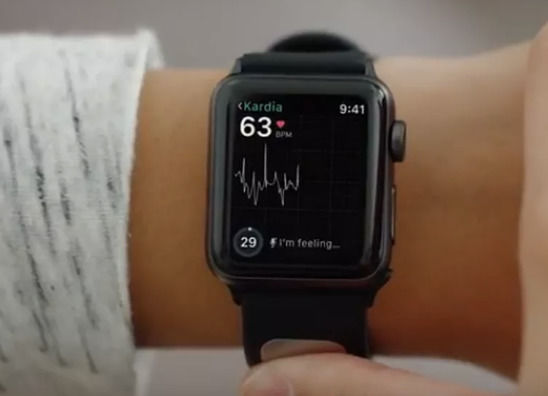
KardiaBand is produced by AliveCor, the company led by former Google+ executive Vic Gundotra. AliveCor has also launched a new feature called SmartRhythm on its Kardia app, which uses AI to analyze heart rate and activity data from watch sensors.
Equipped with AI technology, KardiaBand can predict and analyze an individual’s heart rate using data from both patients and healthy individuals. Such devices can rapidly diagnose abnormalities, alert healthcare professionals, and play a critical role in life-threatening situations.
The Apple Watch’s connection to the KardiaBand ECG offers another advantage: it enables fully independent ECG readings, functioning even when disconnected from the iPhone or offline. This is highly beneficial for medical procedures requiring accurate, on-site heart rate measurements.
It is reported that the current price of this Apple Watch model is $199. However, access to medical-grade heart rate monitoring requires a subscription to AliveCor’s premium service, priced at $99 per year.
In fact, the built-in heart rate sensor in the Apple Watch can also perform rhythm detection and even detect sleep apnea with an accuracy rate of up to 90%.
Gundotra stated that both Apple’s products and their own feature abnormal heart rate notifications. However, without FDA clearance, Apple Watch data cannot be used for medical diagnosis; thus, even if monitoring is possible, the results are not clinically recognized. “Without FDA approval, it is impossible to use the Apple Watch to diagnose atrial fibrillation. This represents a significant change.”
The U.S. Food and Drug Administration (FDA) is an internationally recognized authority in medical product review. Authorized by the U.S. Congress and operating under the federal government, it serves as the regulatory agency responsible for enforcing laws related to food and drug oversight. In the United States and other countries, only materials, devices, and technologies that have received FDA approval may be used in commercial clinical applications.
It is precisely for this reason that subjecting rapidly evolving electronic products to FDA approval is not a prudent strategy, as exemplified by the AliveCor wristband. The entire approval process took more than two years, over a year longer than initially anticipated. For the Apple Watch, which iterates with new models annually, pursuing FDA clearance would mean that regulatory progress could never keep pace with technological innovation.
As early as 2016, Apple Inc. filed a patent for a user identification system based on plethysmography, a medical application applicable to smartwatches that includes “identifying users’ vascular characteristics.” It is speculated that this technology was developed to support the newly launched atrial fibrillation detection feature on the Apple Watch Series 3.
Another patented device, titled “Electronic Device for Computing Health Data,” incorporates a camera, an ambient light sensor, and a proximity sensor to measure and calculate health metrics. Apple filed the patent application in early 2015, but the United States Patent and Trademark Office (USPTO) did not grant the patent until August 2017.
Tim Cook has previously stated that Apple employees “don’t want the watch to go through the FDA process… because it would hinder our innovation,” but he also acknowledged that they “don’t mind having some smartwatch-like products” subject to FDA oversight, including a software application or certain additional hardware.
According to an IDC report, wearable device shipments grew by 7.3% in the third quarter of 2017, with Xiaomi and Fitbit tying with Apple for the lead. Ramon Llamas, Research Manager at IDC, stated in a press release: “The diverging trajectories of smart and basic wearables highlight the evolving nature of the wearable device market. Devices from companies such as Fitbit, Xiaomi, and Huawei helped establish the wearable market. However, as consumer preferences and demands have shifted toward multi-purpose devices like smartwatches from Apple, Fossil, and Samsung, vendors find themselves at a crossroads and are adjusting accordingly.”
In the United States, atrial fibrillation causes 130,000 deaths and 750,000 hospitalizations annually, partly because it is often asymptomatic. Apple believes that early detection of arrhythmias could prevent a fraction of these deaths, and that always-on wearable devices like the Apple Watch represent the best opportunity to achieve this goal. Obtaining FDA clearance is a viable path for Apple’s wearables to evolve into multi-purpose devices; at the very least, such regulatory recognition establishes them as a preferred choice among smart devices that integrate consumer and medical functionalities in the eyes of patients in need.
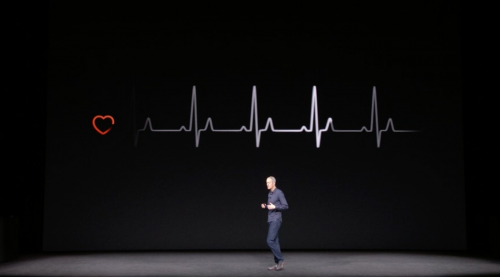
Coincidentally, on the same day AliveCor launched its KardiaBand for Apple Watch and SmartRhythm software, Lloyd Minor, Dean of Stanford University School of Medicine, stated in a press release: “Through the Apple Heart Study, Stanford University School of Medicine will explore how technologies such as the heart rate sensor on the Apple Watch can help us usher in a new era of proactive healthcare. We are excited to partner with Apple on this groundbreaking cardiac study.”
Apple’s Chief Operating Officer Jeff Williams stated this past September that Apple would work closely with the FDA to develop this study. This marks the first ResearchKit study sponsored by Apple itself, signaling the company’s deepening foray into the health sector.
References:
http://www.medsci.cn/article/show_article.do?id=01a81143248a
http://tech.sina.com.cn/it/2016-11-30/doc-ifxyawmm3889893.shtml
http://smart.huanqiu.com/iot/2017-12/11414899.html
http://www.mobihealthnews.com/content/apple-stanford-launch-apple-heart-study-improve-atrial-fibrillation-detection
https://venturebeat.com/2017/11/30/idc-wearables-grew-7-3-in-q3-2017-xiaomi-and-fitbit-tied-for-first-ahead-of-apple/