

New-Generation Clinics: Over RMB 2.4 Billion Raised in 2017, Standardized Chain Expansion and 'Warm, Human-Centric Care' Emerge as Key Trends
Traditional clinics took on a new luster in 2017. Driven by supportive policies, capital inflows, and physician-led startups, they became ubiquitous, ranging from neighborhood locations to sites near shopping malls.
Driven by these factors, private clinics have demonstrated even greater vitality. Relevant policies have become clearer and more open, capital has grown more rational, and the industry has entered a phase of restructuring.
In 2017, several trends were evident in the clinic sector:
1. Chain or Group Operation. From a market perspective, although standalone clinics in China account for a significant share of the market, few have adopted chain or group operational models. With capital infusion and policy liberalization, chain clinics are beginning to emerge. Under this trend, several medical chain or group enterprises are likely to emerge and gradually grow into industry leaders.
2. Greater Convenience. As policies related to tiered diagnosis and treatment and primary healthcare are progressively implemented, access to medical services will become more convenient in the future.
3. Payment Reform and Insurance Integration. Driven by heightened health awareness and consumption upgrades, a transformation in healthcare payment models will emerge, evolving from the original price-oriented approach to value-based bundled payments for accountable care. The integration of primary care with insurance will become a major trend.
4. The concept of sharing is emerging. Starting with the multi-site practice platform for physicians and shared workspaces established by Almond Doctor, the Zhang Qiang Doctor Group’s first offline clinic—Hangzhou Sijun Surgical Clinic—is gradually opening its doors to other physician groups. The group seeks to onboard physician teams that complement its existing team, possess high-quality medical expertise, and ideally offer branded services, with the joint aim of building a premier domestic shared platform for surgeons.
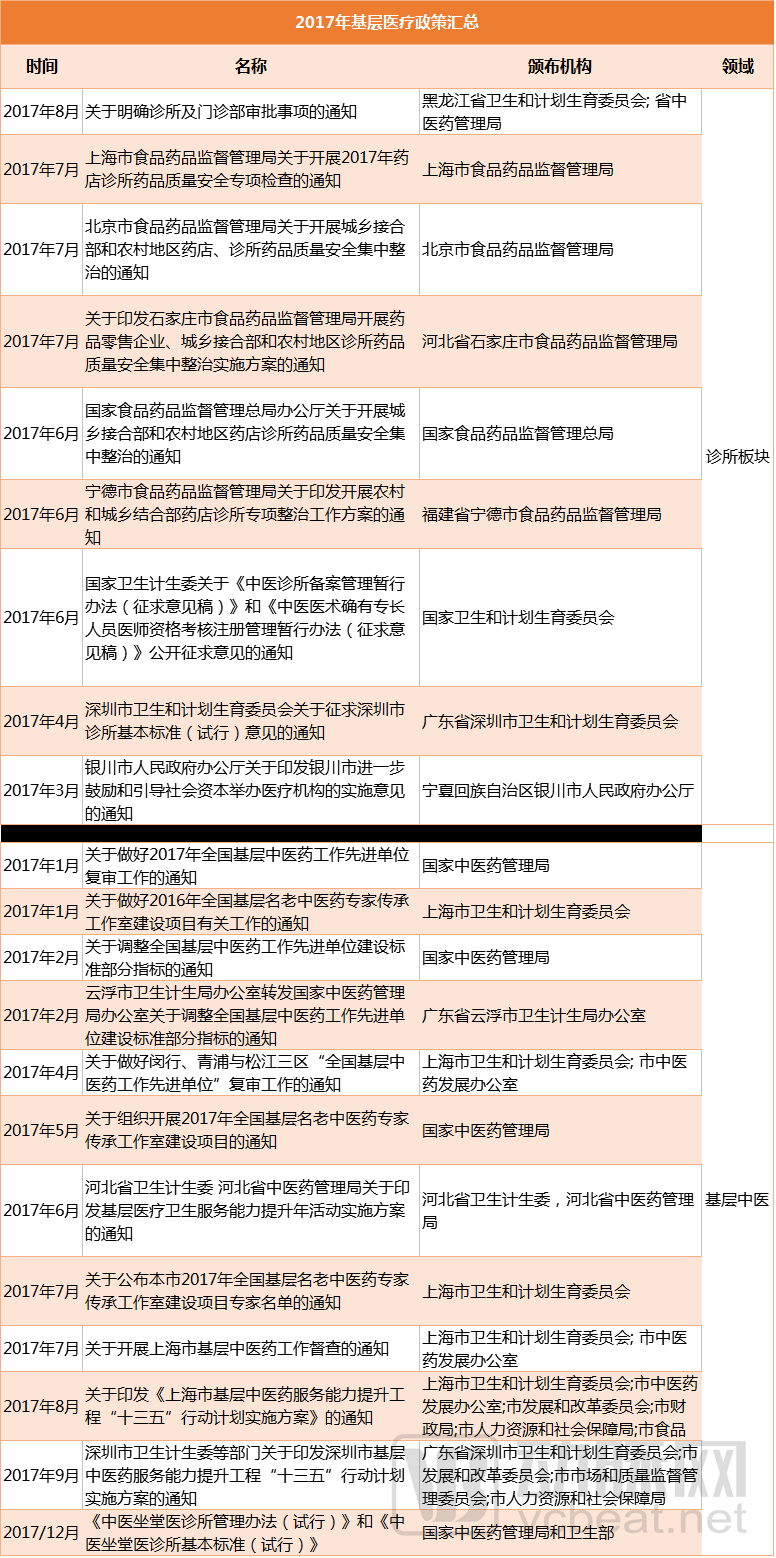
Public data indicate that since January 2017, approximately 20 policies related to clinics have been issued. These policies span from central to local governments, from coastal cities to remote regions, and cover both Western medicine and traditional Chinese medicine. They address various aspects, including clinical practice and talent development, encompassing multiple facets of clinic construction and operation.
Notably, at the State Council’s executive meeting in May 2017, it was decided to support and encourage non-governmental entities to establish general practice clinics, promote the cross-provincial/municipal chain operations of capable privately-run outpatient departments, and allow medical institutions operating under a chain model to have their business registration handled centrally by the headquarters. No restrictions shall be imposed on socially funded medical institutions that meet planning requirements and access qualifications, under any pretext. This is also part of the intensive policy rollout in recent years.The highest-level policy among those encouraging social capital to invest in healthcare.
The opinion pointed out that by June 2018, each province should establish a local electronic registration system interconnected with the national electronic registration system to achieve electronic management of registrations for medical institutions, physicians, and nurses.
By 2020, fully implement electronic registration management, basically complete the issuance and use of electronic licenses, achieve the goal of convenient and efficient administrative approval services, dynamic and timely interim and ex-post supervision, and ensure that everyone has access to medical resource information services.
Furthermore, the deepening of local healthcare reforms, exemplified by cities such as Shenzhen, has produced a demonstration effect. On November 1, Shenzhen began piloting the new "Shenzhen Clinic Establishment Standards," which stipulate that “citizens, legal persons, or other organizations may apply to establish clinics” and that “clinics may offer between one and four medical specialties.” This marks the first time in China that the regulation restricting clinic establishment exclusively to physicians has been broken, while also providing greater flexibility in specialty configuration. The implementation of this new policy in Shenzhen will encourage greater participation of social resources in clinic establishment and create opportunities for the chain operation of clinics.
The 19th National Congress of the Communist Party of China also explicitly stated in the section of its report titled “Improving the Level of Social Security and People’s Livelihood, and Strengthening and Innovating Social Governance” that the “Healthy China Strategy” should be implemented, with a view to improving national health policies and providing comprehensive health services to the public.
On December 5, the National Health and Family Planning Commission released policies related to Traditional Chinese Medicine (TCM) clinics. The purpose is to implement the “Several Opinions of the State Council on Supporting and Promoting the Development of Traditional Chinese Medicine” (Guo Fa [2009] No. 22), strengthen the administration of TCM in-clinic physician practices, and, in accordance with relevant laws and regulations such as the “Law of the People’s Republic of China on Licensed Physicians” and the “Regulations on the Administration of Medical Institutions,” the State Administration of Traditional Chinese Medicine and the Ministry of Health have formulated the “Administrative Measures for TCM In-Clinic Physician Practices (Trial)” and the “Basic Standards for TCM In-Clinic Physician Practices (Trial).” The “Basic Standards for TCM In-Clinic Physician Practices (Trial)” shall serve as Part V of the “Basic Standards for Medical Institutions (Trial)” (Wei Yi Fa [1994] No. 30) issued by the Ministry of Health in 1994.
Driven by policy initiatives, the practice environment has undergone further changes, and the number of clinics continues to increase. According to statistical data from the National Health and Family Planning Commission,In 2016, there were 45,241 traditional Chinese medicine (TCM) outpatient departments and clinics across China, an increase of 2,713 from 2015, with the total number of patient visits reaching 140 million.
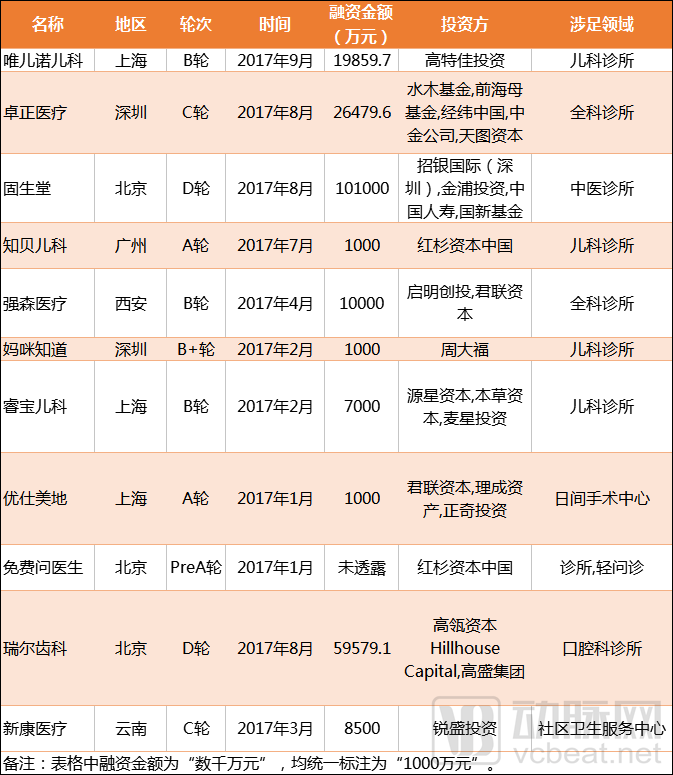
According to the VCBeat database, 11 clinics have publicly secured financing this year, with a total funding amount exceeding RMB 2.4 billion.
Among them, four pediatric clinics, three general practice clinics, one traditional Chinese medicine (TCM) clinic, one dental clinic, one ambulatory surgery center, and one community health service center secured financing.
This year, clinics that have newly secured financing are primarily located in Beijing, Shanghai, and Shenzhen. However, in terms of market activity, Hangzhou has emerged as a particularly vibrant hub, home to entities such as WeDoctor General Practice Center, Dingxiang Clinic, and Linjia Haoyi. Many entrepreneurs have chosen to establish their clinics in Hangzhou, or use the city as a launching pad to build chain operations and brands that rapidly expand across China.
In 2014, the Hangzhou Municipal People's Government released a draft for public comment on the "Implementation Opinions on Promoting the Development of the Health Service Industry."“Encourage private investment in healthcare.” The implementation opinions propose that “newly added medical resources shall prioritize access for social capital. Priority support will be given to social capital investments in areas with scarce resources and services that meet diverse needs, as well as to the establishment of non-profit medical institutions. Qualified professionals are encouraged to legally establish individual clinics.”
According to statistical data from the Hangzhou Municipal Health and Family Planning Commission, among the 4,622 medical institutions currently in Hangzhou, 1,947 are privately operated, accounting for 42.12% of the total. Of the 44,175 approved hospital beds, 14,414 are allocated to private hospitals, representing 32.62%.
In terms of the specialties covered by clinics, newly established clinics are primarily focused on pediatrics and general practice. Meanwhile, dentistry, medical aesthetics, and traditional Chinese medicine (TCM) represent the sectors with the most robust market-oriented and scalable growth, attracting the greatest attention from investors.
The largest financing round this year was secured by Gushengtang, a chain of traditional Chinese medicine (TCM) clinics. In August 2017, Gushengtang raised RMB 1.01 billion in its Series D financing (RMB 510 million in equity and RMB 500 million in debt), with investment jointly provided by central state-owned enterprises and leading domestic financial institutions. Its business spans multiple areas, including conventional TCM medical services, TCM education, and TCM promotion.
From the perspective of the industries to which clinic entrants belong, they include real estate, internet healthcare giants, and physical clinics. In April 2017, Wanda Group signed a strategic cooperation agreement with West China School of Stomatology, Sichuan University, planning to invest RMB 9 billion to open 300 dental clinics in Wanda Plazas across China. In August 2017, Country Garden officially entered into a strategic partnership with International HealthCare Group (IHG) from the UK to jointly develop hospitals and community clinics.
Internet healthcare providers are expanding into offline clinics, including KnowBe Pediatric, Mommy Knows, Weier Nuo Pediatrics, and Ruibao Pediatrics, which has become one of their monetization channels.Data from the first six months of operations at “Mommy Knows Pediatric Clinic” show that, leveraging its online user base of 6 million, the clinic’s monthly compound membership growth rate reached 34.9%. By the end of 2017, a total of six clinics will successively open in Guangzhou, Shanghai, Shenzhen, and other cities.
To explore the developments and changes in the clinic sector in 2017, VCBeat interviewed seven founders in the industry, including He Haiyang, Founder and CEO of Johnson Medical,Liang Liang, Founder and CEO of YiXin (Mommy Knows Pediatric Clinic)Yang Zefang, Founder and Head of Dingxiang Clinic; Zhao Qiang, CEO of Zhibei Pediatrics; Lü Fengping, Founder of Lü Doctor Chain Clinics; Luo Lin, Founder & CEO of Linjia Haoyi; and Gao Ping, President of Weiaikang Medical Group.
Johnson Medical: Small Front-End, Large Platform, Rich Ecosystem
According to He Haiyang, in 2017 they mainly did five things:
First, the “Yizhu Cloud Clinic” SaaS system has been successfully developed and entered its trial phase. Independently developed by Johnson, “Yizhu Cloud Clinic” integrates functionalities including clinic management, operations, inventory control, financial management, statistical analysis, customer relationship management (CRM), electronic medical records (EMR), health records, and remote collaboration. It enables effective online-offline integration and facilitates seamless connectivity with clinics outside the company’s own network. This solution will provide more clinics with professional and efficient management tools, offering comprehensive technical support for establishing an open, interconnected platform for community healthcare chains.
Second, Johnson Medical Chain has expanded into Chongqing, marking its entry into a new city beyond Xi’an and Chengdu. Currently, Johnson Medical’s Chongqing subsidiary has applied to establish two facilities; renovation work and staff recruitment have commenced at the first clinic, while the site for the second clinic has been finalized.
Third, Johnson Medical began to focus on corporate clients and promote employee medical security plans. With its clinic network in the Xi’an region taking shape and continuous growth in consumer (C-end) customers, Johnson Medical launched the “Qi Kang Bao” employee medical security plan for businesses and institutions (B-end). This initiative establishes a tripartite healthcare service coverage integrating “community–family–workplace.”
Fourth, the “Physician Partner” program was launched. From a policy perspective, it aligns with China’s healthcare reform policies that “encourage the establishment of private clinics” and “permit physicians to practice at multiple locations.” For the company itself, this initiative enables more effective human resource allocation and stimulates physicians’ autonomy and initiative.
Fifth, the Group has restructured and established its development strategy: “Small Frontend, Large Platform, Rich Ecosystem.” With each community clinic serving as a “Small Frontend,” a nationwide, interconnected chain model supported by IT systems acts as the “Large Platform.” Through product innovation, service upgrades, payment reforms, and business model restructuring, a “Rich Ecosystem” for community healthcare is formed, featuring both “internal” and “external” circulation loops, thereby creating China’s first Family Responsibility Medical Organization.
The development strategy of “Lean Front-End, Robust Platform, and Rich Ecosystem” determines the path Johnson Medical will take over the next 3–5 years, providing a clearer definition of its development model and strengthening its sense of purpose.
Guided by this development strategy, Johnson Medical will build a chain clinic ecosystem integrating “cloud + terminal + products + services,” providing physicians with an integrated online-offline diagnosis and treatment platform, while matching community residents with richer and more convenient healthcare service consumption scenarios and content. All other changes represent tactical planning and adjustments aligned with this overarching strategic objective.
Johnson Medical will make significant investments in markets such as Xi’an, Chengdu, Chongqing, and Zhengzhou, with its network of directly operated community chain clinics reaching 50 locations by the end of 2018.
Mami Zhidao Integrates Online and Offline Services, with Continued Expansion of Offline Clinics
“Mommy Knows App” has been in operation for over three years, boasting 6 million users and exclusive contracts with more than 3,000 obstetricians and pediatricians from Grade A tertiary hospitals across nine key cities nationwide, including Beijing, Shanghai, Guangzhou, and Shenzhen.
The offline clinics, which have been part of the strategic layout since 2016, opened their first self-operated flagship store—“Mommy Knows Pediatric Clinic”—in February this year at Tianli Central Plaza in Nanshan District, Shenzhen. The clinic primarily provides professional and high-quality pediatric medical services, including child healthcare, pediatric dentistry, pediatric otolaryngology, traditional Chinese medicine for children, pediatric nutrition, and pediatric internal medicine and surgery. This initiative complements the “Mommy Knows App,” forming an integrated online-to-offline (O2O) new internet-based healthcare system.
“This year, we have successively established a total of six clinics in Guangzhou, Shanghai, Shenzhen, and other cities,” Liang Liang told VCBeat.
He believes that in the fields of women’s and children’s health, individuals willing to pay for online consultations or visit physical clinics tend to have stronger purchasing power, akin to the consumer upgrade segment. For this group, brand reputation and word-of-mouth are the most significant factors influencing behavior. Meanwhile, strategic adjustments aimed at driving traffic from online platforms to offline services are being implemented in an orderly manner.
First, Mami Zhidao entered the industry relatively early, with a highly specialized and in-depth product focus. Particularly in Guangdong, a region with a well-developed economy, Mami Zhidao enjoys strong reputation and market recognition. Our online products have been in operation for over three years, accumulating 6 million users and securing exclusive contracts with more than 3,000 obstetricians and pediatricians from Grade A tertiary hospitals across nine key cities nationwide, including Beijing, Shanghai, Guangzhou, and Shenzhen. The logic of establishing clinics on an online platform with substantial patient traffic is more coherent. In the current vertically integrated maternal and child healthcare sector, Mami Zhidao commands significant consumer-facing (C-end) traffic and boasts a large base of high-conversion, highly loyal customers. Therefore, expanding into offline clinics is a natural progression.
Second, in 2014, Mami Zhidao secured a tens-of-millions-yuan angel investment from SoftBank China. Over the following three years, the company completed four funding rounds, raising a total of approximately RMB 200 million. Currently, Mami Zhidao is the most heavily funded company in the vertical sector of women’s and children’s health. Moreover, the investment from Chow Tai Fook Group during its Series B+ round has significantly enhanced its brand value. We have both the confidence and the capability to pursue further innovations and expand our services in this field.
Third, Mami Zhidao remains committed to providing high-standard, high-quality integrated online and offline medical services to thousands of families, delivering “healthcare with warmth.”
Zhibei Pediatrics: From Online to Offline, Continuing to Open Clinics
Another pediatric clinic, Zhibei Pediatrics, has followed a development path similar to that of Mami Zhidao Pediatrics. It also transitioned from online services to offline operations, validated the profitability model at individual sites, and has now begun its expansion. In July 2017, it secured tens of millions of RMB in Series A financing, with Sequoia China as the investor.
Following this round of financing, the company will continue to uphold its integrated model of offline physical clinics and online internet services, providing customers with closed-loop healthcare solutions grounded in Evidence-Based Medicine (EBM). The second outpatient clinic is scheduled to open by the end of this year, with additional facilities set to launch sequentially in Kunming and Shenzhen next year.
Zhao Qiang believes that the future development trend of private healthcare will focus more on enriching medical services. For example, Zhibei Pediatric Clinic originally did not have a dental department, but due to strong demand from parents, they established one, thereby creating a more closed-loop system for pediatric medical services.
Dr. Lü Chain Clinics: Achieved the modest goal of opening 20 clinics this year
For Dr. Lü’s chain of clinics, everything is proceeding in an orderly manner according to the established plan, with the modest target of operating 20 clinic locations achieved this year.
According to Lu Fengping, in terms of the scope of diagnosis and treatment, Dr. Lu primarily focused on intra-consultation treatments in the past, but has now extended his services to pre-consultation prevention and post-consultation management. These two areas will also be the key focus for future development.
This year, we also established a strategic partnership with China’s largest third-party medical laboratory, creating the Dr. Lv Cloud Laboratory Center. As the first community healthcare institution to offer cloud-based laboratory services, we provide comprehensive precision medicine and genetic screening services to community residents, enabling them to monitor their health status at any time.
In addition, Dr. Lü’s Clinic has launched a family doctor contract service, which is currently operating very successfully. Leveraging its chain of 20 outlets and a covered population of 600,000, Dr. Lü has also introduced health community operation and management to provide in-depth services and further engage its existing customer base.
Dingxiang Clinic: Expanded Customer Acquisition Channels and Integration with Corporate Clients
Meanwhile, Yang Zefang believes that in terms of the number of newly added clinics, Dingxiang Clinic’s performance this year has been mediocre, with only one general practice clinic—Fuzhou Dingxiang Clinic—opened in August.
However, in terms of customer acquisition channels, he increased engagement with corporate clients, restructured and streamlined the internal medical team, and focused on enhancing medical service capabilities.
Following the changes, “this year we have witnessed immense growth potential for clinics. On one hand, there has been a significant increase in business volume; on the other hand, the issue of talent shortage is becoming increasingly prominent behind this substantial growth. This demonstrates that education and training to strengthen primary healthcare capabilities are more important than simply opening new clinic locations.”
He also stated that the future of primary healthcare will continue to hinge on clinical diagnostic and treatment capabilities. Currently, the clinical capabilities across the market are insufficient to support development over the next five years, and newly established clinics that perpetuate the outdated model of subsidizing medical services with pharmaceutical profits will fail to scale. Institutions that merely hype concepts and engage in marketing gimmicks will be eliminated.
Neighborly Good Doctor: Aiming to Become the 7-Eleven of the Healthcare Industry
When formulating this year’s strategy, Luo Lin made several adjustments and established a business model featuring one core line and two supporting lines. Centered on the chain operation of urban community clinics, and supplemented by SaaS systems and supply chain services, the company pursues franchising and model replication, using self-operated clinics as benchmarks.
In his view, such adjustments are primarily driven by the fact that the business model of grassroots private medical institutions remains immature. In particular, there is still a scarcity of standardized and regulated grassroots medical institutions that cater to the middle-class market by offering service-oriented healthcare with an emphasis on cost-effectiveness.
To become the “7-Eleven” of the healthcare industry and serve as its primary entry point, Linjia Haoyi must ensure cost controllability, standardization, and replicability to achieve scalability. Accordingly, our company has made significant efforts and achieved notable progress in these areas, such as enabling individual clinics to reach break-even rapidly and establishing standard operating procedures (SOPs) covering everything from site selection to patient service management. Meanwhile, this process requires long-term and sustained commitment.
Weiai Kang Community Hospital: Clever Strategies for Patient Acquisition
“Since our first offline campus began operations in June, we have been seeing approximately 120 outpatient visits per day,” said Gao Ping, President of Weiai Kang Medical Group.
In terms of customer acquisition, he has implemented numerous initiatives:
(1) Enhance brand recognition and influence: Establish collaborative partnerships with Grade 3A hospitals within the province and city, and introduce their high-quality resources.
(2) Free Clinic Services: Actively conduct free clinic activities in communities surrounding the hospital campus, enabling residents to access tertiary-level hospital technical services right at their doorstep.
(3) Establishment of Public Welfare Health Records: To better provide personalized, private physician-style services to residents in the surrounding communities, the hospital campus has conducted public welfare health examinations for these residents and established permanent health records. For patients with chronic diseases, regular telephone follow-ups and home visits will be provided based on the information in their health records.
(4) Online Consultation Services: To facilitate patient visits and consultations, the hospital has developed its own online diagnosis and treatment system. This allows patients to consult with hospital physicians or schedule appointments with specialist experts from home. Additionally, the hospital has launched a remote video consultation system, enabling patients to connect with renowned specialists in cities such as Beijing and Shanghai at any time and from any location, thereby providing professional medical guidance.
(5) Health Seminars: The hospital regularly organizes various health lectures for residents in the surrounding communities, covering topics such as the pathogenesis, prevention strategies, and lifestyle precautions for chronic diseases including diabetes, kidney disease, and chronic bronchitis. These sessions provide health guidance to residents, aiming to reduce disease incidence and lower health risks.
As healthcare reform advances, community hospitals are playing an increasingly important role in China’s healthcare system. In particular, following the implementation of the three-tier diagnosis and treatment model, community hospitals not only provide basic services such as planned immunization and perinatal care but also conduct primary clinical diagnoses and treatments, thereby serving as a critical link connecting upper- and lower-level facilities within the national healthcare system.
At the upper level, it serves as a filter for tertiary hospitals by screening and managing complex and difficult cases. At the lower level, it provides post-treatment rehabilitation and monitoring for patients discharged from tertiary hospitals. This approach not only conserves medical resources for Grade A tertiary hospitals but also fulfills the critical role of safeguarding the health of community residents.
From a capital perspective, internet healthcare has garnered sufficient attention in the past two years. In recent years, platforms within the industry have continuously announced funding rounds: Alibaba invested in XYWY (Xun Yi Wen Yao) and Sina’s Love Doctor; Tencent invested in DXY (Dingxiang Yuan) and Guahao.com; Baidu invested in Huliwang, Quyi Network, and Jiuyi 160; SoftBank, Morningside Venture Partners, Fosun Group, Hawthorn Capital, and Chow Tai Fook invested in Mommy Knows, among others.
However, despite attracting investor interest, internet healthcare continues to grapple with challenges such as high cash burn rates and weak profitability. These issues came to a head in 2016, prompting investors to adopt a wait-and-see stance. From late 2016 to the present, capital has increasingly flowed toward companies with clear profit models and solid user bases. In contrast to the frenzy of 2014, investment in the healthcare sector has gradually become more rational.
Industry expert Dr. 2 once wrote that the landscape for offline clinics in the maternal and child health sector has largely taken shape, primarily falling into two categories: one comprises vertical platforms such as Mammy Knows, Sunshine Women and Children, Yuxueyuan, and Anxin Doctor; the other consists of dedicated sections within comprehensive platforms, including Chunyu Doctor, Ping An Good Doctor, Haodf Online, and WeDoctor, which also offer corresponding maternal and child health services.
Community hospitals will also undergo earth-shaking changes, shedding their outdated image of being old, dilapidated, and stagnant. Instead, we will see the emergence of well-branded, modernized hospital chains with strong reputations and a fresh public image.
In terms of medical services, there will be a gradual shift from cold, impersonal care to warm, humanized, and star-rated medical services, with greater emphasis on patient experience. This approach ensures that patients not only have access to high-quality medical resources but also enjoy one-on-one, highly private, respectful, and human-centered service.
As the tiered diagnosis and treatment system advances, it has become a trend for minor ailments to be treated at community level while serious conditions are managed in hospitals, creating opportunities for small chain clinics and comprehensive clinics. For these clinics, there are four potential development paths for their future:
First, to become the mainstay of primary healthcare and an important supplement to the medical resources of public hospitals. Examples include Johnson Medical and Dr. Lv’s Chain Clinics;
Second, there is a growing trend toward high-end specialization in niche medical fields, as exemplified by Usmile Medical.
Third, it ensures market competition, particularly in terms of service quality, user experience, and efficiency management.
Fourth, there is a growing trend toward diversification of service models to meet users’ multi-tiered healthcare needs.
Furthermore, the vast majority of clinics in China are individually owned and operated. These sole-proprietorship clinics are characterized by their small scale, disorganized management, and poor service quality. With outdated business practices and low public trust, they have hit a development bottleneck and are unable to compete with chain clinics that offer branding, scalability, and standardized operations.
Information technology is a critical factor in the future competitiveness of clinics. Drawing on the development status of large hospitals, many have already achieved informatization; however, for individual clinics, the cost remains prohibitively high. In this regard, chain clinics are well-positioned to implement such systems. If the number of clinics surges in the future, those with self-built, full-time medical teams and high-value chain clinics will undoubtedly hold a significant competitive advantage.