

World Internet Conference Panorama: Cook and Ma Huateng Highlight Healthcare; AI+Healthcare Innovations Steal the Spotlight
On the afternoon of December 5, the 4th World Internet Conference concluded at the Wuzhen Internet International Convention and Exhibition Center. Themed “Developing the Digital Economy to Promote Openness and Sharing—Working Together to Build a Community with a Shared Future in Cyberspace,” the conference brought together more than 1,500 attendees from over 80 countries and regions.
Over the course of two and a half days, not only were the two blue books, Internet Development Report 2017 in China and World Internet Development Report 2017, released for the first time, but also the annual list of world-leading internet technological achievements, jointly evaluated by 44 renowned global experts including Robert Kahn, the "father of the internet." Among the 14 listed achievements, eight came from Chinese companies such as Huawei, Baidu, Alibaba, Mobike, and Didi.
A review of past World Internet Conferences reveals that the themes explored at each event have reflected global trends in emerging technologies. This holds true for developments ranging from mobile internet to wearable devices, and from VR and AR to AI.
In 2017, the healthcare sector witnessed a “capital feast” driven by artificial intelligence (AI), with AI-focused healthcare companies securing substantial funding rounds. In Q3 2017 alone, the total disclosed financing in the AI industry exceeded RMB 300 million (the full-year financing total will be released in VCBeat’s subsequent year-end review of artificial intelligence). Here,VCBeat (WeChat: vcbeat)Scanning the World Internet Conference: Presenting to Readers the Nuances of Healthcare at This Year’s Event
As the highlight of the conference, internet giants such as BAT showcased their most impressive artificial intelligence application scenarios at the “Light of the Internet” Expo, including Tencent’s “Tencent Miying” (AI-powered medical image analysis), Baidu’s DuerOS smart home system (a conversational AI platform), and Alibaba’s unmanned supermarkets.
It is reported that 26 smart projects related to “Internet+” were showcased at this conference, with various cutting-edge technologies making their mark, including iFlytek’s Xiaoyi Translator, Alibaba’s Unmanned Supermarket, and CEC Technology’s Smart Lamp Posts. Medical products also secured a place at the event, and VCBeat has compiled them as follows:
Three WeDoctor Products Unveiled at the World Internet Conference
WeDoctor Cloud
WeDoctor Cloud is the world’s first cloud platform dedicated to intelligent healthcare. Leveraging WeDoctor’s seven years of experience in internet-based healthcare, and powered by cloud computing, big data, and artificial intelligence technologies, it provides one-stop, multi-scenario cloud-based solutions for governments, hospitals, primary care institutions, and healthcare enterprises.
At this event in Wuzhen, Liao Jieyuan, founder of WeDoctor, stated, “Connectivity and cloudification have broken down hospital walls, progressively enabling data, workforce, and resource collaboration, thereby delivering breakthrough capability enhancements to the entire healthcare industry.”
Leveraging seven years of data accumulation and scenario connectivity by WeDoctor, WeDoctor Cloud provides dozens of cloud-based solutions—including internet hospitals, internet medical consortia, family doctor contracting, cloud pharmacies, and AI-assisted medical diagnosis—to a diverse range of users such as governments, hospitals, primary healthcare institutions, and health enterprises. It has supported Beijing Tiantan Hospital in establishing the “Tiantan Neurological Disease Specialist Alliance,” assisted the Heilongjiang Provincial Government in building the “Heilongjiang Provincial Population Health Information Platform,” and undertaken the “Wenzhou Regional Medical Collaboration Platform,” thereby becoming the intelligent medical cloud platform with the widest international application scale.
The Wuzhen Internet Hospital, which underwent intelligent upgrades based on WeDoctor Cloud, and the Wuzhen Internet Traditional Chinese Medicine Clinic, established on the WeDoctor Cloud platform, both emerged as striking highlights around the venue of this World Internet Conference. On the day of the WeDoctor Cloud launch, Robert Kahn, the American computer scientist known as the “Father of the Internet,” and Gao Xinmin, Executive Vice Chairman of the Internet Society of China, personally visited the Wuzhen Internet Hospital and the Wuzhen Internet Traditional Chinese Medicine Clinic for inspection. They engaged in in-depth discussions with Liao Jieyuan regarding WeDoctor Cloud’s innovations in data transmission and data security, repeatedly exclaiming, “Amazing.”
Micro Medical Health Insurance Platform
On December 3, WeDoctor launched China’s first “Internet Health Insurance Platform,” emphasizing the platform’s role in empowering and connecting financial institutions and healthcare providers.
Su Yingqi, President of WeDoctor Group, stated that the company aims to leverage the strengths of various insurance providers to offer users a one-stop solution for online purchase, healthcare services, and claims processing across diverse scenarios, thereby building an open, win-win health insurance platform that is people’s first choice and delivers considerate service.
Users can purchase medical insurance, critical illness insurance, and accident insurance on demand via the health insurance portal. With tailored insurance products designed for different demographic groups, user choice and flexibility are significantly enhanced. Enrolled users also have access to online services provided by over 2,400 hospitals and 290,000 doctors affiliated with WeDoctor. The health account features medical consultation and settlement capabilities, allowing holders to make convenient payments across WeDoctor’s integrated “medical care, pharmaceuticals, and insurance” ecosystem. This covers expenses such as medical examinations, medication costs, and social medical insurance reimbursements, enabling seamless settlement both online and offline.
At the press conference, WeDoctor announced that Industrial Bank, ZhongAn Insurance, and Generali China Life had become the first batch of strategic partners for its internet health insurance platform. Su Yingqi stated that WeDoctor has already established collaborations with more than 30 insurance companies, including ZhongAn, Generali China Life, MetLife, Taikang Pension, and PICC Health. In the future, leveraging technologies such as the internet and artificial intelligence, and relying on its robust medical service supply network, WeDoctor will continue to co-develop health insurance products with insurance institutions, driving further upgrades to their commercial systems.
Micro Health Connect
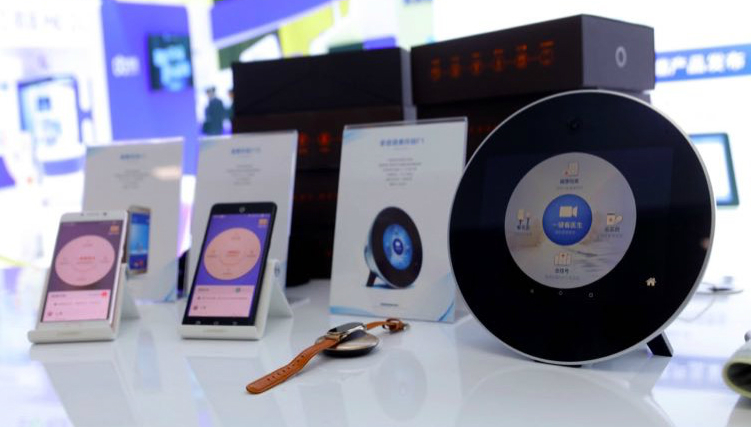
As an intelligent device for medical support services at this year’s conference, the WeDoctor Health Connect, an intelligent health terminal product jointly launched by Jiua Technology and WeDoctor, was exhibited at the conference.
The “Jiuai Health Connect” product series includes the mobile terminals V1 and V1s, as well as the home terminal F1. The applications across these three types of terminals cover the vast majority of users’ daily scenarios. When at home, users can connect via video call with their dedicated family doctor by pressing the one-touch medical consultation button on any terminal, thereby completing common healthcare processes such as online consultations, prescription issuance, treatment follow-up, chronic disease management, and daily health maintenance.
Physician resources for WeDoctor Health Connect are sourced from WeDoctor Group. Leveraging the WeDoctor Cloud Service Platform, WeDoctor Health Connect, released by Jiua Technology, enables connectivity from terminals to the cloud and then to healthcare institutions, establishing a rapid and convenient information transmission channel that links patients with doctors, hospitals, pharmaceutical companies, and even the broader medical security system.
Lingke Technology Showcases Hubble AI-Assisted Decision Support System
At this conference, LinkDoc Technology’s booth is located in Hall B4 of the Wuzhen Convention and Exhibition Center, where the Hubble AI-assisted decision-making system is on display.
Leveraging its core competencies in medical big data and advanced artificial intelligence technologies, LinkDoc Technology has currently partnered with over 500 Grade A tertiary general and specialized hospitals. By intelligently structuring clinical data, it has established China’s largest oncology internet healthcare and data platform. Furthermore, capitalizing on breakthroughs in its core technologies, the company has innovatively developed a Clinical Decision Support System (CDSS)—the Hubble AI-assisted decision-making system.
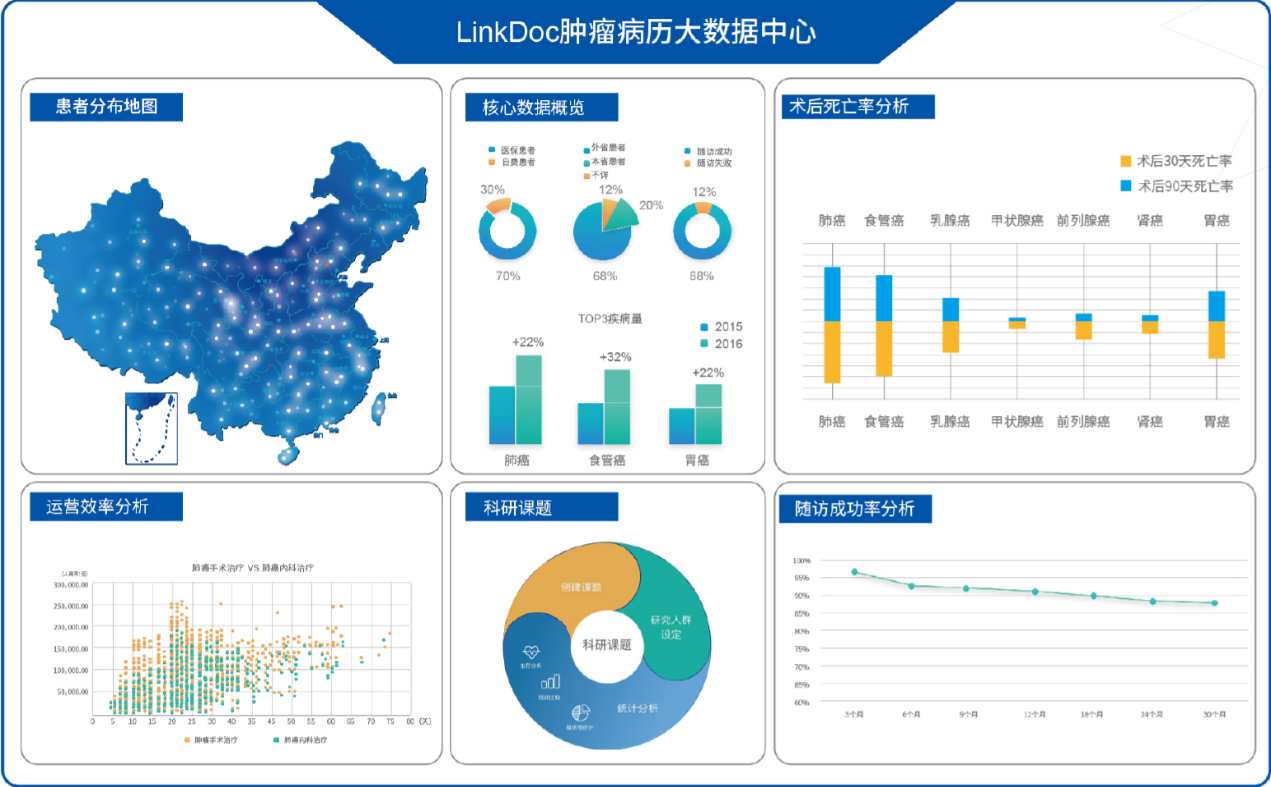
Hubble AI-Assisted Decision Support System Display Page
Currently, the “Risk Prediction for Skip Metastasis of Lung Cancer Lymph Nodes” module of the Hubble system can prevent lung cancer patients from experiencing recurrence 8–10 months earlier due to misdiagnosis, thereby extending the lives of nearly 20,000 patients by 8–10 months each year. The “AI-Based Intelligent Diagnosis of Pulmonary Nodules” module of the Hubble system automatically identifies all nodules in CT images, achieving a detection rate of 91.5%.
Furthermore, in terms of data security and compliance, the Hubble system has obtained Level 3 Certification for the Classified Protection of Cybersecurity (MLPS 2.0) from the Ministry of Public Security, as well as certification under HIPAA, the most stringent global standard for medical information security.
Medical Industry Smart Contract Operation Platform (MCOP)
Zhongsi Bo’an Technology (Beijing) Co., Ltd. (hereinafter referred to as “Zhongsi Bo’an”), in partnership with Beijing Miaokang Intelligent Technology Co., Ltd. (hereinafter referred to as “Miaokang Intelligent”), jointly with Matrix Elements, Anzhen Hospital, and the China Maternal and Child Health Association, released the world’s first Medical Industry Smart Contract Operation Platform (MCOP) at the conference on its closing day.
The medical specialty diagnosis and treatment project for “Congenital Heart Disease” based on MCOP, jointly launched by Zhongsi Bo’an and Beijing Anzhen Hospital, has been implemented at the National Clinical Research Center for Maternal and Fetal Medicine. By screening diseases through B-mode ultrasound imaging data, MCOP continuously improves diagnostic accuracy, laying a solid foundation for the advancement of smart healthcare. In addition, patients can perform self-testing of routine urine analysis at home using Miaokang Intelligence’s smart urine testing devices and manage their health via a mobile client application.
A Blockchain- and Smart Contract-Based Intelligent Contract Management Platform for the Healthcare Industry Provides a Breakthrough Solution for Medical Data Sharing, Further Advancing the Application of Smart Healthcare and Blockchain Technology.
“Internet + HIV Prevention and Control”
The “Internet + HIV Prevention and Control” model leverages mobile internet technologies and social new media to conduct publicity and education on HIV/AIDS prevention. As the first internet company to propose this model, Blued not only provides interest-based social networking services for young people and advocates a positive and healthy lifestyle, but also establishes a platform for health intervention and health education targeting its user base.
Meanwhile, by integrating intelligent mobile internet technologies and information dissemination techniques with HIV prevention and control efforts targeting key populations, Blued developed and launched an “Online Appointment Testing System.” This system connects more than 200 HIV testing sites across China, creating a “virtual testing room” that enables one-click appointment scheduling. The platform has also compiled and organized an online database of HIV prevention and control information, and conducts targeted public welfare science popularization campaigns through new media channels such as live webcasting, WeChat, and Weibo. Furthermore, it has established an internet-based public welfare platform, on which 46 HIV prevention organizations nationwide have registered to carry out HIV awareness-raising and intervention activities.
Cook: I’m Not Worried About Machines Thinking Like Humans; Bullish on the Integration of AI and AR
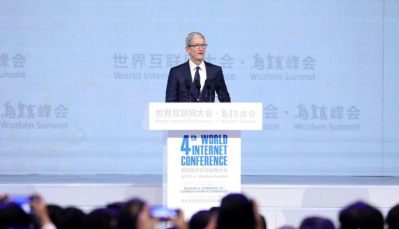
Cook stated that he has long been bullish on augmented reality technology, believing that AR can emphasize the human element rather than isolate people. By leveraging smartphone cameras and screens, this technology overlays digital imagery onto the real world.
Regarding AI, Cook stated that while many people are concerned about AI technology, the future is filled with possibilities, and our world can become a better place.If AI can integrate augmented reality and machine learning technologies, infusing them with human-computer interaction principles, it can help achieve breakthroughs in accessibility within fields such as education and healthcare.Therefore, Apple is committed to building the world’s largest augmented reality platform. Currently, there are over 1,000 augmented reality apps available on the Apple App Store. He believes that AR can integrate technology into human life, assist people in their work, and achieve breakthroughs in fields such as education and assisted healthcare, thereby making human life better.
Cook said, “I am not worried about machines thinking like humans; rather, machines will make human work more valuable and dignified. Humans possess souls, faith, and values, and we have the confidence to control machines. What concerns me is that humans might start thinking like machines. We need to seize this historic opportunity to assign technology its proper value, remain open, foster trust and creativity, and ensure protection for all. We hope these efforts will bring benefits to humanity worldwide.”
Ma Huateng: Increasing Investment in New Technologies to Empower Healthcare
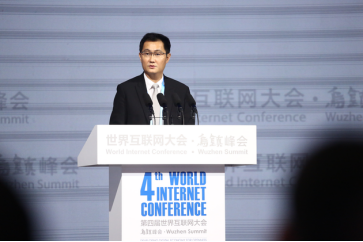
In his keynote address, Ma Huateng noted that over the past year, Tencent has increased its investment in emerging technologies and achieved results across multiple areas.Tencent has established a company-level AI Lab and set up its first overseas laboratory in Seattle, USA. Tencent’s “Miying” leverages the capabilities of artificial intelligence and big data to enable machines to screen and analyze medical images, thereby assisting physicians in diagnosis. Currently, Tencent has jointly established AI medical joint laboratories with more than ten Grade 3A hospitals in China and is carrying out collaborative efforts.
Currently, the digital economy and the real economy are showing a trend of integration. Tencent is empowering various industries by opening up its digital technologies, thereby promoting the in-depth development of the digital economy. Ma Huateng stated, “We need to facilitate intelligent connectivity to help industries achieve digital transformation and upgrading, enabling them to ultimately process big data with artificial intelligence on the cloud. Particularly in the manufacturing sector, which serves as the primary battlefield, we must continuously promote smart manufacturing that integrates hardware, software, and services through ‘Internet + Advanced Manufacturing.’”
Beyond the promising prospects for AI in the healthcare sector, it is worth noting that the forum titled “Sharing the Dividends: Internet-Based Targeted Poverty Alleviation,” hosted by the China Internet Development Foundation and the China Foundation for Poverty Alleviation, was held at the Wuzhen Internet International Convention and Exhibition Center during the 4th World Internet Conference. At the event, WeDoctor, a leading intelligent healthcare platform in China, signed an agreement with Zhaojue County in Sichuan Province to establish a paired assistance partnership, pooling efforts to tackle the challenge of poverty alleviation in deeply impoverished areas.
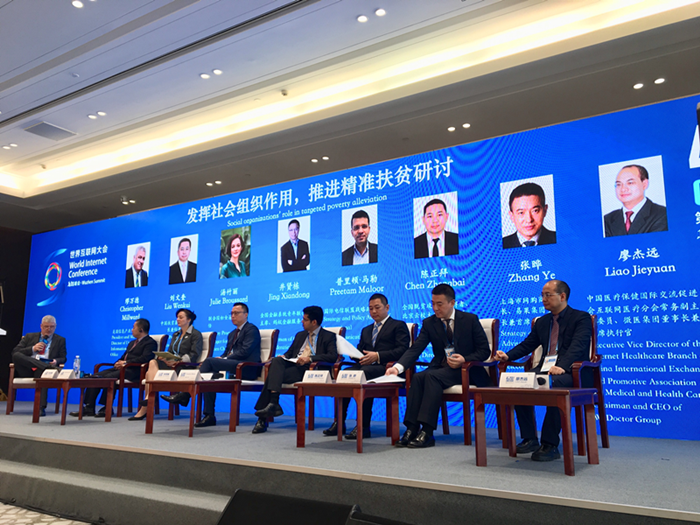
This agenda further underscores the social responsibility that governments, businesses, and individuals should prioritize in addressing resource allocation imbalances amidst the current technological boom.
Liao Jieyuan, Founder of WeDoctor: Three Initiatives Undertaken by WeDoctor for Precision Health Poverty Alleviation
Liao Jieyuan stated, “In terms of targeted health poverty alleviation, we have undertaken three key initiatives:First, specialized telemedicine enables experts to provide diagnosis and treatment for residents in impoverished areas through remote medical technologies. Second, pharmaceutical supply involves collaboration with major domestic and international pharmaceutical companies to ensure access to affordable medications for the public. Third, an internet hospital collaboration platform is established to facilitate coordination among physicians at municipal, county, and township levels, thereby delivering continuous medical services to underserved populations.
In 2017, WeDoctor launched the “Health Poverty Alleviation” initiative in key poverty-stricken counties, including Guangshan County in Henan Province, Ningshan County in Shaanxi Province, and Nanzhang County and Gucheng County in Hubei Province. Tailored to local conditions, the project deployed multiple platforms such as internet-based medical consortia, family doctor contract services, and remote consultation workstations to implement a systematic approach to health-focused poverty alleviation.
JinWang Yulin, CEO of Shanyun: Health Poverty Alleviation Is One of the Core Components of Targeted Poverty Alleviation, with Informatization of Primary Healthcare as the Key
How to fully leverage the innovative “Internet + Targeted Poverty Alleviation” model to build an effective bridge between impoverished regions and enterprises, thereby contributing more rapidly, effectively, and substantially to jointly focus on and participate in poverty alleviation efforts and share the nation’s burdens, is the direction toward which a growing number of leading domestic enterprises are striving.
Kingsoft Cloud regards poverty alleviation as a key corporate social responsibility and has intensified its strategic investments in the healthcare sector. Wang Yulin believes that,The application of information technology in healthcare services will be key to addressing the difficulties and high costs of accessing medical care in impoverished areas, while the emergence of the “Internet + Health Poverty Alleviation” model will serve as a vital engine to help residents in these regions overcome their healthcare challenges.
BAT Seizes the AI Opportunity
This year’s World Internet Conference also featured its first-ever sub-forum on artificial intelligence, themed “Artificial Intelligence: Making Life Better.” In November, China’s Ministry of Science and Technology announced the first batch of national open innovation platforms for next-generation AI, marking AI’s formal entry into the “national team.”
If AlphaGo marked the moment when artificial intelligence officially “emerged into the spotlight,” then the release of the list of National New-Generation Artificial Intelligence Open Innovation Platforms has enabled AI to truly “stand on its own feet.” From internet finance to warehousing and logistics, and from facial recognition to speech recognition, artificial intelligence is omnipresent. Even in Hangzhou, an “AI Town” has been established, attracting more than 170 projects.
“The pigs can fly when caught in the updraft” — this famous quote is once again echoing in our ears. Faced with phenomena expanding too rapidly, people inevitably harbor doubts. After BAT (Baidu, Alibaba, and Tencent) monopolized the internet sector, they collectively pivoted to become artificial intelligence companies, seizing the next major market opportunity. This may seem somewhat unfair to the numerous startups that have been exploring the AI field for several years. Nevertheless, in areas such as medical image recognition and new drug development, companies like Infervision, Yitu Technology, and Huiyi Huiying continue to secure successive rounds of substantial financing by leveraging their core technological and data advantages. However, practical implementation remains a significant challenge for them.
2017 was hailed as the inaugural year of artificial intelligence (AI). AI’s profound impact on daily life is undeniable, and it is widely regarded as a primary driver of the new wave of industrial revolution and economic transformation. Whether dominated by state-backed enterprises or marked by the steady progress of startups, the increasingly widespread application of AI in our lives remains unaffected by market dynamics.
Internet Healthcare Overlooked at the Internet Conference
Among the areas closely monitored by BATJ, in addition to the full-scale explosion of artificial intelligence, a noteworthy phenomenon is that internet healthcare, previously widely favored, appears to have fallen into a “fog” this year. It is reported that internet healthcare-related topics did not make it onto the agenda of this year’s Internet Conference.
Although it represents the integration of traditional industries with “Internet Plus,” internet-based healthcare appears less effective in this context compared to traditional sectors such as automotive, tourism, and retail. Due to the inherent conservatism and seriousness of the medical field, challenges including patient distrust and difficulties in establishing viable profit models continue to constrain the growth of the lucrative internet healthcare market.
Internet healthcare is a major trend, yet internet healthcare companies have undergone repeated cycles of trial and error and business model innovation. This also corroborates VCBeat’s year-end review of the internet healthcare industry in 2017—"Internet Healthcare: From Racing to Grab Market Share to Competing on Strength, Penetrating Core Medical Scenarios to Achieve Diversified Monetization"One of the conclusions drawn at the time:
Internet healthcare is gradually returning to its essence: leveraging internet technologies to achieve comprehensive digitalization, mobilization, and intelligentization of medical services. “Online consultations,” which connect doctors and patients in real time via the internet, are increasingly becoming instrumentalized—serving not only as a means of delivering medical care but also as a platform for managing medical data and a channel for integrating emerging technologies.
The strategies for “Internet + Healthcare” are evolving, but its core remains unchanged. Internet-based tools serve merely as an adjunct; the focal point is “healthcare.” Therefore, the development of internet healthcare should largely adhere to the logic of medical practice—streamlining access channels and returning to physical care delivery.