

How to Implement Family Doctor Contract Services? Insights from China's Top 100 Community Health Centers

Recently, the 12th China Community Health Service Development Forum, co-hosted by the Chinese Community Health Association and the Sichuan Provincial Health and Family Planning Commission, was held in Chengdu. At the opening ceremony, Zhu Hongming, Deputy Director of the Department of Primary Health Care under the National Health and Family Planning Commission, read aloud the “Notice on the Release of the List of Top 100 Community Health Service Centers in China for 2017.” The newly released list includes a total of203 Community Health Service CentersOn the List.
What truly piqued VCBeat’s curiosity was not so much who made the list and who did not, but rather what capabilities a community health center must possess to earn a place on it. Guided by this question, VCBeat reviewed relevant publicly available information and interviewed directors of multiple community health centers featured among the Top 100. From these insights, we uncovered the significance and value underlying the Top 100 ranking.
What capabilities should a community health center have?
In fact, as early as 2015, the National Health and Family Planning Commission had clearly defined the capacity-building initiatives for community health centers.
On November 5, 2015, the National Health and Family Planning Commission and the State Administration of Traditional Chinese Medicine decided to launch the “Community Health Service Improvement Project” (hereinafter referred to as the “Service Improvement Project”).
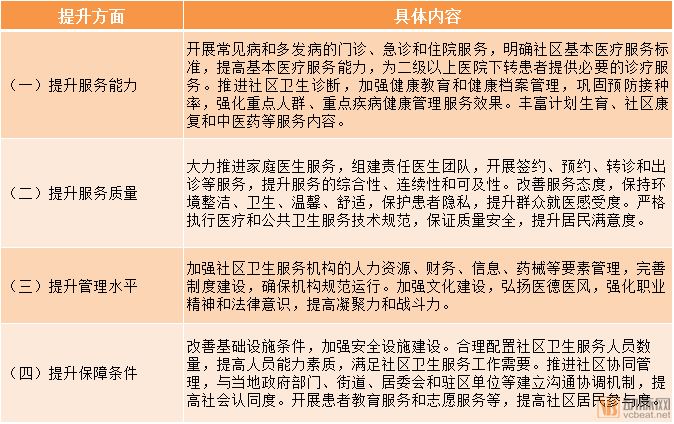
The objectives of the Service Enhancement Project are as follows: By 2020, through the continuous advancement of the Community Health Service Enhancement Project, the environment of community health service institutions will be significantly improved, service functions will be perfected, and service quality will be substantially elevated; residents within the jurisdiction will generally establish stable service relationships with general practitioner teams, and there will be a marked increase in the proportion of residents seeking initial consultation at the community level, the utilization rate of community health services, and the share of outpatient and emergency visits handled by community facilities; residents will be able to access safe, effective, affordable, convenient, comprehensive, and continuous public health and basic medical services through community health service institutions.
The implementing entities for the Service Enhancement Project are community health service centers, with community health service stations required to comply with the relevant requirements applicable to community health service centers. The specific details are as follows:
Since the National Health and Family Planning Commission has made it clear that the capabilities of community health centers must be enhanced, what does the emergence of the list of China’s Top 100 Community Health Centers signify?
What Are the Selection Criteria for the Top 100 Community Health Centers?
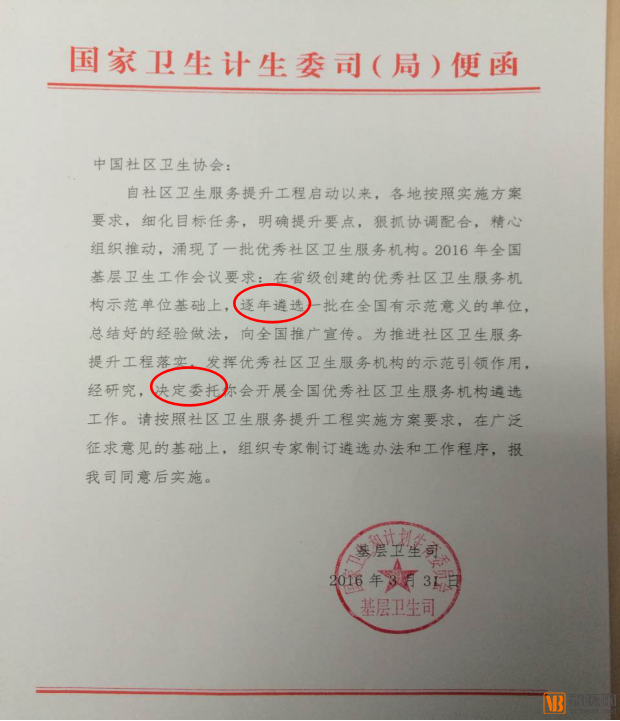
The National Health and Family Planning Commission stated in a document released on March 31, 2016, that based on the exemplary community health service institutions established at the provincial level, a cohort of units with demonstrative significance would be selected annually for nationwide promotion and publicity. The Commission delegated the selection process to the Chinese Community Health Association. Target: Select 100 institutions in 2016, reaching a total of 500 by 2020.
In response, the Chinese Community Health Association, building on its “Service Enhancement Initiative,” has categorized and summarized the capabilities of community health centers according to an indicator framework using the “Three-Balance Model” (i.e., the “3A Model”):
1. Capability
2. Activeness
3. Attractiveness
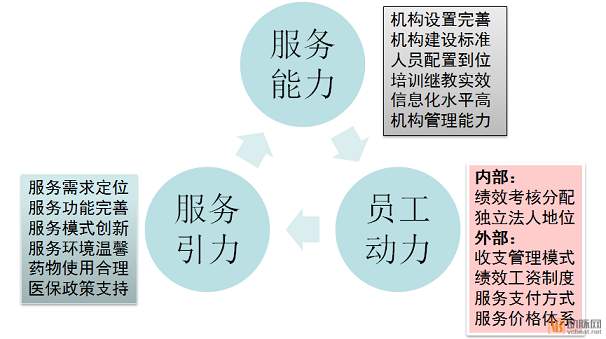
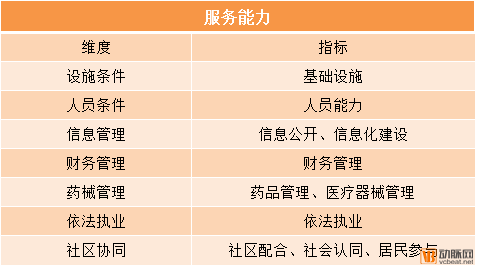
Among these, service capacity encompasses seven major dimensions and 11 key indicators:
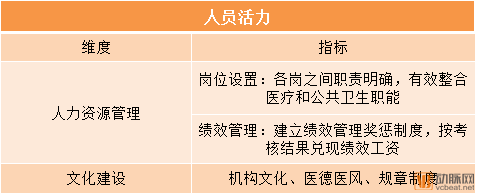
Personnel Vitality: Comprising 2 Major Dimensions and 5 Key Indicators.
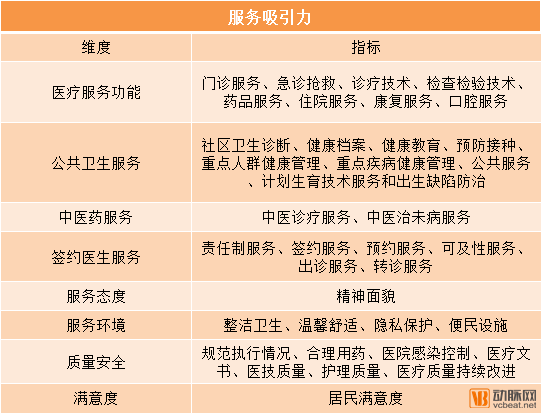
Service Appeal: Comprising 4 major dimensions and 38 key indicators.
In addition to the aforementioned evaluation criteria, there are certain basic requirements for community health service centers to be shortlisted:
1. Registration under the primary name, independent legal entity status, Organization Code Certificate, and Medical Institution Practice License;
2. Area meets the standard;
3. Included in the medical insurance coverage;
4. No violations of regulations or discipline, and no medical malpractice incidents in the past three years;
5. Data are reasonable.
Based on the above information, it is evident that service attractiveness encompasses the greatest number of dimensions and indicators, making it the most core evaluation criterion, followed by service capability and staff vitality. Through interviews and surveys with two community health centers that made it onto the Top 100 list, VCBeat has gained deeper insights into the core competencies required to become a Top 100 community health center.
Medical Capability: The Core Competency of Community Health Service Centers
“I believe that, as a community healthcare institution, the primary priority is to provide effective medical care, with clinical competence being the most critical factor.” In an interview with VCBeat, Dr. Tan Wei, Director of the Qingling Street Community Health Service Center in Hongshan District, Wuhan (hereinafter referred to as the Qingling Street Community Health Service Center), repeatedly emphasized the importance of clinical competence.
In his view, the primary responsibility of community health centers is to provide treatment and management for chronic and common diseases; their secondary responsibility is to deliver public health and preventive services. Whether it involves contracted physician services or traditional Chinese medicine (TCM) services, the core lies in the inherent capabilities of the community health centers themselves. Without such capabilities, contracting becomes merely a formality, failing to achieve substantive results. Therefore, the most fundamental aspect is the capacity to provide basic medical services.
Qingling Street Community Health Service Center is a non-profit medical institution sponsored by Wuhan University of Science and Technology. It is currently the community health service center in Hubei Province with the largest medical building area, the most comprehensive medical equipment, and the most complete medical and nursing staff. The center covers an area of 40 mu, has 23 clinical and medical technology departments including General Practice, and provides 210 inpatient beds. It is among the first batch of pilot community health service centers in Hubei Province for innovating service models in primary care hospitals, implementing first-contact care at the primary level, and advancing hierarchical diagnosis and treatment reform.
The medical capabilities of the Qingling Street Community Health Service Center are widely recognized as the best among community health centers in Hubei Province, which is the aspect that Director Tan takes the most pride in.
In 2017, the Hubei Provincial Health and Family Planning Commission participated in the National Primary Healthcare Institution Job Skills Competition, jointly organized by the All-China Federation of Trade Unions and the National Health and Family Planning Commission, achieving an excellent result of ninth place nationwide. The competing team consisted of six members in total, four of whom were medical staff from the Qingling Community Health Center.
The medical capabilities of the Qingling Street Community Health Service Center were not outstanding from the outset. In fact, when the center was first established in 2011, it did not even meet the basic standards for emergency resuscitation. At that time, Dr. Tan, the director of the center and a chief physician at a Grade A tertiary hospital, made a firm resolution to significantly elevate the quality of medical care.
Leveraging its academic affiliation, Wuhan University of Science and Technology has recruited four PhDs and over 50 master’s degree holders for the Qingling Street Community Health Service Center, thereby enhancing the medical team’s capabilities and establishing them as the center’s core competitive advantage.
To retain these highly educated professionals, the Qingling Street Community Health Service Center has not only provided them with career platforms and competitive compensation but, more importantly, has enhanced their professional competencies, thereby giving them a sense of security.
In response to this, the Qingling Street Community Health Service Center has developed a talent training program. Each year, the center sends doctors with doctoral and master’s degrees to affiliated tertiary Grade A hospitals for three-month placements, enabling them to acquire sufficient technical expertise and integrate advanced medical technologies and concepts into their practice.
In the subsequent years, the Qingling Street Community Health Service Center maintained an annual growth rate of over 30% in key metrics, including medical capacity and workload. The center achieved significant advancements in medical technology, equipment and facilities, as well as in the professional competence of its physicians. Building on this foundation, the health center also expanded its family doctor contract services and public health services.
How Can a Community Health Service Center Achieve an Annual Revenue of RMB 100 Million?
According to Director Tan, the annual revenue of the Qingling Street Community Health Service Center has now exceeded RMB 100 million, placing it among the top community health centers nationwide.
“Such high turnover is, in fact, a form of forced development.” From having no inpatient wards to being compelled to open them, and then to providing hospice care services, the Qingling Street Community Health Service Center has steadily enhanced its service capabilities in response to patient needs. Its average daily outpatient volume has risen from fewer than 100 visits per day in 2011 to 1,300 visits currently, making the Qingling Street Community Health Service Center the first choice for medical care among local residents.
In addition, geographic location is also a key factor driving the community health service center’s annual revenue to exceed RMB 100 million.
Qingling Street Community Health Service Center is located at the southern gateway of Wuhan, a typical urban-rural fringe area. Within a 10-kilometer radius, there are no other public medical institutions besides the Qingling Street Community Health Service Center. In terms of service area, the center covers approximately 62.5 square kilometers, serving a population of over 140,000.
Prioritize Quality Over Quantity: Returning to the Essence of Family Doctor Contract Services
Of the 140,000 residents served by the Qingling Street Community Health Service Center, only slightly more than 40,000 have actually signed up for family doctor services. In response, Director Tan told reporters, “Signing a contract entails fulfilling its obligations, which is a gradual process that cannot be accomplished overnight. The service package includes treatment, follow-up visits, and health management, among other components. Many community health centers prioritize meeting enrollment targets rather than ensuring genuine engagement, but public acceptance is what truly matters. Our goal is to achieve authentic enrollments, not merely engage in superficial initiatives.”
According to him, the family doctor contract service mainly includes three major factors:
1. It requires an improvement in the overall quality of the entire population, rather than relying solely on systemic processes;
2. The service capacity of community health service centers is the foundation;
3. Whether community health service centers have implemented the program with guaranteed quality and quantity.
“The Qingling Street Community Health Service Center prioritizes key populations, including individuals with chronic diseases and those in a sub-health state. Our slogan is: ‘Return sub-health individuals to the healthy population, and halt the progression of chronic diseases.’ To this end, family doctors should provide patients with dual guidance in both medical and psychological aspects.”
It is reported that the Qingling Street Community Health Service Center employs over 280 staff members, comprising 21 family doctor teams, each with six to seven members. The team members include family doctors, public health physicians, assigned nurses, and public health nurses, all with clearly defined roles and responsibilities.
It is worth noting that family doctor contracting teams are subject to a mandatory regulation: the maximum number of individuals managed by each team shall not exceed 2,200. This figure is derived from the center’s practical trials, which have shown that service quality becomes difficult to guarantee once this threshold is exceeded.
In accordance with national policy requirements, the team leader of a family doctor group should be a general practitioner. However, since the Qingling Street Community Health Service Center has only 16 general practitioners, it has also selected public health physicians and senior internal medicine physicians as team leaders, based on their understanding of diseases.
Furthermore, the Qingling Street Community Health Service Center has posted contact information for assigned physicians and nurses, along with disease management publicity notices, in every residential building within its service area. This initiative not only helps residents identify their contracted primary care providers but also informs them of the specific conditions managed by each physician.
Informatization Management: Bridging the Gap Between Family Doctors and Community Residents
To improve service quality and management efficiency, the Qingling Street Community Health Service Center has introduced the Shequ 580 grassroots medical internet platform.
According to Director Tan, the most pressing issue for community health service centers is to address communication gaps between contracted physicians and patients. The Community 580 primary care internet platform facilitates doctor-patient interaction through multiple channels, including online consultations via mobile app and video visits, enabling physicians to stay promptly informed about patients’ conditions.
Performance management is a key priority for community hospitals and their supervisory authorities. Through the “Community 580” family physician service management platform, numerous operational details can be reviewed individually. These include which residents have signed contracts with family physician teams, the number of health-related inquiries responded to, as well as the timing and content of all communications, all of which are clearly recorded in the system’s backend.
By integrating with the “Bailing” call platform, it is also possible to record the number of telephone follow-ups conducted by family doctors for individual patients with chronic diseases, including the number of successfully connected calls, call duration, and call content. This facilitates hospital monitoring of service quality and improves management efficiency, while also making these data accessible to senior management for performance evaluation.
Every month, the team leaders of all 21 family doctor teams must submit their complete documentation on time to the Quality Control Office for review. Each quarter, the Qingling Street Community Health Service Center conducts a quality control audit and summarizes the status of patient enrollments.
If a patient neither communicates with the physician nor visits the center within three months after signing up, the Quality Control Office will deem the enrollment invalid, remove the patient from the roster, and deduct the corresponding workload from the team’s performance metrics.
“The state has assigned the Commission for Discipline Inspection to investigate the authenticity of public health services. With data now available in our system, they can easily access it,” Director Tan told reporters. At present, the ratio of contracted users to actual service recipients at the Qingling Street Community Health Service Center is approaching 5:4.
Community 580 “Capability Cloud”: The “Golden Cloth” for Community Health Service Centers
The “Community 580” mentioned by Director Tan is actually not unfamiliar to most community health centers in China.
Media reports this year indicated that from March to June 2017, while continuing its horizontal market expansion, Community 580 launched a revenue conversion initiative. Within just three months, the conversion rate from free-tier hospitals to paid-tier hospitals exceeded 7%, with month-over-month revenue growth surpassing 100% for three consecutive months, resulting in nearly one million yuan in monthly net profit.
VCBeat learned from Liu Bo, CEO of Shequ 580, that the company’s services are collectively referred to as “Capability Cloud.” In addition to information technology services, the “Capability Cloud” integrates multiple medical services, including intelligent diagnosis, pharmaceutical distribution, and laboratory testing. Once these third-party services are integrated into the Shequ 580 platform, they can rapidly empower community health service centers and family doctors. Furthermore, various medical data from healthcare institutions can be quickly made available to physicians and residents through integration with the Shequ 580 platform, thereby generating substantial value.
For most community health service centers, building their own systems to integrate various services is often hindered by insufficient funding and maintenance capabilities. Through the “Capability Cloud” platform of Community 580, community hospitals can be equipped with services such as patient enrollment, health management, medication delivery, and remote consultation within just one to two weeks. This approach tightly integrates patients, medical data, healthcare services, and the Internet of Things (IoT).
In addition, Shequ 580 has completed the construction of more than 50 standardized contract signing centers for community health service centers with the necessary conditions, and plans to complete over 400 by the end of this year. This initiative will effectively support the national promotion of family doctor contract services.
A standard contract signing center is equipped with comprehensive health screening devices, a contract management system, a health management system, self-service contract kiosks, mobile contract service kits, and a user-facing mobile app. The entire system can be fully deployed and go live within a hospital in just one week.
According to Liu Bo, these more than 50 contracted centers add an average of over 5,000 new contracted users daily on the Community 580 platform, averaging more than 100 per center.
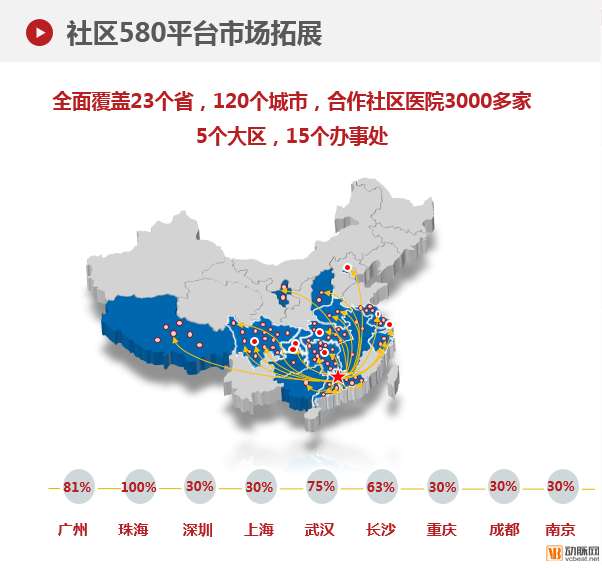
As of now, the Community 580 platform’s products have covered more than 3,000 community hospitals across 23 provinces in China, establishing it as a leading brand among domestic enterprises specializing in informatization for primary healthcare.
Appendix
Appendix: Complete List of the Top 100 Community Health Service Centers in China (2017) (Data Source: Chinese Association of Community Health Services)
