

From Olympic Live Streaming to AI-Powered Heart Health: Zhuxin Medical Files for IPO with Direct-to-Consumer Medical AI Product
2014Year8Month, Sunac World by O-film Tech6Following the acquisition for hundreds of millions of yuan, Zhao Jianqi, one of the company’s founders, suddenly became a “free agent.”
After leaving his previous position, Zhao Jianqi, now in his forties, sought to do something meaningful for his parents. He founded Zhuxin Medical, partnering with healthcare institutions to deliver health services using mobile ECG monitoring devices and an auxiliary diagnostic system. With their product just over a month away from obtaining Class II certification from the China Food and Drug Administration (CFDA), VCBeat conducted an exclusive interview with him to learn about his entrepreneurial journey.
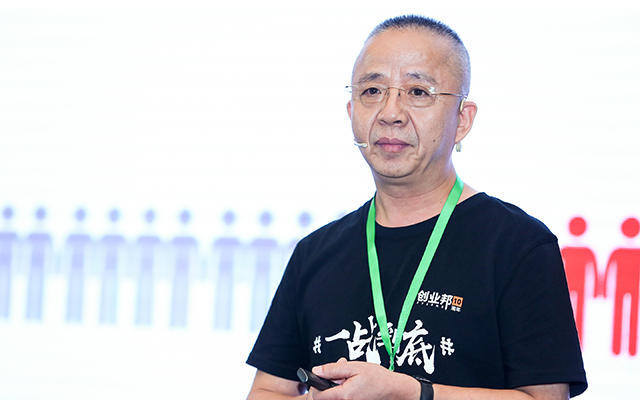
Zhao Jianqi, Founder of Zhuxin Technology
Do something for your parents.
Founded in 2007, Sunac World was a leading enterprise in the mobile internet video sector prior to its acquisition.
In 2008, Sunac World experienced rapid growth. The company once live-streamed the 2008 Beijing Olympics via mobile phones, at a time when 2.5G networks were still widely used. Zhao Jianqi led the algorithm team to develop a video compression standard that enabled video streaming over extremely low-bandwidth connections. Due to the company’s rapid expansion, it was acquired by O-Film Tech in 2014.
After leaving Sunac Tianxia, Zhao Jianqi had been contemplating his future career path. During a conversation with Lao Keliang, Chairman of Maike Group, the phrase “Do something for your parents” resonated deeply. This sentiment-driven entrepreneurial aspiration was not an arbitrary fabrication, but rather a heartfelt reflection from a middle-aged individual who had already achieved financial freedom. Consequently, he founded Zhuxin Technology.
At the age of 40, with his parents suffering from various chronic diseases, Zhao Jianqi decided to engage in family health-related initiatives. He believes this sentiment is shared by many people in his age group.Therefore, I intended to pursue ventures in the health sector as early as 2014.
Home health encompasses a wide range of services, including elderly care, chronic disease management, and companionship for the elderly. Zhao Jianqi had not yet settled on a specific direction for his entrepreneurial venture. In 2014, while conducting research in the United States, he encountered a bioelectric technology that monitors and promotes preventive health by collecting human bioelectrical signals, such as electrocardiogram (ECG), electroencephalogram (EEG), and electromyogram (EMG) readings.
Upon returning to China, through discussions with friends at Southern Medical University, I decided to focus my entrepreneurial efforts on the cardiovascular field. This sector represents a substantial market; according to the "Report on Cardiovascular Diseases in China 2014" released by the National Center for Cardiovascular Diseases, there are 290 million diagnosed patients with cardiovascular diseases in China, with 540,000 sudden cardiac deaths occurring annually. Cardiovascular diseases are often accompanied by arrhythmia symptoms, which are characterized by their sudden and transient nature.
Although the patient population is large, early symptoms are difficult to detect. The episodes of palpitations and discomfort are brief, and by the time patients seek medical evaluation, many tests fail to capture abnormalities, resulting in missed opportunities for early treatment. Medical evidence has demonstrated that long-term data monitoring can be used to predict the progression of a patient’s condition.
During postoperative rehabilitation, patients lack access to physicians or convenient monitoring devices at home, which hinders effective tracking of their recovery and accurate assessment of surgical outcomes. Additionally, follow-up visits to hospitals pose significant inconvenience. Therefore, there is a need for a cost-effective device and system capable of monitoring vital signs and performing basic condition assessments to provide pre-hospital early warnings and post-discharge follow-up care.
Furthermore, the considerable time physicians must devote to sifting through vast volumes of electrocardiogram (ECG) data to identify arrhythmias exacerbates the shortage of high-quality medical professionals in China, making this a critical issue to address. Consequently, Zhao Jianqi aims to launch products and services that reduce the frequency of hospital visits for patients and assist physicians in clinical decision-making, thereby saving valuable physician time.
After conceiving the entrepreneurial idea, Zhao Jianqi reached out to Zhong Sifen, a partner and team member with whom he had collaborated for over a decade, as well as some former team members. Dr. Zhong Sifen holds a Ph.D. in Computer Science from New York University and is a professor at Princeton University. She currently serves as the Chief Algorithm Architect of the Big Data Medicine Division at Zhuxin Technology.
Zhong Sibin returned from the United States in 2004. Prior to that, he worked in the U.S., specializing in research on image and video algorithms, and is a senior expert in intelligent analysis algorithms. The two met through an introduction by a mutual friend.
Zhong Sifen hoped to bring her previous research findings back to China. Coincidentally, Zhao Jianqi was also working in the field of audio and video technology. The two thus collaborated to establish a research institute and began working together. To this day, Zhao Jianqi and Zhong Sifen remain close friends and trusted partners.
Hardware + Software, Terminal + Service
In the early stages, the Zhuxin team encountered several challenges. Although the team, primarily composed of software professionals, possessed strong algorithmic capabilities and expertise in health data analysis, the project was temporarily halted due to a lack of sufficient high-quality data for model training after the initial modeling phase.
Zhao Jianqi recognizes that in the era of big data and artificial intelligence, possessing a sufficient volume of high-quality data that is continuously updated serves as the cornerstone for the development of an AI company.
Therefore, Zhuxin decided to first develop a hardware product for collecting and accumulating ECG data. Recognizing that high-quality data determines model accuracy, the Zhuxin team resolved to build its data acquisition device to medical-grade standards. It appointed distinguished experts, including Dr. Guo Zhigang, a Ph.D. in Cardiology from the Graduate School of Southern Medical University and Director of the Department of Cardiology at Southern Medical University, to oversee quality control in the medical domain.
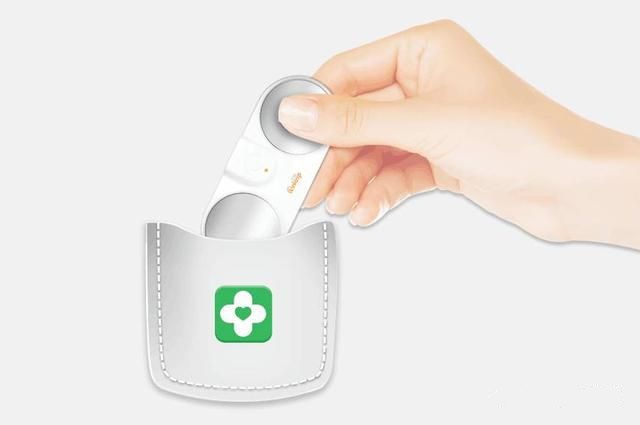
The ECG device has completed clinical trials at Southern Medical University and Guangzhou First People's Hospital. After more than two years of R&D and clinical validation, it is expected to obtain Class II certification from the CFDA within over a month. The device is compact enough to fit in a pocket, enabling real-time monitoring via a smartphone.。
While developing hardware devices, Zhuxin Technology’s AI-assisted diagnostic system for cardiovascular diseases, under the leadership of Professor Zhong Sibin, is also making steady progress.
By leveraging electrocardiogram (ECG), blood pressure, physical activity, and medical history data acquired through ECG machines and mobile phones, the team has progressively refined its algorithmic models. Currently, the system can accurately detect more than 10 types of arrhythmias, including tachycardia, bradycardia, atrial fibrillation, premature beats, Wolff-Parkinson-White syndrome, and left or right bundle branch block.。
For each disease, the team trains a dedicated algorithm. For instance, the atrial fibrillation (AFib) detection model leverages single-lead ECG data to intelligently identify AFib, providing real-time alerts to help prevent stroke. It achieves an AFib-positive recognition rate of 96.8% and can run efficiently on mobile phones.
Compared with other continuous ECG monitoring devices on the market, Zhuxin Technology’s products have their own advantages.
Zhao Jianqi stated,FirstThe company’s hardware products are medical-grade. The Class II certification from the CFDA will be obtained shortly.
Second, The product is extremely user-friendly and can be carried in a pocket or wallet; simply take it out to record and monitor when needed.
3., offering high cost-effectiveness. The hardware equipment costs approximately RMB 400–500, representing a significant price advantage compared to other devices priced at RMB 1,000–2,000. Additionally, renting such equipment in hospitals costs RMB 200 per day, with a typical usage period of three days.
Fourth, assisting users in interpreting ECGs. Compared to blood pressure and blood glucose measurements, ECG interpretation involves a higher degree of professionalism and complexity; without the assistance of physicians or auxiliary systems, it is difficult for laypersons to understand. Zhuxin Technology leverages artificial intelligence to assist users in interpreting ECGs.
5., assist physicians in analyzing, providing early warnings for, and compiling statistics on patient data, thereby reducing their workload.
In addition to equipment and systems, health services are also a key focus of Zhuxin Medical. Currently, Zhuxin Technology has gained a foothold in the market.Collaborating with Jiangsu Provincial Government Agencies Hospital to assist in cardiac screening, and providing follow-up care and management for individuals at risk of heart disease.。
Additionally,Zhuxin Technology collaborates with the Tibet Armed Police Corps to equip high-altitude armed police personnel with ECG monitoring devices, enabling continuous tracking and monitoring of their cardiovascular health.. Although the soldiers are still very young, the impact of the high-altitude environment and their work intensity on cardiovascular health is greater than that in low-altitude areas. After the device transmits the soldiers' data to the database, the hospital and the company jointly conduct follow-up analysis and health management.
Both services are fee-based.
Entering the Market with Consumer Medical Electronics
Regarding market planning, Zhao Jianqi told VCBeat that Zhuxin Technology would enter the market in the form of consumer medical electronic products. Although they are medical-grade products, the target usage scenario for Zhuxin Technology's products is the home. Zhao Jianqi hopes to address disease prevention within the household setting.
Zhao Jianqi emphasized that healthcare is a serious matter. The medical and follow-up services provided by Zhuxin Technology are carried out in collaboration with offline medical institutions. Zhuxin Technology provides digital technical services, while the medical institutions deliver clinical care services, with final medical decisions resting solely with physicians.
Regarding the market environment, Zhao Jianqi stated that while some companies are also engaged in this field, Zhuxin Technology holds distinct advantages in terms of pricing and AI-assisted diagnostic services.Zhuxin Technology positions itself not as an equipment provider, but as a health service provider. The company’s primary revenue stream also comes from subsequent service fees.。
Zhuxin Technology is currently seeking its first round of financing for market expansion...