

Amazon's Full-Scale Healthcare Ambition: Telemedicine, Drug Distribution, Pharmacy Retail, and PBM in Focus
As the world’s largest online retailer, Amazon has actively expanded into the healthcare sector in recent years, with initiatives including:
Established a secret team named “1942” to develop internet healthcare technologies;
Amazon acquires Whole Foods for $13.7 billion, with commentators stating that this will provide a “suitable venue” for Amazon to sell pharmaceuticals;
Amazon Web Services (AWS) has partnered with Cerner, the fourth-largest healthcare IT company in the United States, to help it leverage data for predicting patient health outcomes;
Amazon has secured wholesale pharmacy licenses in 12 U.S. states……
Although Amazon has not officially responded to whether it will shift its strategic focus to pharmaceutical-related businesses, its recent activities have already drawn the attention of investors and the U.S. pharmaceutical industry. Following rumors about Amazon’s formation of a secret team codenamed “1942,” the stock prices of both CVS and Walgreens Boots Alliance (formed by the merger of Walgreens and Alliance Boots) declined, with CVS dropping 3.78% and Walgreens Boots Alliance falling 4.99%. Over the subsequent several weeks, the share prices of both CVS and Walgreens Boots Alliance remained under pressure.
Why Is Amazon Aggressively Expanding into Healthcare and Pharmaceuticals? What Are the Most Likely Directions for Expansion, and How Will This Impact the Traditional U.S. Healthcare Market? VCBeat (WeChat ID: vcbeat) has compiled information from multiple sources to provide a comprehensive analysis of Amazon’s healthcare strategy.
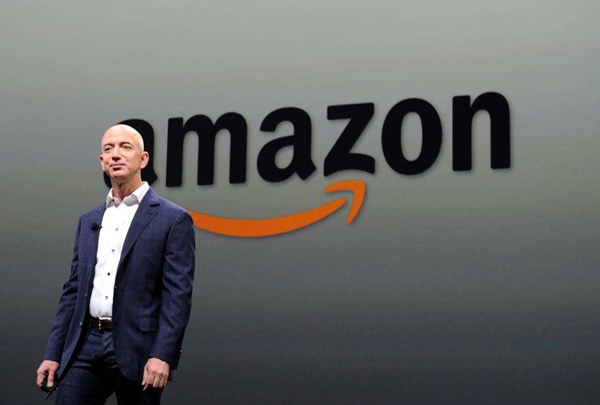
Amazon founder Bezos
Amazon May Bring Retail Industry Experience to the Pharmaceutical Sector
Amazon’s success stems from its revolution of the retail business; to some extent, Amazon has completely reshaped people’s definition of the retail industry. By offering a wide variety of low-priced products delivered directly to consumers via mail order, it created an unprecedented retail model.
Financial reports show that Amazon achieved revenue of $43.7 billion in the third quarter of 2017, roughly equivalent to five times Alibaba’s revenue ($8.3 billion). In terms of revenue structure, online stores contributed approximately 60% of Amazon’s revenue, third-party seller services accounted for 18.1%, web services 10.5%, and physical stores 3.0%.
Having already secured a monopolistic advantage in the online sphere, Amazon gradually shifted its focus to offline retail: in 2015, it opened its first physical bookstore; in 2016, it launched Amazon Go, a new type of convenience store billed as “no lines, no checkout,” marking its foray into unmanned retail.
Currently, Amazon’s offline business encompasses a variety of formats, including Amazon Restaurants, bookstores, pickup locations, and Amazon Go.
On June 16, 2017, Amazon announced its acquisition of Whole Foods Market for $13.7 billion, a move widely regarded as a signal of Amazon’s aggressive expansion into offline retail operations.
This transaction marks the largest acquisition in Amazon’s history. Whole Foods Market, a well-established brand with over 40 years of focus on organic and healthy foods, operates more than 460 stores across the United States, many of which are situated in prime locations. It accounts for approximately 1.2% of the total U.S. food market share. Through this acquisition, Amazon has gained a nationwide offline retail network and a fresh food supply chain system. The supply chain data generated by Whole Foods Market will enable Amazon to further optimize its solutions for fresh food logistics systems.
Online + Offline is essentially the “New Retail” concept popular in China. It involves optimizing supply chain structures and enhancing consumer experience, or in other words, “selling more and buying better.”
Having achieved success in the supermarket sector, Amazon is highly likely to transfer its expertise to the pharmaceutical retail industry.
Of course, now is also an excellent time for Amazon to enter the pharmaceutical distribution and retail sectors. The reason is that the U.S. healthcare system is undergoing profound changes, with growing uncertainty surrounding the potential repeal of the Affordable Care Act.
“The Affordable Care Act,” implemented since 2010, primarily aims to increase health insurance coverage and control healthcare expenditures. Measures include providing insurance subsidies for low-income individuals, mandating employers to purchase insurance for employees, prohibiting insurers from denying coverage or charging higher premiums based on pre-existing conditions, and offering more comprehensive insurance plans covering services such as screenings, medications, and surgeries.
After six years of implementation, the Affordable Care Act has drawn considerable controversy, with questions raised about its effectiveness in curbing the growth of healthcare expenditures. Data show that per capita healthcare spending in the United States rose from $8,402 in 2010 to $9,523 in 2014, a 13.3% increase. Additionally, there have been instances of misuse of health insurance subsidies provided to low-income individuals.
In this case,The United States is seeking to amend or repeal the Affordable Care Act, thereby subjecting the healthcare industry to pressure from policy adjustments.Key manifestations include government intervention in drug pricing, reforms in healthcare payment methods, more aggressive practices by Pharmacy Benefit Managers (PBMs), and further compression of profits in pharmaceutical distribution and retail.
As a result, the U.S. pharmaceutical industry has undergone large-scale consolidation: for example, Walgreens merged with Alliance Boots and sought to acquire Rite Aid, the third-largest pharmacy retailer in the United States; CVS acquired Target’s retail pharmacy and convenient clinic businesses; and more recently, it acquired Aetna.
Amazon’s role in the transformation of the pharmaceutical industry lies in its ability to leverage its technological and financial advantages to “reshape” the pharmaceutical retail sector, enabling pharmaceutical distribution, retail, and PBM (Pharmacy Benefit Management) operations to run at lower costs in response to cost-containment pressures.
Five Speculations on Amazon's Entry into the Pharmaceutical Industry
CNBC has speculated on how Amazon might launch its pharmaceutical business, suggesting that, similar to its entry into the grocery sector, it could directly acquire a pharmaceutical retailer of comparable scale. Potential acquisition targets include Rite Aid and GoodRx.
In mid-August, Goldman Sachs Group released a 30-page report detailing how Amazon would enter the prescription drug market, essentially outlining the direction of Amazon’s foray into the pharmaceutical business. Speculations included:
1. The first step Amazon should take is to collaborate with pharmacy benefit managers (PBMs). PBMs serve as intermediaries between healthcare payers, healthcare providers, and patients, providing payers with cost-containment solutions for medications. According to a Goldman Sachs report, this would enable Amazon to “gain access to patient data and unlock the potential for cross-selling related products.”
2. Amazon may launch pharmaceutical delivery and home medication services, which will increase price transparency and reduce patients’ out-of-pocket spending on medications.
3. Amazon will become a comprehensive pharmaceutical service provider integrating online pharmacy, offline retail, and PBM services.
4. Amazon will tap into pharmaceutical consumption among the young, healthy demographic.
5. Amazon to Offer Medical Services via Echo: “Imagine seeing a virtual doctor on your Amazon app, having them prescribe medication for you, and then clicking the ‘Buy Now’ button—all without leaving home.” (Echo is a smart speaker launched by Amazon that allows users to control smart home devices and engage in voice interactions.)
The above conjectures broadly outline the potential directions Amazon may pursue. Before assessing these possibilities, it is essential to gain an overview of the U.S. pharmaceutical retail industry.
The overall size of the U.S. pharmaceutical market is approximately $400 billion. Due to the implementation of "separation of prescribing and dispensing," retail pharmacies and Pharmacy Benefit Managers (PBMs) serve as the primary channels for drug sales.
The retail pharmacy market is dominated by three major players: CVS, Walgreens, and Rite Aid. CVS and Walgreens each hold over 30% of the market share, while Rite Aid accounts for approximately 10%. Together, these three companies control around 80% of the market.
The PBM market is primarily dominated by three companies: Express Scripts (ESI), Caremark (owned by CVS), and OptumRx (owned by UnitedHealth Group).
CVS is the largest pharmaceutical retailer in the United States, with annual revenue of $177.526 billion in 2016, including $119.963 billion from its PBM business and $81.1 billion from pharmacy operations (which involve related-party transactions). The largest PBM company, ESI, reported annual revenue of $100.29 billion last year.
Both the retail pharmacy and PBM sectors are characterized by oligopolistic market structures, meaning that Amazon’s entry into this market would be akin to “squeezing into every available crack.” In light of this, U.S. industry insiders have stated, “The pharmaceutical industry is not a typical consumer sector; new entrants may find it difficult to quickly establish a foothold. For Amazon, there is no compelling need to enter the pharmaceutical retail space.”
In addition to directly entering the pharmaceutical and healthcare sector,Amazon is also entering the healthcare sector through investments. In early 2017, Amazon, together with ARCH Venture Partners and Johnson & Johnson Innovation, invested $900 million in Grail, a cancer early-screening company under Illumina. This was the largest investment in this field during the first half of 2017.
In fact, it is not uncommon for large technology companies to cross over into the healthcare sector. For instance, on September 13, during its fall product launch event, Apple officially launched the Apple Heart Study. This initiative leverages heart rate data collected from a vast number of Apple Watch users to conduct research aimed at addressing easily overlooked conditions in daily life, such as arrhythmia and atrial fibrillation. The study also assists hospitals in cardiovascular disease research and has received support from Stanford University School of Medicine and U.S. government authorities.
Google made a high-profile acquisition of the artificial intelligence company DeepMind, bringing it to public attention through its matches against top human Go players. By continuously enhancing its capabilities via autonomous learning, DeepMind has identified key application areas in healthcare, including medical data mining, assisted diagnosis, and medical image recognition, and is regarded as one of the most promising providers of AI-driven healthcare solutions.
Other companies, such as Microsoft, IBM, and Facebook, have also turned their attention to the healthcare sector, entering it through investment, incubation, and partnerships.
In China, companies such as Alibaba and JD.com are also actively expanding into the healthcare sector. Alibaba established AliHealth to develop smart healthcare, pharmaceutical e-commerce, and product traceability services, while other affiliates like Alipay and Alibaba Cloud have also made significant investments in healthcare. JD.com’s pharmaceutical business encompasses three main areas: pharmaceutical procurement, online pharmacies, and O2O (online-to-offline) pharmaceutical services. Recently, there have also been reports that JD.com is planning to establish an internet hospital.
As an industry closely tied to human health, healthcare will always retain its appeal and value. We wait with anticipation to see how Amazon will transform this sector.