

Soundario Inc. Submits IPO Prospectus: Red Dot Award-Winning Pillow with 52 Independent 3D Facets Backed by ZhenFund
According to statistics, the global sleep industry’s annual output value was $11.3 billion in 2012 and surpassed $31 billion in 2015, representing a threefold growth within three years. Not only various technology companies but also major enterprises in the traditional home textile and home furnishing sectors have set their sights on this star market.
Unlike the myriad companies promoting smart hardware, Wang Zhong’s entrepreneurial journey in the sleep sector sounds more like an intriguing experiment. He insists on not labeling his product as “sleep tech” or “smart hardware,” stating, “In my view, it is simply a pillow—a pillow that helps people sleep.”
Once a nocturnal creature, he guided the nightlife of listeners on the other end of the airwaves as a radio host; now he has embarked on a scientific entrepreneurial journey centered around “sound,” founding Soundario Inc. and serving as its CEO.
He collaborated efficiently with an international team remotely, completing the product’s development and launch within two months. He hopes that individuals suffering from various forms of insomnia can find relief through this app and return to the “land of dreams.”
Recently,VCBeat (WeChat ID: vcbeat)The reporter conducted an exclusive interview with Wang Zhong, Founder and CEO of Soundario Inc.

Wang Zhong, Founder and CEO of Soundario Inc.
From Sound to Sleep
For Wang Zhong, sound has been the focus of his uninterrupted work for over a decade. His experiences in radio broadcasting have given him unique insights into the power of sound, distinct from those of the average person. As a radio host, during the years he produced evening programs in Beijing, he noticed that many listeners remained highly excited even after the show ended at midnight, eager to continue listening to music and his program. In response to this demand, Wang Zhong made continuous attempts and eventually discovered that audiences preferred slower, more soothing songs after the program concluded, helping them transition into a calmer rhythm. This finding laid the foundation for Wang Zhong’s future entrepreneurial direction.
He envisioned building a system that leverages auditory stimuli or content to enable individuals to rapidly fall asleep upon lying down.
Starting from the emotions conveyed by music itself, one entry point is how to use music to help people exercise or rest more effectively—this is the direction of Wang Zhong’s entrepreneurial thinking. Therefore, the first “product” Wang Zhong initially developed was a running track titled “Run Baby Run!” It enables listeners to synchronize each step with the beat while running; in other words, it matches the tempo of the music to the runner’s pace. This series of tracks garnered nearly 8 million plays within six months.
To create this batch of running music with various combinations of tempo and duration, he independently collected 1,600 samples at Tai Po Waterfront Park in Hong Kong, measuring the time and step counts taken by runners to cover a 10-meter distance, thereby deriving a formula correlating cadence with speed.
Wang Zhong stated, “These explorations have coalesced into a product logic: Can sound orchestration be used to help people achieve a relaxed state before falling asleep, thereby bridging into the field of sleep technology? This approach fosters interdisciplinary exchange and integration.”
Special-shaped pillow with 52 independent 3D sections, ergonomically designed
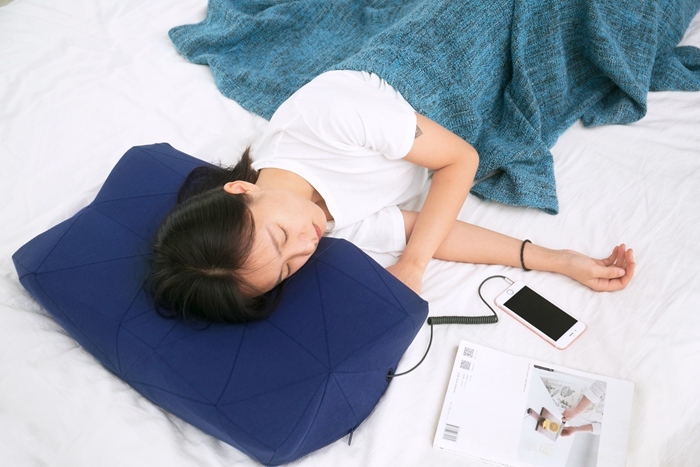
In October 2015, Soundario Inc. launched its first hardware product, the Yunmeng Pillow PILO—an ergonomic, polyhedral sleep aid pillow filled with memory foam that provides a gentle sound field beside the pillow and operates without a power source. The pillow features built-in invisible acoustic transducers, with audio finely tuned by the studio to ensure high-fidelity sound quality even after passing through multiple layers of material.
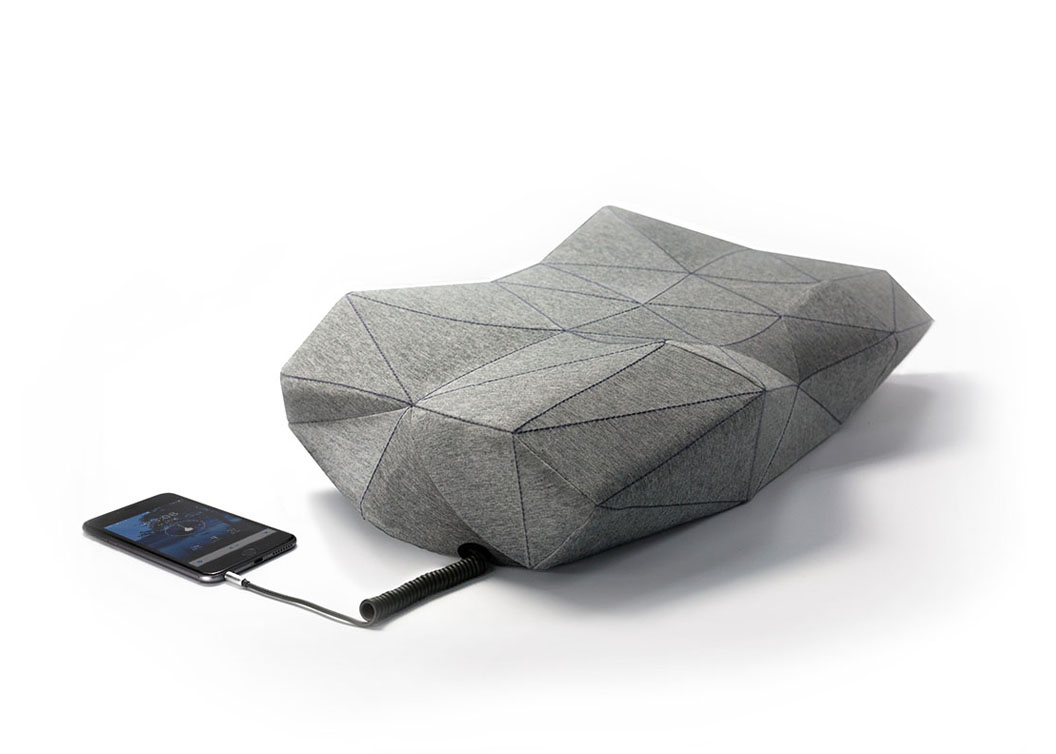
Yunmeng Pillow PILO
“This is an ergonomic pillow with audio-assisted sleep features,” said Wang Zhong, who insists on not labeling his product as “smart hardware.” “From a product perspective, it is simply a pillow. My goal is to introduce some new innovations to the traditional form—a fabric sack filled with cotton—that has remained unchanged for 300 years.”
Although the founder bluntly referred to it as “a pillow,” this pillow has won numerous awards both domestically and internationally since its development:
In October 2015, Yunmengzhen won the Gold Award of “China Good Design (CGD)”;
In July 2016, Yunmeng Pillow won the German Red Dot Product Design Award;
Won five awards at the German PLUS X AWARD in late 2016;
Won the Silver Award at the Italian A’ Design Award in early 2017.
All of this stems from the unique shape and design of the Yunmengzhen PILO.
The Yunmeng Pillow utilizes 3D-molded facet technology, creating a total of 52 independent 3D facets on its surface. Its polyhedral structure, constructed with low-polygon geometry, features a contoured groove designed to adaptively align with the head and neck curves typical of Asian anatomy. This design effectively supports the cervical spine in both supine and lateral sleeping positions, helping to prevent cervical strain and stiff neck resulting from prolonged maintenance of a single sleep posture.
In short, no matter how you sleep, you’ll enjoy just the right amount of cushioning and support.
Wang Zhong revealed that the development of the Yunmeng Pillow drew extensively on ergonomic data. “In essence, pillows lack a fixed shape. Although some ergonomically designed pillows have been available on the market, they have not proven as comfortable as expected. Soundario Inc. leveraged ergonomic data to build models and conduct analyses.”
For example, when a person turns over in bed, the height of their shoulders changes within a specific spatial volume—this space is defined by the pillow. Once the head rests on it, the lowest point after compression should form a curved surface. “If designed with such spatial characteristics, the pillow can ensure comfort regardless of how one turns during sleep. Therefore, the Yunmeng Pillow incorporates data on potential rolling movements and other bodily motions during sleep into its industrial design through modeling.”
Equipped with the Yunmeng APP, capturing sound in real-world scenarios
By integrating the Yunmeng app, scenario-based sound effects are used to induce a state of arousal for sleep onset. The Yunmeng Pillow features built-in invisible flexible speaker units, professionally tuned by audio studios to deliver precise surround soundscapes. It includes seven built-in dream scenarios: Lakeside, Fireplace, Rainy Day, Ocean, Starry Sky, Forest, and Aurora. An 80 cm audio extension cable connects the pillow to a smartphone or other devices to provide sound-assisted sleep aid.
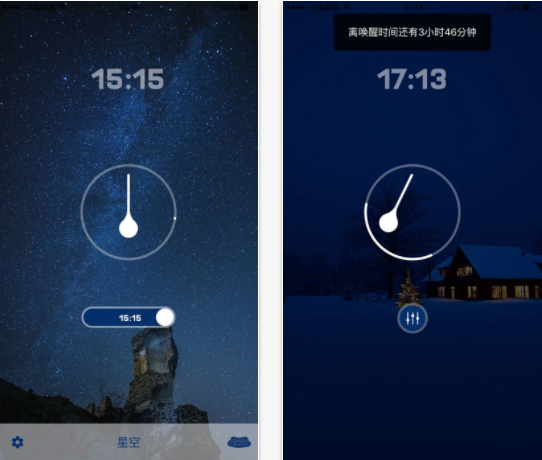
Yunmeng APP Interface
Drawing on his prior experience with sound-based sleep aid products, Wang Zhong can clearly discern which specific sounds or combinations thereof are most effective. “Ambient sounds should not consist of a single, static audio track with fixed rhythm and frequency. In his view, natural sounds are dynamic and evolve over time.”
“If you want people to truly feel the essence of rain, it should begin with the first drop falling on a leaf, progressing through lightning and thunder, then escalating into a violent storm, before finally returning to calm. The entire process must be presented in its entirety, including the sounds of lake water and ocean waves; it can never remain static.”
Therefore, all the real-world sounds in the Yunmeng app are sourced from real life, recorded on-site by sound engineers. He told reporters that to achieve the best results, the team often spends several hours at the recording location. “Once, to capture the sound of lake water by Erhai Lake, the team recorded from 2 a.m. until dawn, and everyone ended up covered in mosquito bites. But it was exceptionally quiet by the lakeside at that time, resulting in excellent audio quality.”
Collaborate with designer platforms to target specific audiences and boost conversion rates
In this intriguing acoustic experiment, Wang Zhong has positioned his product as a meticulously crafted “gift.” Unlike other smart hardware that emphasizes sleep management features, the Yunmeng Pillow is marketed online through platforms such as Liangcang and Secoo, which specialize in curated lifestyles and promote original, design-forward products.
Wang Zhong explained, “We partner with designer platforms to co-launch products. This approach stems from Soundario’s brand identity, which imposes strict criteria on collaborating merchants. We seek partners that demonstrate strong design capabilities, functional utility, and refined aesthetics.” Among current consumer purchasing criteria, sleep-aid efficacy accounts for a significant proportion, while cost-effectiveness is also a major factor influencing buying decisions. “A product that is both practical and beautiful is a perfect product.”
Secondly, the company’s expectation for its product is to benchmark against foreign markets, hoping that the Yunmeng Pillow can make a significant impact in overseas markets. Therefore, partnering with platforms that prioritize product quality, such as Liangcang and Secoo, can help achieve this goal.
Another promotional option leverages Wang Zhong’s core expertise, utilizing Newradio’s inherent ability to attract its listener base to reach audiences interested in radio and audio content.
Two years ago, Newradio was a PGC (Professionally Generated Content) platform where former or current radio DJs produced professional podcasts, consistently ranking among the top apps in the App Store.
The Yunmeng Pillow encompasses two dimensions: design and sound-based sleep aid. “Based on this, we partnered with Newradio for the initial launch, enabling a relatively vertical and precise target audience to form a preliminary assessment of the product. From the listeners’ perspective, they often tune in to parenting programs or other appealing content on Newradio, thereby finding resonance with our product and feeling that the pillow enhances their comfort while listening.” The overlap between the user profiles of Liangcang and Newradio listeners drives conversion.
Currently, Soundario Inc. offers four Yunmeng Pillow products. The earlier releases, the Yunmeng Pillow PILO and the Elite Yunmeng Pillow, are priced at RMB 699 and RMB 1,599, respectively. The newly launched PILO Blue and PILO mini target a demographic ranging from school-aged children to adults, with prices ranging from RMB 499 to RMB 1,599.
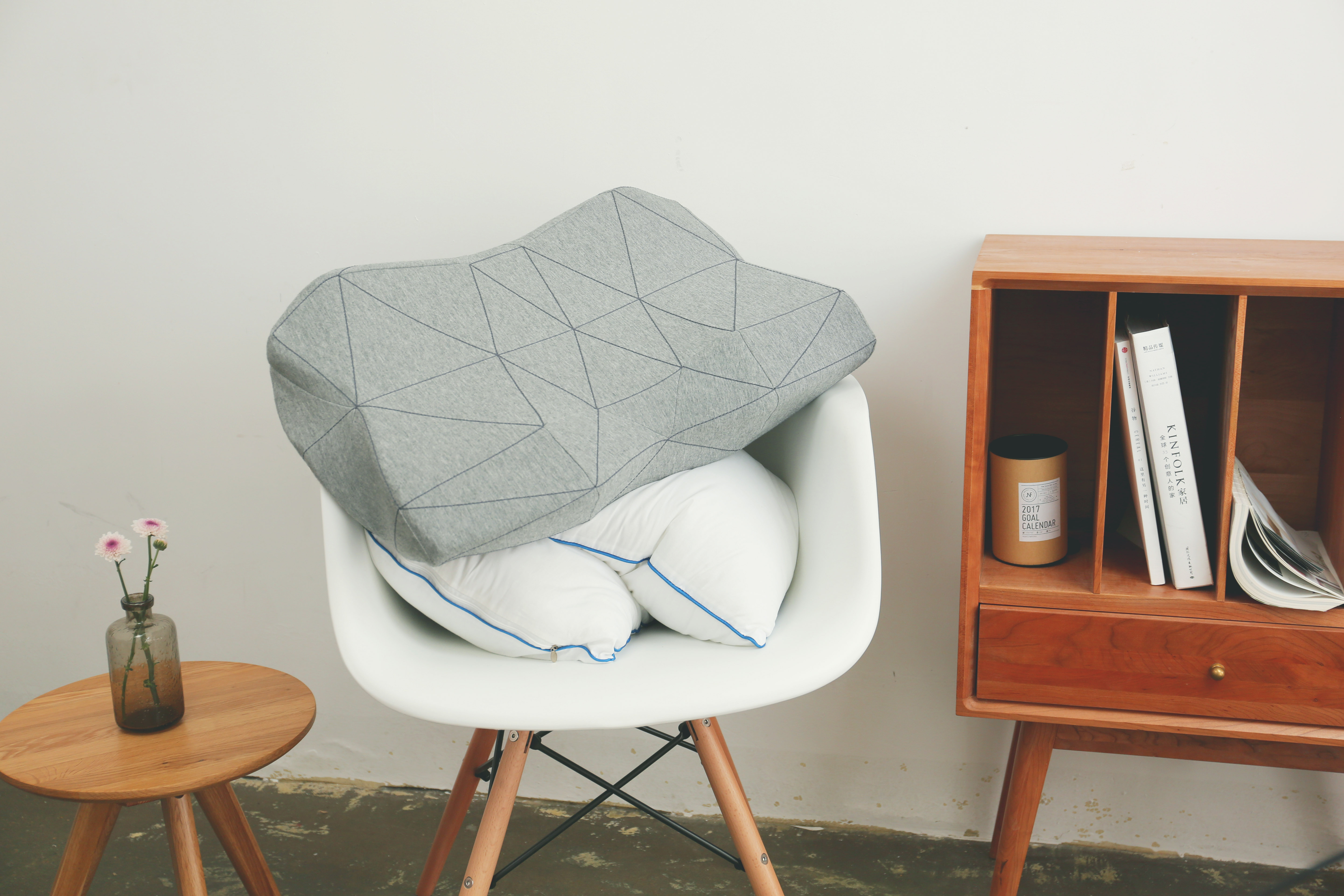
From Wang Zhong’s perspective, startups should avoid rashly venturing into brick-and-mortar retail. Instead, he opted for a consignment model, which requires only shelf space and regularly trained sales staff. The company’s products are now carried in more than 20 stores across China, and it has begun expanding overseas, with exports to Japan, the United Kingdom, and other markets.
In early 2015, Soundario Inc. relocated its headquarters to Shenzhen, drawn by the city’s more robust supply chain and a more favorable entrepreneurial environment. In 2016, the company secured its angel round of financing, receiving millions of RMB from ZhenFund. Currently, with growing demand in overseas markets and the continued improvement of domestic distribution channels, the company is poised to rapidly scale up its production capacity.