

Midea Group Leverages 'Big Data + AI' to Build a Precision Health Management Ecosystem through Smart Appliances
In recent years, chronic diseases have become the “leading killer” threatening people’s health; in China, at least one person dies from cardiovascular and cerebrovascular diseases every 30 seconds.
According to research by the World Health Organization, 60% of the factors contributing to human health and longevity stem from one’s own lifestyle, with poor habits being the primary trigger for chronic diseases. Consequently, how to adopt a healthy lifestyle has become a matter of widespread public concern.
Home appliances are inextricably linked to people’s daily lives. The evolution of these devices has also subtly influenced lifestyles. As a leading global technology group, Midea Group has made beneficial efforts in recent years to help people live healthier lives.
In March 2017, Midea Group publicly launched Midea Health Cloud, leveraging this initiative to enter the health industry. Meanwhile, five subsidiaries under Midea Group joined forces with 11 professional institutions and enterprises in the health sector to establish“Precision Health Collaboration Alliance”。
The Alliance is committed to the principles of “openness, cooperation, and mutual benefit.” By leveraging complementary industrial strengths, it provides consumers with precise health management products and services, thereby enhancing their health awareness and overall health status.The Alliance was recognized as the Guangdong Provincial Precision Health Industry Technology Innovation Alliance by the Department of Science and Technology of Guangdong Province on September 22, 2017.
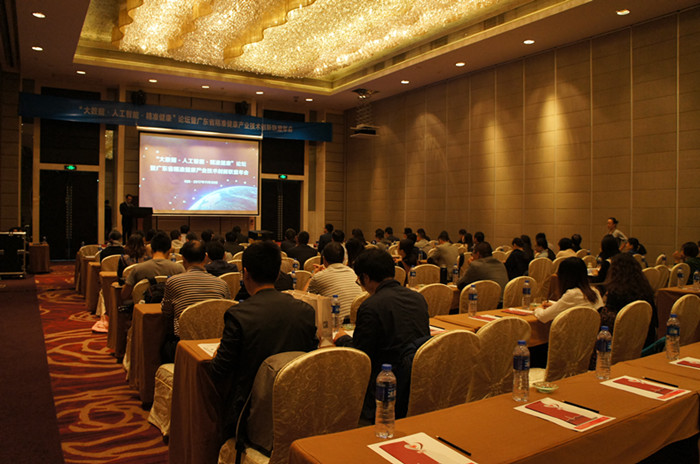
On November 30, hosted by the Precision Health Industry Technology Innovation Alliance2017 Big Data, Artificial Intelligence, and Precision Health Forum & Annual Conference of the Guangdong Provincial Precision Health Industry Technology Innovation AllianceHeld in Foshan, the forum was attended by over 100 participants, including leaders from the Guangdong Provincial Department of Science and Technology, representatives of alliance member units, and top industry experts. The attendees focused on the health management ecosystem and engaged in in-depth discussions on the advantages and value of big data and artificial intelligence in the big health industry.
At the forum, Dr. Hu Ziqiang, Vice President, CTO, and Dean of the Central Research Institute of Midea Group, stated that the report to the 19th National Congress of the Communist Party of China clearly outlined the “Healthy China Strategy,” ushering in a golden era for the health industry. Midea is committed to working with other alliance members to build an open, cooperative, jointly developed, shared, and win-win partnership platform.
Dr. Hu Ziqiang believes that while health is currently merely an aspiration, health management will evolve into a habit and lifestyle in the future. Alliance members are jointly building and practicing this noble endeavor with passion and a sense of responsibility, fostering values of healthy living among the general public.
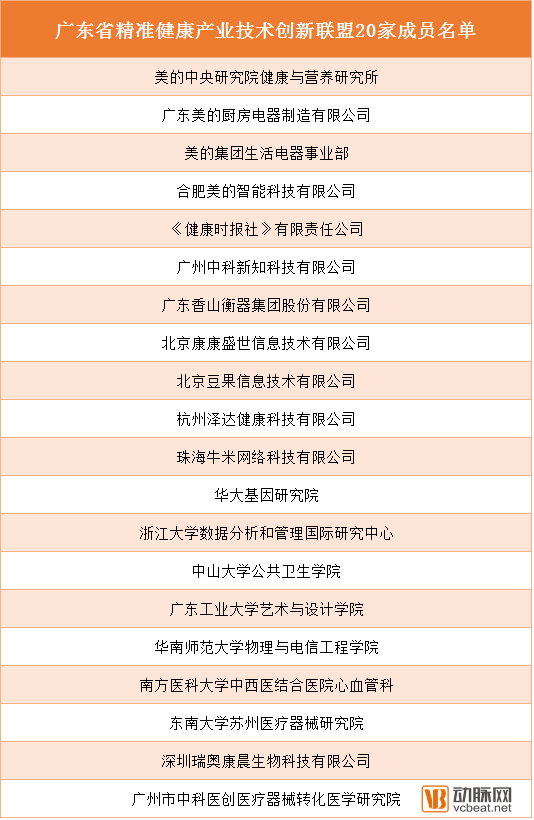
In addition, the alliance also announced three new members on that day, namelySoutheast University Suzhou Medical Device Research Institute, Shenzhen Ruiaokangchen Biotechnology Co., Ltd.andGuangzhou Zhongke Yichuang Medical Device Translational Medicine Research Institute. As of now, the Precision Health Industry Technology Innovation Alliance comprises 20 member organizations.
Meanwhile, jointly authored by the alliance members"White Paper on the Development of China's Precision Health Management Industry in 2017"Also officially released on the same day. The white paper points out that with the development of mobile internet, Internet of Things, big data, and artificial intelligence technologies, the conditions for transformation and upgrading of the precision health industry are ripe, with promising prospects ahead.
What Is Precision Health Management?
The white paper posits that precision health management is founded on individual genetic testing, integrated with comprehensive health examinations—particularly immune cell function assays—alongside health records, lifestyle factors, dynamic monitoring, and big data analytics and interpretation. This approach provides individuals and diverse populations with precise health assessments, interventions, supervision, and health education management services.
With the widespread adoption of the internet and big data, along with the rise of artificial intelligence, precision health management has become a prominent area of broad interest across all sectors of society.
Studies have shown that the effect of drugs on extending lifespan is very limited, andBy leveraging an artificial intelligence data analytics platform to digitize vital signs and life trajectory data, it is possible to develop intelligent health intervention plans tailored to individual physiological indicators, lifestyles, and preferences. This approach enables personalized, precision health management and represents a viable strategy for preventing disease at its source and extending lifespan.
AI-powered health management will significantly reduce communication costs between users and enterprises, driving the realization of precision health management through personalized solutions. The precision health industry holds great promise.
B2B2C Model Based on “Hardware + Software + Cloud”
To achieve true “precision” in health management, technological breakthroughs are still required first. In this era of explosive growth in new technologies,The B2B2C model based on “hardware + software + cloud” is the future development trend of the precision health industry chain.
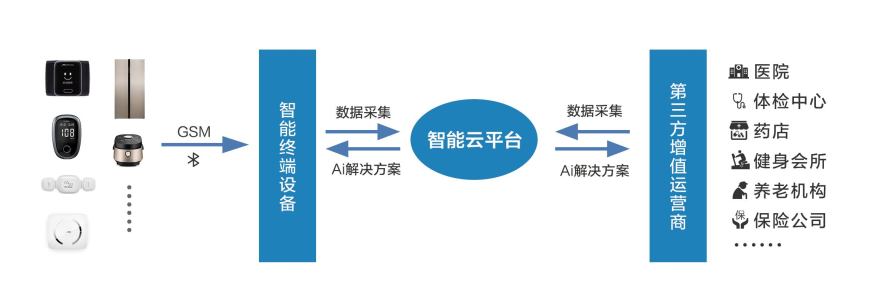
First, as the entry point for data collection, smart blood pressure monitors and glucometers have seen increasing penetration in Chinese households in recent years, laying the foundation for the development of the precision health management industry.
Second, mobile internet and the Internet of Things enable collected basic user data to be circulated and aggregated in the cloud.
Furthermore, the rise of big data and artificial intelligence has enabled more personalized health management. Cloud-based platforms can deconstruct and analyze users’ baseline data from a health perspective, thereby delivering precise health services. Complementing this with deep learning and neural network algorithms allows the system to engage in autonomous learning, making individualized health plans increasingly targeted.
Finally, the cloud platform can deliver AI-driven personalized solutions to smart terminal devices. By partnering with third-party institutions such as hospitals and online consultation platforms, or by providing hardware like smart bands, glucometers, and blood pressure monitors to insurers and hospitals, enterprises can offer users personalized health guidance and solutions based on monitoring data.
Its revenue model includes charging users, monetizing traffic, and charging for third-party value-added services.
How Can Alliance Members Achieve Win-Win Cooperation?
Leveraging this B2B2C business model, alliance members leverage their respective strengths to jointly drive the development of the precision health industry.
“With ‘Healthy China’ elevated to a national strategy, the broader health industry is ushering in a golden era of opportunity. Midea’s entry into the health sector represents an inevitable trend driven by consumption upgrades. By fostering connectivity, co-creation, sharing, and joint utilization, Midea aims to transform lifestyles through its products, promote values centered on healthy living, and provide comprehensive solutions to health-related challenges.”"We aim to leverage our longstanding strengths in smart home technology, databases, cloud computing, and artificial intelligence, while joining forces with other members to collectively build a health management ecosystem."”
“"The first step we are taking now is to promote healthy eating and balanced nutrition. As our alliance deepens its collaboration, we will also provide a comprehensive suite of solutions targeting sleep and exercise lifestyles, enabling people to live healthier lives.""Hu Ziqiang told VCBeat."
This is particularly evident in Midea’s smart home appliances. Based on basic user information such as height, weight, age, gender, food allergies, and taste preferences, Midea’s smart appliance products can provide personalized dietary recommendations, customized meal planning, health information, and other services.
For example, Midea’s smart refrigerators collect user health data and upload it to the Midea Health Cloud Platform, where personalized health models are built within the management platform. This enables the refrigerator to provide value-added services to users, including: customized healthy meal plans, recommendations for healthy foods, access to common recipes, retrieval of functional recipes, real-time monitoring of ingredients inside the refrigerator with push notifications on freshness, nutritional analysis and evaluation to facilitate convenient ordering, and weight management.
In addition,Midea Group also leverages its health data and service application platform, Midea Health Cloud, as a “bridge” to collaborate with alliance members in jointly building a closed-loop health management system.
Midea Health Cloud focuses on out-of-hospital home health management, leveraging intelligent health monitoring data from its big health data platform (smart scales, ECG patches, blood pressure monitors, and glucometers) and the advantages of its smart home appliances, combined withZhongke Xinzhi, precise, continuous, and non-invasive vital signs monitoring devices, as well asNiumi Selectingredient delivery services, providing users with personalized health solutions, and ultimately achieving closed-loop management encompassing health assessment, personalized dietary and exercise guidance, health tracking, and re-evaluation.
Alliance members collaborate and share resources to tailor healthier dietary and exercise plans for users, foster healthy lifestyles, bridge the gap between hospitals and homes, and accelerate user recovery, enabling them to enjoy a better quality of life while maintaining stronger physical health.
In this way, while providing value-added services to users, we can also cultivate their health awareness and enhance their recognition of and loyalty to alliance members, thereby helping enterprises increase product sales and ultimately achieving win-win cooperation.
Finally, Dr. Hu Ziqiang emphasized: “The Alliance is an open platform for exchange. We hope to see more enterprises join us, working together to create value for China’s health industry.”