

Zhejiang University School of Medicine Second Affiliated Hospital Launches 'Good Doctor Zhe Er' to Enable 1,400 Physicians as Shared Resources Across Dozens of Hospitals

In November 2017, The Second Affiliated Hospital of Zhejiang University School of Medicine (hereinafter referred to as “Zhejiang No. 2 Hospital”) launched its first internet-based product under the International Network Medical Center: “Zhe Er Good Doctor.” The hospital positions “Zhe Er Good Doctor” not merely as a tool, but as a service that leverages digital tools to extend medical services beyond the hospital setting—to the general public and to partner hospitals.
As a technical supporter and participant in the “Zhe’er Good Doctor” product, Wang Xuefeng, CEO of Hangzhou Teyang Network Technology Co., Ltd., told VCBeat: “The main drivers accelerating hospitals’ development of internet-based products are twofold: first, to comply with national policies on tiered diagnosis and treatment; second, a heightened sense of crisis stemming from the rapid growth of the internet, coupled with the impact of zero-markup drug pricing and the rise of private healthcare institutions.”
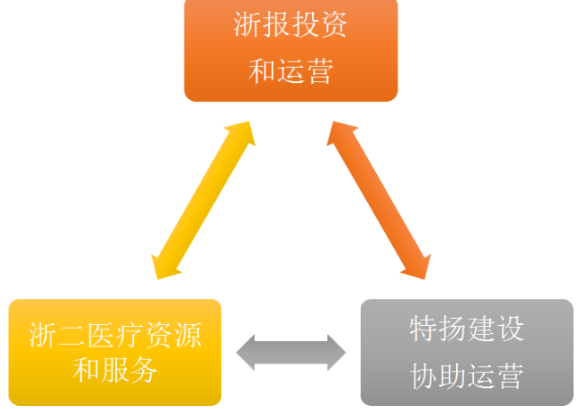
“Zhe’er Good Doctors” is jointly released by The Second Affiliated Hospital of Zhejiang University School of Medicine and Zhejiang Daily Press Group, with Teyang Network serving as the product developer and technical support provider.
“To develop this product, we conducted extensive field research. Two of our product managers spent more than six months in hospitals, visiting departments one by one to understand the true needs of doctors and patients,” said Wang Xuefeng.
Five Major Tiers, Six Sub-platforms, Nine Core Systems
From a technical architecture perspective, the “Zhe’er Good Doctor” product comprises five major layers, namely:Terminal Layer, Network Hardware Layer, Platform Layer, Application Layer, User Layer. The entire system, with the platform and data center at its core, is divided into the followingSix Major Sub-platforms and Nine Major Systems。
The six major sub-platforms include:Medical Service Sub-platform, Online Hospital Sub-platform, Health Management Sub-platform, Tiered Referral Sub-platform, Telemedicine Sub-platform, Physician Education Sub-platform, Medical Service Sub-platform。
The nine major systems include:
1. Mobile App/WeChat System.It primarily aims to digitize the patient care support process, including appointment scheduling, report retrieval, and payment. By moving non-clinical aspects of the healthcare journey online, it seeks to make these processes as fast and convenient as possible.
2. Doctor-Patient Consultation System."Primarily delivers various doctor-patient consultation services through a mobile app and WeChat, including online triage, text-and-image consultations with physicians, video consultations with specialists, and professional nursing consultations."
3. Internet Pharmaceutical Care Service System.Provides services including patient medication consultations, online prescription refills for chronic disease patients, medication review, and pharmaceutical delivery.
4. Health Services System.Provide personal online health records, health assessments, health education, and personal health data monitoring services.
5. Tiered Referral System.Provide tiered diagnosis and treatment services between hospitals, including outpatient care, inpatient care, diagnostic tests, and day surgery.
6. Telemedicine and Collaborative Outpatient Clinic System.Implement telemedicine services, including remote consultations, collaborative outpatient clinics, and cloud-based imaging.
7. Online Physician Education System.Provides online medical education for physicians, live-streamed physician training, and related services.
8. Patient Service and Follow-up System.Provides services including call center operations, satisfaction management, and patient complaint management.
9. Operational Support System.Provide operational management service support.
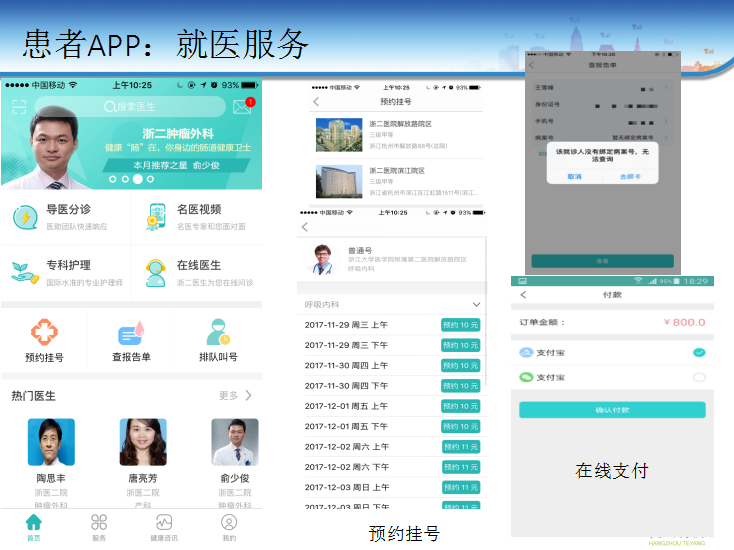
“Top Doctors at SAHZU"Product Interface
Connectivity with other healthcare IT vendors is a challenge that Teyang Network must confront. To achieve interoperability of information within the hospital, Teyang Network’s approach is as follows:
1. Standardize the interfaces to facilitate integration with other hospital information systems;
2. Provide multiple access methods, including SOA (Service-Oriented Architecture) interfaces, view interfaces, and front-end processor-based access, to minimize interface costs and time.
3. Avoid collecting unnecessary data to minimize interaction data and system complexity.
Phase I Objective: Establish a hub-and-spoke network centered on The Second Affiliated Hospital of Zhejiang University School of Medicine to connect with subordinate hospitals.
According to Wang Xuefeng, Phase I primarily focused on the digital transformation of The Second Affiliated Hospital of Zhejiang University School of Medicine (SAHZU) itself. Phases II and III will build upon this foundation to extend coverage to all branch hospitals of SAHZU as well as dozens of collaborative hospitals. With SAHZU at the core, the system will connect county- and city-level central hospitals with community health centers, thereby establishing a tiered diagnosis and treatment model.
Functionally, Phase I primarily implemented features such as mobile healthcare services, online consultations, remote consultations, collaborative outpatient clinics, and tiered diagnosis and treatment.
The mobile healthcare application primarily enables functions such as appointment scheduling, same-day registration, online payment, report retrieval, and online identity verification. Phase II will mainly address issues related to end-to-end online payment processes.
Online Consultation Service: Provides patients with online triage, text-and-image consultations with physicians, video consultations with specialists, and specialized nursing advice. Since its launch two months ago, the service has been handling an average of 50 to 60 online consultation cases per day.
Telemedicine and tiered diagnosis and treatment are now live and in use, with additional features to be implemented in Phase II.
Overall, the primary hallmark of “SAHZU Good Doctors” is its reliability and trustworthiness. “What distinguishes Taobao from JD.com? One is an open marketplace, while the other operates on a self-run retail model. ‘SAHZU Good Doctors’ functions akin to a self-run store, with all physicians being affiliated directly with The Second Affiliated Hospital of Zhejiang University School of Medicine (SAHZU). Furthermore, the services provided by the hospital are standardized, regulated, and traceable, thereby ensuring service quality,” said Wang Xuefeng.
The second major feature of “Zhe-Er Good Doctors” is the establishment of a closed-loop service system. After patients consult with doctors, they need to visit the hospital for treatment, and doctors can directly arrange their in-person medical appointments. Furthermore, doctors can access patients’ medical records and examination information at any time through a dedicated app. Currently, “"Top Doctors at The Second Affiliated Hospital of Zhejiang University School of Medicine"“Already on the platform1,400 Medical ExpertsOn standby for consultation.
“Zhe-Er Good Doctors” features a third key characteristic: the sharing of medical resources. It facilitates the sharing of healthcare resources between higher- and lower-tier institutions, enabling residents in Hangzhou to access expert services from The Second Affiliated Hospital of Zhejiang University School of Medicine (SAHZU).
How to Ensure the Smooth Implementation of Tiered Diagnosis and Treatment Services?
According to Wang Xuefeng, there are currently three main categories of patients seeking medical care at the Second Affiliated Hospital of Zhejiang University School of Medicine (Zhejiang Er Yuan):
1. Identify patients with complex and critical conditions who need to seek medical care at the Second Affiliated Hospital of Zhejiang University School of Medicine (Zhejiang Er Yuan);
2. Patients who can be treated by secondary hospitals;
3. Patients who can be treated by community hospitals.
With the “Zhe’er Good Doctor” platform, patients in the latter two categories no longer need to visit The Second Affiliated Hospital of Zhejiang University School of Medicine (SAHZU), thanks to online triage, referral, and remote collaboration.
Tiered diagnosis and treatment between primary hospitals and the Second Affiliated Hospital of Zhejiang University School of Medicine (SAHZU) involves two scenarios: one in which physicians at primary hospitals submit referral requests for patients through the tiered diagnosis and treatment system; and another in which primary hospitals first submit requests for remote consultations, with the need for referral determined after specialist evaluation via remote consultation by experts from the higher-level hospital.
Patients at primary care hospitals who need to be transferred to higher-level hospitals or wish to receive remote medical consultations must make an appointment in advance.
Regarding the issue of physicians' workload involved in remote consultations, Wang Xuefeng stated that relevant policies are already in place to support this practice; remote consultations may be subject to certain fees and can be included in medical insurance reimbursement.