

WeDoctor Cloud: Powering the Transformation from Internet Healthcare to Intelligent Medical Platform
Over the past decade, China’s cloud computing market has evolved from initial concept adoption to a phase of “comprehensive embrace.” Transitioning from generalized cloud services to specialized cloud solutions, the healthcare industry has accelerated onto a fast track of intelligent and diversified development driven by cloud platforms, fostering a competitive landscape characterized by the proliferation of multiple industry players.
In 2017, cloud platform companies that entered the healthcare sector all demonstrated strong performance:
In March, the Beijing Municipal Development and Reform Commission established the first “Key Technology Engineering Laboratory for Smart Healthcare Cloud” at Kingsoft Cloud.
In late March, Alibaba Cloud launched the AI system ET Medical Brain at the Apsara Conference;
In June, Qingyun announced the completion of its RMB 1.08 billion Series D financing round, officially making inroads into the healthcare industry;
In July, Alibaba Health partnered with Wanli Cloud to launch the “Doctor You” AI system;
In December, Kingsoft Cloud announced a $300 million financing round, with healthcare becoming a key area of its strategic expansion.
Although the other two giants of BAT, Tencent Cloud and Baidu Cloud, have not yet fully entered the medical field, WeDoctor, a company affiliated with Tencent, released its intelligent medical cloud platform, “WeDoctor Cloud,” at the first International Intelligent Healthcare Conference in November.
At the 4th World Internet Conference in early December, “WeDoctor Cloud” once again garnered significant attention from the industry. Robert Elliot Kahn, known as one of the “fathers of the Internet,” expressed considerable interest in WeDoctor Cloud and engaged in in-depth discussions with Liao Jieyuan, founder of WeDoctor, regarding its innovations in data transmission and data security.
For WeDoctor, which has been established for seven years, what does the launch of WeDoctor Cloud signify? What kind of cloud platform is it? With WeDoctor Cloud, what will the future landscape of healthcare look like?
From Internet Hospital to Weiyi Cloud: Weiyi’s “Face Change”
A review of WeDoctor’s development history reveals that each of its new initiatives has precisely aligned with the evolving trajectory of the healthcare industry.
In the first half of 2017, following the “regulatory standardization” of internet-based medical consultation services, the entire industry began seeking new pathways for development.
As a typical representative of internet healthcare enterprises, WeDoctor rapidly upgraded its “online” internet hospital into an Internet Medical Consortium, aligning with the national direction for implementing tiered diagnosis and treatment.
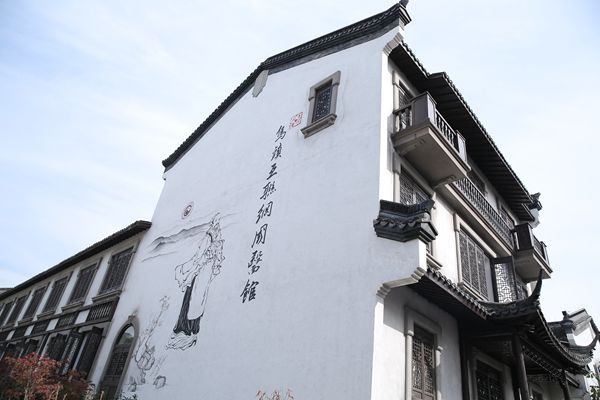
Following the 19th National Congress of the Communist Party of China, WeDoctor collaborated with a number of domestic universities of traditional Chinese medicine (TCM), large TCM hospitals, and the Tongxiang Municipal People’s Government to recently launch the Wuzhen Internet TCM Clinic, which fully aligns with the overarching strategy of the “Belt and Road” initiative for traditional Chinese medicine.
The era of WeDoctor as merely a registration platform has long passed. Its “Internet + Healthcare” business, centered on internet hospitals and medical consortia, is now returning to its essence, with internet technology serving simply as a means to achieve the digitization, mobilization, and intelligence of healthcare services.
The Wuzhen Internet Hospital, which connects more than 2,400 hospitals across China, 7,400 expert medical teams, and 150 million registered platform users, will ultimately become a traffic entry point and a source of data.
Over the past seven years, WeDoctor has leveraged internet healthcare to connect multiple supply-and-demand scenarios in medical services, including hospitals, physicians, patients, and the pharmaceutical and insurance industries. The Wuzhen Internet Hospital now handles more than 60,000 outpatient visits per day. WeDoctor has established over 100 regional medical service bases, comprising internet hospitals, medical consortia, and WeDoctor General Practice Centers, and has built a nationwide network of 18,000 primary care service outlets, including community health service centers and pharmacy-clinics. As a result, it has become China’s largest healthcare service platform and telemedicine collaboration network.
However, to carry forward the achievements of the past seven years, WeDoctor has pinned its hopes on WeDoctor Cloud.
“Connectivity and cloud adoption have broken down the walls of hospitals, progressively enabling data, workforce, and resource synergy, thereby delivering breakthrough capability enhancements to the entire healthcare industry.” This is how Liao Jieyuan, founder of WeDoctor, interprets the role of WeDoctor Cloud.
According to VCBeat, leveraging WeDoctor’s data accumulation and scenario connectivity, WeDoctor Cloud can provide dozens of cloud-based solutions—including internet hospitals, internet medical consortia, family doctor contracting, cloud pharmacies, and AI-assisted medical diagnosis—to a diverse range of users such as governments, hospitals, primary healthcare institutions, and medical health enterprises.
As a result, WeDoctor is preparing to transform from an internet healthcare company into a more diversified smart healthcare platform enterprise.
What is Weiyi Cloud?
VCBeat first came into contact with Weiyi Cloud at the First International Smart Healthcare Conference on November 15.
Tracing back to its origins, on March 25, the AI Research Center of Zhejiang University’s Ruiyi was unveiled at the Zijingang Campus of Zhejiang University, with WeDoctor donating RMB 100 million to support the center’s development.
WeDoctor thus took its first step toward medical artificial intelligence, which was later followed by the enhanced integration of “artificial intelligence” technologies within WeDoctor Cloud.
Officially introduced as the world’s first cloud platform dedicated to intelligent healthcare, Weiyi Cloud leverages Micro Medical Group’s extensive experience in internet-based healthcare, along with cloud computing, big data, and artificial intelligence technologies, to provide one-stop, multi-scenario cloud-based solutions for governments, hospitals, primary healthcare institutions, and medical and health enterprises.
Based on WeDoctor Cloud, two medical AI products have been developed: Ruiyi Intelligent Doctor and Huatuo Intelligent Doctor. The former is designed for Western medicine AI, while the latter is tailored for traditional Chinese medicine (TCM) AI.
Meanwhile, WeDoctor Cloud is the sole corporate member of the Medical Artificial Intelligence Alliance initiated by Zhejiang University. The alliance comprises 12 members in total; besides Zhejiang University and WeDoctor Cloud, the remaining ten are all hospitals, underscoring the critical importance of hospital settings, physicians, and medical data to the development of medical artificial intelligence.
This alliance is a prime example of the integration of industry, academia, and research. The hospital provides data, scenarios, and requirements; Zhejiang University, the hospital, and Weiyi Cloud jointly conduct R&D; and Weiyi Cloud then facilitates the industrial translation and sector-wide application of the developed products.
WeDoctor Cloud will open its cloud computing and cloud storage capabilities to the entire industry, fostering multi-directional collaboration with alliance members, healthcare institutions, physician teams, pharmaceutical companies, and research organizations to drive the development of smart healthcare in China.
Liao Jieyuan also stated that Weiyi Cloud is an open, intelligent healthcare cloud platform. It can support governments in implementing family doctor contracting services, help hospitals and physicians enhance their diagnostic and treatment capabilities, collaborate with pharmaceutical companies, insurers, and other institutions to build a comprehensive healthcare industry chain, improve China’s primary healthcare service system, and provide families with continuous, proactive, and end-to-end home healthcare services.
Western Medicine AI and TCM AI: WeDoctor Cloud “Takes It All”
Ruiyi Intelligent Doctor and Huatuo Intelligent Doctor are two medical AI products launched based on WeDoctor Cloud.
Ruiyi Intelligent Doctor is a Western medicine AI diagnostic and treatment application developed by WeDoctor in collaboration with the Zhejiang University Ruiyi Artificial Intelligence Research Center, featuring functionalities similar to IBM Watson and Baidu Medical Brain.
According to WeDoctor, through deep learning on millions of high-quality data sets, Ruiyi AI Doctor has achieved key breakthroughs in more than ten specialty areas, including pulmonary nodule detection, diabetic retinopathy screening, cervical cancer screening, bone age assessment, and general practice auxiliary diagnosis and treatment.
Notably, the accuracy and sensitivity of cervical cancer screening both surpass those of clinical physicians. For binary classification of diabetic retinopathy, specificity reaches 99% and sensitivity reaches 95% across most datasets, outperforming Google and achieving an internationally leading level.
The Hua Tuo Intelligent Doctor is an AI-powered diagnostic and therapeutic application in traditional Chinese medicine (TCM), centered on the core principle of syndrome differentiation and treatment, which consolidates the clinical experience of renowned TCM masters and their classic prescriptions.
Recently, CCTV’s “Economic Half-Hour” program featured a special report on the application value of the Huatuo Intelligent Doctor system in grassroots traditional Chinese medicine (TCM) communities. The report highlighted that since adopting the system in 2016, the Hangzhou Mishixiang Community Health Center has seen a substantial increase in TCM service volume, with the proportion of services involving TCM herbal decoction pieces and non-pharmacological therapies rising from less than 30% initially to nearly 50%.
“By leveraging AI-physician collaboration, we can replicate and scale expert expertise, empowering family doctors with ‘academician-level’ disease recognition capabilities to better support daily clinical practice,” said Liao Jieyuan.
WeDoctor Cloud Enables Comprehensive Upgrading of WeDoctor’s Business Capabilities
Although WeDoctor has not provided a comprehensive overview of the practical achievements and business logic of WeDoctor Cloud, we can still discern clues through its series of strategic initiatives.
If Wuzhen Internet Hospital and the newly opened Wuzhen Internet TCM Clinic are regarded as products of WeDoctor, then “Wuzhen Internet Hospital + Ruiyi AI Doctor” and “Wuzhen Internet TCM Clinic + Huatuo AI Doctor” will constitute WeDoctor’s core product lineup in the future.
Based on this, Wuzhen Internet Hospital has achieved cloud migration for hospital service windows, physician consultation rooms, diagnostic tests and laboratory examinations, medical consortiums, regional resident health records, and medical insurance payment and settlement. This full-chain “cloudification” reduces the operational load on healthcare institutions, improves business efficiency, and mitigates medical risks, thereby establishing the largest medical cloud platform in terms of international application scale.
To date, Weiyi Cloud has achieved data interoperability with more than 2,400 key hospitals across 30 provinces in China. The Huatuo AI Doctor has been integrated into over 310 traditional Chinese medicine (TCM) clinics in 11 prefecture-level cities in Zhejiang Province, cumulatively assisting in the issuance of more than 1.7 million prescriptions, thereby becoming the TCM “AI doctor” with the widest international application scope.
“The most challenging aspect of traditional Chinese medicine (TCM) is its inheritance. We leverage an AI-powered TCM system to preserve experiential knowledge and disseminate it to primary-care physicians,” said Liao Jieyuan.
Moreover, WeDoctor Cloud has helped Beijing Tiantan Hospital establish the “Tiantan Neurological Disease Specialist Alliance,” assisted the Heilongjiang Provincial Government in building the “Heilongjiang Provincial Population Health Information Platform,” and undertaken the “Wenzhou Regional Medical Collaboration Platform,” becoming the intelligent medical cloud platform with the widest international application scale.
What else can be done with WeDoctor Cloud?
“The cloud is the soil, AI is the tree, and terminals are the fruit.”
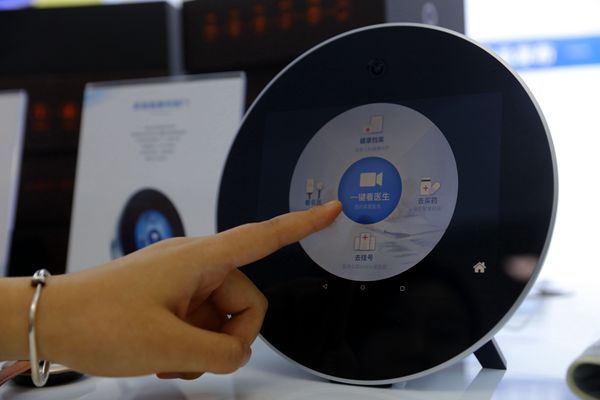
Liao Jieyuan articulated the relationship among cloud platforms, artificial intelligence, and terminal devices. Leveraging cloud platforms and AI, WeDoctor has also launched a series of integrated smart health terminals that combine “software + hardware + services.”
This terminal offers individual and household users one-click consultations, appointment scheduling, recommendations for renowned physicians, health records, health management, and vital signs monitoring. Without leaving home, users can have face-to-face interactions with their family doctors through a simple “one-click” action, thereby receiving proactive, immediate, and convenient medical and healthcare services.
“Our newly launched smart health smartphone has become a blockbuster hit. Seniors can use the phone to instantly connect with their family doctors at the touch of a button when facing health issues at home; if the family doctor cannot resolve the issue, the call is immediately transferred to a specialist. The nationwide medical service network we have built over seven years, covering both urban and rural areas across China, serves as a robust backbone,” said Liao Jieyuan. “Leveraging WeDoctor Cloud, we have also achieved tripartite collaboration among healthcare services, pharmaceuticals, and health insurance, thereby advancing the integrated development of these three sectors. While the domestic health insurance industry is experiencing widespread losses, our health insurance services are achieving profit margins of approximately 30%.”
Building on extensive scenario connectivity and vast medical data, Weiyi Cloud leverages technologies such as big data, cloud computing, and machine learning to develop AI-assisted diagnostic and treatment systems, enabling household users to access more affordable and higher-quality healthcare services through health terminals.
In the future, smart terminals will enable “three-way synchronization” with just a single button press: human synchronization, allowing patients and doctors to interact face-to-face via the terminal within three seconds; data synchronization, enabling rapid sharing of health records and electronic medical records from different institutions with physicians; and payment synchronization, permitting patients to use their medical insurance or personal insurance accounts directly from home.