

Moreal Releases '2017 China Medical Aesthetics Industry White Paper': China Becomes World's Second-Largest Market, Gen-Z Emerges as Key Consumer Base
On December 8, 2017, the Gengmei App released the “2017 White Paper on China’s Medical Aesthetics Industry” and the “2017 Black Book on China’s Medical Aesthetics Industry,” providing an in-depth analysis of the industry’s market size, development trends, changes in consumer behavior, and underlying malpractices.
In 2017, China surpassed Brazil to become the world’s second-largest medical aesthetics market, with projections indicating it would surpass the RMB 1 trillion mark in 2019. Safety is the primary factor influencing consumer decision-making, and illegal medical aesthetic practices have become the biggest obstacle to the development of China’s medical aesthetics industry.
This “Dual White Paper” draws on this year’s e-commerce big data from the back-end systems of the Gengmei App, covering 22 million users. It combines questionnaire surveys and statistical analyses based on a random sample of 120,000 Gengmei App users and 500 medical aesthetic institutions. The report also queries and cites relevant data from ISAPS, Deloitte, Zero2IPO Research, and TalkingData, and includes field visits to unlicensed clinics and illegal training organizations. Its aim is to expose the full scope of illegal medical aesthetics and provide an objective description of the current state of China’s medical aesthetics industry.
China's Aesthetic Medicine Market Sees Accelerating Growth, Surpassing Brazil to Become the World's Second-Largest
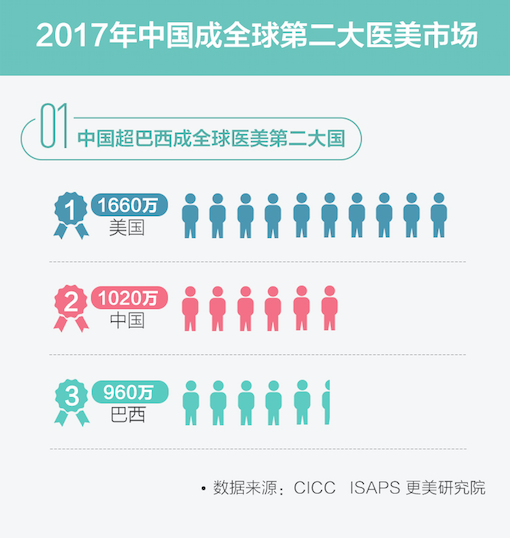
The “2017 White Paper on China’s Medical Aesthetics Industry” shows that in 2015, China’s medical aesthetics market trailed Brazil by a narrow margin of just 0.8%. As the industry entered a “fast lane” of development, China’s medical aesthetics sector achieved a growth rate exceeding 40% in 2017, with the total number of procedures surpassing 10 million. This milestone marked China’s overtaking of Brazil to officially become the world’s second-largest medical aesthetics market, after the United States.
It is projected that China’s medical aesthetics market will surpass the one-trillion-yuan mark in 2019. The plastic surgery and cosmetic industry has also become the fourth-largest service sector, following real estate, automobiles, and tourism.
The medical aesthetics industry has long been criticized for issues such as information asymmetry, heavy reliance on advertising and promotion, and excessively high customer acquisition costs.
The emergence of medical aesthetics platforms has not only made information on institutions, procedures, and physicians—previously opaque in the industry’s black-box sales model—readily accessible, but also presents each procedure in a shelf-like format, with service details and pricing clearly displayed at a glance.
Rising Acceptance of Medical Aesthetics: Characterized by Younger Demographics, Increased Male Participation, and High Repeat Purchase Rates
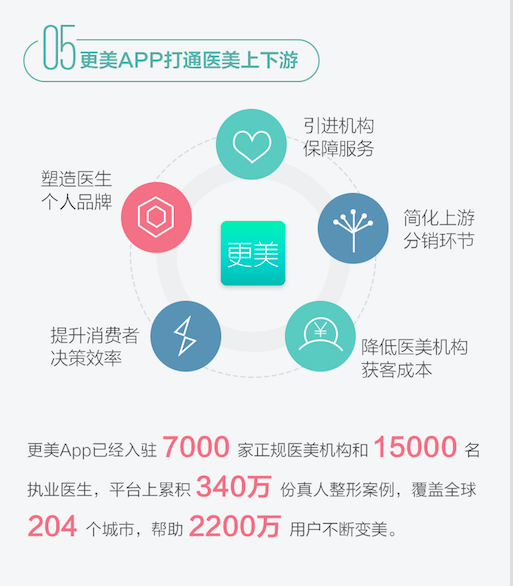
According to the "2017 White Paper on China's Medical Aesthetics Industry," male users accounted for 23% of the platform’s total user base, a significant increase from 17% in 2015. An increasing number of Chinese men are undergoing cosmetic surgery to enhance their appearance and boost their masculine appeal. In fact, in the United States, Japan, and several developed European countries, male users constitute half of the entire medical aesthetics market.
Liu Di, founder and CEO of Gengmei, stated, “We have observed a clear trend: the rapid development of hair transplantation centers in China over the past few years. Compared with aesthetic enhancement, most male users are more concerned about anti-aging procedures such as hair transplantation.”
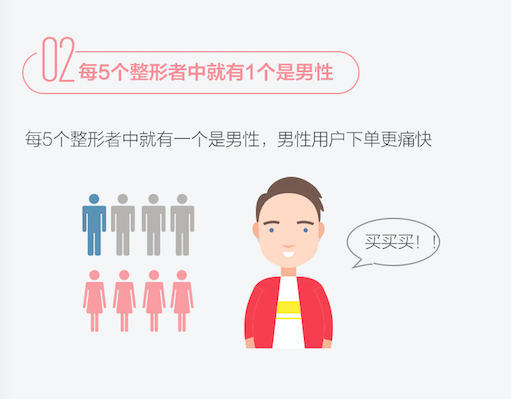
Users of medical aesthetics platforms are trending younger, with the post-90s generation becoming the primary consumer base and the post-00s generation joining the ranks of those undergoing cosmetic procedures. The average age for first-time cosmetic surgery among platform users has dropped from 28 to 22 years old.
The development of medical aesthetics finance has also become a significant factor driving the expansion of demand in the medical aesthetics industry. Installment payment options for medical aesthetic services lower the entry barrier for consumers, thereby stimulating demand growth. The surgical insurance and outcome insurance launched by the Gengmei APP help users quantify medical risks, further supporting the expansion of demand in the medical aesthetics sector.
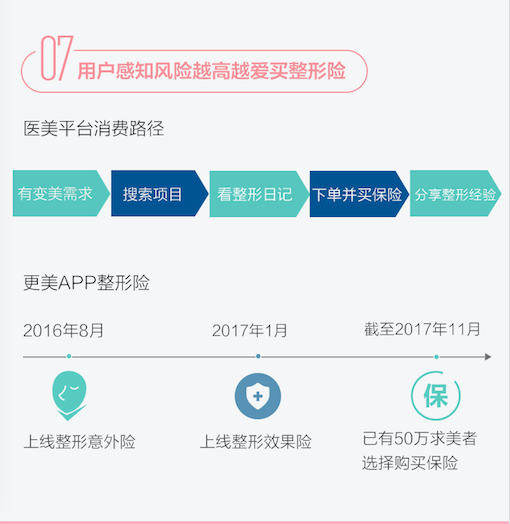
Information Opacity Is the Primary Cause of Illegal Medical Aesthetics
For legitimate medical aesthetics, accredited institutions, licensed practitioners, and approved pharmaceuticals are all indispensable.
Liu Di, founder of the Gengmei app, stated: “Legitimate medical aesthetics procedures, including surgeries and injections, must be performed by licensed practitioners using approved pharmaceuticals within accredited institutions. Such institutions must obtain both a Business License and a Medical Institution Practice License to conduct their operations. Licensed practitioners (physicians) must hold a Physician Qualification Certificate and a Physician Practice Certificate, and they are permitted to perform procedures only at compliant institutions. Approved pharmaceuticals must be authentic and must not include gray-market products smuggled from abroad.”
However, with the rapid development of China's medical aesthetics market in recent years, substantial profits have attracted a large number of unlicensed and illegal medical aesthetics institutions to take risks and reap high returns.
“2017 Black Book of China’s Medical Aesthetics Industry” analyzes that the primary causes of illegal medical aesthetics include a scarcity of authoritative channels, insufficient information transparency, high profitability coupled with lenient penalties for illegal practices, high concealment of illegal operations, and significant regulatory challenges.
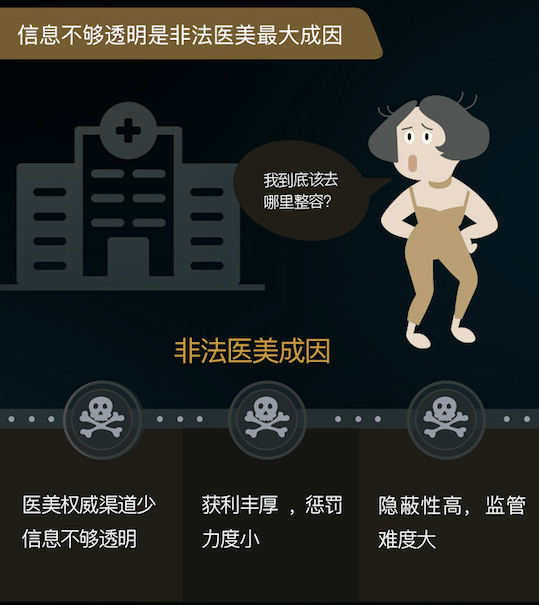
“The Black Book” reveals that an illegal clinic in China generates an average annual profit of RMB 1 million. Once investigated for illegal medical practice, the typical penalty is merely the confiscation of medical equipment, with average fines ranging from RMB 10,000 to RMB 20,000, resulting in extremely low costs for non-compliance.
Generally, illegal medical aesthetic institutions are highly concealed, with 90% of them hidden within common lifestyle beauty establishments such as beauty salons and nail salons. Some private studios are even tucked away in ordinary residential complexes, while others go so far as to perform procedures directly at customers’ homes or in hotels.
Beyond unlicensed institutions and illegal practitioners, the authenticity of pharmaceutical products constitutes another major profit channel for illegal medical aesthetics. A large volume of counterfeit drugs is being sold to unsuspecting consumers through platforms such as WeChat. Furthermore, some illicit clinics employ individuals to smuggle gray-market drugs and medical devices into the country. The difficulty of regulatory oversight, combined with these factors, has collectively fueled the proliferation of illegal medical aesthetic practices in China.
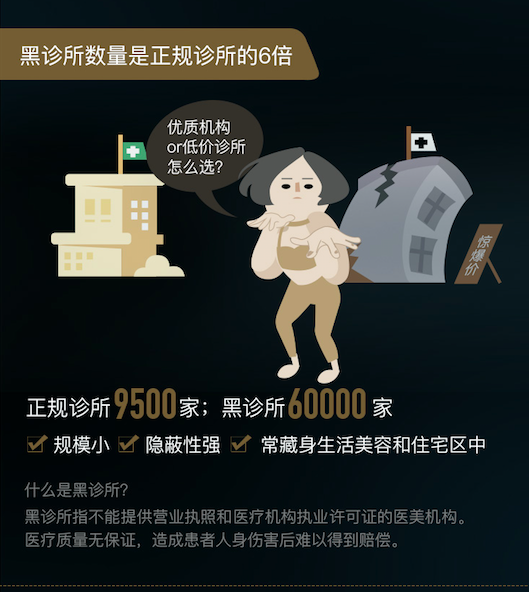
Unlicensed Clinics Outnumber Legitimate Facilities Sixfold, Ruining 100,000 Faces in Three Years
“2017 China Medical Aesthetics Industry Black Book” statistics show that the number of illegal clinics in China has exceeded 60,000, which is six times that of licensed clinics; the annual number of surgical procedures performed at illegal clinics is 2.5 times that of licensed clinics, exceeding 25 million cases. Approximately 40,000 medical accidents occur annually at illegal clinics, with issues such as postoperative infections and severe scarring being commonplace.
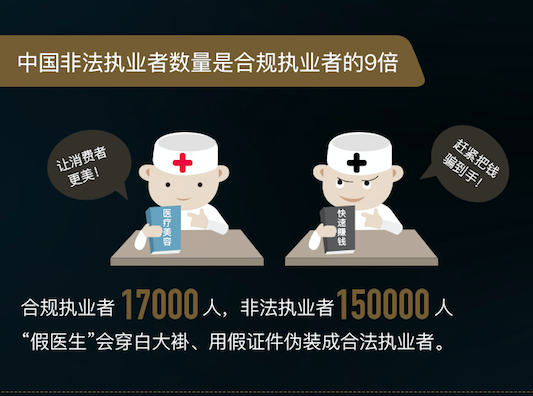
The number of illegal practitioners in China is nine times that of compliant practitioners, meaning that only one in ten plastic surgeons is legitimate. Most alarmingly, these “fake doctors” are difficult to identify; they wear white coats, caps, and masks, and even use forged credentials to pose as licensed professionals.
Since legal practitioners are required to hold three certificates—the Physician Qualification Certificate, the Physician Practicing Certificate, and the Attending Physician Certificate for Medical Aesthetics—which take years of advanced study to obtain, numerous crash-course training programs in plastic surgery have emerged.
Illegal practitioners require certificates, which these training institutions issue fraudulently. Most of them operate under banners such as “Four-Day Crash Course to Become a Microplastic Surgeon” or “7-Day Microplastic Surgery Training Program,” employing so-called “instructors” who lack any professional or teaching qualifications to provide students with only a few days of simplistic training. Some institutions even have students practice injections on each other; some students proceed with injection exercises without wearing gloves or sterilizing, and practice surgical incisions on chicken wings.
The first clients sought by illegal practitioners of minimally invasive cosmetic procedures are often relatives and friends, who also serve as “practice subjects” for honing their skills. If no complications arise from these procedures, the practitioners then enlist these relatives and friends to promote their services and recruit new clients, with referrers receiving commissions ranging from several thousand to tens of thousands of yuan.
Industry and Platform Initiatives in Tandem to Drive Standardization of the Medical Aesthetics Sector
To crack down on illegal medical aesthetics, in May 2017, the National Health and Family Planning Commission issued the "Notice on Launching a Special Campaign to Severely Crack Down on Illegal Medical Aesthetic Services," which stated: "To further safeguard the legitimate rights and interests of consumers and protect public health, the National Health and Family Planning Commission, the Cyberspace Administration of China, the Ministry of Public Security, the Ministry of Human Resources and Social Security, the General Administration of Customs, the State Administration for Industry and Commerce, and the China Food and Drug Administration have decided to jointly launch a special campaign to severely crack down on illegal medical aesthetic services."
The emergence of online medical aesthetics platforms has also brought a glimmer of hope to address information asymmetry in the medical aesthetics industry. All information regarding medical aesthetics institutions, procedures, and doctors on the Gengmei APP is accessible for inquiry.
Find Compliant Clinics:As a leading medical aesthetics platform, the Gengmei app conducts on-site verification and assigns dedicated specialists to review the qualifications of medical aesthetic institutions applying for listing, ensuring that 100% of the institutions on the platform are fully licensed and compliant.
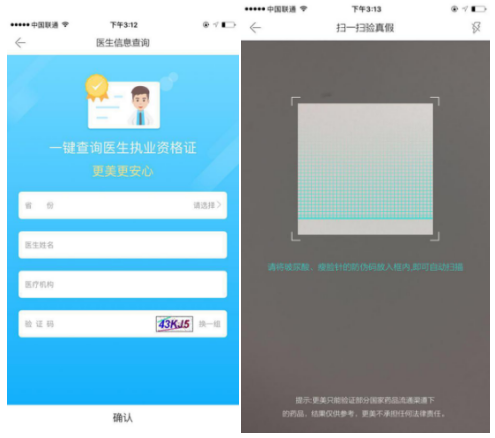
Compliance Physician Search:In April 2017, the Gengmei app launched a physician credential verification feature, with its backend integrated into the National Health and Family Planning Commission’s physician qualification verification system, enabling consumers to check physicians’ information and credentials with a single click.
Check for compliant products:Users can verify the authenticity of medications by scanning QR codes with the drug verification feature in the Gengmei app, ensuring a safer and more confident beauty journey.
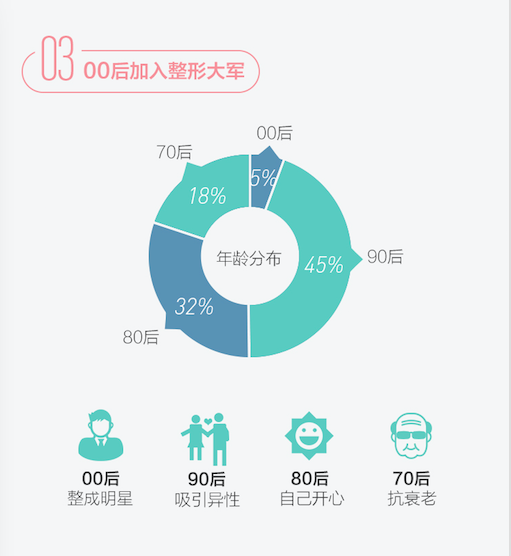
As of December 2017, the Gengmei APP had onboarded 7,000 licensed medical aesthetic institutions and 15,000 practicing physicians. The platform had accumulated 3.4 million real-life cosmetic surgery case studies, covering 204 cities worldwide as well as five overseas countries and regions, helping 22 million users continuously enhance their appearance.