

Internet Hospitals: Focused on Complex or Chronic Diseases? Key Operational Challenges and Strategic Insights from Industry Leaders
On December 8, 2017, the 2nd “Huaxia Internet+ Hypertension Summit and the 2017 Annual Meeting of the Hypertension Branch of the China International Exchange and Promotive Association for Medical and Health Care” was held in the International Hall on the second floor of the Beijing International Hotel. The event was hosted by the Hypertension Branch of the China International Exchange and Promotive Association for Medical and Health Care and organized by Peking University People’s Hospital.
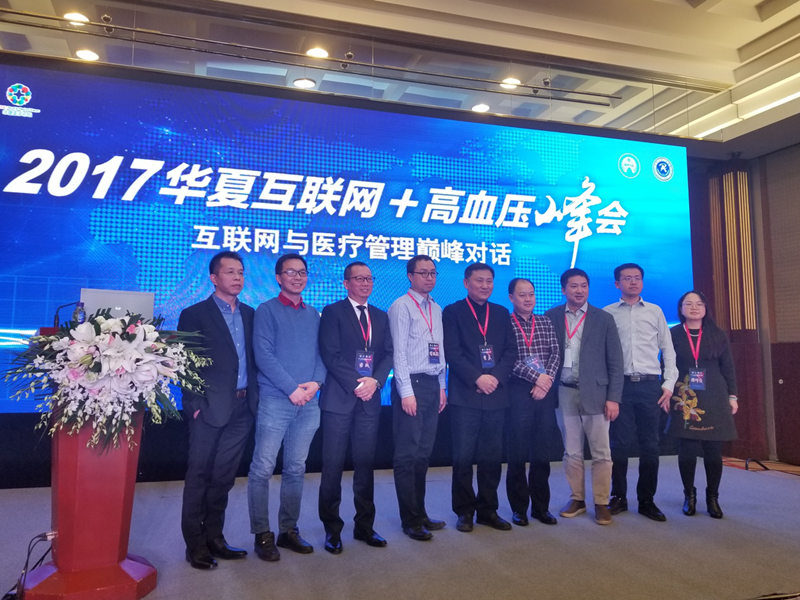
Attendees of this forum included Professor Huo Yong, a leading expert with practical experience in internet healthcare; He Tieqiang from China Life Investment Holdings; Dr. Li Yong, President of Chaotian District People’s Hospital in Guangyuan, Sichuan Province; as well as several pioneers representing diverse internet hospital models: Zhou Xinxing, CEO of Guizhou Internet Hospital; Shi Hui, Vice President of Haodf Online; Li Chengzhi, Founder of Tanghushi (Sugar Nurse); Jin Xin, Founder of Aiyisheng Health Technology; and Zeng Mingfa, Founder of Guiyang Kangkang Internet Hospital for Hypertension and Chronic Disease Management.
The forum, titled “Are Internet Hospitals Centered on Complex Diseases or Chronic Diseases? What Are the Operational Challenges and Key Success Factors?”, was co-moderated by Dr. Huo Yong, Director of the Heart Center and Department of Cardiology at Peking University First Hospital, and Mr. Pang Chenglin, Executive Dean of 39 Internet Hospital. The participants engaged in an in-depth discussion on the key operational elements and challenges of these two models, as well as the value they deliver to physicians, patients, and primary care providers.
There is a consensus that, regardless of the format, it is essential to adhere to the fundamental principles of internet-based healthcare, genuinely address the pain points of both physicians and patients, deliver value to primary care hospitals, and align with the current trends in national healthcare reform policies.
Experts Such as Huo Yong and Li Yong Share Their Views on Internet Healthcare
Professor Huo Yong provided a detailed exposition on the operational standards, regulations, and the essential nature of healthcare within the context of internet-based medical services. He noted that the development of internet healthcare in China is becoming increasingly mature, with the integration of health IT and data deepening the advancement of the healthcare system. Meanwhile, the BAMA project, based on post-diagnosis management, bridges inpatient care with post-discharge management. Hypertension, a primary risk factor for cardiovascular diseases, has been selected as a core pilot area for internet healthcare and receives significant attention from national basic public health services. Research indicates that a combined approach—featuring home blood pressure monitoring under the supervision of family doctors, internet-based blood pressure recording, and pharmacist-led data management—demonstrates remarkably clear and effective advantages in blood pressure control.
Based on its research, 39 Internet Hospital has developed six innovative telemedicine models via mobile internet video platforms, tailored for individuals, departments, conference venues, and remote medical centers. These models include remote consultation for complex cases, remote medical education, remote joint ward rounds, multi-specialty joint consultations, internet-based poverty alleviation medical aid, and remote peer-to-peer medical collaboration. Over the past year, more than 100,000 remote medical service cases have been completed nationwide, covering 37 specialties across 24 provinces. By keeping over 90% of patients with difficult and critical conditions treatable locally within their local hospitals, this initiative has significantly advanced the realization of tiered diagnosis and treatment goals. Post-treatment follow-up results indicate a patient satisfaction rate as high as 98.79%. Edited by Professor Huo Yong, with an editorial board comprising clinical experts involved in actual telemedicine practice, legal professionals, hospital administrators, and medical and operational staff from the internet hospital, the first practical guide to mobile remote medical services in China’s internet hospitals has been compiled based on 39 Internet Hospital’s operational experience. Titled Trends, Practice, and Standards: Application and Practice of Internet Hospitals in Tiered Diagnosis and Treatment, the book is forthcoming and will provide a reference for the standardized implementation of major internet hospitals.
Professor Huo Yong concluded that the core of healthcare lies in its quality, encompassing the overall quality of medical outcomes, structural composition, and care processes. Establishing detailed, standardized protocols for internet-based medical diagnosis and treatment serves as an essential prerequisite for upholding the principle that “the essence of internet healthcare remains healthcare.”
President Li Yong, on behalf of Chaotian District People's Hospital of Guangyuan City, Sichuan Province, provided a strategic summary of the needs and practices regarding internet hospitals among physicians and patients at county- and city-level hospitals.
Departments including Cardiology, Respiratory Medicine, Pediatrics, and Gynecology at Chaotian District People’s Hospital have been providing routine internet-based medical services for nearly one year through the 39 Internet Hospital platform, in collaboration with renowned specialists nationwide. By offering “remote ward round” services from these experts to over a thousand patients, the hospital ensures the authority and accuracy of patient treatment. Meanwhile, medical staff in these departments, from department heads to attending physicians, have received case-based teaching and guidance from the experts, fostering rapid professional development within their teams. This approach has earned high recognition and trust from patients in Guangyuan City, establishing the hospital as an effective practitioner of China’s tiered diagnosis and treatment policy. Additionally, it has managed nearly 5,000 chronic disease patients from township areas within just six months.
Based on the long-term and effective practical experience of Chaotian District People’s Hospital, President Li Yong summarized that the internet is leading and fostering continuous innovation in healthcare. As county- and city-level hospitals, it is even more essential to embrace internet thinking and leverage internet platforms to seek new momentum for institutional revitalization. By accurately grasping the contemporary demands placed on county-level hospitals, these institutions can harness the power of internet hospitals to enhance medical quality and operational functions.
A Collection of Insights from Entrepreneurs Including Pang Chenglin and He Tieqiang
In the subsequent roundtable discussion, Pang Chenglin engaged with industry insiders on three core issues:
How Do Different Internet Hospitals Address the Pain Points of Patients, Doctors, and Hospitals, and What Are Their Contributions?
What are the key breakthroughs and challenges required for different internet hospital models to achieve normalization?
From an individual perspective, what are your expectations for the successful implementation of internet hospitals?
In Zhou Xinxing’s view, trust is the most valuable asset in the healthcare sector. Compared with other consultation formats, video consultations convey richer information and facial expressions, thereby enhancing trust during the medical care process. Guizhou Internet Hospital, which provides medical services directly to patients, has also faced challenges in its exploration of commercialization. Unlike patients with urgent or critical conditions, chronic disease patients who are willing to pay are actually a group with strong health awareness, ready to invest proactively in their own well-being.
From another perspective, physicians involved in chronic disease management do not need to be specialists; rather, what is essential is a strong sense of responsibility toward patients. Their role is primarily that of health supervisors and managers. For chronic disease management regimens that run counter to natural human habits—such as emphasizing “low salt, less oil, low fat, and daily medication”—reliance solely on hospital-based management and government promotion is insufficient. The involvement of third-party entities in the chronic disease management process is therefore imperative.
He Tieqiang shared his perspectives on the development of internet hospitals from the angles of policy and investment. He mentioned that internet healthcare is a tool, an effective connector in medical services. It must subsequently form synergy between online and offline channels, with the ultimate goal of improving the quality and efficiency of medical services, reflecting cost reduction, increased output, and enhanced benefits.
Shi Hui elaborated that its business model primarily consists of fee-based services provided directly to patients by hundreds of thousands of active physicians on the platform. From January to November 2017, doctors utilized their fragmented time to deliver a total of 1.66 million hours of online consultation services, contributing to the alleviation of the difficulties patients face in accessing medical care and finding doctors, thereby precisely connecting both parties. In 2017, Haodf.com launched expert remote outpatient clinics via mobile platforms, achieving significant success in pilot regions. Shi Hui also emphasized Haodf.com’s tracking and control of service quality, underscoring its commitment to providing high-quality medical services.
Li Chengzhi from Tang Hushi elaborated on the core business from three perspectives: B2B, B2C, and integrated B2B2C. The devices required for diabetes management need to be integrated with insurance institutions, and comprehensive services are provided to patients through standardized service models leveraging other health management platforms. After diabetic patients receive treatment plans from physicians, Tang Hushi helps improve patient adherence, enabling long-term stable blood glucose control and maintaining glycated hemoglobin (HbA1c) levels within the normal range.
Kang Kang Blood Pressure’s Zeng Mingfa pointed out that by leveraging a comprehensive suite of chronic disease management platforms, solutions, services, and ambulatory blood pressure monitoring systems, community healthcare institutions and physicians are empowered to facilitate effective connections between specialists in hypertension and other fields and primary care patients, thereby enabling community hospital doctors to manage a larger number of hypertensive patients.
Aiyisheng Jinxin believes that the model of having patients pay for chronic disease management is not viable. Leveraging both insurance and pharmaceutical sectors, while assisting physicians in performing foundational management tasks, represents an effective pathway to achieving large-scale development of internet healthcare.
President Li Yong, representing practitioners of internet healthcare in municipal and county-level hospitals, pointed out that it is difficult to change the established dietary culture among rural residents, who lack preventive health awareness and tend to delay addressing health issues. Coupled with a large population of left-behind elderly individuals who long neglect their own health conditions, these factors necessitate that medical institutions integrate more internet healthcare resources to focus more effectively on improving the current state of rural healthcare. This will constitute a significant challenge and task for healthcare professionals in the future.
At the conclusion of the conference, Professor Huo Yong summarized that the “zero markup on pharmaceuticals” policy would impose financial pressure on healthcare institutions. Against this backdrop, the integration of internet-based healthcare models must ensure the quality of the overall medical process, provide patients with cost-effective solutions for their health concerns, and enable physicians to effectively address disease conditions. This is the fundamental prerequisite for the efficient integration of internet hospitals and traditional healthcare institutions.
“In the course of implementing their operational business models, major internet hospitals should ultimately aim to address the needs of both physicians and patients, and work together in a spirit of win-win cooperation to advance the development of China’s healthcare sector,” said Huo Yong.
The 2017 Huaxia Internet+ Hypertension Summit, hosted by the Hypertension Branch of the China International Exchange and Promotion Association for Medical and Health Care, featured presentations and discussions on medical humanism, challenges in healthcare reform, insurance payment mechanisms for chronic diseases, the integration of hypertension management with digital networks, and the role of artificial intelligence in shaping the future of medicine. The summit has become a central hub in China for academic exchange, discourse on cutting-edge medical science, and the latest advancements in healthcare within the field of hypertension.
The Chinese International Exchange Promotion Association for Medical and Health Care (CPAM), established in 1987. Its Hypertension Branch is led by a team of top domestic experts in the field of hypertension prevention and treatment, under the leadership of Honorary Chairman Han Demin, Academician of the Chinese Academy of Engineering and President of CPAM; Conference Chairman Professor Sun Ningling, Honorary Chairman of the Hypertension Professional Committee of the Chinese Medical Doctor Association; and Honorary Chairmen Liu Lisheng, Zhan Qimin, Wang Longde, and Jiang Baoguo. The branch is actively seeking effective pathways to seamlessly integrate traditional healthcare with smart healthcare.
Leveraging this conference as a platform, we aim to reflect on and discuss the workflows for chronic hypertension management. By integrating health insurance, telemedicine technologies, artificial intelligence, and policy regulations, we seek to promote cross-sector integration in the field of hypertension. We will distill professional insights from diverse stakeholders and combine historical experience with technological advancements to optimize diagnostic and treatment protocols for chronic disease management. Through innovation in technology and healthcare, we strive to effectively address the growing number of hypertensive patients in China, who are increasingly trending toward a younger demographic.