

Arterial Network Unveils 2017 Healthcare Industry Competitiveness Report with VB Quadrant Model
In 2014, VCBeat released its first comprehensive data report on the internet healthcare sector, titled “Deconstructing Chunyu Yisheng Report,” which sparked extensive discussion and debate within the industry. To this day, some users still purchase this landmark report via our mini-program.
In 2015, VCBeat released its first industry-specific report, the Special Report on Medical Imaging. By interviewing dozens of domestic and international companies, it gathered nearly all primary data unavailable elsewhere in the market. This report later attracted industry professionals who formed three WeChat groups, each with nearly 500 members.
In 2016, VCBeat’s VBInsight and Tencent Research Institute jointly released the *White Paper on China’s Internet Hospitals 2016*, which for the first time clearly defined the standards and operational models of internet hospitals, becoming a reference model for many researchers studying internet hospital frameworks.
In December 2016, VCBeat and VBInsight released the “White Paper on the Top 100 Future Healthcare Companies in China 2016,” conducting the first comprehensive scan of China’s top 100 future healthcare companies. The report analyzed the development trajectories of these leading enterprises from multiple dimensions—including founding date, financing rounds, corporate valuation, and specialized sectors—and outlined the development trends of the healthcare industry.
In May this year, VCBeat and VBInsight released the “Empowering Primary Healthcare: 2017 White Paper on Innovation in Primary Healthcare,” the first industry report to provide a comprehensive overview of primary healthcare. The report examines development trends in the primary healthcare sector from perspectives including industrial policy, technological evolution, business models, and industry collaboration. It also shares more than 20 outstanding case studies of primary healthcare practices and hosted an industry conference with over 500 attendees.
Gradually, reports from VCBeat·VBInsight have become essential reading for many industry professionals, clarifying the current landscape and future trends for corporate decision-makers and even providing strategic insights for policymakers.
After three years of accumulation, the VCBeat database has gradually amassed foundational data on over 8,000 healthcare companies, more than 70,000 policy entries, information on over 4,000 institutions, and upwards of 5,000 investment and financing records. Coupled with VCBeat’s interviews with relevant companies, as well as peripheral information such as job postings and news reports, this has culminated in the comprehensive VCBeat database.
This time, based on these data,VCBeat · VCBeatCombinationZero2IPO CapitalJointly launching the sincere masterpiece of 2017—“A Data-Driven Glimpse into Healthcare: 2017 Competitiveness Report on the Healthcare Industry”, and established a startup analysis model for the healthcare sector, termedVB Quadrant。
This report was completed over a two-month period by seven researchers from VCBeat Research, who surveyed more than 500 innovative medical enterprises and compiled over 70,000 data points on these companies.
Over the course of these two months, researchers repeatedly verified the data, collaborated with experts to define the dimensions for indicator scoring, and employed the Analytic Hierarchy Process (AHP) to determine the weights of indicators at each level. Supported by the rigorous analyses from VCBeat Institute and Zero2IPO Capital, the study ultimately derived the companies’ comprehensive competitiveness through quadrant analysis.
This report will be released on December 16 at the “2017 Top 100 Future Healthcare Forum”was officially released, with an in-depth interpretation by Li Datao, founder of VCBeat. Colleagues in Beijing are welcome to attend the event in person.

Three-Day Pass for Only 219 Yuan
By reading this report, you can obtain answers to these eight questions, including but not limited to:
What industry status and trends does the VB quadrant chart reveal across eight sectors: online medical consultation, healthcare IT, artificial intelligence, genomics, pharmaceutical e-commerce, clinics, maternal and infant care, and in vitro diagnostics?
Artificial intelligence, clinical decision support, medical big data, and genomics have frequently secured substantial funding rounds. What other opportunities remain for technological innovations at the core of healthcare?
How Does the Brand Effect Transfer from Hospitals to Doctors?
How has the marketization of China’s healthcare industry developed and evolved, as seen from the perspectives of the maternal and infant sector and the pharmaceutical distribution sector?
In 2017, what specific aspects reflected consumption upgrading in the healthcare industry?
Who are the new entrants in the healthcare industry this year? How have they performed?
In This Fastest-Growing Investment Sector, How Did Overall Financing in the Healthcare Industry Fare in 2017?
What were the trends in various sub-sectors of the healthcare industry in 2018?
Below is an excerpt from the report, with additional content at the end.Purchase Full Version。
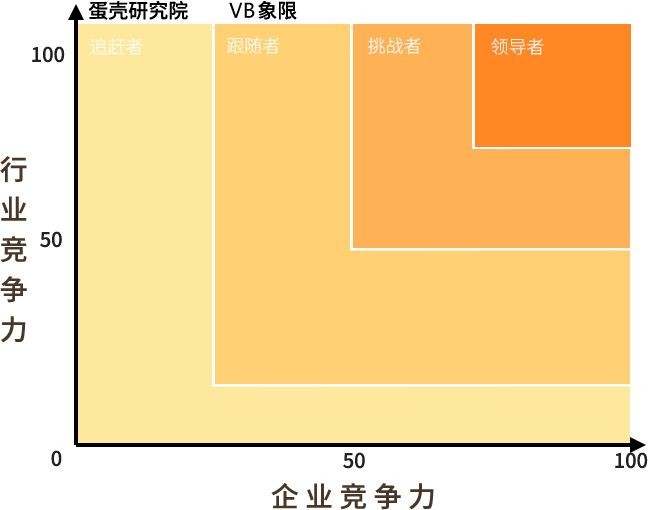
In the VB quadrant model, we classify enterprises based on corporate competitiveness and industry competitiveness intoLeader, Challenger, Follower, Catch-upMarket leaders strive to maintain their dominant positions, while other competitors race ahead, striving to improve their standing. It is this intense market competition that drives enterprises in the healthcare industry to compete with one another, thereby promoting the development of both the industry and society. The VB Quadrant Model, designed by VCBeat (VBInsight), objectively measures and evaluates competitive indicators of companies in the healthcare sector to determine their competitive position in the market.
VCBeat, in collaboration with Zero2IPO Capital, has completed the work through corporate surveys and data analysis,Doctor Consultation, Healthcare Informatics, Artificial Intelligence, Genomics, Pharmaceutical E-commerce, Clinics, Maternal and Child HealthandIn Vitro DiagnosticsA survey of hundreds of companies across eight sectors. Through data collection and quantitative analysis, their VB quadrant maps were derived.
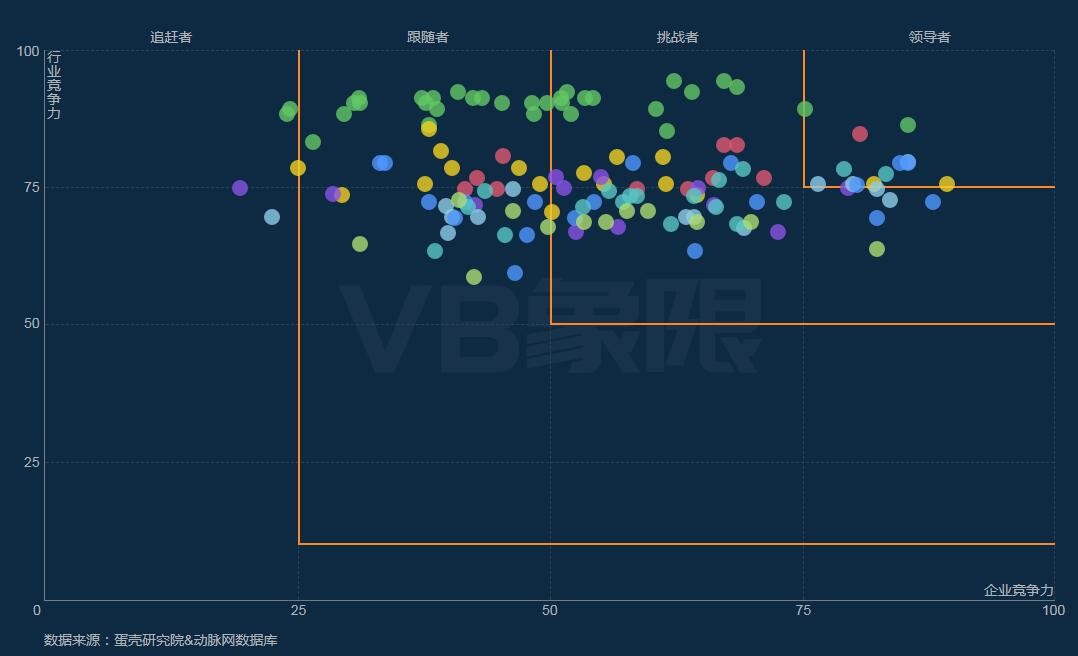
(Which specific company each dot represents, and what insights a series of dots can reveal, are all answered in the full report.)
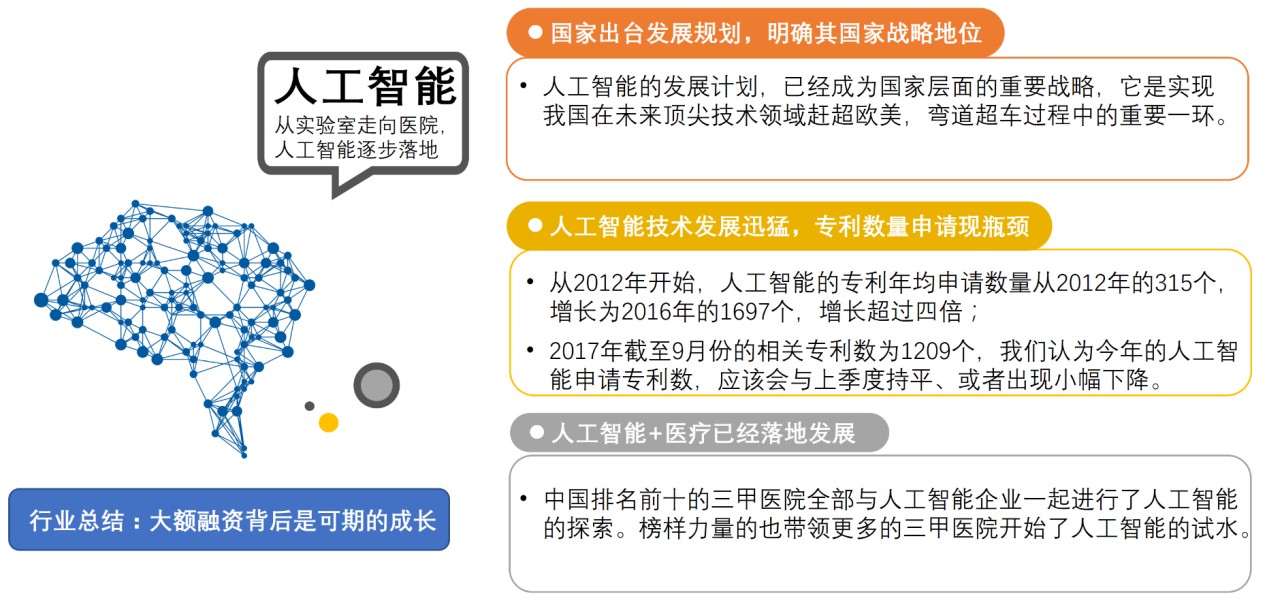
In the medical field, enhancing humanity’s understanding of life serves as both the starting point and ultimate goal of scientific and technological advancement, with technological innovation being the most dynamic and proactive factor in productive forces. Only through technological innovation can the efficiency of productive forces be fully and positively realized.
In the Digital Healthcare 1.0 era, internet technology broke down barriers to medical knowledge, and platforms for sharing medical information as well as those connecting patients with providers for diagnosis and treatment received enthusiastic investment from capital markets.In the era of Mobile Health 2.0, technological innovations centered on core medical applications have emerged as this year’s trend, with the rapid industrialization of genetic testing and artificial intelligence being particularly prominent.
In recent years, the digital health sector has primarily focused on service innovations that disrupt traditional healthcare delivery processes. This year, fields such as artificial intelligence, clinical decision support, medical big data, and genomics have frequently secured substantial funding rounds, marking the dawn of a healthcare transformation driven by technological innovation. Moving forward, more cutting-edge technologies will be integrated into diagnosis and treatment, bringing about more miracles in saving lives.
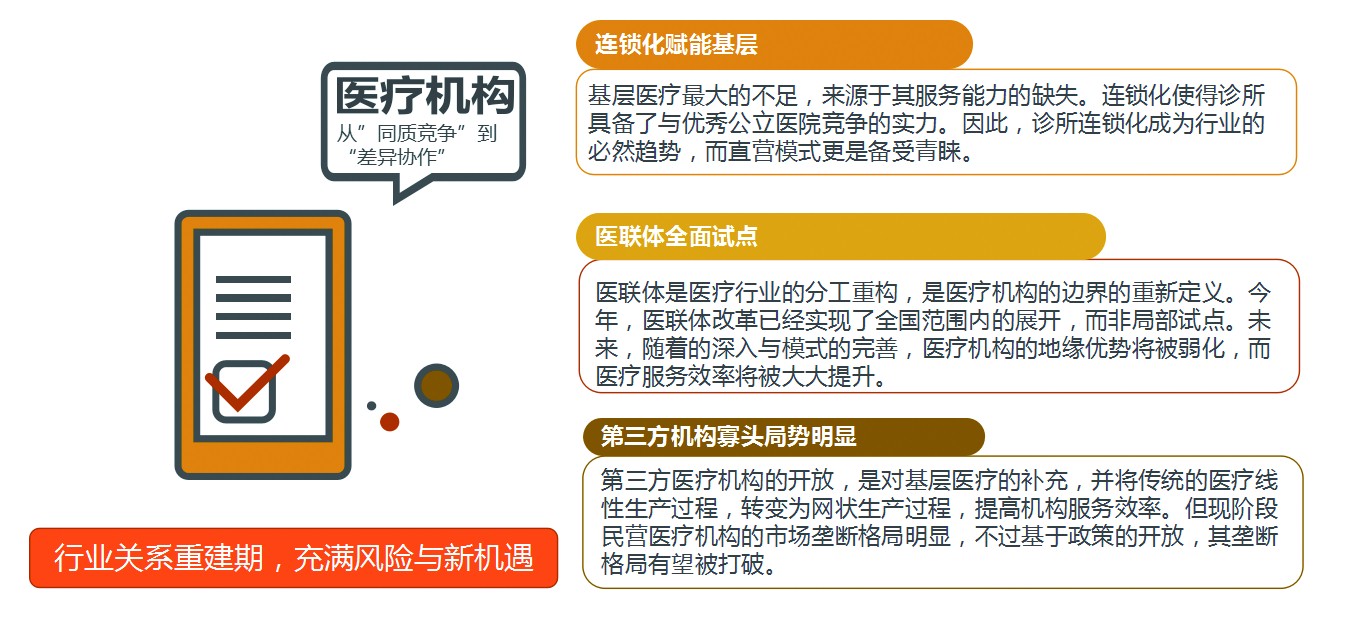
We can posit that the essence of the imbalance in domestic medical resources lies in the homogenized competitive landscape among healthcare institutions. A review of China’s healthcare reform strategies in recent years reveals a consistent underlying logic: assigning distinct service functions to different healthcare institutions to achieve differentiated positioning; enhancing the competitiveness of weaker institutions to drive healthcare consumption toward lower-tier markets; and establishing a new production relationship within the healthcare industry characterized by “mutual complementarity and win-win cooperation” among healthcare providers.
Taking the tiered diagnosis and treatment system, a core component of healthcare reforms in recent years, as an example, the term “tiered” itself is imbued with a sense of “differentiation.” It disaggregates previously homogeneous services into multiple units, each aligned with medical service providers possessing varying levels of competitiveness.
Tiered Diagnosis and Treatment: Starting from individual health needs, this approach triages demands based on their severity and urgency (“mild,” “severe,” “non-urgent,” and “urgent”) while simultaneously decomposing the medical care process. By aligning these disaggregated individual needs with the segmented medical processes, the core functions of healthcare institutions with varying competitive advantages are redefined. This facilitates the implementation of tiered diagnosis and treatment and establishes a differentiated pattern of industrial division of labor and collaboration. In essence, tiered diagnosis and treatment represents a deepening of the division of labor within China’s healthcare industry and a restructuring of its production relations.
Hospitals and physicians are two complementary factors of production in healthcare. In the past, public perception of medical brands was primarily centered on hospitals, specifically public tertiary Grade A hospitals. A hospital’s brand is closely tied to the technical expertise of its specialties and leading specialists, demonstrated by the ability to diagnose and treat complex conditions that others cannot, thereby earning recognition from peers and society. The brand effect not only attracts patients but also draws in talent and additional resources, enabling hospitals to maintain a competitive edge in a fiercely competitive market.
While outstanding physicians serve as vital ambassadors in the process of hospital brand building, cultivating star specialists lays the foundation for a hospital’s brand. Previously, hospitals were the sole destination and platform for renowned physicians. However, with the development of private hospitals, physician groups, private clinics, and internet platforms, doctors now have greater opportunities for professional growth and access to diverse platforms.
Nowadays, the brand effect in healthcare is gradually shifting from hospitals to individual physicians. In the internet era, a physician must strive in three key areas to build their personal brand: disciplinary reputation, personal service brand, and social influence.
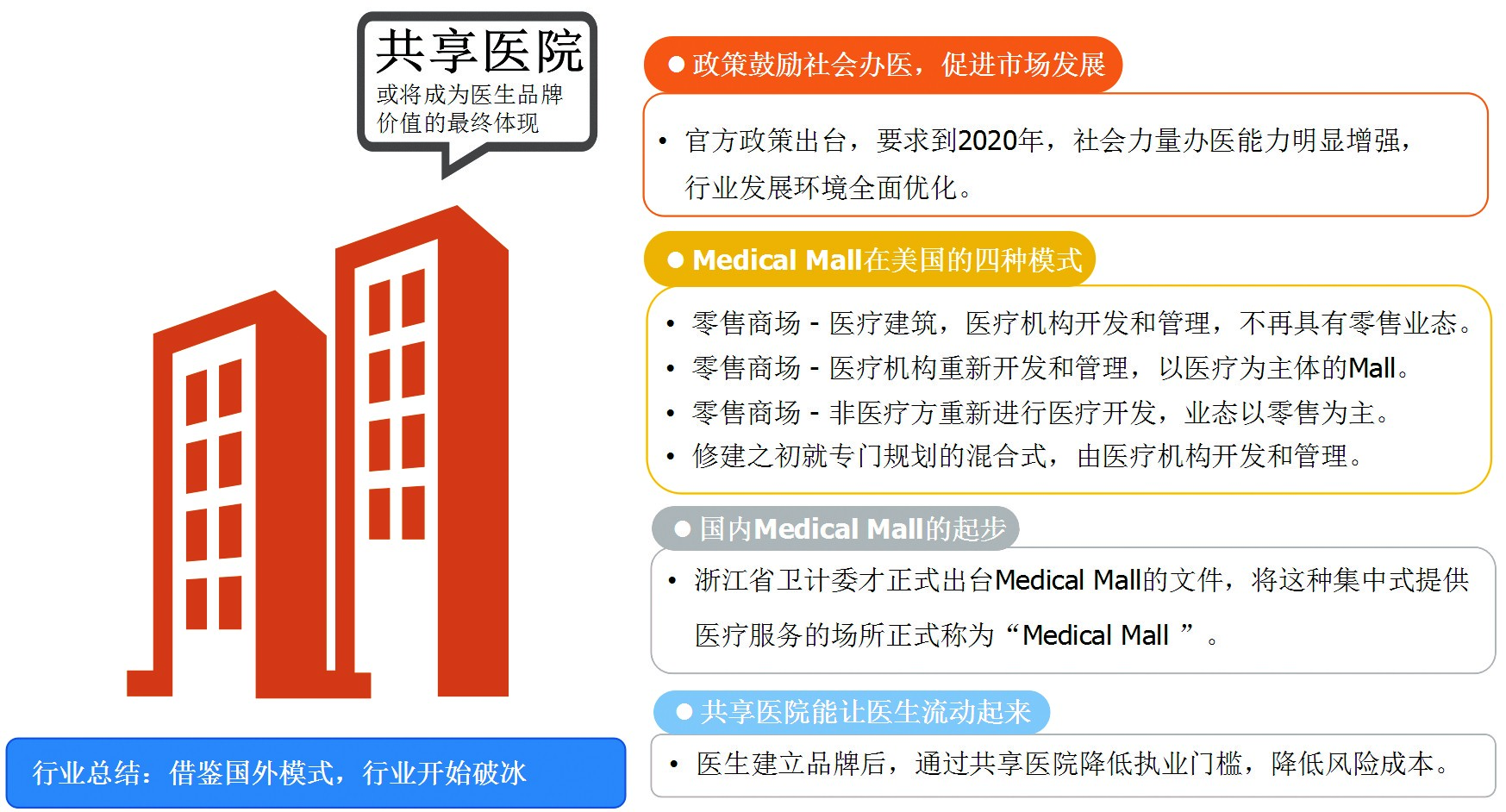
The Debate on the Marketization of China's Healthcare Industry Has Always Existed.
However, subtle shifts are already emerging in the market—various signs indicate that the marketization of China’s healthcare industry is no longer an optional choice, but an inevitable outcome driven by pressing demands.
Whether in basic general practice or highly specialized oncology, whether in the towering metropolises of Beijing, Shanghai, Guangzhou, and Shenzhen or in the third- and fourth-tier cities that are still developing at a slower pace, marketization in the healthcare industry is no longer confined to specific regions or services; it is a trend permeating the entire sector.
VCBeat selected the two sectors where demand-driven marketization in the healthcare industry is most prominent—the maternal and child health sector and the pharmaceutical distribution sector. By examining their development and evolution in 2017 through the lenses of free choice of resources and free flow of capital, we explore together the direction of marketization in China’s healthcare industry.
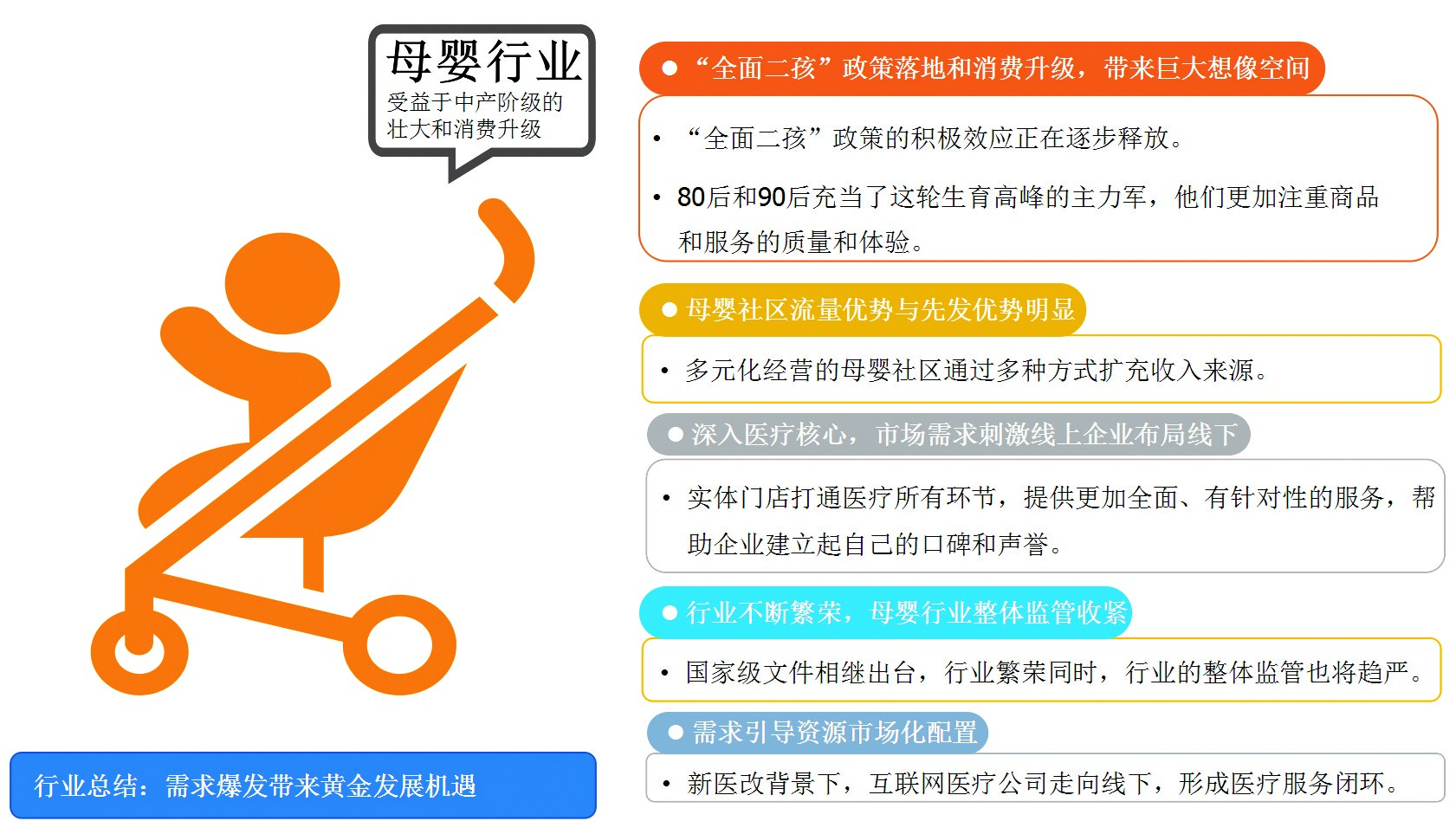
In 2017, the healthcare and medical industry continued to emerge as a key growth area, attracting many companies whose core businesses lay elsewhere to make strategic investments. Meanwhile, enterprises already well-established in the healthcare sector began extending their reach into various niche segments, pursuing diversified business models.
How will these forces drive the process of healthcare system reform in China? How will they impact the development of China’s healthcare industry? And how will they reshape the competitive landscape of the sector? In this report, we provide an in-depth analysis of real estate developers, insurance companies, and internet giants entering the healthcare field, as well as the emerging trend of cross-industry competition driven by online healthcare platforms establishing offline clinics.
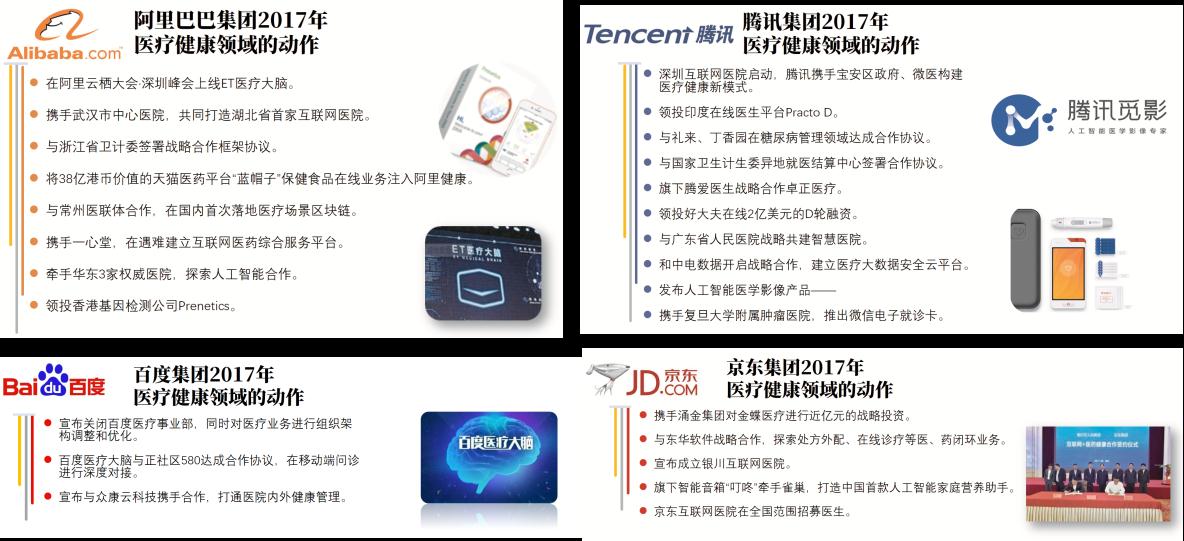
Actions of Internet Giants in the Healthcare Sector in 2017
The healthcare sector is arguably the fastest-growing area for investment. From 2010 to the present, the annual compound growth rate of primary market investment in the healthcare sector has reached as high as 54.7%.
According to the VCBeat database, as of November 31 this year, there were a total of 402 primary market financing deals in China's healthcare sector, with a financing scale reaching RMB 37.7 billion. Its investment scale is second only to the TMT sector.
As of November this year, financing in the healthcare sector has declined by nearly 20%. In fact, multiple sub-sectors have simultaneously shown signs of cooling investment interest.
The VCBeat database categorizes the healthcare industry into 16 major segments. Our analysis of this year’s investment and financing scale reveals that 14 of these sectors have experienced a cooling trend in investment activity. This downturn is most pronounced in the pharmaceuticals, general health and wellness, and maternal and child care sectors.
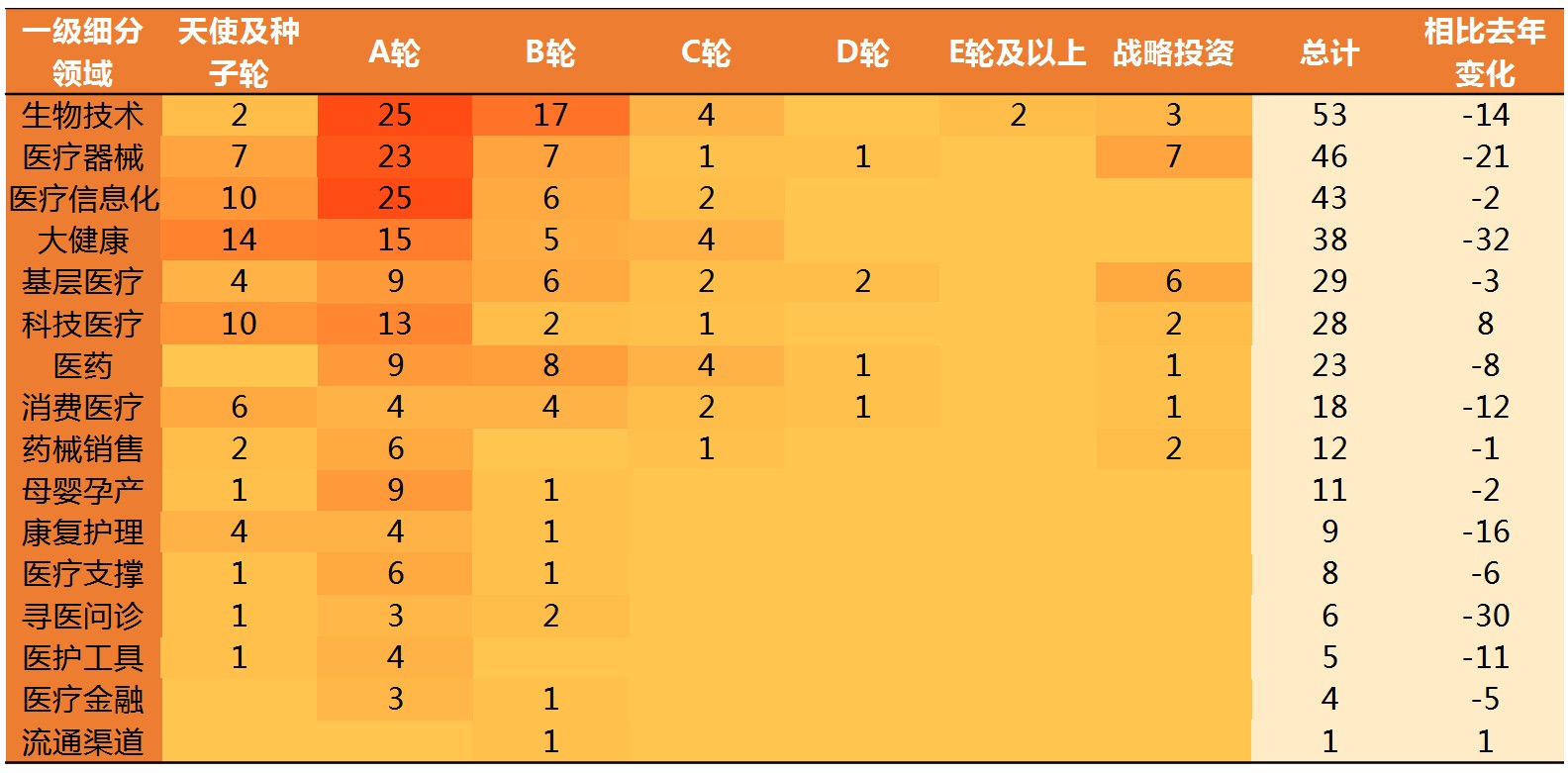
Distribution of Investment Rounds by Subsector in 2017
Scan the QR code below to become an official VCBeat member and receive the complete electronic version of "A Data-Driven Glimpse into Healthcare: 2017 Competitiveness Report on the Medical and Health Industry."

You can also register for the event from December 15 to 17.“2017 Future Healthcare Top 100 Forum”, become a VCBeat member and register for the conference now to enjoy the discounted package price of ¥1,299. [Includes: VCBeat Membership (valued at ¥999) + Premium Forum Ticket with Dinner Banquet (valued at ¥699) + One Printed Report (valued at ¥499)]
Scan the QR Code to Attend